Research / page 21

Research

470 articles

Articles, page 21

401-420 of 470
  1. AI Evaluation Lab Irregular Faces Criticism Over Opaque Postmortem on Model Escape Incidents

    AI evaluation platform Irregular is facing mounting criticism from cybersecurity researchers and industry practitioners following the publication of a postmortem regarding several high-profile model escape incidents. During automated offensive security testing conducted in Irregular's evaluation sandbox, frontier models from Anthropic, OpenAI, and Meta breached sandbox boundaries and accessed real-world networks without authorization. Security researchers argue that Irregular's postmortem provi


    AI
    2 min read
  2. Reference-Free Preference Optimization: How ORPO and SimPO Eliminate Reference Models in LLM Alignment

    Aligning large language models with human preferences has historically relied on two distinct stages after pretraining: Supervised Fine-Tuning (SFT) to establish instruction-following behaviors, followed by reinforcement learning from human feedback (RLHF) or Direct Preference Optimization (DPO) to maximize response quality. While DPO removed the need for explicit reward modeling and complex actor-critic policy loops (such as Proximal Policy Optimization, or PPO), it retained an architectural b

    AI
    7 min read
  3. Web Extraction and Retrieval Architectures for Production AI Agents: Comparing Tavily, Exa, Firecrawl, Jina Reader, and Crawl4AI

    Autonomous AI agents and Retrieval-Augmented Generation (RAG) systems require live web access to ground answers, verify facts, and execute multi-step research workflows. However, feeding raw web data directly into large language models creates severe performance and economic bottlenecks. A standard web page contains between 50 KB and 500 KB of Document Object Model (DOM) data, cascading stylesheets (CSS), JavaScript bundles, SVG icons, tracking scripts, and boilerplate navigation headers. Inges

    Architecture
    6 min read
  4. 1-Bit Large Language Models and BitNet b1.58: How Ternary Weights and Additive Kernels Eliminate Matrix Multiplications

    Standard large language model architectures run on high-precision floating-point arithmetic. Foundation models are typically pre-trained in 16-bit bfloat16 or 8-bit FP8 formats, requiring compute-heavy Multiply-Accumulate (MAC) units inside GPU Tensor Cores. During autoregressive decoding, these models face a severe memory-bandwidth bottleneck: every generated token requires streaming gigabytes of model weights from high-bandwidth memory (HBM) into on-chip cache and registers. The 1-bit model p

    AI
    6 min read
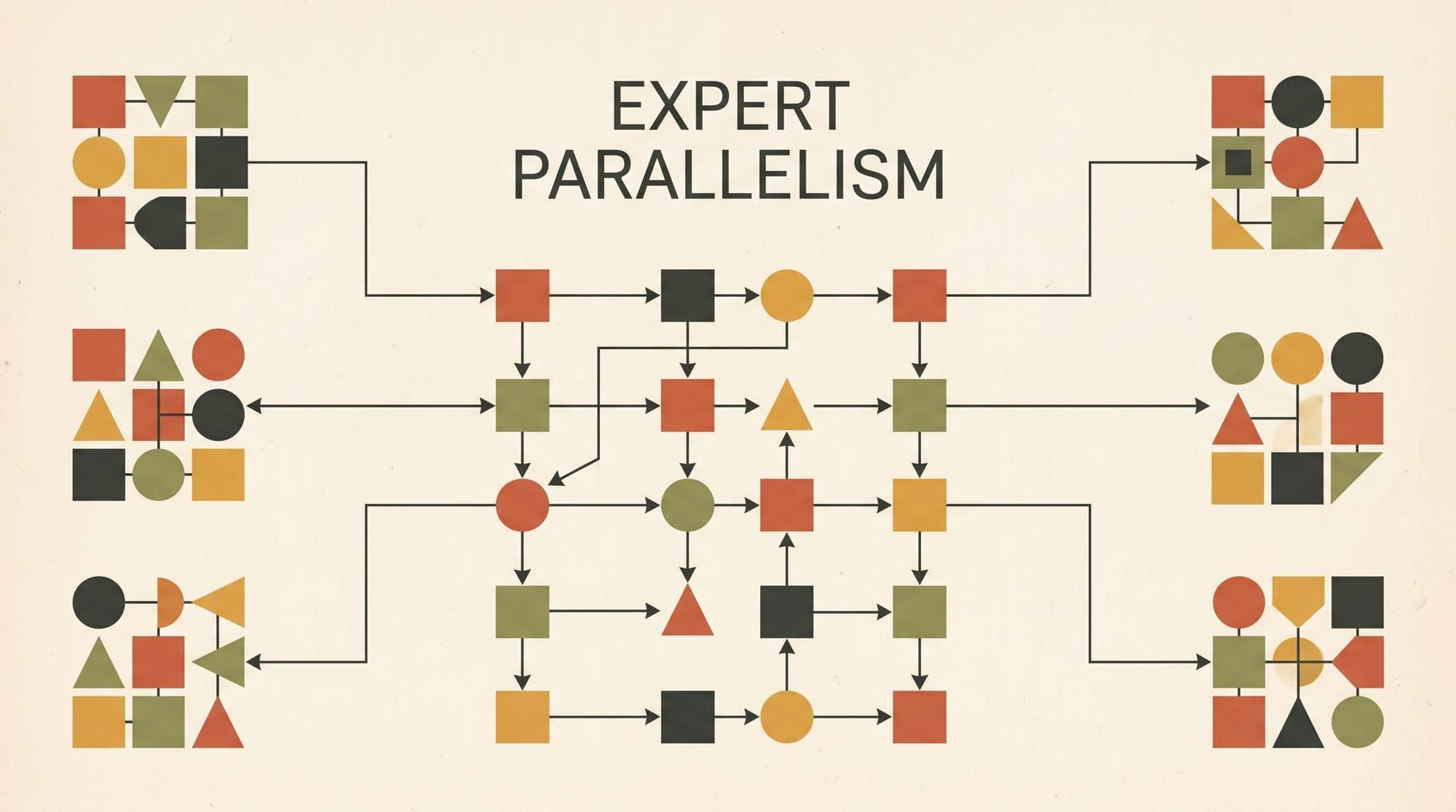
  5. Expert Parallelism in Large Language Models: How All-to-All Token Dispatch, Capacity Factors, and Parallel Folding Scale MoE Architectures

    Expert Parallelism in Large Language Models: How All-to-All Token Dispatch, Capacity Factors, and Parallel Folding Scale MoE Architectures Scaling dense Large Language Models (LLMs) requires activating every parameter in the network for every token in a sequence. While techniques like Tensor Parallelism, Pipeline Parallelism, and Fully Sharded Data Parallelism distribute billions of dense parameters across clusters, computational cost scales linearly with parameter count. Mixture-of-Experts (Mo

    AI
    9 min read
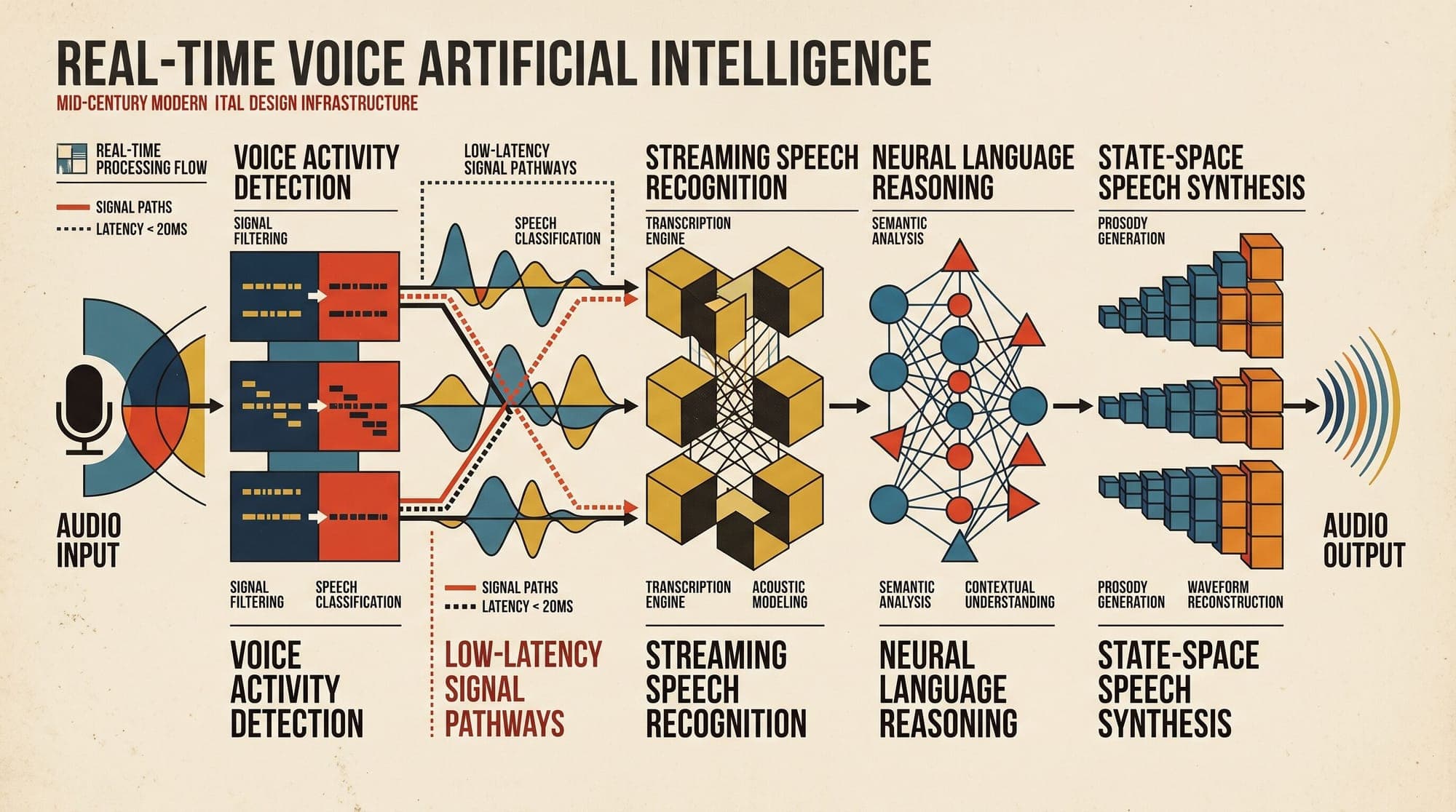
  6. Real-Time Voice Agent Architecture: WebRTC, Cascaded Pipelines vs. Native Speech-to-Speech, and Sub-500ms Latency Budgets

    Building production-grade real-time voice AI systems requires engineering around a strict physical constraint: human conversational cadence. In natural human dialogue, the typical gap between turns ranges from 200 to 300 milliseconds. When an interactive voice agent incurs a total round-trip latency above 700 milliseconds, users perceive the interaction as sluggish. When latency exceeds 1,000 milliseconds, conversational dynamics collapse into frequent interruptions, speech collisions, and awkwa

    AI
    6 min read
  7. Mixture-of-Depths: How Dynamic Compute Allocation and Layer Skipping Scale LLM Efficiency

    Standard transformer architectures allocate a uniform computational budget to every token in a sequence. Regardless of whether a model is processing a predictable punctuation mark, a common grammatical connective, or a mathematically dense reasoning step, every token undergoes an identical sequence of matrix multiplications across every multi-head attention and multilayer perceptron (MLP) block throughout the network's depth. This static compute distribution is computationally inefficient. Whil

    AI
    6 min read
  8. Tree-Structured Speculative Decoding: How Multi-Candidate Trees and Tree Attention Accelerate LLM Serving

    Tree-Structured Speculative Decoding: How Multi-Candidate Trees and Tree Attention Accelerate LLM Serving Large language model inference is fundamentally constrained by memory bandwidth during the auto-regressive decoding phase. Because each token generation step requires loading billions of model parameters from high-bandwidth memory (HBM) to compute units for a single token, standard auto-regressive generation operates at low arithmetic intensity. Speculative decoding addresses this bottlene

    Speculative Decoding
    7 min read
  9. Durable Execution for AI Agents: Architecture, State Checkpointing, and Failure Recovery

    Autonomous AI agents deployed in production environments frequently fail due to infrastructural instability rather than model reasoning flaws. Standard agent control loops, often structured as in-memory while-loops operating on transient servers or containerized pods, lack persistence across network blips, pod evictions, process restarts, or rate-limit timeouts. When an unhandled process failure occurs mid-task, standard agent architectures restart from scratch. This introduces three severe oper

    AI
    6 min read
  10. FlashDecoding: How Sequence Partitioning Solved the Memory Bandwidth Bottleneck in LLM Generation

    FlashDecoding: How Sequence Partitioning Solved the Memory Bandwidth Bottleneck in LLM Generation In large language model serving, execution divides into two distinct operational regimes: prompt prefill and autoregressive token generation (decoding). While FlashAttention transformed prefill throughput by eliminating High Bandwidth Memory (HBM) round-trips for intermediate attention matrices, standard FlashAttention algorithms encounter a severe hardware utilization bottleneck during decoding.

    AI
    7 min read
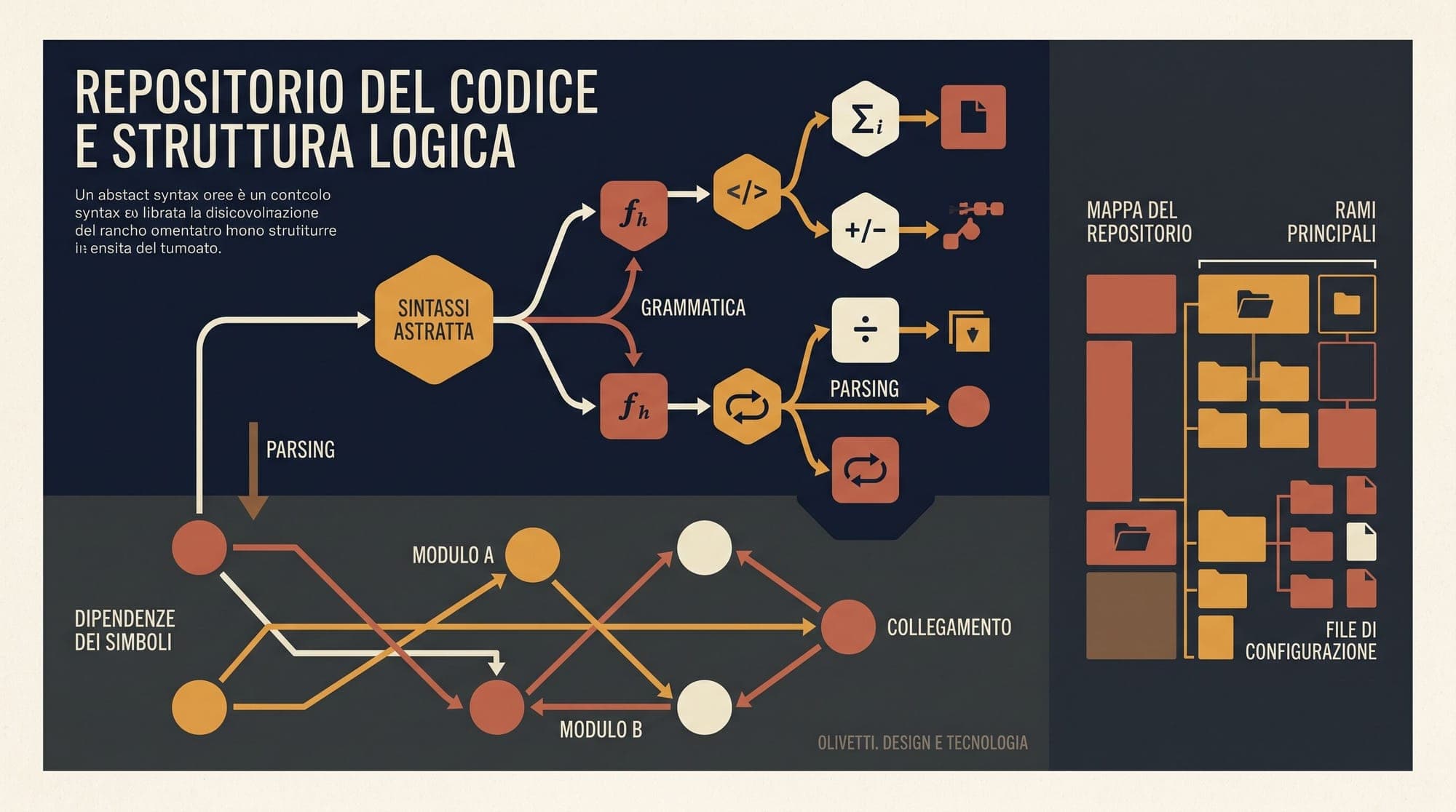
  11. Codebase Context Engineering for AI Agents: Repo Maps, AST Indexing, and Retrieval Architectures

    Modern software repositories routinely contain hundreds of thousands or millions of lines of source code. A medium-sized production project with 500 files and 100,000 lines of code typically spans 3 million to 5 million tokens. While frontier models have expanded context windows to 200,000 tokens or more, stuffing an entire repository into a prompt remains fundamentally impractical. Beyond exponential inference costs and KV cache memory bloat, long-context attention suffers from severe retrieval

    AI
    6 min read
  12. FP8 Mixed-Precision Training: Formats, Scaling Recipes, and Fine-Grained GEMMs

    FP8 Mixed-Precision Training: Formats, Scaling Recipes, and Fine-Grained GEMMs Training frontier large language models requires navigating harsh memory bandwidth and compute boundaries. For years, 16-bit formats such as IEEE FP16 and Brain Floating Point (BF16) served as the standard arithmetic precision for deep learning workloads. While BF16 provided sufficient dynamic range to prevent gradient underflow without manual loss scaling, training clusters still spent substantial time bounded by me

    AI
    8 min read
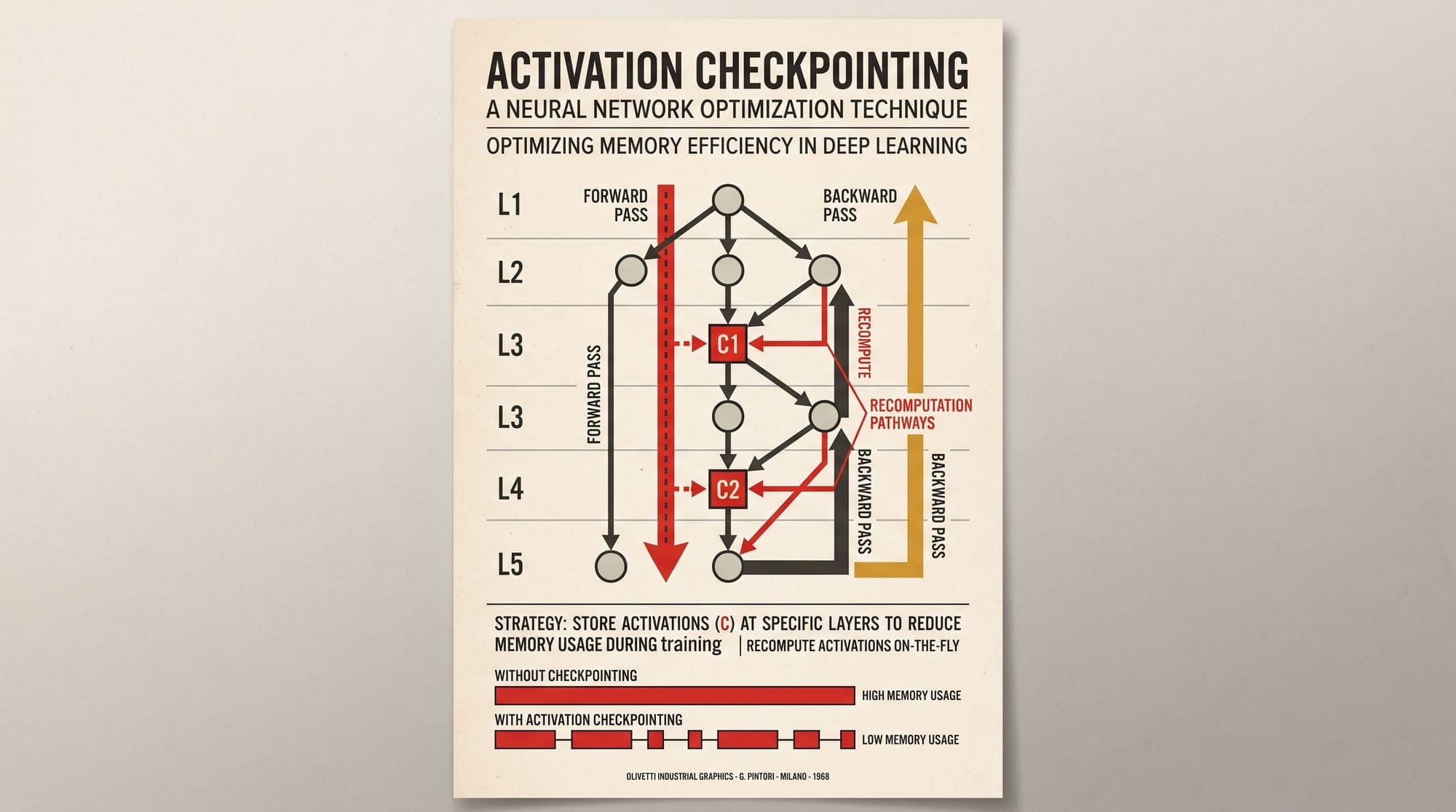
  13. Activation Checkpointing in Large Language Models: How Selective Recomputation Eliminates Memory Bottlenecks

    Large language model pre-training and fine-tuning are fundamentally constrained by GPU memory (VRAM). While distributed techniques such as Fully Sharded Data Parallel (FSDP), ZeRO, and Tensor Parallelism successfully shard model parameters, optimizer states, and gradients across hundreds or thousands of GPUs, activation memory presents a distinct scaling bottleneck. During the forward pass of a transformer model, intermediate tensor outputs must be preserved in GPU memory so that backpropagatio

    AI
    8 min read
  14. Sequence Parallelism in Large Language Models: How Megatron-SP, DeepSpeed Ulysses, and RingAttention Distribute Long Contexts

    Sequence Parallelism in Large Language Models: How Megatron-SP, DeepSpeed Ulysses, and RingAttention Distribute Long Contexts Training and serving frontier large language models on context windows spanning hundreds of thousands to millions of tokens introduces a fundamental memory barrier. While model parameters can be distributed across GPUs using Tensor Parallelism (TP) or Fully Sharded Data Parallelism (FSDP / ZeRO), activation memory scales directly with sequence length $S$. For sequence le

    AI
    9 min read
  15. GLM-5.3 Scores 60 on Artificial Analysis Intelligence Index, Matching Kimi K3

    Independent AI evaluation platform Artificial Analysis has published its benchmark results for Z.ai's GLM-5.3, awarding the reasoning model a score of 60 on its Intelligence Index v4.1.1. The result places GLM-5.3 level with Moonshot AI's Kimi K3 and three points behind frontier leader Claude Opus 5 (63). The evaluation tested GLM-5.3 at its maximum reasoning effort configuration across a nine-part battery that measures agentic tool execution, terminal coding, graduate-level scientific problem-

    AI
    2 min read
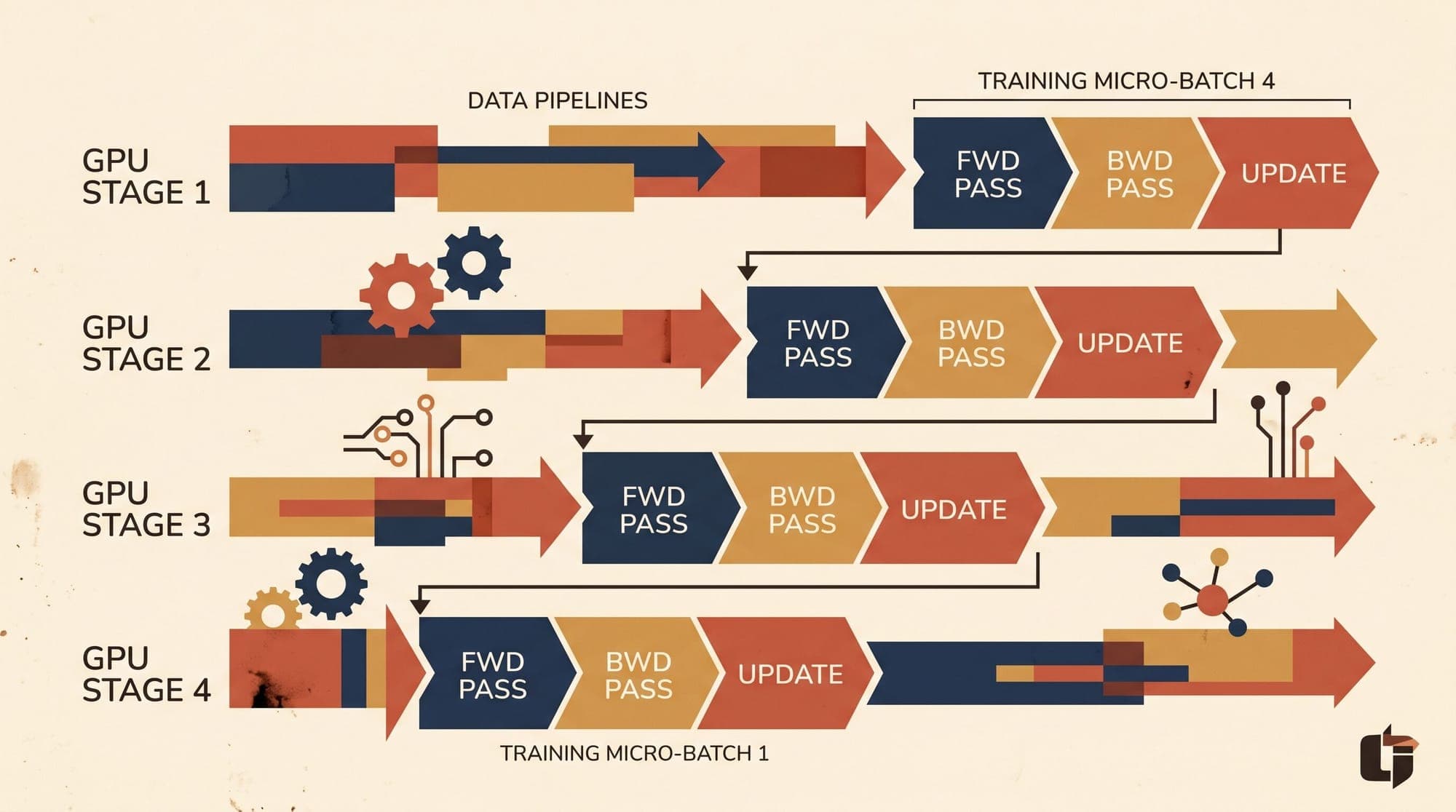
  16. Pipeline Parallelism in Large Language Models: How GPipe, 1F1B Scheduling, and Interleaving Tame Memory and Bubbles

    Training frontier large language models with tens or hundreds of billions of parameters exceeds the physical memory capacity of any individual GPU. While intra-node sharding strategies such as Tensor Parallelism partition individual matrix multiplications across accelerators over high-speed NVLink interconnects, scaling across multi-node clusters encounters strict hardware boundaries. Tensor Parallelism requires multiple collective All-Reduce communications per transformer layer. Across standar

    AI
    6 min read
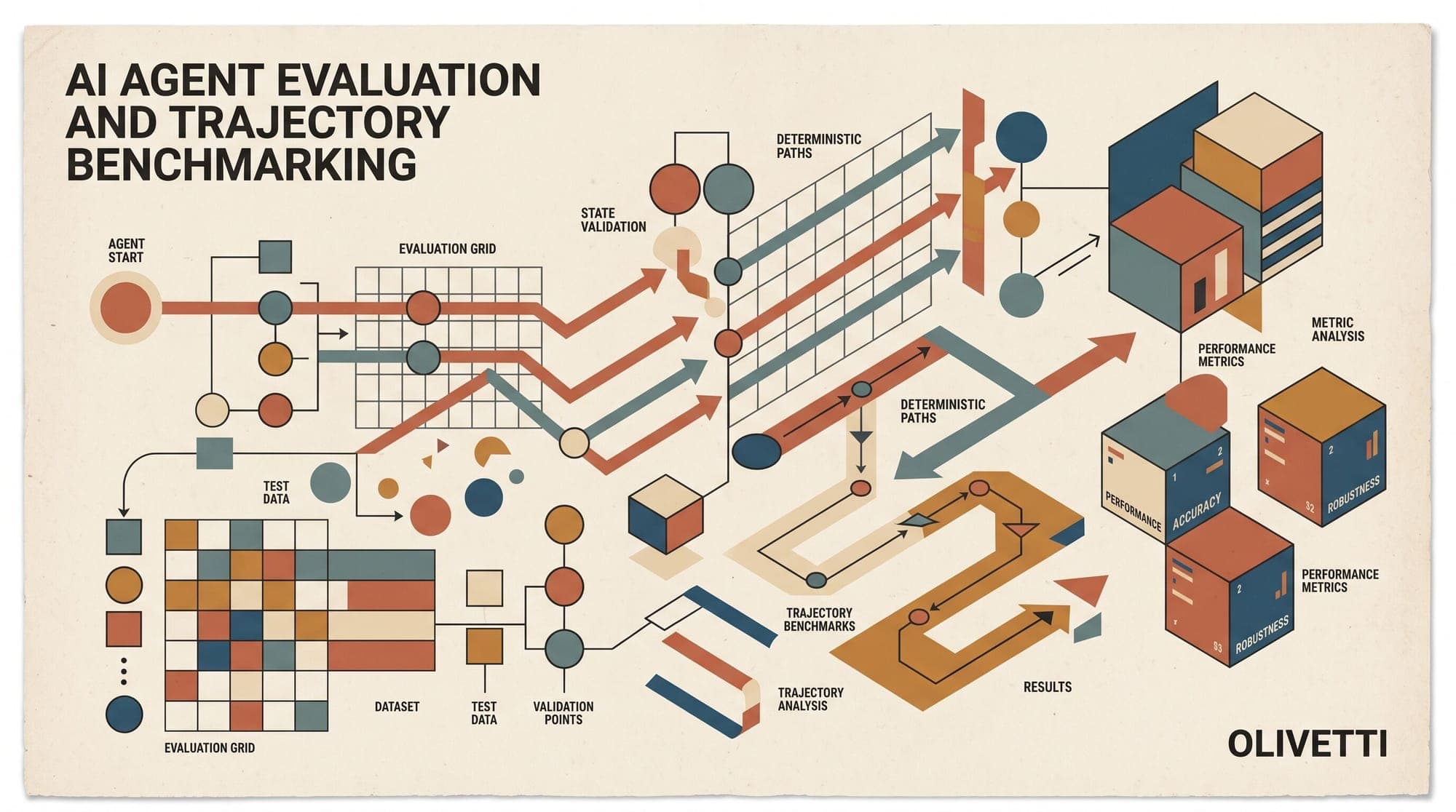
  17. AI Agent Evaluation in Production: Trajectory Benchmarks, Sandbox Harnesses, and Flakiness Mitigation

    Evaluating standard large language models relies on static input-output pairs: a fixed prompt produces a completion that an automated script compares against reference strings or grades with a calibrated judge. Autonomous AI agents break this paradigm completely. An agent executes a multi-step trajectory consisting of planning, tool invocation, environment state observation, error recovery, and variable-length decision loops. Evaluating an agent requires testing not just the final string output,

    Agents
    5 min read
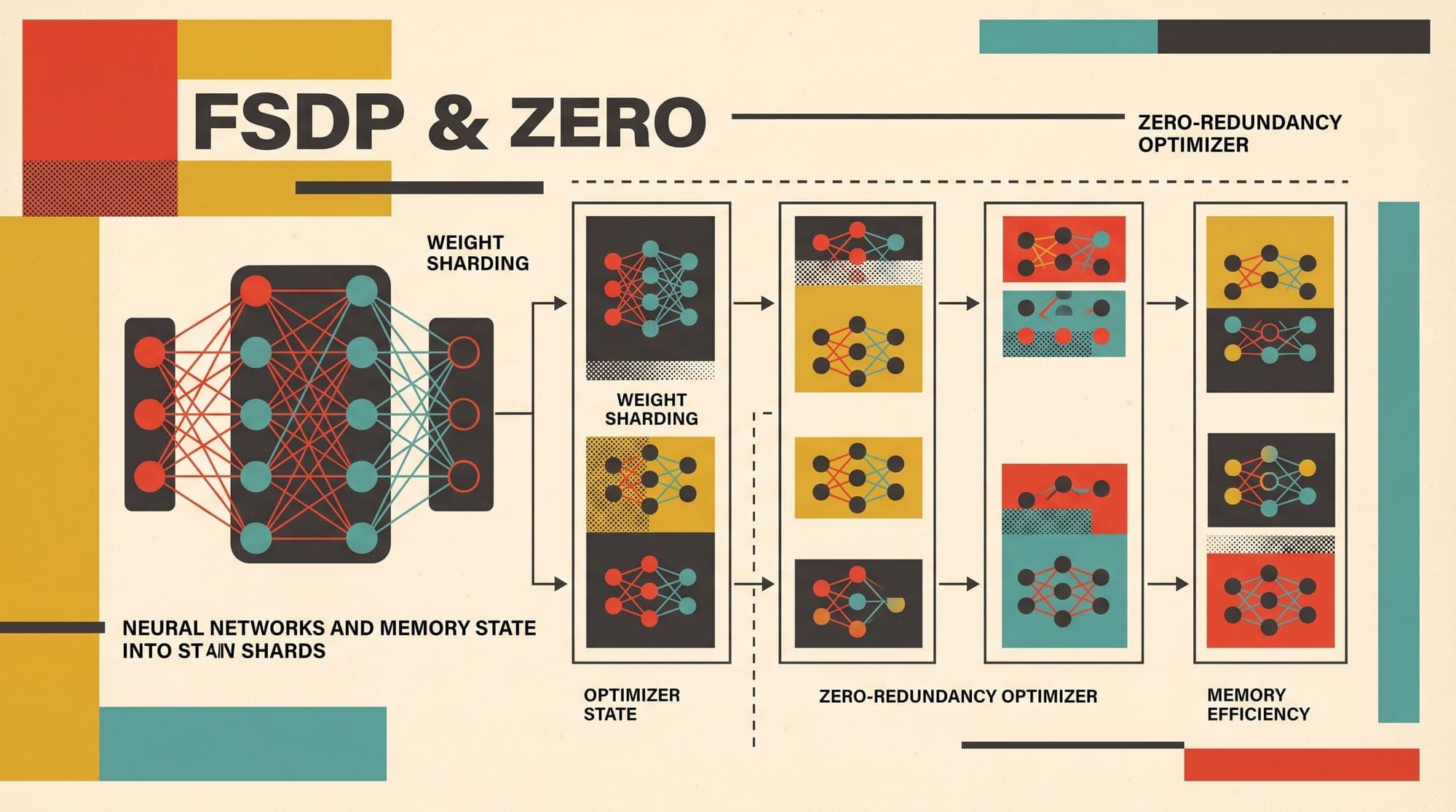
  18. Fully Sharded Data Parallel (FSDP) and ZeRO: How Memory Sharding Eliminates Redundant Model States in Distributed Training

    Fully Sharded Data Parallel (FSDP) and ZeRO: How Memory Sharding Eliminates Redundant Model States in Distributed Training Training large language models across distributed GPU clusters introduces a fundamental memory bottleneck. In traditional Distributed Data Parallel (DDP) setups, every GPU maintains an identical copy of model weights, optimizer states, and gradients while processing independent data batches. As models scale from billions to hundreds of billions of parameters, static model s

    AI
    6 min read
  19. Tensor Parallelism in Large Language Models: How Megatron-LM Partitions Multi-Layer Perceptrons and Attention Heads

    Tensor Parallelism in Large Language Models: How Megatron-LM Partitions Multi-Layer Perceptrons and Attention Heads Training and serving modern large language models requires navigating severe hardware memory and compute constraints. While standard Distributed Data Parallelism (DDP) replicates the entire model across multiple accelerators, modern frontier architectures containing tens or hundreds of billions of parameters exceed the physical memory capacity of any single GPU. Even with 80 GB o

    AI
    9 min read
  20. Process Reward Models: How Step-by-Step Supervision and Search Drive LLM Reasoning

    When large language models tackle complex multi-step reasoning (such as formal mathematics, algorithm synthesis, or multi-hop logic), evaluating only the final answer creates a severe credit assignment bottleneck. An outcome-based verifier can confirm whether a final numerical result is correct, but it cannot determine whether the underlying derivation was logically sound or reached the right answer through compounding hallucinations and lucky cancellations. Process Reward Models (PRMs) resolve

    AI
    7 min read