Research / page 19

Research

470 articles

Articles, page 19

361-380 of 470
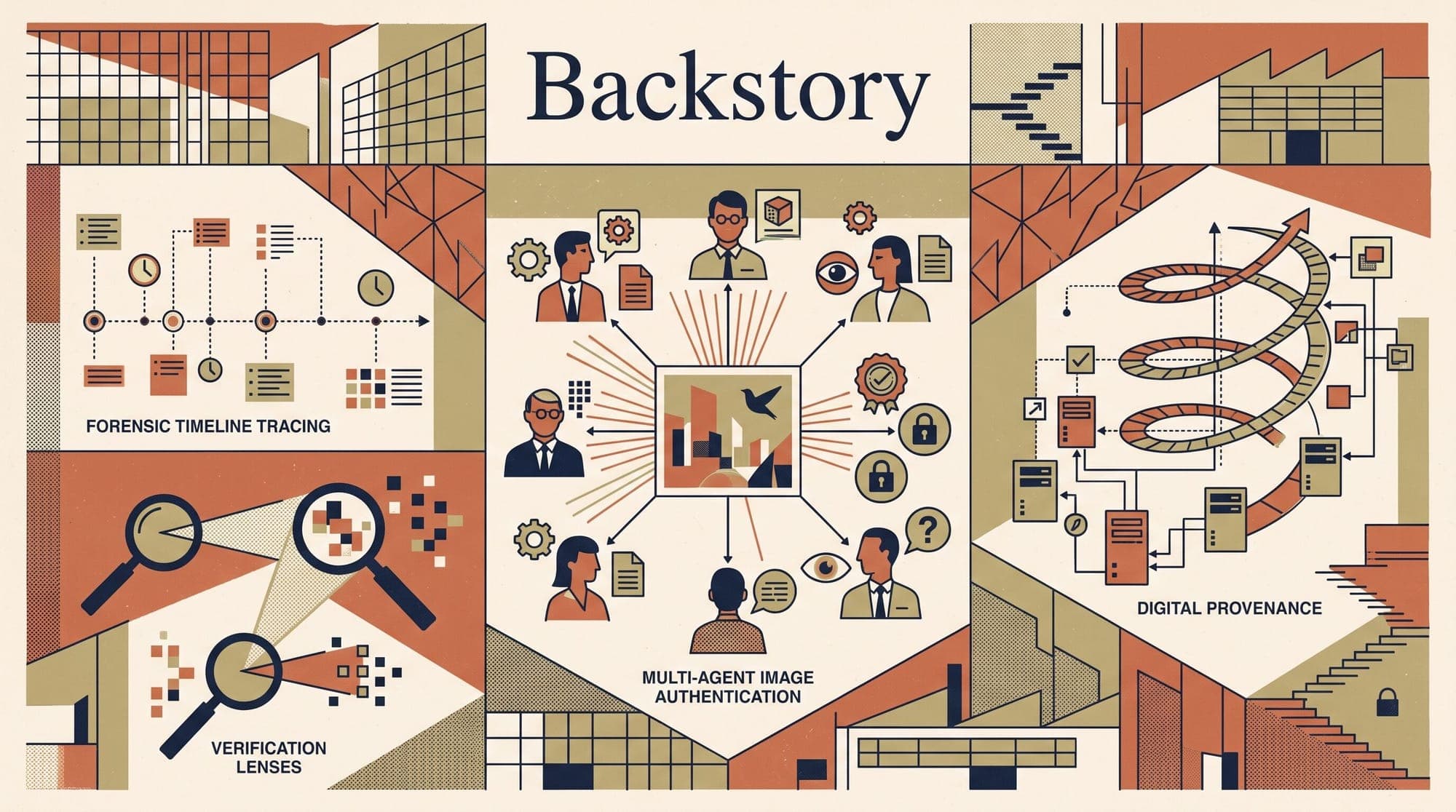
  1. Google DeepMind Deploys Backstory to Fact-Checkers for Multi-Agent AI Image Verification

    Google DeepMind has expanded live testing of Backstory, an experimental verification platform designed to investigate the origin, manipulation, and dissemination history of digital images. The system, built on the Gemini model family, is currently deployed across newsrooms, open-source intelligence (OSINT) groups, academic researchers, and fact-checking teams participating in Google's Trusted Testers program. Beyond Binary Synthetic Detection Traditional automated image forensic tools typical

    AI
    2 min read
  2. Sliding Window Attention in Large Language Models: How Bounded Receptive Fields, Interleaved Layers, and Rolling KV Buffers Scale Contexts

    Standard causal multi-head attention imposes two severe computational constraints as sequence lengths expand into tens or hundreds of thousands of tokens. First, calculating pairwise query-key dot products scales quadratically with sequence length, requiring $O(N^2)$ floating-point operations. Second, autoregressive generation requires caching key and value projections for all preceding tokens, causing the key-value (KV) cache to grow linearly with sequence length $O(N)$ across all layers and at

    AI
    8 min read
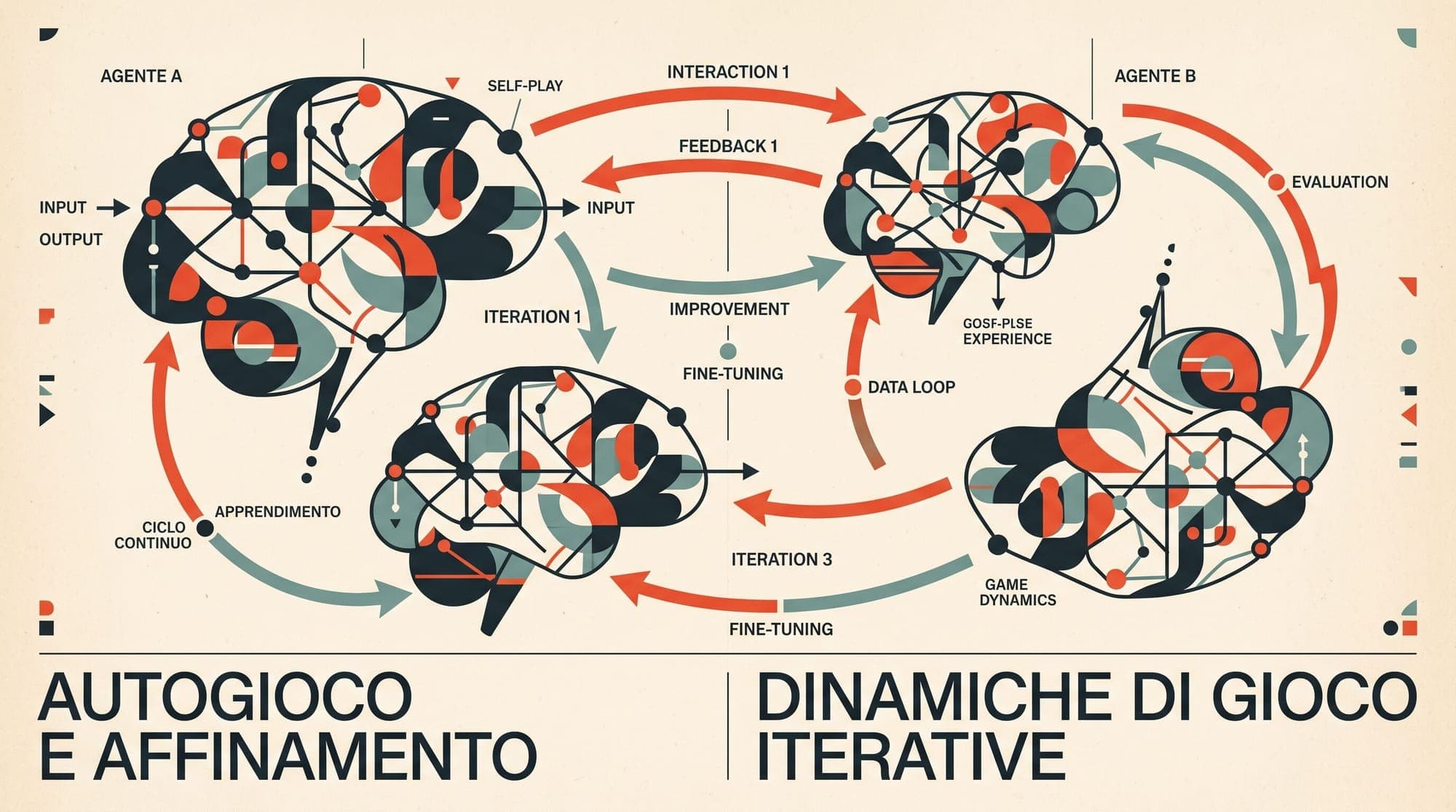
  3. Self-Play Fine-Tuning (SPIN): How Iterative Games Against Historical Checkpoints Eliminate Preference Labels

    Self-Play Fine-Tuning (SPIN): How Iterative Games Against Historical Checkpoints Eliminate Preference Labels Supervised fine-tuning (SFT) remains the standard entry point for adapting foundation language models to downstream instructions. By training on curated prompt-response pairs via token-level cross-entropy loss, SFT forces a model to mirror reference demonstrations. However, standard maximum likelihood estimation (MLE) suffers from exposure bias and covariate shift. During inference, the

    AI
    8 min read
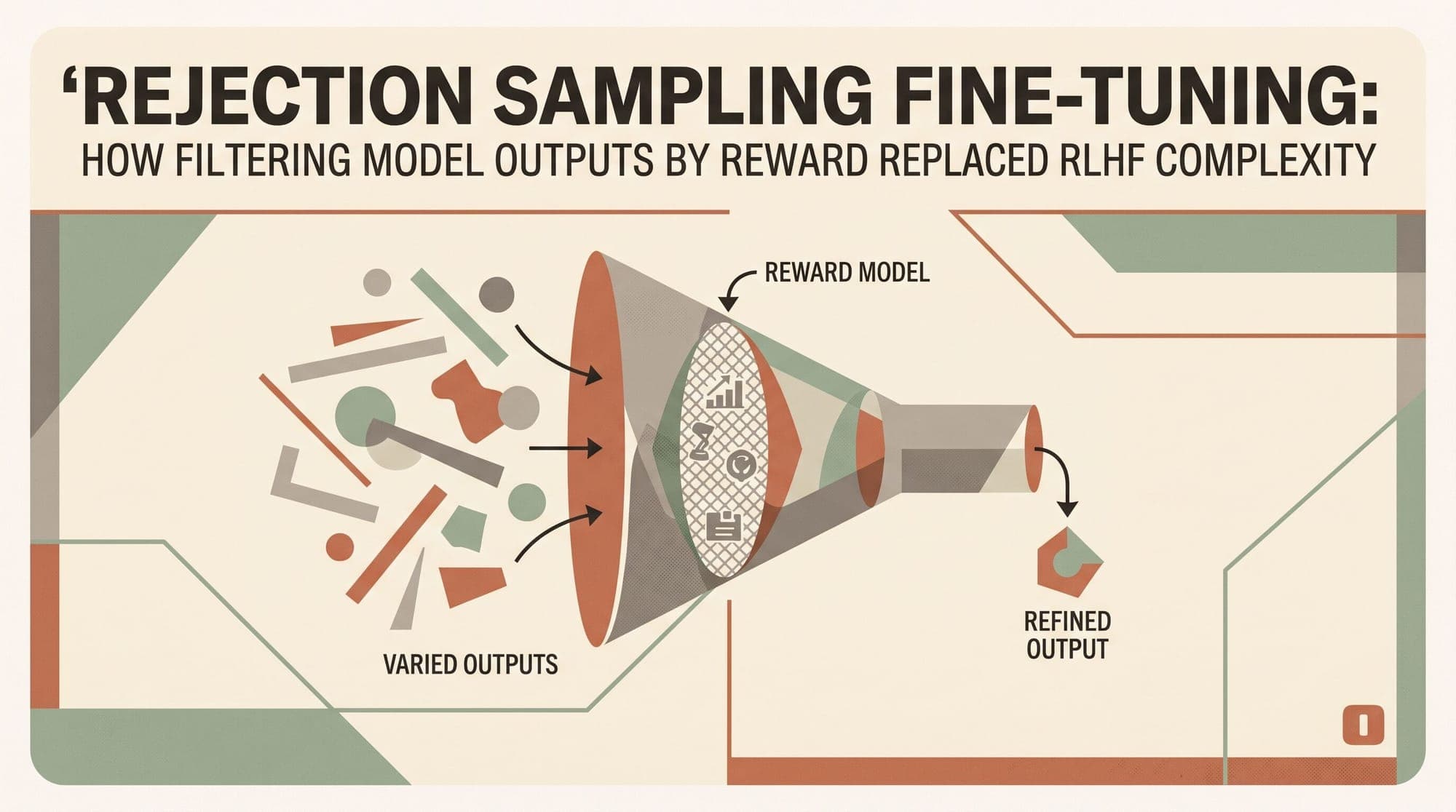
  4. Rejection Sampling Fine-Tuning: How Filtering Model Outputs by Reward Replaced RLHF Complexity

    Rejection Sampling Fine-Tuning: How Filtering Model Outputs by Reward Replaced RLHF Complexity Rejection sampling fine-tuning (RAFT) has emerged as the practical workhorse of LLM alignment. While PPO-based RLHF dominated early literature, production systems from Llama 2 to DeepSeek-R1 rely on a simpler loop: generate multiple completions per prompt, score them with a reward model, keep the best, and fine-tune on the filtered data. The technique converts the reinforcement learning problem into s

    Education
    4 min read
  5. Rotational Quantization: How Orthogonal Transforms and Hadamard Incoherence Enable Outlier-Free Low-Bit Inference

    Large language model serving is governed by two physical bottlenecks: memory bandwidth during autoregressive decoding and compute throughput during prompt prefill. While weight-only post-training quantization (such as GPTQ or AWQ) reduces parameter footprint to 4 bits, it leaves activations in 16-bit floating-point formats. As a result, inference engines cannot utilize high-throughput INT4 tensor cores, and the key-value (KV) cache continues to consume massive memory pools. Attempting to quanti

    AI
    8 min read
  6. Weight-Decomposed Low-Rank Adaptation (DoRA): How Decoupling Magnitude and Direction Closes the LoRA Gap

    Weight-Decomposed Low-Rank Adaptation (DoRA): How Decoupling Magnitude and Direction Closes the LoRA Gap Parameter-efficient fine-tuning (PEFT) has become the standard operational paradigm for adapting large language models to domain-specific downstream tasks. Among existing PEFT methodologies, Low-Rank Adaptation (LoRA) remains the default implementation across industry and academia due to its minimal parameter footprint and zero inference overhead. However, empirical studies consistently reve

    AI
    8 min read
  7. Attention with Linear Biases (ALiBi): How Static Positional Slopes Enable Zero-Shot Context Extrapolation

    Large language models process sequences by transforming discrete tokens into continuous vector representations. Standard dot-product self-attention is permutation-invariant: without explicit positional information, the attention operation treats a sequence as an unordered bag of tokens. Early transformer architectures addressed this limitation using Absolute Positional Embeddings (APE), either through fixed sinusoidal functions or learned lookup tables added directly to token embeddings. While

    AI
    6 min read
  8. Vals AI Raises $40M Series A at $400M Valuation Led by a16z to Build Real-World AI Benchmarks

    San Francisco evaluation startup Vals AI announced a $40 million Series A funding round at a $400 million post-money valuation, led by Andreessen Horowitz. The round included participation from existing seed backers 8VC, Pear VC, and Bloomberg Beta, alongside new institutional investors HRT Ventures and Next Ladder Ventures. The financing brings total capital raised by the company to $45 million, following a $5 million seed round. Founded by Stanford computer science graduates Rayan Krishnan a

    AI
    2 min read
  9. Small Language Models in Production: Task Specialization, Serving Economics, and the Frontier Offloading Pattern

    The default architecture for first-generation enterprise AI agents routed every prompt, tool selection, and intermediate evaluation step to a single frontier large language model. While this monolithic approach simplified initial orchestration, it introduced severe latency bottlenecks and unsustainable inference unit economics in high-throughput production environments. In production agentic loops, between 40% and 70% of model invocations are narrow, highly structured operations: classifying in

    AI
    6 min read
  10. Contrastive Decoding in Large Language Models: How Comparing Expert and Amateur Logits Suppresses Hallucination and Reasoning Errors

    Contrastive Decoding in Large Language Models: How Comparing Expert and Amateur Logits Suppresses Hallucination and Reasoning Errors Autoregressive large language models operate by predicting the conditional probability distribution of the next token given a sequence of preceding tokens. However, translating these continuous probability vectors into coherent, factual, and logically sound sequences remains one of the fundamental challenges of modern natural language processing. Traditional deco

    AI
    6 min read
  11. Reinforcement Learning with Verifiable Rewards: How Programmatic Oracles Eliminate Reward Hacking in LLM Reasoning

    Post-training paradigms for large language models have undergone a fundamental architectural shift. While the initial wave of alignment relied on Reinforcement Learning from Human Feedback (RLHF) and direct preference optimization (DPO), frontier reasoning systems increasingly depend on Reinforcement Learning with Verifiable Rewards (RLVR). Traditional RLHF relies on neural reward models trained on human pairwise comparisons. These neural proxies suffer from reward overoptimization, vulnerabili

    AI
    6 min read
  12. Human-in-the-Loop Architectures for Production AI Agents: Interrupt Patterns, State Resumption, and Permission Escalation

    Deploying autonomous AI agents into production environments exposes a fundamental tension between system velocity and operational safety. While read-only tasks such as data extraction and document summarization carry minimal operational blast radius, agents equipped with write-access tools (database mutations, API transactions, cloud infrastructure provisioning, and outbound communications) introduce severe operational risks. Hallucinations, prompt injections, and logical drift can trigger irrev

    AI
    6 min read
  13. Machine Unlearning in Large Language Models: How Gradient Ascent, Representation Misdirection, and Negative Alignment Purge Neural Memory

    Large language models memorize massive amounts of training data, including copyrighted literature, personally identifiable information (PII), proprietary codebases, and dual-use knowledge spanning cyber exploits and biological hazards. When copyright holders, regulators, or safety researchers demand the removal of specific data, complete retraining from scratch is economically infeasible, often costing tens of millions of dollars in compute. Machine unlearning aims to remove the influence of ta

    AI
    7 min read
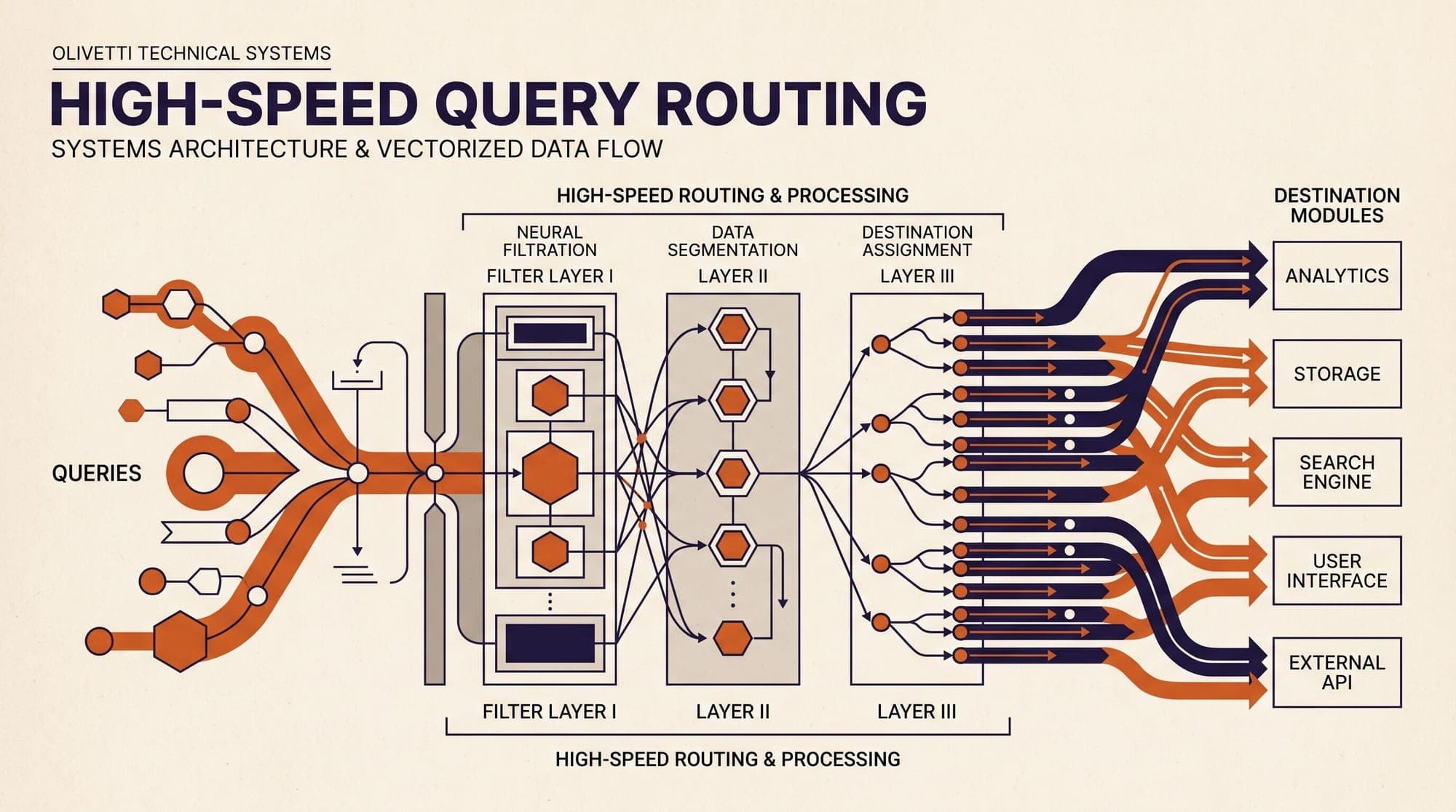
  14. Semantic Routers in Production: Architecture, Embedding Classification vs. LLM Triage, and Cascade Topologies

    Routing user requests to specialized tools, APIs, or tiered foundation models is central to production AI architectures. However, relying on large language models (LLMs) or native JSON tool-calling mechanisms to perform initial intent classification introduces significant latency and cost overheads. A single LLM-based classification pass typically adds between 200 milliseconds and 1.5 seconds of time-to-first-token (TTFT) latency, alongside linear token billing for routine triage queries. To el

    AI
    5 min read
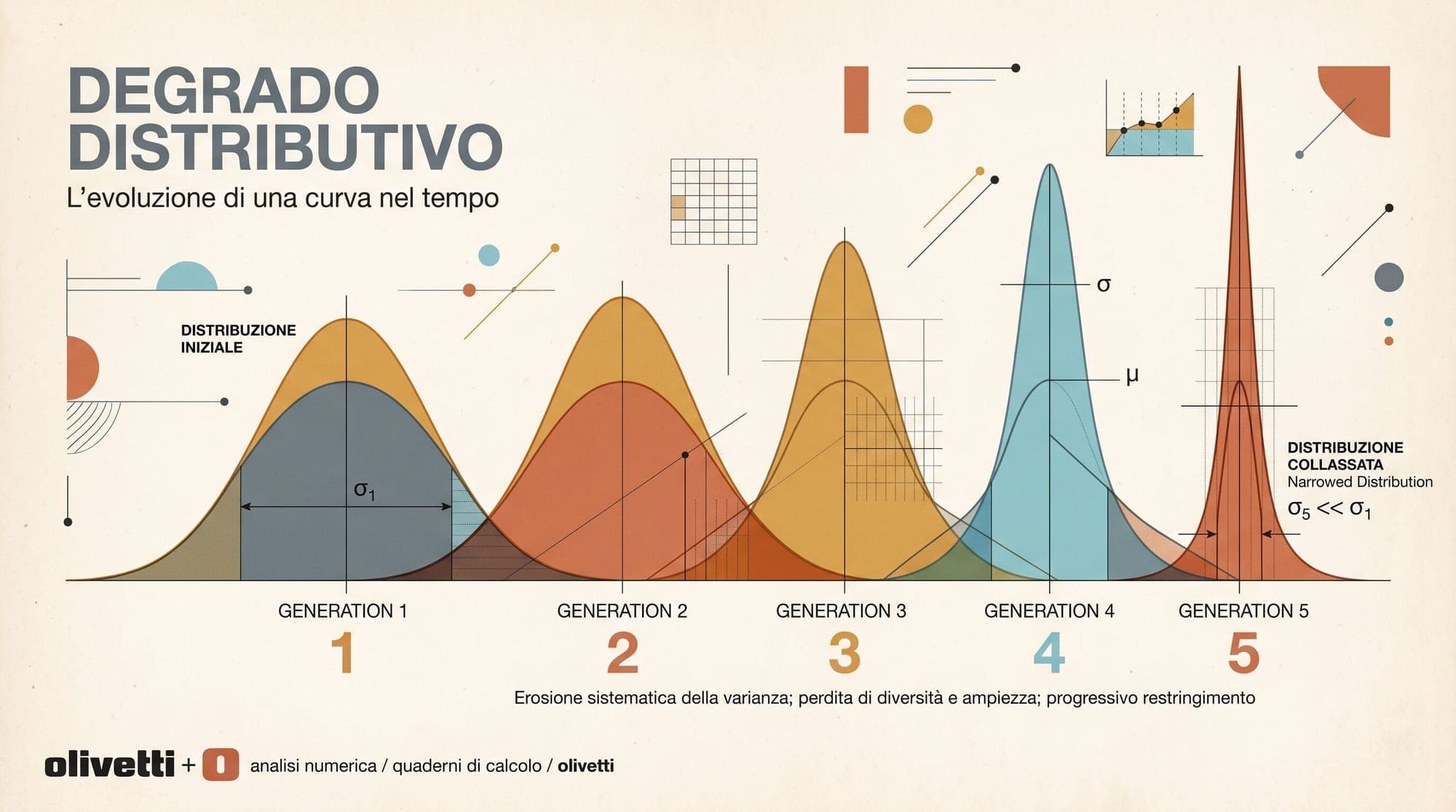
  15. Model Collapse in Large Language Models: How Recursive Training on Synthetic Data Degrades Neural Distributions

    As large language models scale and generate a growing share of digital text, code, and media, the web datasets used to train next-generation models increasingly consist of machine-generated outputs. When generative models are trained recursively on data produced by earlier model generations without sufficient ground-truth anchoring, they undergo a systematic degradation process known as model collapse. First formalized in foundational statistical literature and demonstrated across modern deep l

    AI
    7 min read
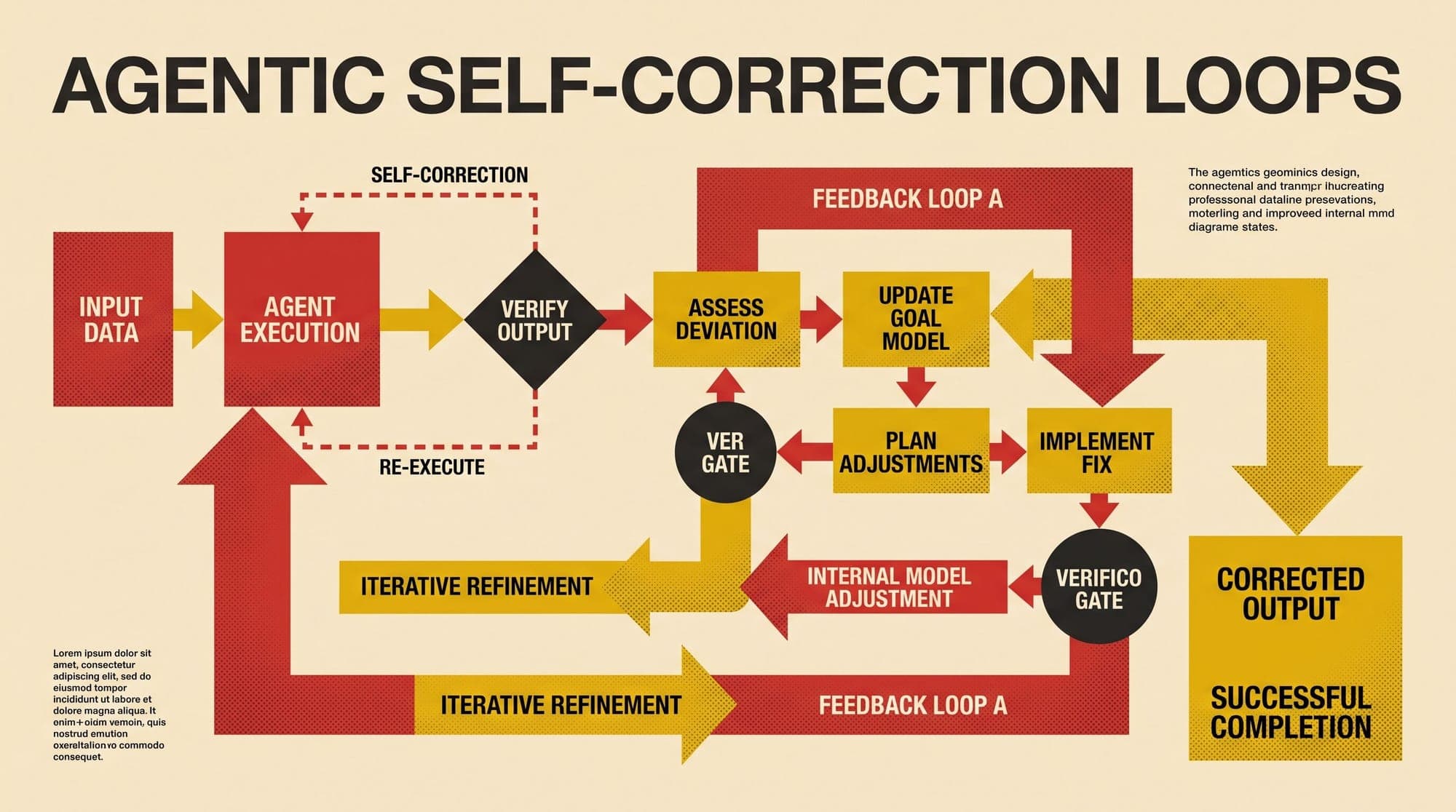
  16. Self-Correction and Reflection Loops in Production AI Agents: Architecture, Verification Oracles, and the Over-Correction Trap

    Autonomous AI agents frequently fail on initial generation when solving multi-step reasoning, code generation, and complex API orchestration tasks. To address initial execution failures, system architects widely deploy self-correction and reflection loops. However, the mechanism through which reflection operates determines whether a system converges on a valid solution or degrades into hallucinations and infinite loops. Recent research demonstrates a sharp division in reflection paradigms: whil

    AI
    6 min read
  17. The Logit Lens: How Direct Unembedding Decodes Intermediate Representations in Large Language Models

    Autoregressive large language models process input tokens through deep stacks of transformer blocks, generating a final probability distribution over the vocabulary at the final layer. For years, the intermediate computations occurring within these hidden layers were treated as opaque black boxes. Mechanistic interpretability research has demonstrated that modern transformer architectures operate through a structured, iterative refinement process across their residual stream. The logit lens and

    AI
    6 min read
  18. LLM Streaming in Production: Server-Sent Events vs. WebSockets, Incomplete JSON Parsing, and Backpressure Architecture

    Token streaming is the primary user experience mechanism in generative AI applications. By piping generated tokens to the client as they leave the transformer layers rather than awaiting full sequence completion, systems dramatically reduce perceived latency from tens of seconds to sub-second time to first token (TTFT). However, moving from batch request-response models to long-lived streaming pipelines introduces brittle failure modes across the networking stack. In production, engineering tea

    AI
    7 min read
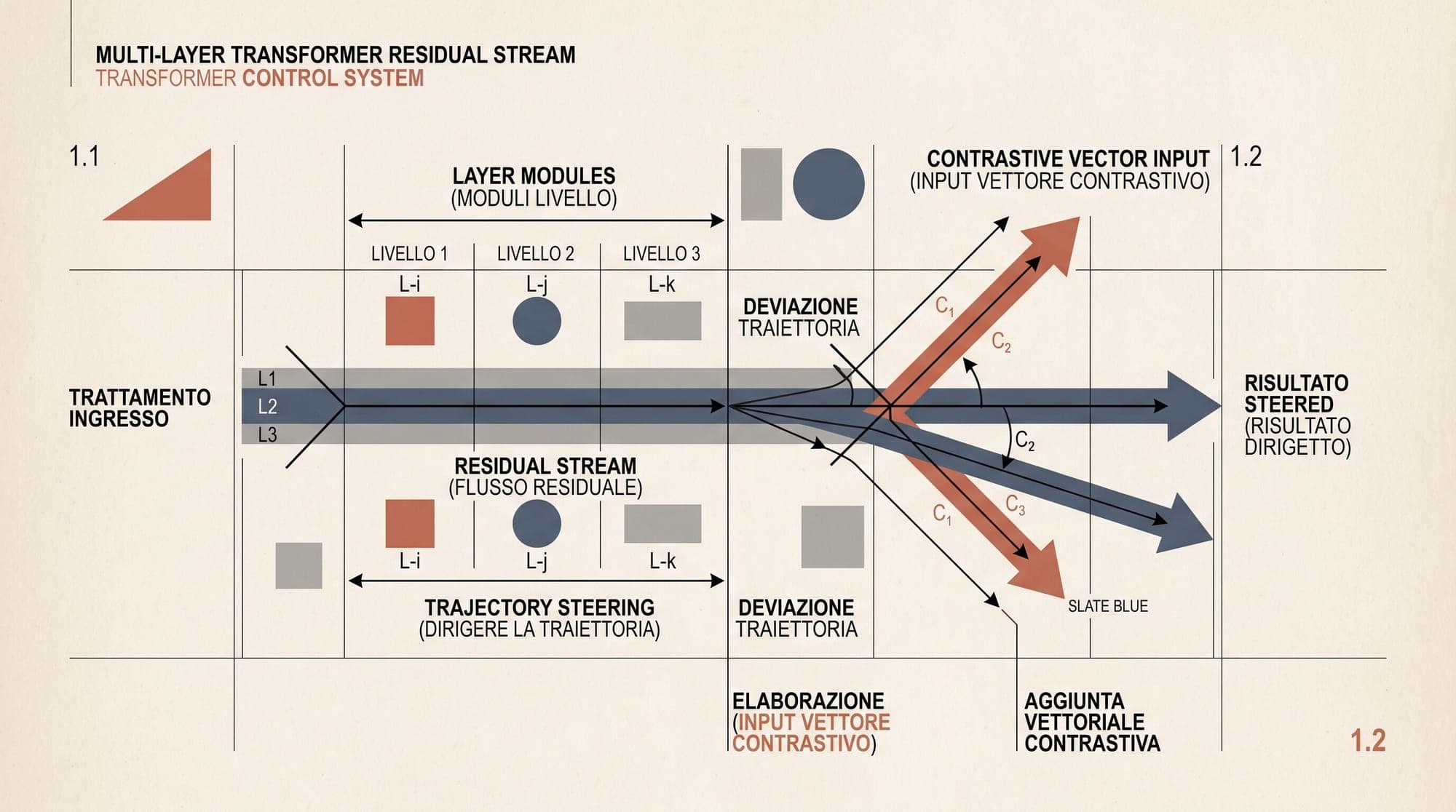
  19. Activation Steering and Representation Engineering: How Latent Vector Additions Control LLM Behavior

    Large language models operate by sequentially transforming token representations across dozens of transformer layers. While traditional alignment and behavioral steering rely either on prompt engineering in the input context or gradient descent during fine-tuning, an alternative paradigm has emerged: representation engineering and activation steering. By treating the transformer residual stream as a continuous semantic vector space, activation steering manipulates intermediate hidden states dur

    AI
    7 min read
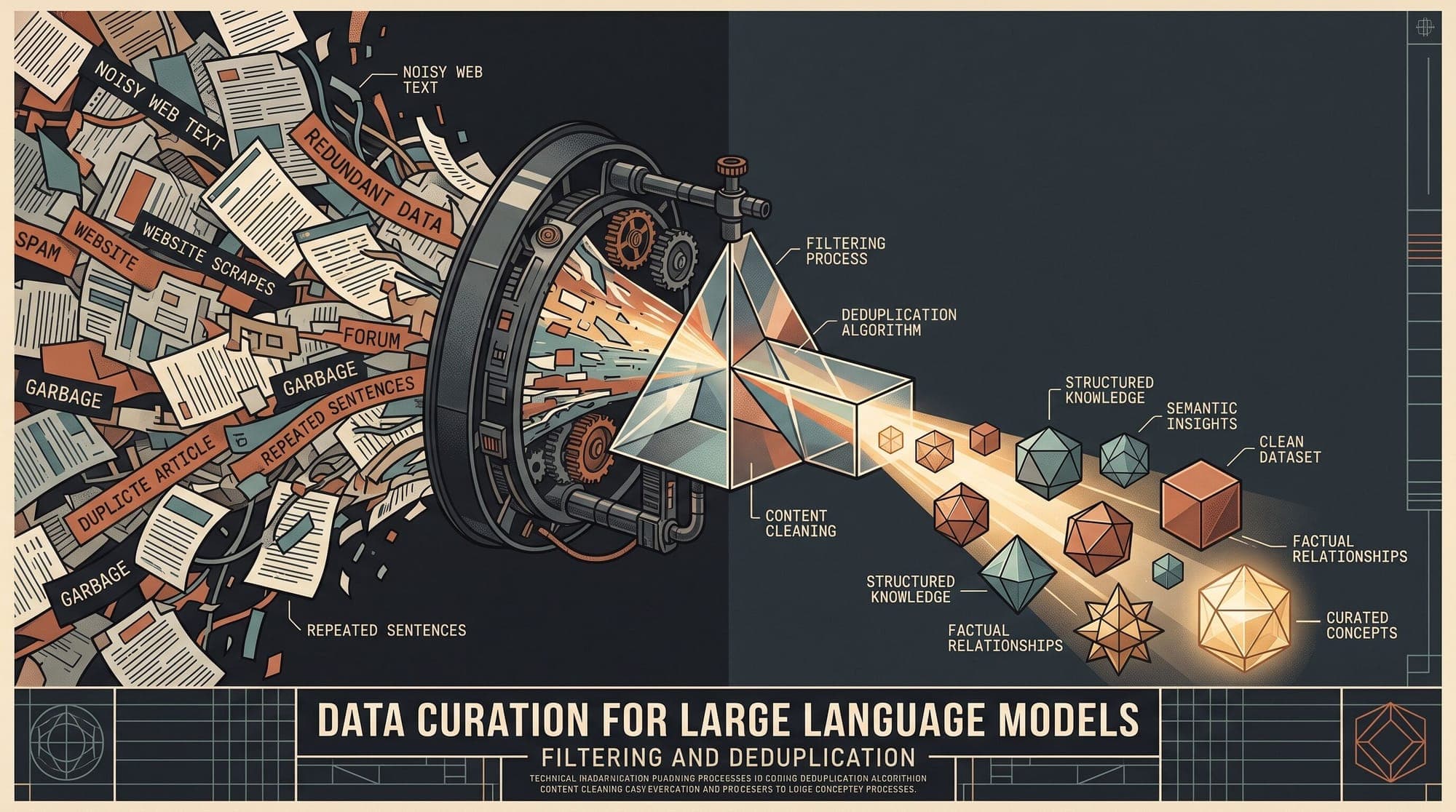
  20. Data Filtering and Deduplication in Large Language Models: How Heuristics, MinHash LSH, SemDeDup, and Quality Classifiers Curate Pre-Training Corpora

    Data Filtering and Deduplication in Large Language Models: How Heuristics, MinHash LSH, SemDeDup, and Quality Classifiers Curate Pre-Training Corpora Pre-training data quality governs the downstream reasoning, factual accuracy, and sample efficiency of foundation large language models (LLMs). While early pre-training efforts relied on uncurated or lightly processed dumps from web repositories like Common Crawl, modern state-of-the-art models depend on multi-stage data curation pipelines that fi

    AI
    10 min read