
Wall Street closed the books on the Jensen Huang affair on Monday. Washington has not opened theirs.
Nvidia's board reversed its own public position in six days; what is now public record is who made that happen. Across fresh accounts from Axios, the New York Times and the Financial Times, the throughline is the same: the decision to bring Huang back as CEO came from the White House, and the board followed.
How the call went down
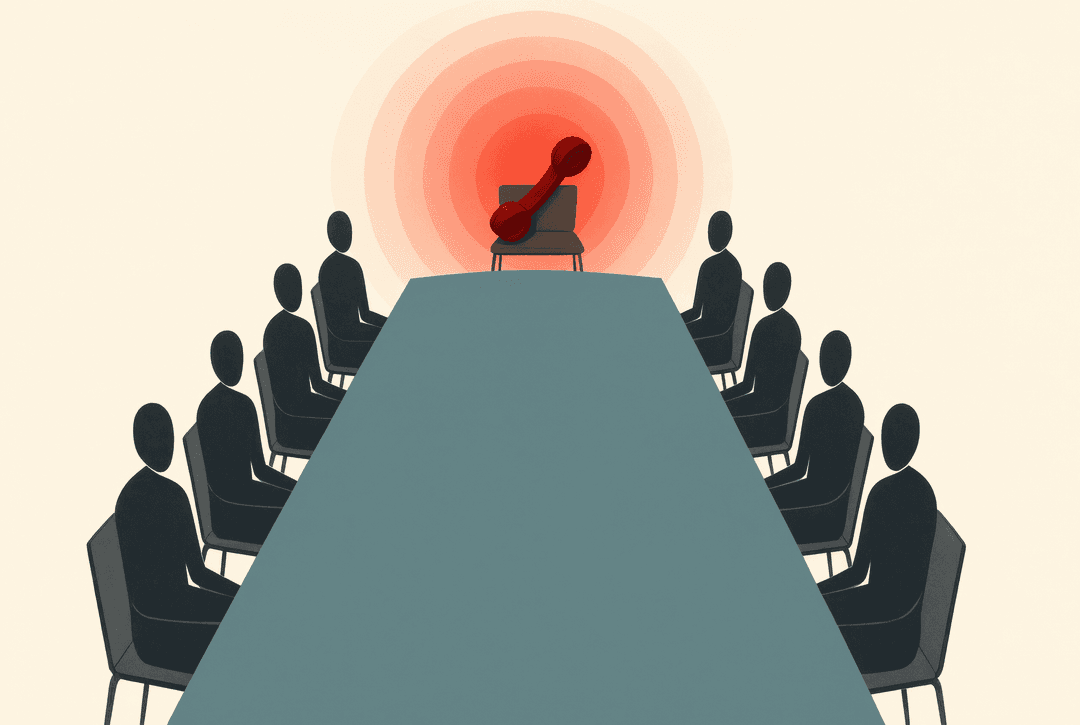
Six days after Nvidia chairman Mark Harvey Jones publicly ruled out Huang's return, the board unanimously reversed course. Axios reports that Trump joined the decisive Sunday board meeting by phone, and one source said the president pushed harder for the reinstatement than Huang himself did. Nvidia acknowledged it relied on assurances from "senior levels" of the US government that Huang posed no national security risk, even as its own investigation into the suspected Chinese espionage operation around Alice Huang remained unfinished.
The New York Times reports that Trump had JD Vance lead the push, including work to assure Nvidia's board that Huang was not facing criminal charges. The Financial Times describes a Silicon Valley war room that lobbied Trump and Vance directly: Travis Kalanick, hedge fund manager Gavin Baker, Altimeter CEO Brad Gerstner and Marc Andreessen. In other words, four private individuals with commercial exposure to Nvidia's future helped overrule a sitting board's public position.
The president's case for the defense
Trump defended the intervention in an hour-long CNBC interview, declaring Huang "exonerated" and saying the board "decided to do what we wanted them to do." According to the New York Times, Trump told CNBC he needed to act because of mounting market losses, and reported financial disclosures show Trump held more than $12 million of Nvidia stock in 2025. The president later shared a doctored version of his 2024 assassination-attempt photo with a bloodied Huang raising a red bra under an Nvidia flag, which is roughly the tone of the entire episode.
Two threads run under the intervention. First, distrust of intelligence agencies, left over from the Russia investigation: Trump brushed aside US intelligence warnings about suspected Chinese espionage at the heart of America's AI industry, and Huang's allies played to that skepticism, casting the Nvidia founder as a victim of the deep state and anonymous leaks. Second, the stock market as administration scoreboard: Nasdaq 100 futures hit their 7% overnight limit, and Nvidia shares rose nearly 31% on the news, adding hundreds of billions in value. Axios frames it as a de facto bailout of the AI industry, with the credibility of the US government staked on a CEO accused of lying about his relationship with a suspected Chinese spy.

What Congress does next
The market settled it; the Senate may not. Huang will face closed-door questioning next week alongside Nvidia general counsel Tim Teter, followed by a public Senate hearing on December 3. China hawks on both sides of the aisle, including in Trump's own coalition, treat the affair as a threat to the technological supremacy they have spent years building policy around. Nvidia's admission that its reinstatement decision leaned on government assurances while its internal probe was still open hands those members a subpoena's worth of questions: what did the "senior levels" actually verify, and when.
The reinstall took one phone call. The scrutiny it invited has a calendar now.
Sources
- Nvidia's one-man board: How Trump inherited Jensen Huang's scandal - Axios
- Sources: Trump had JD Vance lead the push to reinstate Jensen Huang - New York Times
- Inside the war room that lobbied Donald Trump to bring back Nvidia's Jensen Huang - Financial Times
- Trump's CNBC interview on the Huang reinstatement - CNBC
