
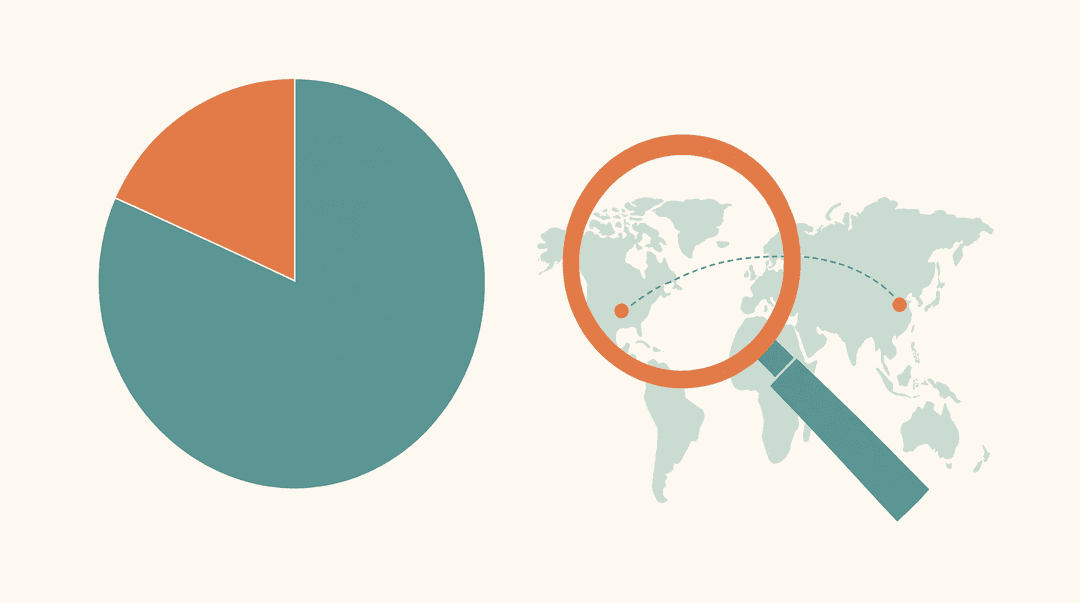
Nvidia's latest numbers show 69% of its sales going to US-headquartered customers, with China cut to 9%. That figure depends on how "American" a buyer has to be. A CBS News investigation found it can be very American indeed: registered in California, owned from Shenzhen.
The company is selling its most advanced chips to at least two US-based firms controlled by Chinese owners, CBS News reports, and some of those chips then get leased or sold onward to companies in Southeast Asia, records show.
The 10-week partner
RiCloud AI, a San Jose data center company, appears on Nvidia's public list of "preferred partners," a status that grants priority access to advanced chips, software and technical support. CBS News found the company had secured partner status by December 2025, just ten weeks after it was incorporated. Its parent is Yuxing InfoTech Investment Holdings, headquartered in Shenzhen and listed on Hong Kong's GEM board. Yuxing's CEO and co-owner, Cong Yu, holds a degree in National Defense Mobilization from the People's Liberation Army Command College, a Chinese military university, according to exchange filings CBS reviewed. Yu also serves as CEO of a related RiCloud company in California.
Nvidia has not responded to questions about what due diligence preceded the partnership. The US government has not accused RiCloud or Yuxing of any wrongdoing.
Where the chips went afterward is more concrete. This year RiCloud signed a $120 million deal to lease 300 Nvidia B300 servers to Agencia Comercial Spirits, a Taiwan-based whisky importer with $609,000 in 2025 net income that listed on Nasdaq this year as an AI company. After Li Qiang, previously chairman of data center firm Global Switch Holdings (dropped by Australia's Department of Defense in June 2024 over security concerns), became Agencia's chairman, the company committed between $488 million and $598 million to AI data center deals. The February press release calling the pivot "part of a broader review of strategic opportunities outside its core whisky business" is the clearest explanation on offer. Agencia did not respond to CBS.
Renaming after a blacklist
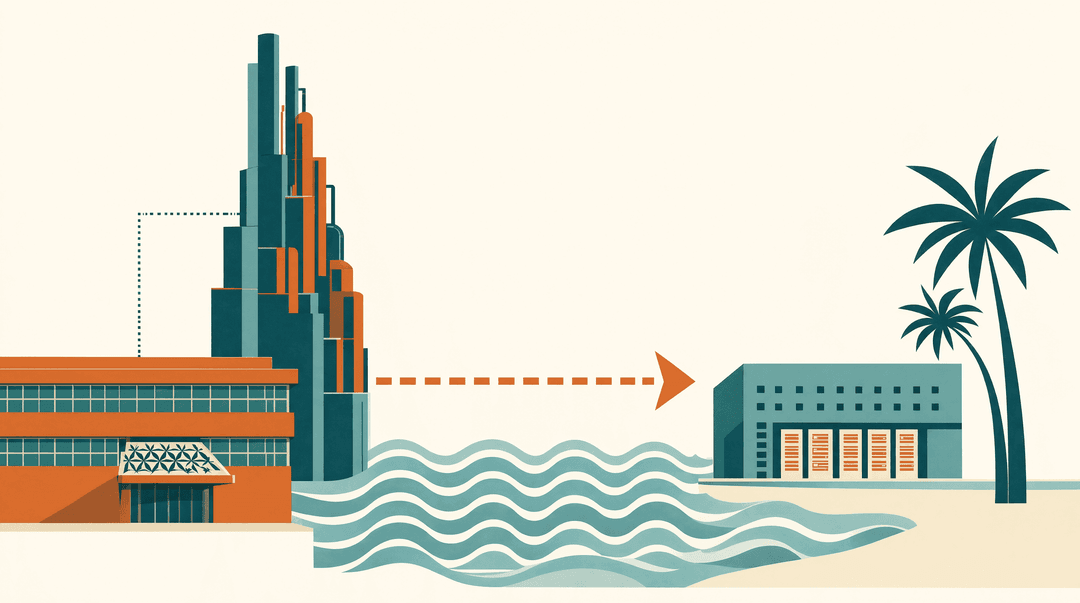
Nvidia's California firm Aivres carries its "elite" partner tier, the highest the marketplace offers. It was formerly called Inspur, the same name as its Chinese parent, CBS found. When Inspur group firms in China were added to a federal security blacklist in March 2023, the California subsidiary changed its name. Aivres itself is not blacklisted, and the relationship with Nvidia continued.
A New York Times analysis of trade records published in September put Aivres' exports of advanced technology to Southeast Asia at no less than $5.6 billion between April 2024 and February 2026, including roughly $3 billion of machines containing export-restricted Blackwell chips. Those servers went to two Malaysian companies, Megaspeed and Aolani, which provide cloud AI services to Alibaba and ByteDance. Megaspeed, at the center of the Jensen Huang and Alice Huang scandal, was blacklisted this week. Aivres did not respond to requests for comment.
The accounting of where a customer lives
The accounting question underneath the story is how Nvidia counts sales. The company used to break out regional revenue by customer billing location, which showed nearly half of 2024 chip sales billed to the US, 18% to Singapore and 13% to China. In November 2025 it switched to customer headquarters, a change that revealed an extra $7.9 billion of 2024 billings were from firms headquartered in China. Its filings state plainly that "the end customer and shipping location may be different from our customers' headquarters location." Under export controls, end use and end user are what matter. Under the 10-K, headquarters is what counts.
Senator Elizabeth Warren demanded Nvidia's board answer questions about export-control compliance this week, and Senator Chris Coons, next in line to chair the Senate Foreign Relations Committee, is poised to investigate circumvention of the chip bans and alleged Chinese espionage connected to Nvidia, CBS reports. C4ADS analyst Mishel Kondi called the findings "a wake-up call for accountability" and for private companies to map where they are exposed.
The chain-of-custody problem is structural. A preferred-partner badge checks a company's registration, not its ownership, and a shell can incorporate in ten weeks. The smuggling cases reinforce the point: Nvidia elite partner 2CRSi lists Topmost Corp, the firm of indicted alleged smuggler Greg Lui, as an authorized reseller, and 2CRSi's US revenue collapsed from $201 million to $4.7 million this year. Nvidia is not accused of knowledge in that case, and the Justice Department's indictment does not name it. What the pattern shows is that "US-based buyer" was never a security classification. Export-control politics is turning it into one, whether Nvidia's partner directory is organized for that job or not.
Sources
- 2 California companies are buying Nvidia's most advanced chips. Those companies are actually Chinese-owned, CBS News
- Nvidia 10-K, SEC EDGAR
- Agencia Comercial Spirits 6-K, SEC EDGAR
- Yuxing InfoTech disclosure, HKEX
- California man arrested for smuggling more than $300 million of export-controlled computer servers to China, DOJ
- Nvidia marketplace partner listings
