

Nvidia has told its server-building partners to stop shipping AI servers to customers in Malaysia, Singapore, Thailand and Indonesia, according to a Financial Times report published Thursday, citing three people with knowledge of the matter. Manufacturing partners that package Nvidia chips into complete systems, including Dell and Supermicro, told buyers in those four countries that the chipmaker will not allow their orders to ship, the FT said. Nvidia, Dell and Supermicro did not immediately respond to requests for comment relayed by Reuters, and the report did not say whether the halt is permanent or a compliance pause.
That distinction matters, because the pauses started as supplier caution. Nikkei Asia reported on November 20 that at least two of Nvidia's server partners had independently suspended deliveries to Southeast Asia. One halted all shipments to the region and stopped taking orders from new clients there. Another put deliveries on hold on the advice of its own legal department. A third server maker kept shipping while applying for export licenses on orders placed after November 19. If the FT's account holds, the freeze is no longer OEM risk management. Nvidia is gating its own channel.

What triggered it
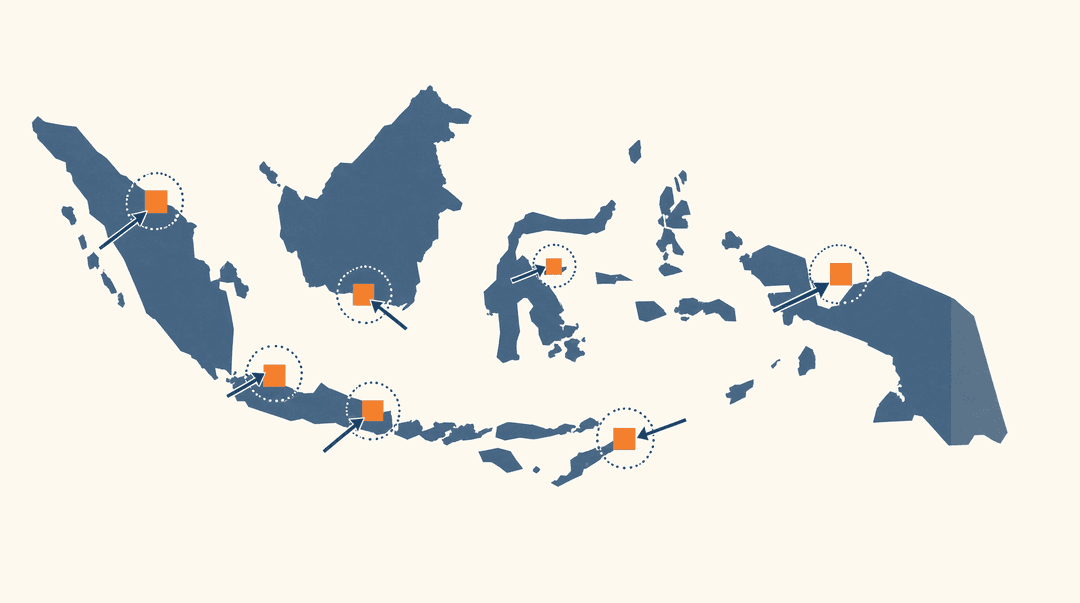
The trigger is the interim final rule the Commerce Department issued on November 16, the first rewrite of the chip export regime since the Jensen Huang controversy broke. Per Fortune's readout, it does two things. First, it requires export licenses to ship advanced AI chips to data centers in five named countries: Indonesia, Malaysia, Singapore, Thailand and Brazil. Second, it requires a license for any large data center operator, anywhere in the world, that grants computing access to companies headquartered in China, closing the remote-access loophole that let Chinese firms rent foreign racks instead of buying banned chips. Operators already serving such customers got a 90-day transition window.
Nobody is banning the sales outright. The rule adds a checkpoint, and checkpoints in the export world behave like checkpoints in any supply chain: the goods stop moving while the paperwork catches up. Server suppliers were already bracing for exactly that. "We will have to ask our clients to provide more information before we apply for an export license from the U.S. government," an executive at one supplier told Nikkei, adding that the real fear is being "left with too many expensive GPU boards" as inventory. A GB200 NVL72 rack sells for nearly $5 million and B200 units start around $500,000, per the same report. Sitting on a room full of those while a license application sits in a queue is a financing event, not a logistics event.
Why the numbers are hard to read
Southeast Asia's exposure to Nvidia's revenue is documented but slippery. Under its old billing-address accounting, Singapore accounted for 18% of Nvidia's total revenue in fiscal 2025, Lianhe Zaobao notes; after the company switched to attributing sales by customer headquarters, Singapore vanished from the regional breakdown entirely, which does not mean the business disappeared. It does mean that a four-country shipment freeze lands somewhere in the books and nobody outside the company can yet say where.
The regulatory backdrop is equally unsettled. Commerce added Megaspeed, the Singapore server firm at the center of the diversion allegations, and six related entities to the Entity List on November 23. The SEC has an early-stage accounting inquiry open at Nvidia. Malaysia has required permits to export or transit US-made high-performance AI chips since July 2025 and seized 30 servers at Kuala Lumpur airport in October, the fifth case that year tied to one syndicate, per Yahoo Finance's roundup. Singapore's government has said it will help Washington police diversion but will not itself enforce US export controls.
What to watch
Three tells, in order. First, whether Nvidia or Dell and Supermicro confirm the instruction publicly; nothing was on the record as of the FT report. Second, license throughput: if BIS approvals start clearing in weeks, this reads as the standard post-rule stutter that earlier supplier pauses were. If they don't, Southeast Asian data center projects that were sold on fast access to Blackwell-class hardware, and financed against those deliveries, have a repricing problem. We covered the lending freeze last weekend: banks have already put a $6.6 billion data-center loan for Malaysian facilities on hold over the same rule. A supplier-side shipment stop, if it holds, moves the freeze from the loan desk to the loading dock.
Sources
- Techmeme: Nvidia tells manufacturing partners to halt AI server shipments to Malaysia, Singapore, Thailand and Indonesia (Financial Times)
- The Edge Malaysia / Reuters: Nvidia halts chip shipments to Southeast Asia, FT reports
- Nikkei Asia: Nvidia server suppliers halt Southeast Asia shipments over US curbs
- Fortune: The Nvidia scandal fuels tougher China chip rules as Commerce targets Singapore and Malaysia
- Lianhe Zaobao: Nvidia suppliers halt shipments to Southeast Asia as US tightens chip controls
- Yahoo Finance: Asia's chip smuggling fears put Malaysia, Thailand and Singapore in the US firing line
