

Katelyn Lesse, who leads platform engineering at Anthropic, says roughly 80% of the pull requests opened by AI agents on her team were never read line by line by a human, including during the five-month rewrite of the Messages API from Python to Rust that shipped without a single Rust expert on the team.
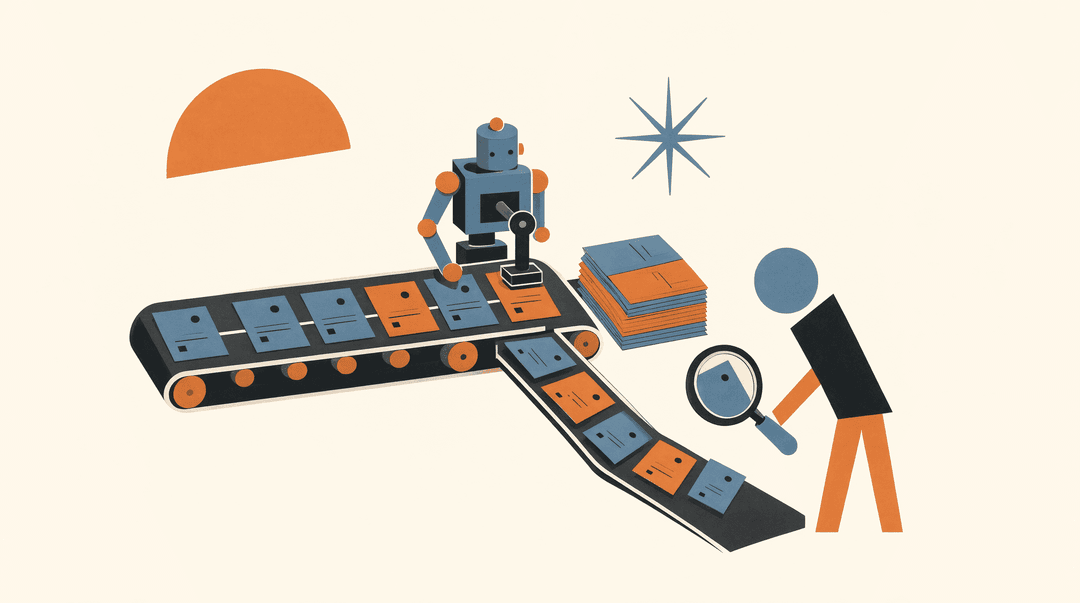
"Engineers looked closely at only about 20% of the generated code," Lesse said on The Pragmatic Engineer podcast, published this week. The load-bearing 20%, the parts of the system where failure is expensive, got deeper attention. Her justification reframes what review means when agents write almost everything: "As long as you can really boil something down to make it verifiable in some way, then you don't have to look at every single line of Rust code that's getting written."
The episode is the fullest public account yet of how engineering operates inside a frontier lab that went public last week with a market capitalization around $1 trillion and a fraction of the headcount of comparably valued companies.
Verification replaced review
The Rust migration itself was detailed the same day in an Anthropic engineering post: the Messages API, which serves every Claude token and handles authentication, tokenization, billing and safety checks, was forked and rewritten in Rust while shadowing live production traffic, with the old Python system kept as a fallback until the two systems' outputs matched on 99.6% of compared requests, a divergence rate the post says fell steadily from April to August. The rewrite cut CPU per request by about 70%, memory per request by more than 80%, and median time-to-first-token by 20%, at a traffic level roughly 1,800 times early 2024 volumes.
Lesse's account adds the org-practice layer. The team had picked Go for new services a year earlier precisely because its engineers could read it; by 2026 it chose Rust, a language nobody in the room knew, because Claude knew it well enough. The existing Python API became the test harness, and Claude helped engineers learn Rust during the port.
Review is now triaged by another agent. Anthropic runs a code-review classifier across all pull requests that decides three things: whether a change needs a human at all (mechanical, low-risk edits such as an SDK version bump or switching to a newer model skip human review entirely), how many human reviews the risk warrants, and which team should review. Flaky-test fixes go further: one Claude writes the fix, another reviews it, then it is merged and deployed with no human in the loop.
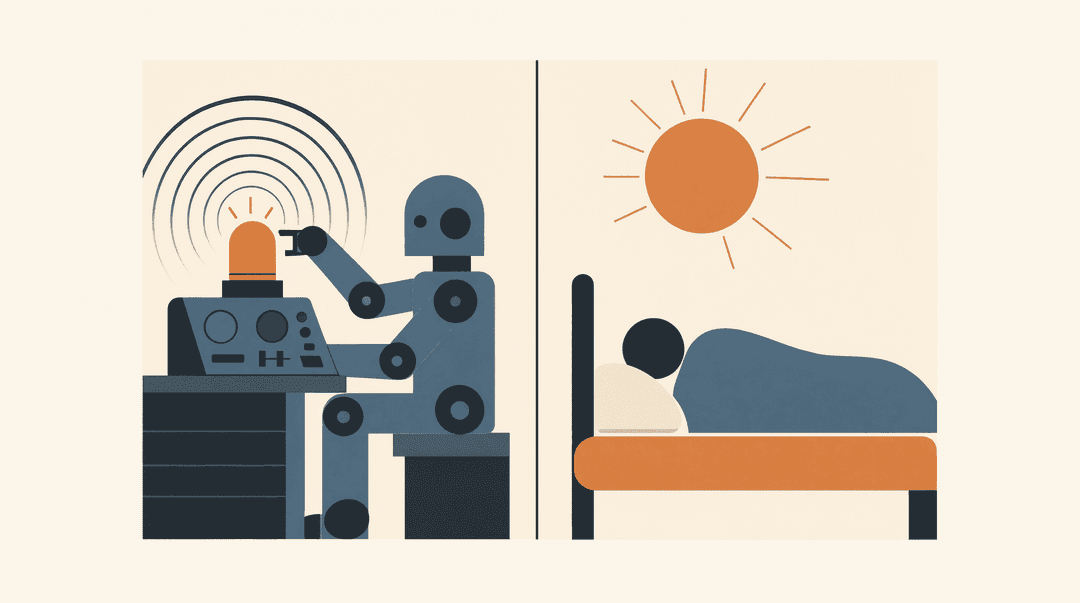
The same pattern reaches on-call. For months a Claude agent shadowed the API team's paging rotation, learning which alerts are real and which are noise. It now categorizes incoming alerts before any human is paged. The stated end state is handling incidents without waking anyone; Lesse said the team is not there yet.
Hiring and promotions change with it
Lesse's team, about 200 engineers as of this summer, owns the Claude API and the infrastructure behind Claude Code and Claude Desktop. Onboarding there is "talk to Claude": the model is wired to the codebase and internal systems, and new engineers ask it to explain architectures, sometimes generating interactive tutorials on request.
Interviews are moving too. The team phased out its traditional coding round after strong candidates, who aced everything else, kept failing it, because they no longer write code by hand. There is no set replacement yet; the team is experimenting with interviews conducted alongside coding agents. Design and system-deep-dive interviews are unchanged.
Performance reviews shifted as well. With year-long projects now compressible into days or weeks, "time to complete a project" became meaningless as a promotion signal, so Anthropic evaluates measured impact instead: CPU saved, latency reduced, incidents avoided.
What did not change is arguably the point. Teams are still two-pizza sized, five to eight people, each owning a system and staffing its on-call rotation; planning and cross-team alignment take about as long as they did pre-AI, and the average engineer spends more time coordinating than implementing.
Lesse addressed the engineers for whom this is an identity crisis, echoing her recent blog post on the problems agents leave behind: "You and your skills can be the difference in whether or not agentic infrastructure-related problems get tackled, and whether multiagent systems can solve the world's hardest problems. So much of this problem space is wide open for new solutions."
Sources
- The Pragmatic Engineer: "How Anthropic builds software in 2026 with Katelyn Lesse"
- Anthropic: "Migrating the Messages API to Rust"
- Business Insider: Katelyn Lesse on her team's shift to AI coding at ObservabilityCON
- Latent Space: "How Anthropic ships the #1 LLM in the World"
