Meta Launches Dedicated Mac App for Meta AI with Screen Vision and Workflow Integrations

Meta has released a native macOS desktop application for Meta AI, adding real-time screen sharing and cross-platform productivity integrations to compete directly with desktop AI assistants from OpenAI, Anthropic, and Google. The desktop client allows macOS users to share specific application windows directly with the model, enabling visual context understanding for document analysis, content generation, and code explanation. The application also introduces system-wide voice dictation across ma

1 min
Meta Launches Dedicated Mac App for Meta AI with Screen Vision and Workflow Integrations

Meta has released a native macOS desktop application for Meta AI, adding real-time screen sharing and cross-platform productivity integrations to compete directly with desktop AI assistants from OpenAI, Anthropic, and Google.

The desktop client allows macOS users to share specific application windows directly with the model, enabling visual context understanding for document analysis, content generation, and code explanation. The application also introduces system-wide voice dictation across macOS apps.

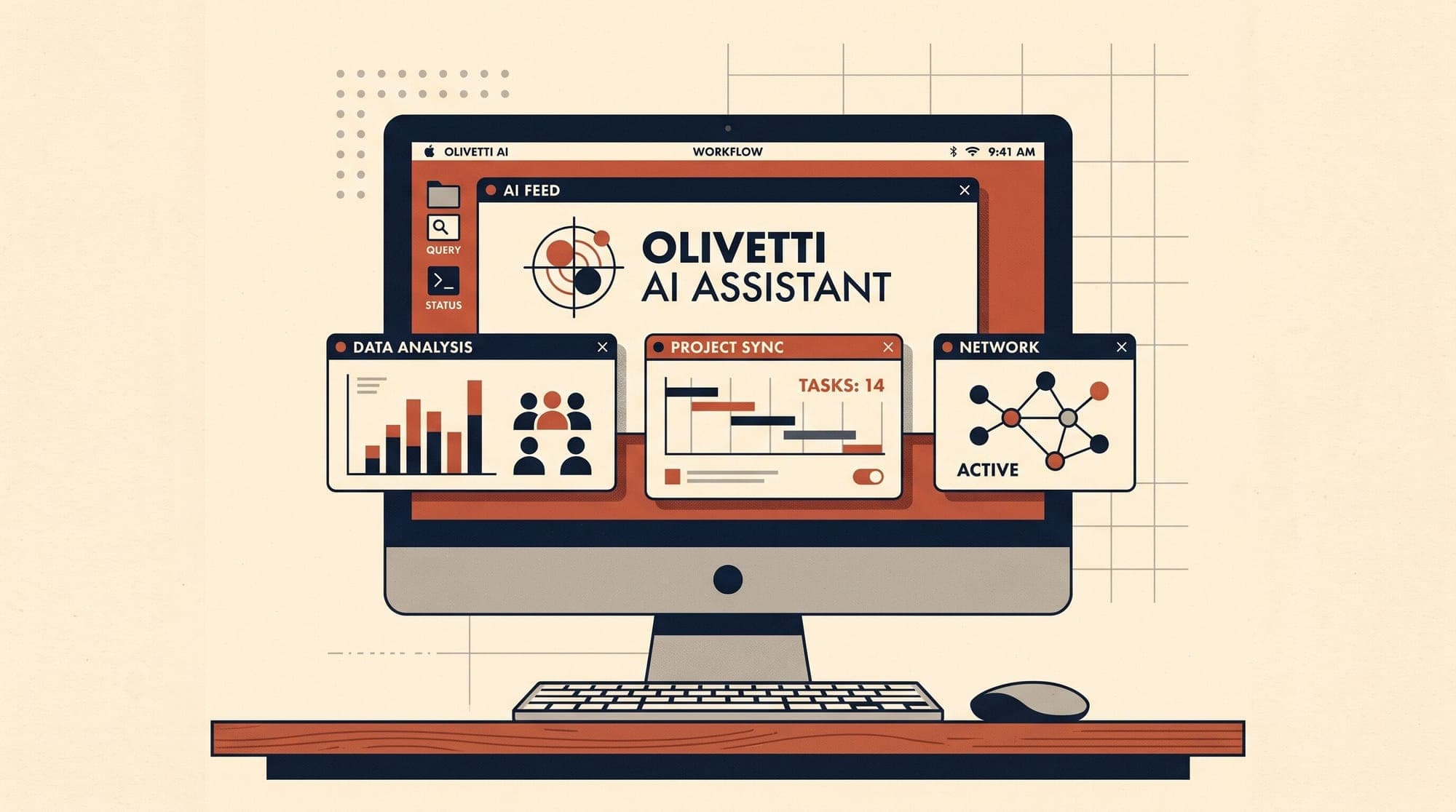
Meta AI macOS Desktop Architecture and Window Sharing Context

Contextual Vision and Desktop Capabilities

The new macOS client brings several core workflow capabilities:

  • Window Context Sharing: Users can select active application windows to provide visual context directly to the model. The assistant can extract data, answer queries about on-screen material, and assist in drafting without manual copy-pasting.
  • System-Wide Dictation: Integrated voice input supports speech-to-text transcription directly into third-party desktop applications.
  • Workspace and Account Integrations: The desktop client links directly with Google Workspace (Docs, Sheets, Slides) as well as Meta-native creator and business tools, including Instagram, Facebook accounts, and Meta Ads Manager.
  • Automated Business Reporting: Meta added capabilities for the assistant to query social metrics, generate structured presentation decks, build spreadsheets, and schedule recurring performance summaries.

The release brings Meta into closer competition with macOS desktop implementations from OpenAI (ChatGPT with desktop integration), Anthropic (Claude Code and Cowork), and Google (Gemini desktop client).


Sources

Written by

More to read

  • Data Filtering and Deduplication in Large Language Models: How Heuristics, MinHash LSH, SemDeDup, and Quality Classifiers Curate Pre-Training Corpora

    Data Filtering and Deduplication in Large Language Models: How Heuristics, MinHash LSH, SemDeDup, and Quality Classifiers Curate Pre-Training Corpora Pre-training data quality governs the downstream reasoning, factual accuracy, and sample efficiency of foundation large language models (LLMs). While early pre-training efforts relied on uncurated or lightly processed dumps from web repositories like Common Crawl, modern state-of-the-art models depend on multi-stage data curation pipelines that fi

    1 min
  • Agentic Search and Multi-Hop Retrieval in Production: Query Decomposition, Evidence-Gap Loops, and Synthesis Architecture

    Standard retrieval-augmented generation (RAG) relies on a single-pass paradigm: an incoming prompt is embedded, matched against a vector or hybrid index, and the top-k passages are injected into the generator's context window. This linear workflow functions reliably for direct fact retrieval, but it breaks down on complex research tasks. When a query requires chained dependencies, comparative analysis across isolated documents, or multi-step reasoning, single-shot retrieval fails because the req

    1 min
  • Supervised Fine-Tuning in Large Language Models: Loss Masking, Sequence Packing, and Alignment Dynamics

    Pre-training endows a large language model with broad linguistic patterns, world knowledge, and reasoning primitives by predicting the next token across trillions of uncurated web tokens. However, a raw base model remains a document completer rather than an interactive assistant. Given a prompt such as "Explain how a compiler works," a base model is as likely to generate additional exam questions or web navigation headers as it is to answer the query. Supervised Fine-Tuning (SFT), frequently te

    1 min

