
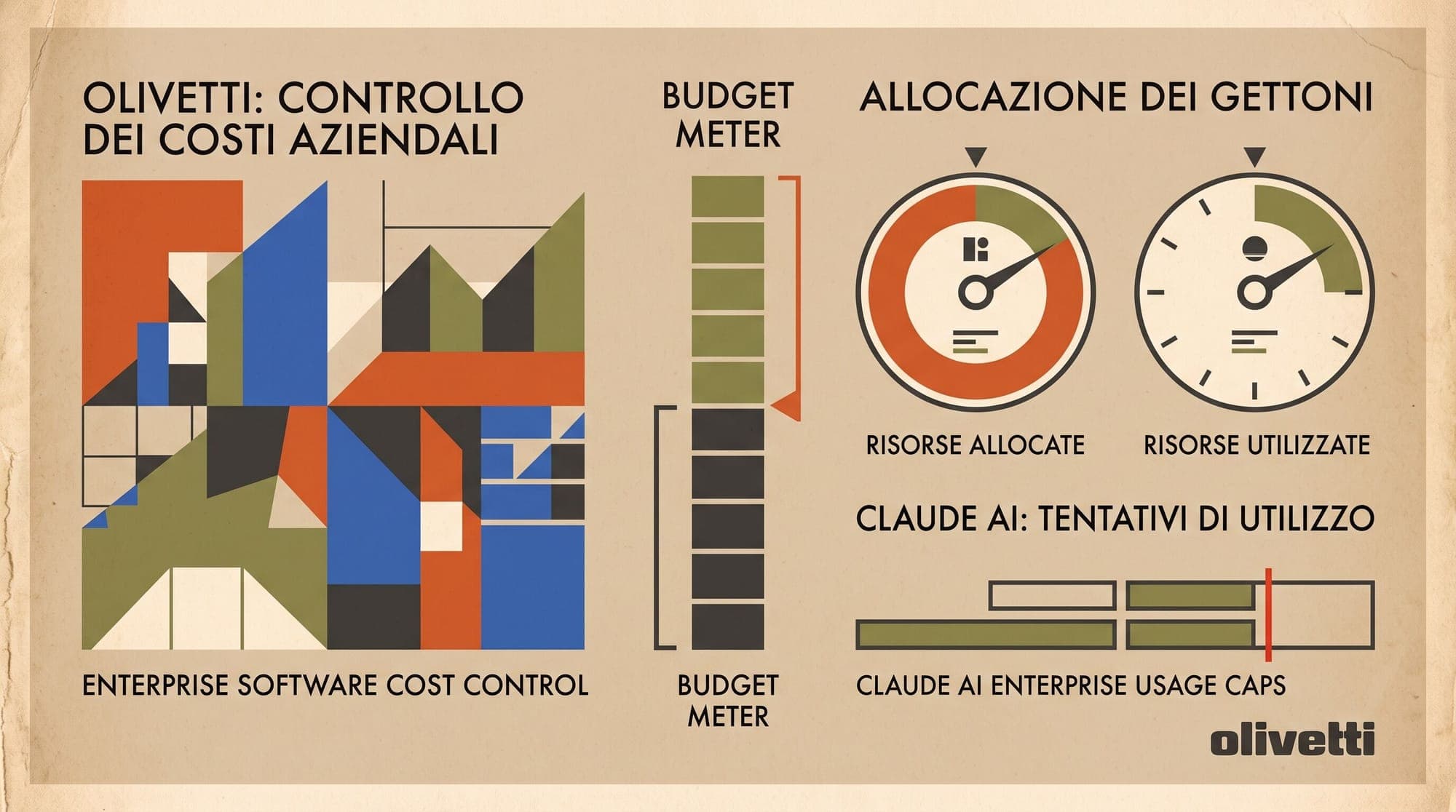
Global IT services and consulting firm Accenture has instituted a centralized spending cap on employee access to Anthropic's Claude, limiting central corporate funding to $29 per month per worker. The move follows internal spending reviews that revealed heavy users, particularly software engineers and consultants utilizing Anthropic's agentic coding tools, were running monthly inference bills between $500 and $1,000 per seat.
Policy Structure and Budget Shifting
Effective October 1, 2026, the new policy establishes a baseline monthly allowance covering standard General tier enterprise accounts. Employees whose workflows require higher token consumption, such as those building automated AI accelerators or operating agentic CLI tools like Claude Code, can no longer rely on central corporate coverage for overages.
Under the updated guidelines, additional consumption beyond the $29 central allowance must be explicitly charged to specific client engagement codes (Work Breakdown Structure) or departmental budgets. Premium accounts that feature higher weekly token ceilings ($250 per week) require formal project allocation and role-based review before approval.
Fixed-Price Contracts and Margin Pressure
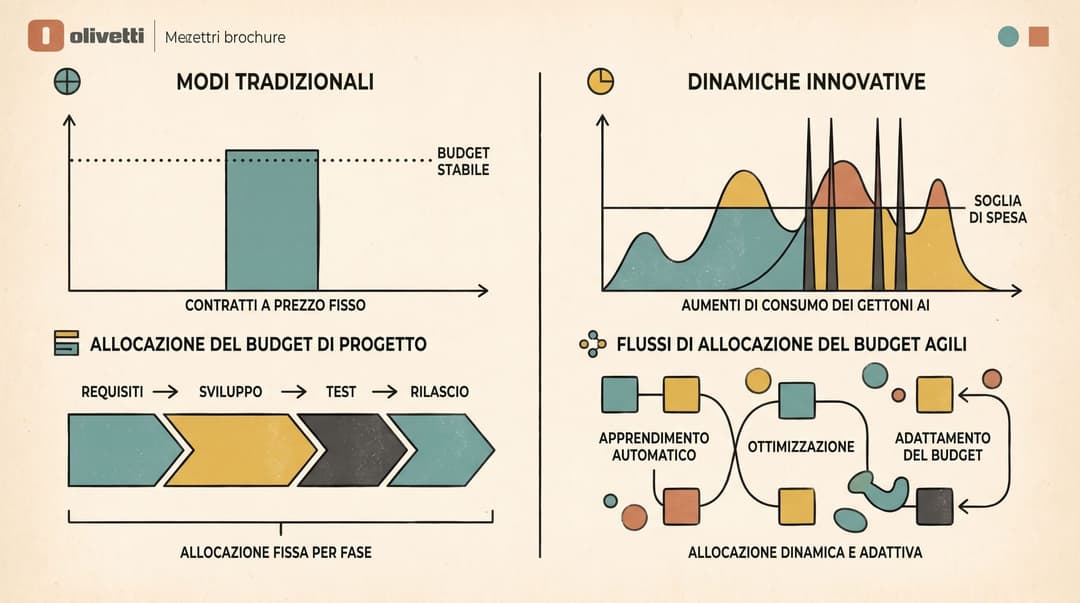
The spending cap highlights an operational friction point between usage-based AI inference pricing and traditional enterprise IT services delivery models. Fixed-price contracts represent more than 65% of Accenture's total bookings. On fixed-price client engagements, unanticipated compute and API expenses cannot be passed through to the client and instead directly reduce the firm's operating margins, which management guided to target between 15.9% and 16.1% for fiscal 2027.
By shifting variable API charges from centralized general overhead to individual project billing codes, the policy enforces cost attribution directly against project profitability metrics.
Broader Industry Restrictions
Accenture's policy reflects an accelerating trend among enterprise technology firms seeking to contain developer API spending on third-party models. Both Microsoft and Meta have recently implemented comparable policies to monitor or curb internal employee spend on external frontier models like Claude, encouraging teams to optimize prompts, cap per-user token consumption, or migrate workloads to internally hosted model infrastructure.
Update, Oct. 28, 2026: Anthropic made pooled group budgets generally available for Claude Enterprise. They give a group one shared monthly budget on top of each member's own spend limit. Our post on Claude Enterprise smart reports and pooled budgets explains how they work.
Update, Nov. 11, 2026: On Nov. 10, Cognizant launched a managed service for Claude that it says gives clients more predictable AI spend. Our post on Cognizant's Claude group explains it.
Separately, sources told WIRED in October that an Accenture employee had linked a Defense Department system to a personal Claude Code account. Read our report on the possible DOD credential leak.
What the Internal Memo Says
404 Media first reported the policy on October 15, 2026. The memo is titled "Claude Enterprise Users: Important Updates to Licensing and Usage Costs," according to 24/7 Wall St, and states that "all costs are consumption-based." Accenture has not published it or said how many employees are affected.
The memo also makes access conditional. "Providing a WBS and obtaining a license does not guarantee indefinite or ongoing access to Claude," it reads, as quoted by 24/7 Wall St. Another passage, quoted by TechRadar, says: "License allocations are reviewed periodically, and access may be reassessed based on business priorities, role requirements, usage patterns, and evolving workforce needs." One employee lost access entirely, according to the reporting.
The cap applies to General accounts. TechRadar reports that many heavy users are trying to move to Premium accounts to get around it, though Premium is much more expensive. One employee told 404 Media that Claude Code had been central to building an AI accelerator for Accenture's own clients.
How Accenture Explains It
Accenture frames the change as matching tools to work rather than cutting AI. "Our approach today is to provide the right tool for the right work, and we continue to invest in AI capabilities, skills and enablement that deliver greater value for clients and our own organization," a spokesperson said. TechRadar describes the $29 figure as a soft limit, since teams and projects can still fund more usage when it is justified.
The timing stands out. On the company's October 1 earnings call, CEO Julie Sweet said falling token costs will "enable companies to use AI in more places and at scale." She also called the Anthropic relationship non-exclusive. Accenture reports nearly 110,000 AI and data professionals and roughly 814,000 employees in total, which is why unbounded per-seat token spending is hard to absorb.
Why a Per-Seat Budget Breaks on Agentic Tools
A $29 monthly allowance sits near the price of a consumer chat subscription. Agentic coding tools work differently. They run long, multi-step tasks on their own and bill by the token, so a single heavy user can spend roughly 17 to 34 times that amount in a month, as the $500 to $1,000 figures show. Moving overages onto WBS codes makes each project owner decide whether that spend pays for itself.
Analysts at 24/7 Wall St note that the policy is one data point, reported indirectly. Total spending, the number of staff affected, and whether other AI tools face similar limits are still unknown. For AI vendors, tighter controls at the largest IT services firms could slow seat-based enterprise growth, even if targeted use on proven client work continues.
Sources
- 404 Media: Accenture Tells Employees They Can Now Spend Only $29 on Claude Per Month
- Forbes: Accenture Clarifies Claude Spending Limits As AI Cost Questions Grow
- TechRadar: Accenture employees will only be able to spend $29 on Claude per month
- 24/7 Wall St: Accenture Just Capped Employees' Claude Spending at $29 a Month
