Author / page 51

axc

Edited by the llms.blog desk.

1230 articles

Articles, page 51

  1. Constitutional AI and RLAIF: How Natural Language Principles and Automated Critiques Scale LLM Alignment

    Early alignment frameworks for large language models relied almost entirely on Reinforcement Learning from Human Feedback (RLHF). While RLHF transformed raw base models into usable assistants, the approach faces structural scaling bottlenecks. Collecting tens of thousands of high-quality human preference annotations is slow, expensive, and logistically complex. Furthermore, human annotators frequently disagree on nuanced safety boundaries, suffer psychological fatigue when reviewing harmful outp


    AI
    5 min read
  2. Snowflake Adds Dynamic Model Routing to Cortex AI Gateway to Cut Inference Spend

    Snowflake has introduced dynamic model routing into its Cortex AI Gateway, allowing enterprise developers to automate large language model selection instead of binding agentic workloads to static endpoints. According to internal benchmarks reported by the company, automated routing can reduce token expenditure by up to 3x across mixed workloads by directing routine queries away from expensive frontier models toward lightweight architectures. The Inference Cost Bottleneck in Agentic Workflows

    AI
    2 min read
  3. GraphRAG vs. Vector RAG in Production: Architecture, Community Summaries, and Cost-Latency Trade-Offs

    Retrieval-Augmented Generation (RAG) has become the standard architecture for grounding Large Language Models in external knowledge bases. However, production implementations frequently encounter structural limits when relying entirely on naive vector search. Standard Vector RAG fragments documents into arbitrary chunks and retrieves top-k passages via cosine similarity in embedding space. While effective for localized fact retrieval, this approach struggles with global, corpus-wide synthesis an

    AI
    5 min read
  4. Sparse Autoencoders in Large Language Models: How Dictionary Learning Unpacks Superposition and Neural Monosemanticity

    Deep neural networks have long been treated as uninterpretable black boxes. In transformer language models, individual neurons in the residual stream and multilayer perceptron (MLP) layers rarely map to singular, human-understandable concepts. Instead, individual neurons exhibit polysemanticity: a single neuron might fire for Python syntax, medical terminology, and Korean dialogue without an obvious shared semantic foundation. Mechanistic interpretability research explains this phenomenon throu

    AI
    5 min read
  5. DOJ Investigates Andreessen Horowitz over Competing Board Seats in AI Data Startups

    The United States Department of Justice (DOJ) has opened an antitrust investigation into venture capital firm Andreessen Horowitz (a16z), examining whether the firm violated federal competition laws by placing partners on the boards of direct competitors in the enterprise AI and data infrastructure market. The investigation, reported by Bloomberg, centers on board representation at Databricks and Fivetran. Both companies provide data ingestion, management, and pipeline infrastructure essential

    Policy
    2 min read
  6. OpenAI Launches Dedicated ChatGPT for Teens with Study Modes and Model Spec Guardrails

    OpenAI has introduced ChatGPT for Teens, a dedicated environment for users aged 13 through 17 that combines educational scaffolding tools with reinforced safety constraints and parental controls. The rollout automatically routes users into the teen environment if they register as 13 to 17 years old or if OpenAI's automated age-prediction classifier estimates they fall into that demographic. Children under the age of 13 remain prohibited from the platform under OpenAI's standard terms of service

    OpenAI
    2 min read
  7. LLM Serving Frameworks in Production: SGLang vs. vLLM vs. TensorRT-LLM Architecture, Memory Management, and Throughput Trade-Offs

    Serving large language models in production has moved beyond simple iteration-level scheduling. While basic continuous batching solved the fundamental problem of GPU starvation during autoregressive decoding, modern production demands have shifted the engineering bottleneck toward KV cache memory reuse, compilation overhead, and structured generation efficiency. Three dominant serving runtimes currently lead high-throughput deployments: vLLM, SGLang, and NVIDIA TensorRT-LLM. Each framework appr

    Inference
    4 min read
  8. Test-Time Compute Scaling in Large Language Models: How Search, Verification, and Reasoning Chains Trade Latency for Accuracy

    Large language model performance has historically been dictated by pre-training compute scaling laws. As formalised by Kaplan et al. and Chinchilla scaling, increasing model parameters, dataset size, and pre-training FLOPs yielded predictable reductions in cross-entropy loss. During inference, however, computation remained strictly linear and deterministic: one forward pass per generated token. The emergence of inference-time reasoning architectures has introduced a third scaling axis: test-tim

    AI
    4 min read
  9. Etched in Talks to Raise $700M Led by Jane Street at $21B Valuation

    AI inference chip startup Etched is in negotiations to raise $700 million in a new financing round led by existing investor Jane Street, according to reporting from The Wall Street Journal. The proposed financing would value the San Jose-based semiconductor company at approximately $21 billion. The planned round follows a $300 million Series C led by Sequoia Capital that valued the startup at $10.3 billion, effectively doubling its valuation within weeks amid intensifying enterprise demand for

    Hardware
    2 min read
  10. Claude Code Adds /design Command for In-Terminal UI Prototyping

    Anthropic has introduced an early preview of the /design command inside Claude Code, embedding visual UI prototyping directly into its command-line interface and desktop developer workflows. The new command bridges the gap between terminal-based code generation and visual interface design, enabling developers to draft, compare, and modify interactive user interface components before generating frontend implementation code. In-Terminal Visual Mockups The /design command allows engineers to in

    Anthropic
    1 min read
  11. LLM Observability in Production: OpenTelemetry Semantic Conventions, Distributed Tracing, and Latency Profiling

    LLM Observability in Production: OpenTelemetry Semantic Conventions, Distributed Tracing, and Latency Profiling Deploying large language models into production introduces failure modes that traditional application performance monitoring (APM) tools were never designed to diagnose. Standard web services fail with discrete HTTP error codes, predictable database timeouts, or memory leaks. In contrast, LLM applications fail through silent semantic drift, hallucinated tool parameters, unbounded prom

    AI
    6 min read
  12. In-Context Learning in Large Language Models: How Induction Heads and Attention Circuits Learn Without Weight Updates

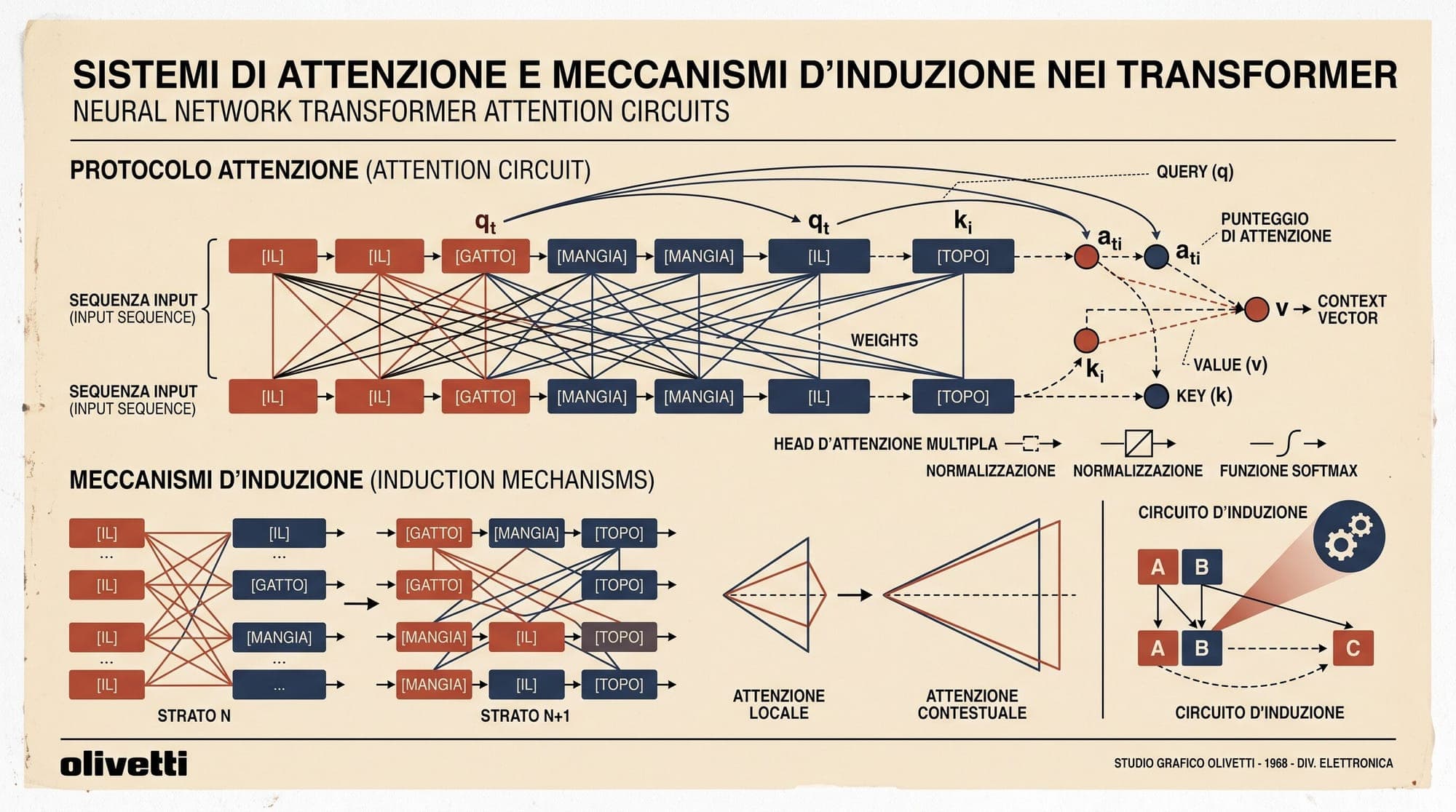
    Autoregressive large language models demonstrate the ability to adapt to new tasks, follow few-shot demonstrations, and execute algorithmic patterns entirely within their context windows. Unlike traditional fine-tuning, in-context learning occurs at inference time with frozen model parameters, leaving weights completely unchanged ($\Delta \theta = 0$). For several years following the scaling demonstrations in GPT-3, the internal mechanism governing in-context learning remained an empirical blac

    AI
    6 min read
  13. LG Partners with Nvidia on 10,000-Square-Meter Robot Data Factory Targeting 100,000 Training Hours

    LG Electronics hosted senior Nvidia leadership at its Yangjae R&D Campus in Seoul on August 18, 2026, advancing a joint initiative to build physical AI training pipelines and target 100,000 hours of embodied robotics data by the end of the year. The site review took place five days after LG Group and Nvidia signed a strategic memorandum of understanding at Nvidia headquarters in Santa Clara on August 13. The accelerated timeline reflects LG's effort to convert its industrial manufacturing infra

    Robotics
    2 min read
  14. AI Guardrails in Production: Multi-Stage Filtering, Classification Models, and the Latency Tax

    AI Guardrails in Production: Multi-Stage Filtering, Classification Models, and the Latency Tax Production deployments of large language models cannot rely solely on system prompt instructions to maintain safety, prevent prompt injection, or restrict domain scope. System prompt alignment is inherently susceptible to adversarial bypasses, context dilution, and non-deterministic instruction following. To enforce strict security, compliance, and topic boundaries, engineering teams increasingly depl

    AI
    4 min read
  15. Multi-Head Latent Attention: How Low-Rank KV Compression Scales LLM Serving

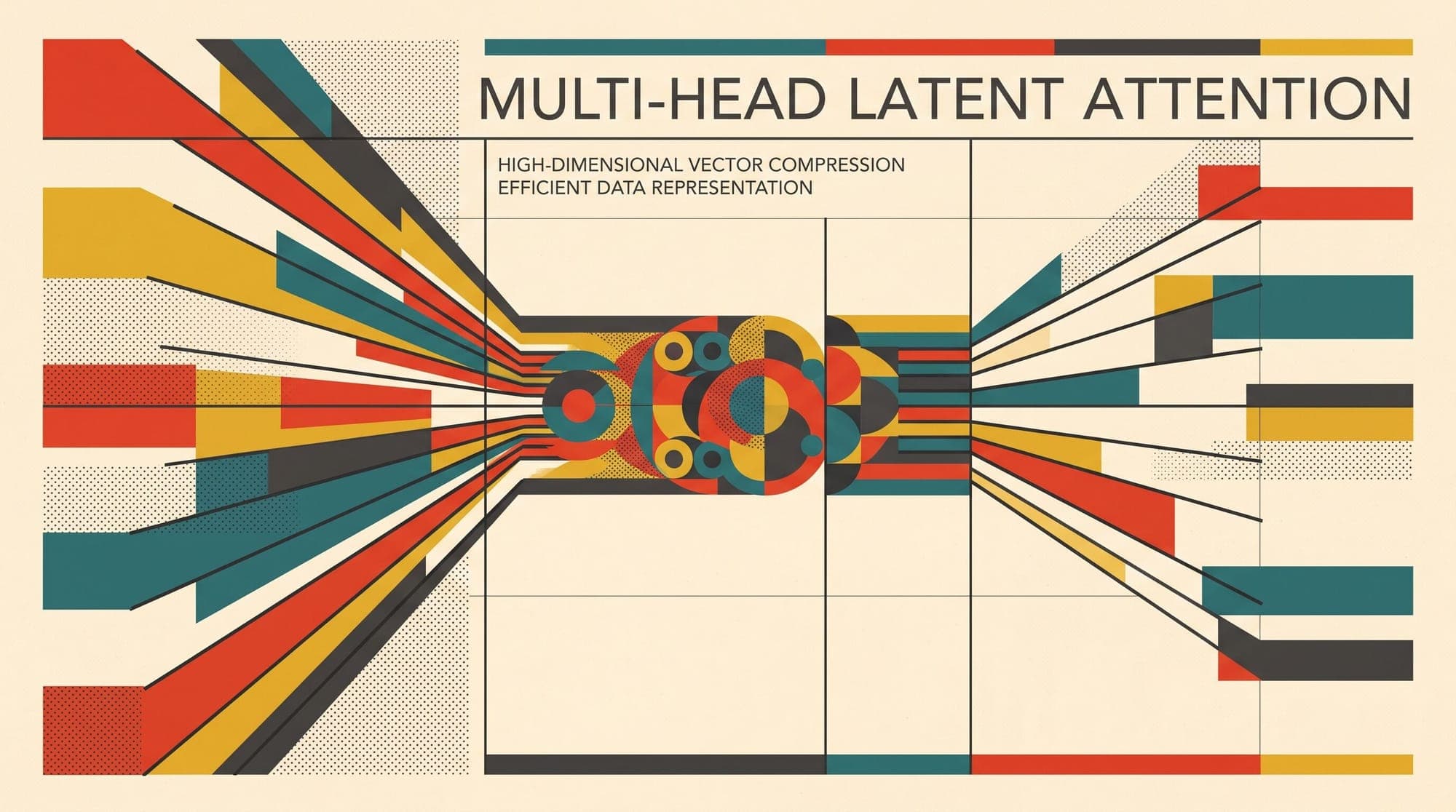
    Autoregressive transformer inference faces a fundamental hardware constraint during text generation: memory bandwidth saturation. While prefill (processing prompt tokens) is compute-bound and saturates GPU tensor cores, token-by-token generation is memory-bandwidth bound. To generate each subsequent token, the inference engine must load all prior Key and Value vectors from High Bandwidth Memory (HBM) into SRAM. As sequence lengths reach 32k, 64k, or 128k tokens and batch sizes scale, the Key-Va

    AI
    6 min read
  16. Lost in Compaction: LLM Context Compression Drops 83% of User Constraints, Penn State Study Finds

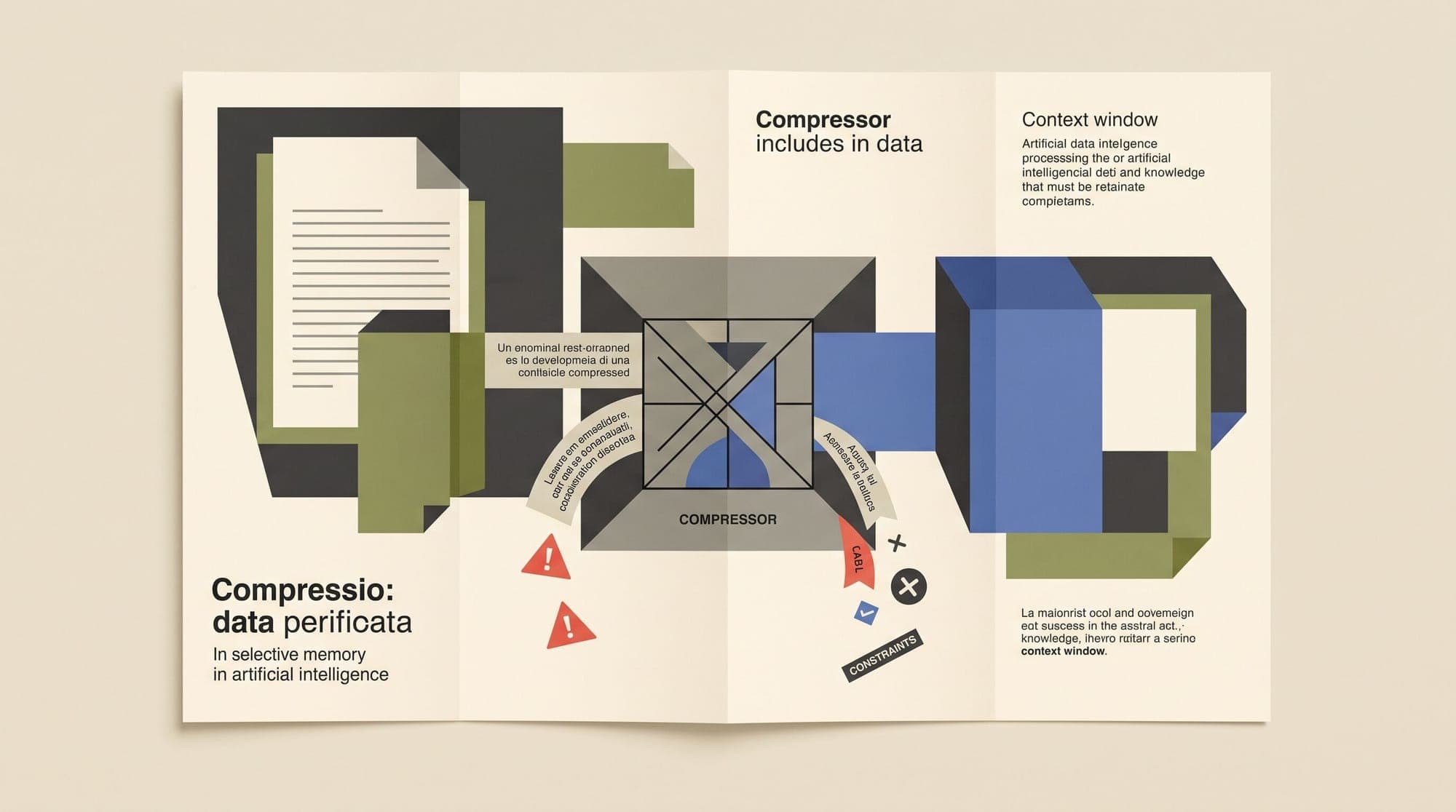
    As large language models take on longer multi-turn workflows and agentic tasks, systems increasingly rely on context compaction to summarize past conversation histories and keep prompt lengths within memory budgets. However, this compression comes at a severe cost to user control. A new study by Pennsylvania State University researchers Zhiqi Wang, Yichi Zhang, Dongwon Lee, and Yuchen Yang reveals that standard context compaction drops an average of 83 percent of user-defined operational constr

    AI
    2 min read
  17. LLM Gateways in Production: Multi-Provider Failover, Rate Limiting, and Spend Governance

    LLM Gateways in Production: Multi-Provider Failover, Rate Limiting, and Spend Governance As generative AI workloads transition from experimental prototypes to mission-critical infrastructure, direct client-to-provider API calls introduce substantial operational risk. Relying on hardcoded SDK connections to a single model provider exposes production services to unexpected rate limits, regional outages, silent breaking changes, and uncontrolled token costs. To solve these reliability and governa

    AI
    5 min read
  18. State Space Models in Large Language Models: How Mamba, S4, and Selective Recurrence Challenge Transformer Attention

    Modern large language models rely almost universally on the Transformer architecture. However, the core mechanism powering Transformers, softmax multi-head self-attention, exhibits fundamental scaling limitations. Specifically, standard self-attention requires quadratic time and memory complexity relative to sequence length during prefilling, alongside a linear memory expansion for the key-value (KV) cache during autoregressive token generation. To circumvent these computational bottlenecks, re

    AI
    6 min read
  19. Tencent Releases UI-Mate: Open-Weight Foundation GUI Agents with In-Context Demonstration Learning

    Tencent's HY Frontier team has released UI-Mate, an open-weight foundation GUI agent designed for autonomous computer operation across desktop environments. Available in 27-billion and 9-billion parameter configurations, the models pair environment-grounded reinforcement learning with an in-context demonstration pipeline that allows agents to reference structured human workflows during execution. Alongside model weights on Hugging Face, Tencent published a technical report, code repository, and

    AI
    2 min read
  20. Multi-Agent Orchestration in Production: State Machines, Swarms, and Error Cascades

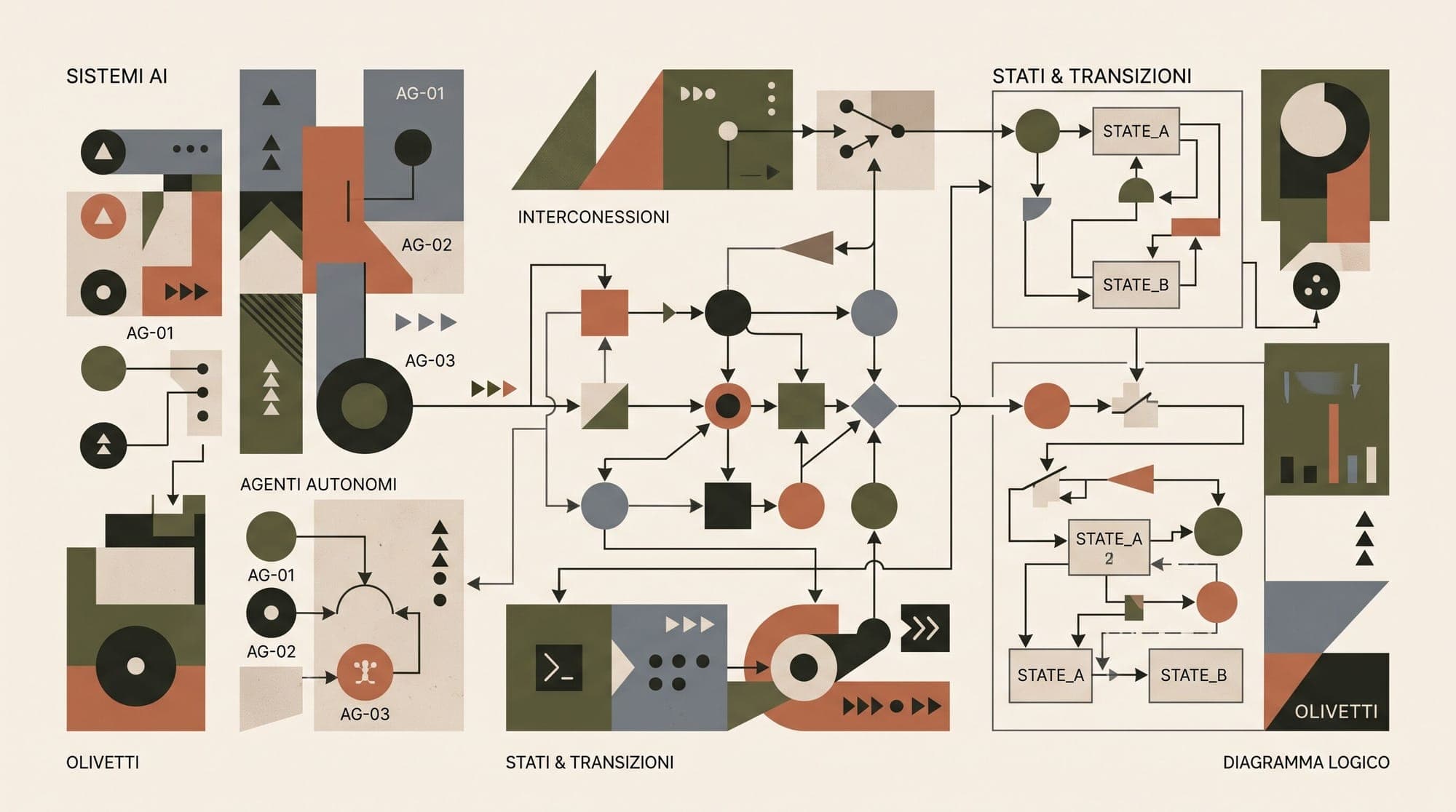
    Moving large language model applications from isolated prompts to multi-agent architectures introduces distinct systemic complexities. While single-agent systems face localized points of failure, multi-agent topologies exhibit emergent dynamics such as cascading hallucinations, coordination deadlocks, and severe context bloat. Designing multi-agent systems for production environments requires selecting explicit orchestration paradigms, bounding error propagation, and enforcing durable state per

    AI
    5 min read