Etched in Talks to Raise 00M Led by Jane Street at 1B Valuation

AI inference chip startup Etched is in negotiations to raise $700 million in a new financing round led by existing investor Jane Street, according to reporting from The Wall Street Journal. The proposed financing would value the San Jose-based semiconductor company at approximately $21 billion. The planned round follows a $300 million Series C led by Sequoia Capital that valued the startup at $10.3 billion, effectively doubling its valuation within weeks amid intensifying enterprise demand for

2 min
Etched in Talks to Raise 00M Led by Jane Street at 1B Valuation

AI inference chip startup Etched is in negotiations to raise $700 million in a new financing round led by existing investor Jane Street, according to reporting from The Wall Street Journal. The proposed financing would value the San Jose-based semiconductor company at approximately $21 billion.

The planned round follows a $300 million Series C led by Sequoia Capital that valued the startup at $10.3 billion, effectively doubling its valuation within weeks amid intensifying enterprise demand for specialized inference hardware.

Hardwired Transformer ASICs vs General-Purpose GPUs

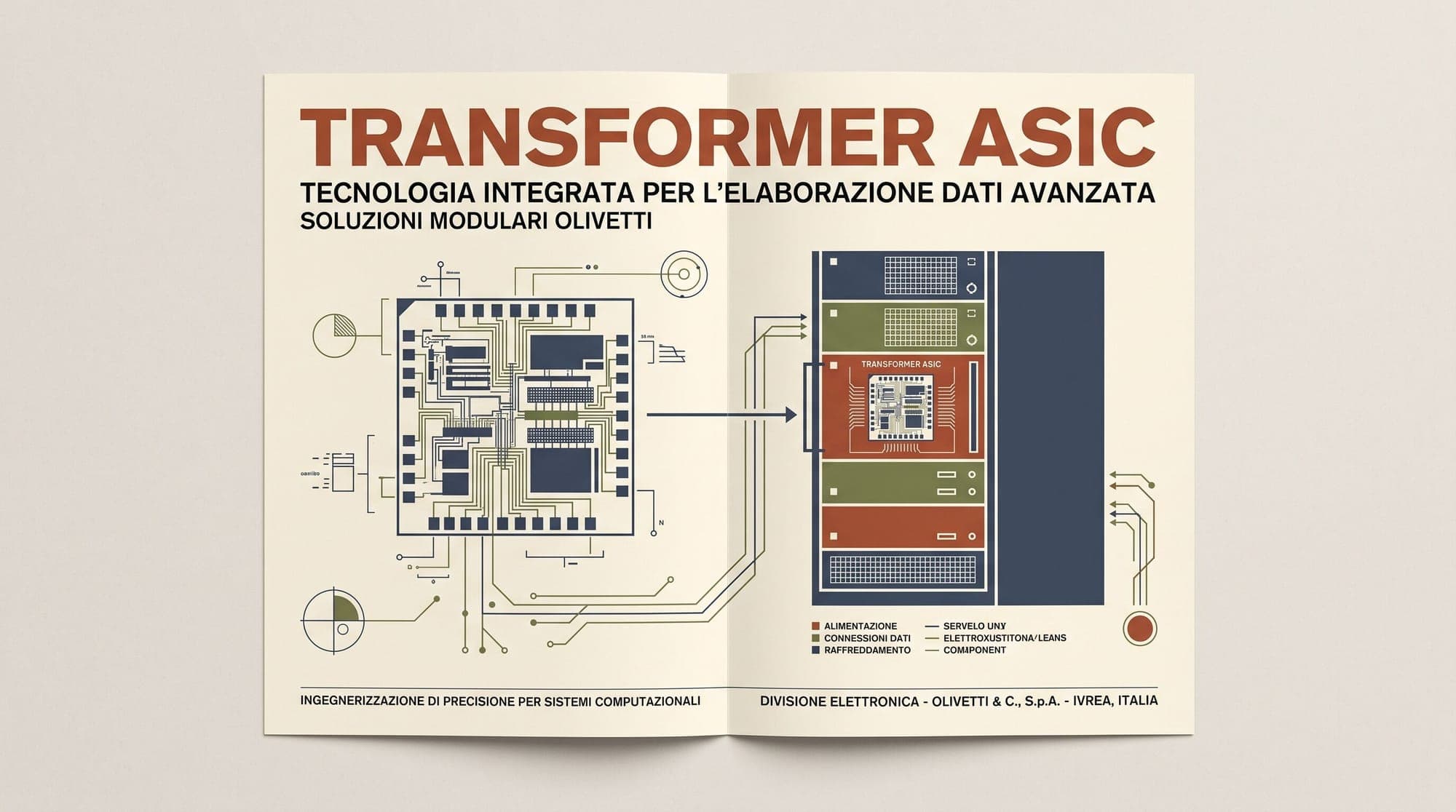
Founded in 2022 by Gavin Uberti, Chris Zhu, and Robert Wachen, Etched takes an architectural approach distinct from general-purpose graphics processing units (GPUs). Rather than supporting arbitrary parallel compute workloads or training routines, Etched designs application-specific integrated circuits (ASICs) hardwired directly to execute transformer attention mechanisms and frontier model architectures.

By baking transformer mathematical operations directly into silicon pathways, the design aims to eliminate runtime instruction overhead, maximize memory bandwidth utilization, and significantly lower power consumption per generated token compared to conventional GPUs.

Etched Inference Architecture and System Design

Rack-Scale System Design and Production Scaling

In addition to custom silicon manufactured on advanced TSMC process nodes, Etched develops full rack-scale systems in-house. The company's engineering scope encompasses:

  • Custom Server Enclosures: Proprietary circuit boards, power delivery networks, and liquid cooling cold plates built to support high-density inference clusters.
  • Model Compatibility: Hardware validation across prominent open-weight and proprietary architectures, including DeepSeek, Qwen, Llama, and hybrid state-space models.
  • Manufacturing Expansion: Operating from an 80,000-square-foot prototyping and production facility in San Jose to handle customer rack deployments.

Etched previously disclosed over $1 billion in commercial pre-orders and customer deployment commitments from major quantitative trading firms and cloud infrastructure providers.

The funding round terms remain subject to final closing conditions.

Sources

Written by

More to read

  • Automated Prompt Optimization in Production: Signatures, Teleprompters, and Metric-Driven Compilation with DSPy

    Manual prompt engineering remains one of the largest sources of technical debt in modern LLM applications. Teams routinely spend weeks hand-crafting multi-paragraph system prompts, hardcoding few-shot examples, and tweaking phrasing to extract reliable outputs from specific model checkpoints. When the underlying model is upgraded, migrated to an open-weight alternative, or integrated into a multi-step pipeline, these hand-crafted strings break, requiring another cycle of trial-and-error adjustme

    1 min
  • Model Merging in Large Language Models: How Task Arithmetic, TIES, and DARE Combine Checkpoints Without Training

    Fine-tuning foundation models for specialized tasks typically produces isolated checkpoints. A model adapted for mathematical reasoning retains high numerical precision but often degrades in general dialogue or code generation. Traditionally, unifying these capabilities required multi-task training: gathering mixed datasets, re-running optimization across multiple GPUs, and managing gradient conflicts during backpropagation. Model merging provides an alternative paradigm. By operating directly

    1 min
  • Harvey Introduces Tenet, Its First In-House Legal LLM Trained on Moonshot's Kimi K3

    Legal AI startup Harvey has announced Harvey Tenet, its first proprietary, in-house foundation model tailored for legal workflows. The release marks a strategic shift for the $11 billion legal tech company, which has historically relied on API access to third-party frontier models from OpenAI and Anthropic. Tenet is post-trained on top of Kimi K3, an open-weights model released in July 2026 by Chinese AI lab Moonshot AI. The initiative is part of a broader platform update titled Harvey II, whic

    1 min


