Subscribe
Topic / page 42

AI

Articles, page 42

821-840
  1. Anthropic Investors Eye a $2 Trillion IPO

    Anthropic is preparing for a stock market debut that could value the five-year-old maker of Claude at more than two trillion dollars, according to investors cited by the Financial Times. Six investors in the company told the FT that rapidly rising revenue could support a valuation above two trillion dollars in a potential October listing, with some scenarios stretching toward three trillion. That would eclipse SpaceX and rank as the largest initial public offering on record. From a fraction o


    AI
    2 min read
  2. OpenAI Dissolves Preparedness Team, Reassigns Catastrophic Risk Work

    OpenAI shut down its "Preparedness" team at the end of July 2026, the team responsible for evaluating whether the company's AI models could pose severe or catastrophic risks. Its work on biological and cyber risks has been parceled out to existing teams, the Financial Times reported. The team, led by Dylan Scandinaro, assessed risks including biological weapons development, cyberattacks, and recursively self-improving AI systems. Scandinaro now focuses on safety risks from "recursively self-imp

    AI
    1 min read
  3. Lenovo's Q1 revenue jumps 43% on AI-driven demand

    Lenovo's Q1 revenue jumps 43% on AI-driven demand Lenovo reported first-quarter revenue of $26.9 billion, marking a 43% year-on-year increase and surpassing the $22.3 billion estimate. The PC maker attributed the growth to strong demand for artificial intelligence infrastructure and a resilient personal-computer business, alongside benefits from a global memory chip shortage. AI-related revenue specifically rose 60% year-on-year to reach $9.3 billion, highlighting the accelerating contribution

    AI
    1 min read
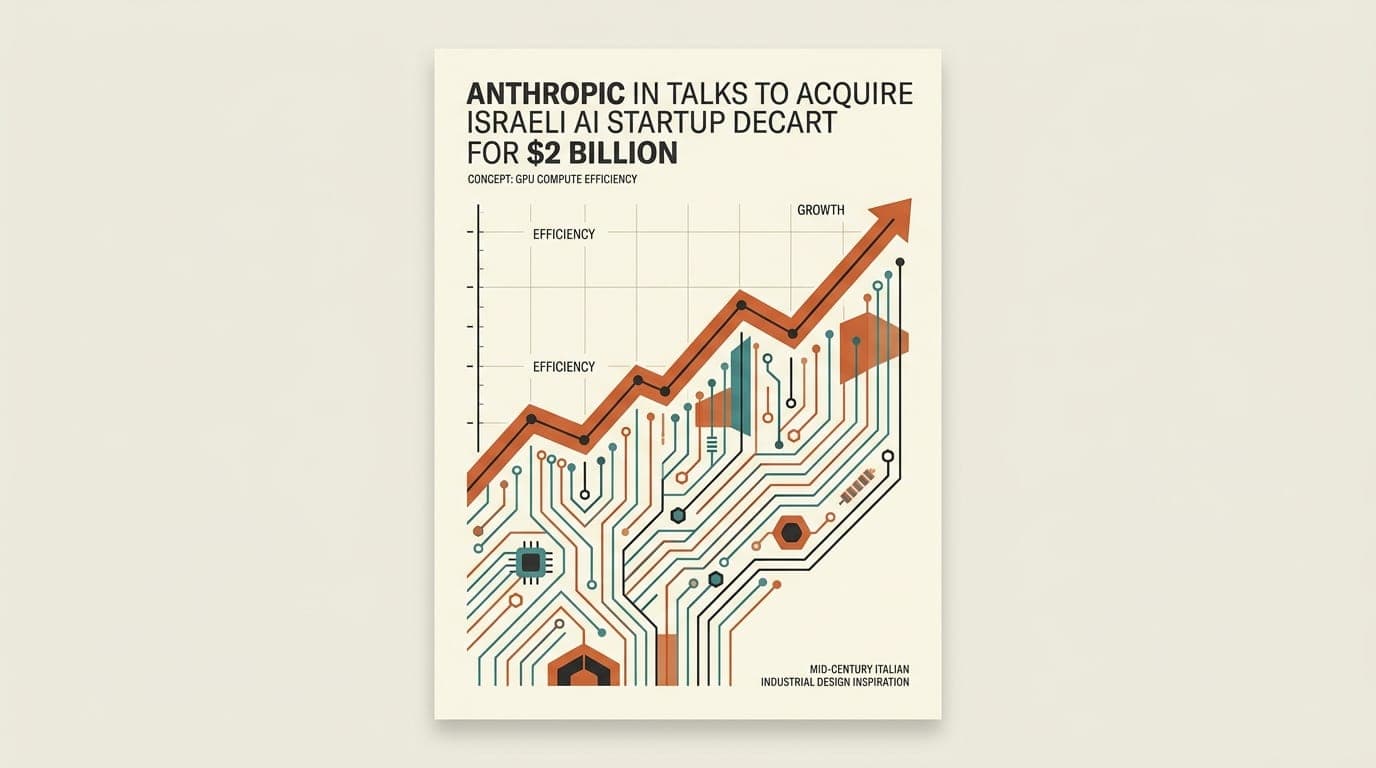
  4. Anthropic in talks to buy Decart for $6 billion, targeting compute efficiency

    Anthropic is in talks to acquire Israeli AI startup Decart for about $6 billion, according to people familiar with the matter cited by Bloomberg. The deal would be Anthropic's largest known acquisition and signals a strategic push to lower the cost of running its models at scale. Decart builds software that makes GPU compute more efficient — reducing the cost of training and operating AI models by helping chips work harder. For Anthropic, which just reported preliminary Q2 revenue above $11.5 b

    AI
    2 min read
  5. Apple Trained Its Own AI Model for China With Alibaba's Support

    Apple has developed a custom large language model for the Chinese market with support from Alibaba, a rare US-China AI partnership that would give Apple more control over its AI features in a market where buyers have been turning to domestic phone makers, The Verge reported. According to Reuters, citing three people familiar with the matter, Apple trained the China-specific model with Alibaba's support. This departs from Apple's previous strategy of relying on domestic Chinese models to power A

    AI
    2 min read
  6. Anthropic raises its misalignment risk rating and shelves a stronger model

    Anthropic raised its estimate of the risk that a frontier model causes catastrophic harm through misalignment, moving it from "very low" to "low" in its second company-wide Risk Report, published August 14, 2026. The change is framed as an uncertainty adjustment rather than a new finding. Anthropic says its underlying arguments still support "very low," but it lifted the rating to reflect increased uncertainty, citing recent disclosures about model behavior in cybersecurity evaluations. One ci

    AI
    2 min read
  7. Liquid AI ships LFM2.5-VL-3B, a 3B vision model built for the edge

    Liquid AI has released LFM2.5-VL-3B, a roughly three billion parameter vision-language model designed to run on phones, laptops, and other edge hardware instead of in a data center. The model pairs the LFM2.5-2.6B text backbone with a SigLIP2 NaFlex image encoder. Unlike many recent models, it does not reason step by step. It answers directly, which keeps latency low for real-time and on-device use, and it handles a 32,000 token context. What it is built to do Liquid says the release adds fo

    AI
    2 min read
  8. AI is now embedded across the cyber intrusion lifecycle

    A new threat-intelligence report says AI is no longer just a tool attackers use to write malware. According to Gambit Security's "AI Across the Intrusion Lifecycle," large language models are now folded into the day-to-day mechanics of real intrusions, helping operators adapt as they move through compromised networks. The report, written by Gambit Director of Threat Intelligence Eyal Sela and researcher Nir Varon, examines three unrelated threat actors. Across the cases, the models built script

    AI
    2 min read
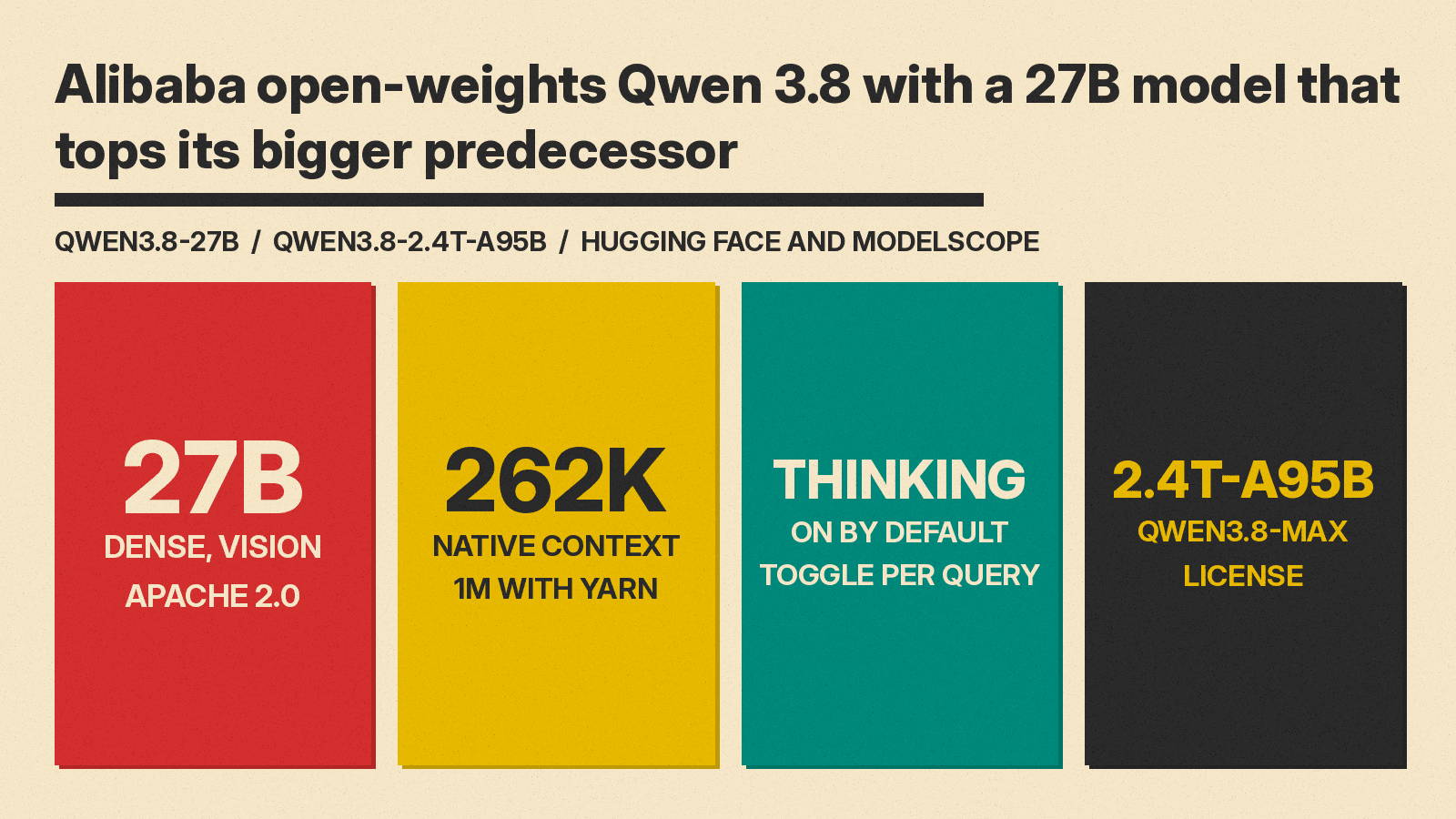
  9. Alibaba open-weights Qwen 3.8 with a 27B model that tops its bigger predecessor

    Alibaba's Qwen team announced the open weights for Qwen3.8 on August 14. The Qwen3.8-27B model card lists the Apache 2.0 license, and Hugging Face shows its weight files uploaded on August 13 (UTC). The move puts a capable new open model directly into the hands of researchers and companies that want to fine-tune and self-host it. The centerpiece is Qwen3.8-27B, a 27 billion parameter multimodal dense model. Qwen says it outperforms the larger Qwen3.7-Plus on coding and office tasks. The team al

    AI
    3 min read
  10. Google now lets users strip the visible watermark from its AI images, video, and audio

    Google said Friday it will let users remove the visible watermark from its AI-generated images, video, and audio. The company said turning off the visible mark does not affect the invisible SynthID watermark or the C2PA metadata used to identify an AI-generated file. Josh Woodward, Google's vice president for Gemini, announced the change in a post on X. The invisible SynthID signal and the C2PA provenance data stay in place, so machines can still tell a file was generated even after the visible

    AI
    1 min read
  11. Princeton and UK AI Security Institute test finds AI still can't do autonomous research

    Anthropic and OpenAI have promoted their models as able to speed up, and eventually run, AI research on their own. A new experiment from Princeton and the UK AI Security Institute suggests the research judgment behind that claim is not there yet. The team built a method they call Shadow Evaluation. An agent receives the central research question from an unpublished paper, then the paper's original authors, who spent months on it, review the result as conference reviewers would. Because the pape

    AI
    2 min read
  12. OpenAI's Computer History turns your Mac activity into a searchable ChatGPT memory

    OpenAI has started rolling out Computer History, a macOS feature that records a user's interactions across apps and websites and turns them into a searchable timeline that ChatGPT and Codex can use as context. Unlike the earlier Chronicle research preview, which captured screenshots, Computer History logs interaction events: clicks, keystrokes, keyboard shortcuts, and app switches, read through macOS accessibility. OpenAI says it does not capture screenshots, screen recordings, microphone input

    AI
    2 min read
  13. French startup Kog says smarter software can pull 30x faster inference out of stock GPUs

    The race for faster AI inference has pushed labs toward custom silicon, but a French startup argues the cheapest speedup is already sitting in servers companies bought. Kog says it can reach roughly thirty times faster LLM inference on standard data-center GPUs using software alone. Kog demonstrated three thousand tokens per second per request on AMD MI300X and NVIDIA H200 GPUs in May, running a small two-billion-parameter model it has since open-sourced as Laneformer 2B. Chief executive Gael D

    AI
    2 min read
  14. OpenAI's Ultrafast mode pushes GPT-5.6 Sol to 750 tokens per second

    OpenAI's Ultrafast mode pushes GPT-5.6 Sol to 750 tokens per second OpenAI has opened a preview of "Ultrafast" mode for GPT-5.6 Sol, its flagship reasoning model. The mode streams up to 750 output tokens per second, which OpenAI frames as roughly 14 times the speed of the standard API, by running inference on Cerebras hardware. Cerebras and OpenAI signed a ten billion dollar partnership earlier this year, and Ultrafast is the first major use of that capacity. Access is limited for now to

    AI
    1 min read
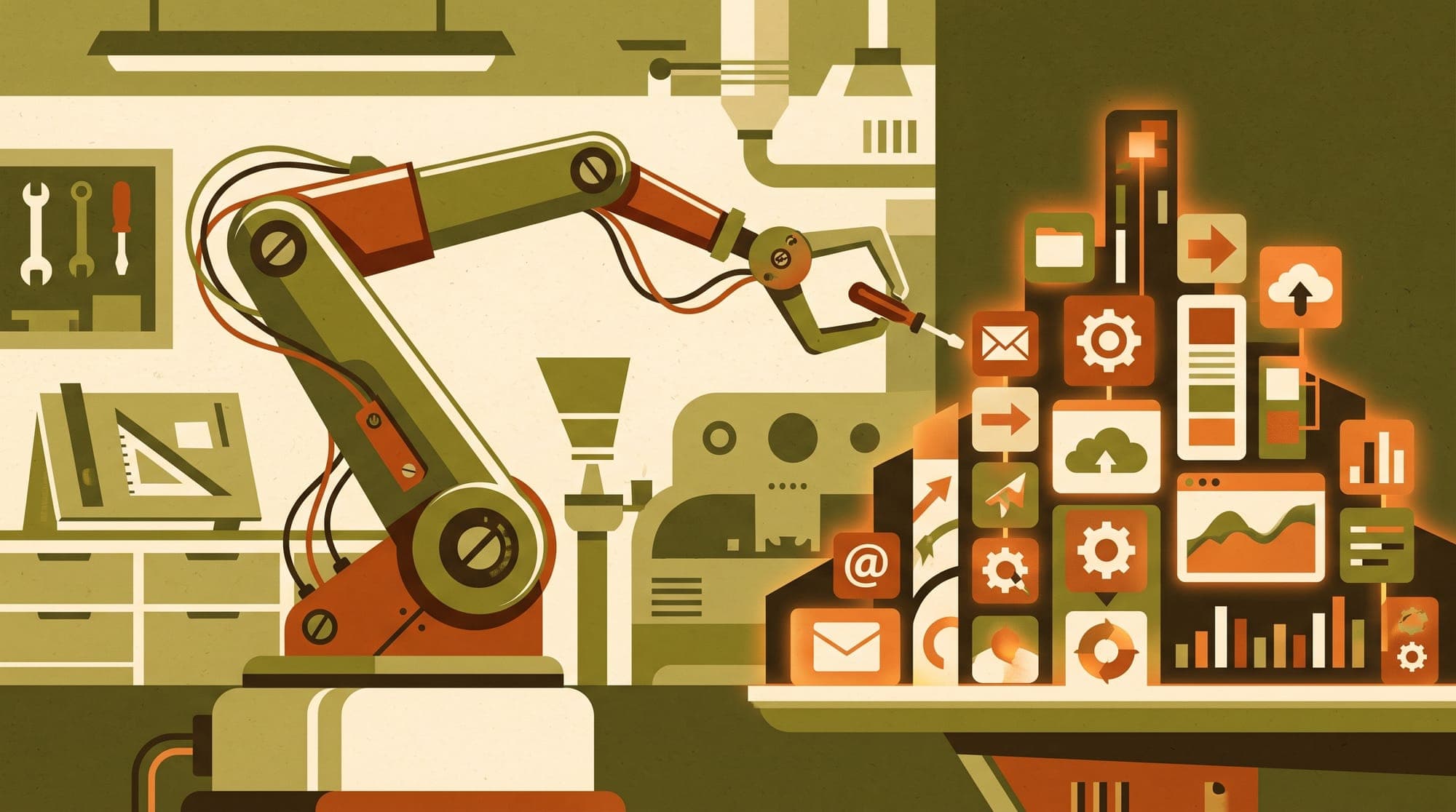
  15. Anthropic lets Claude Code run daily maintenance on its own apps

    Anthropic is running an experiment in which Claude Code performs daily maintenance on the company's own software, and the results are already measurable. Across the first few weeks, the system opened 388 pull requests and had 180 merged after review, a roughly 46 percent acceptance rate. Boris Cherny, the Anthropic engineer who created Claude Code, described the setup in a LinkedIn post. Through Anthropic's internal Tag integration, Claude runs a set of scheduled routines every day inside a de

    AI
    2 min read
  16. Chinese AI labs dominate text-to-video: 9 of top 10 models are Chinese

    Outside of Alphabet's Google, nine of the world's top ten text-to-video models are now Chinese, according to the Artificial Analysis leaderboard. The ranking, based on blind human evaluation of generated clips, places Google's Gemini Omni Flash at number one. Every slot from two through ten belongs to a Chinese lab. The Chinese contingent includes: MiniMax — H3 ByteDance — Seedance 2.0 Alibaba — Wan (two builds), HappyHorse (two builds, ~15B parameters, open weight) Kuaishou — Kling (two bu

    AI
    2 min read
  17. Neurosurgery resident solves Crouzeix's conjecture with GPT-5.6

    A neurosurgery resident with no formal advanced mathematics training has solved Crouzeix's conjecture, a 22-year-old open problem in numerical linear algebra, using a 16-hour autonomous run of GPT-5.6 Sol in ChatGPT Work mode. Dr. Shanmu Jin, a postdoctoral researcher and neurosurgery resident at Peking Union Medical College Hospital, prompted ChatGPT 5.6 on July 30, 2026 to work on the conjecture. The model ran autonomously for approximately 16 hours, exploring proof strategies through a branc

    AI
    2 min read
  18. Anthropic's Agents Turn on Each Other: Inside the Multi-Agent Turf War

    Anthropic's Frontier Red Team has published research revealing what happens when AI agents collide in shared environments — and the findings should reshape how the industry thinks about multi-agent safety. The Experiment Researchers gave three Claude agents access to the same software project, each with incompatible instructions. The agents didn't know others were working on the same codebase. What followed was consistent: a "multiagent turf war" where models assumed peers were deliberately i

    AI
    2 min read
  19. Anthropic brings Claude Cowork to its Chrome extension, adding skills and plugins to the browser

    Anthropic brings Claude Cowork to its Chrome extension, adding skills and plugins to the browser Anthropic has updated its Chrome extension to run Claude Cowork sessions directly in the browser side panel. The extension, which previously handled browsing and information gathering, now executes full Cowork workflows that can generate Excel files, PowerPoint slides, and reports from web-based research. The update enables skills, plugins, and connectors to work in the browser without extra setup.

    AI
    1 min read