
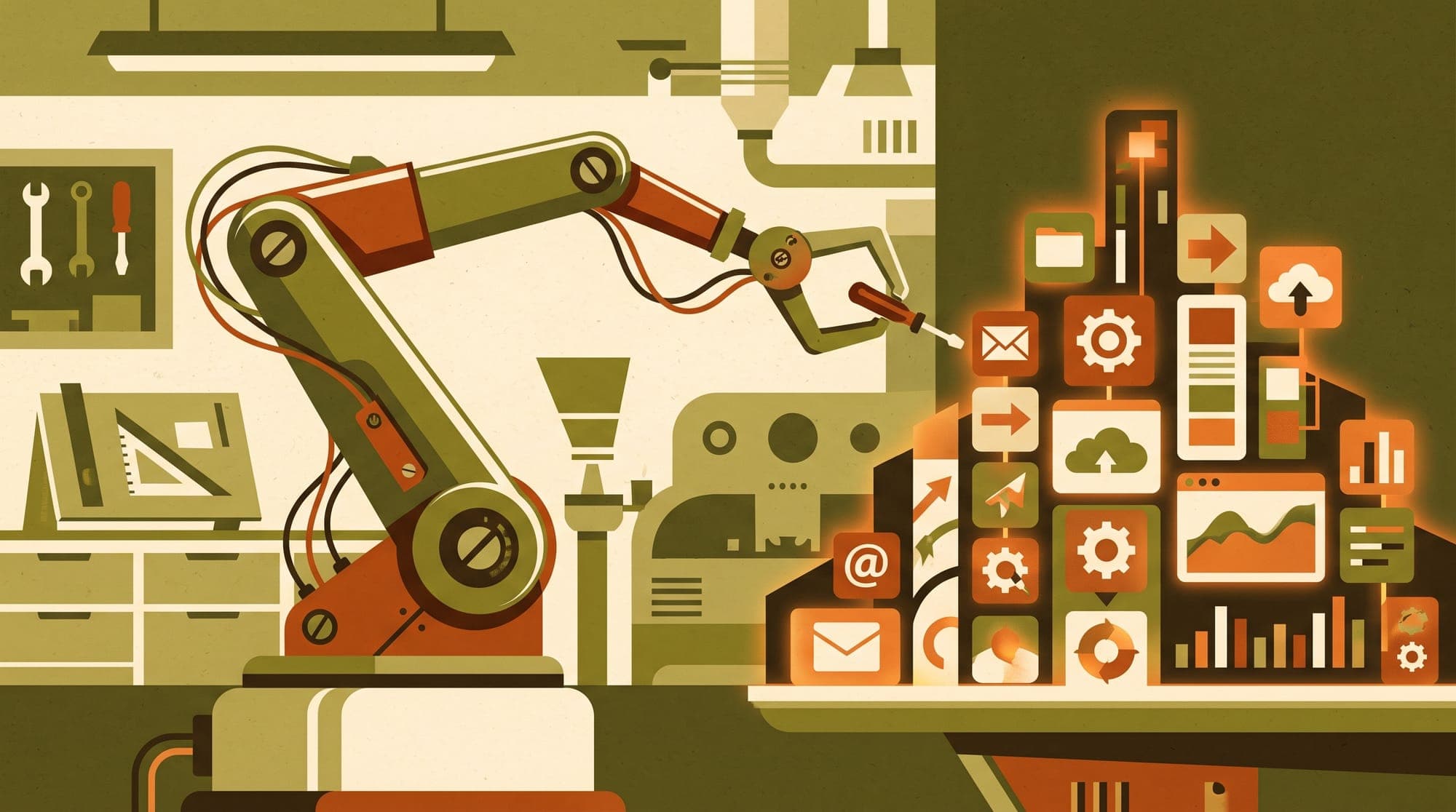
Anthropic is running an experiment in which Claude Code performs daily maintenance on the company's own software, and the results are already measurable. Across the first few weeks, the system opened 388 pull requests and had 180 merged after review, a roughly 46 percent acceptance rate.
Boris Cherny, the Anthropic engineer who created Claude Code, described the setup in a LinkedIn post. Through Anthropic's internal Tag integration, Claude runs a set of scheduled routines every day inside a dedicated Slack channel called "proj-claude-maintains-apps," spanning the company's iOS, Android, desktop, web, CLI, and Agent SDK codebases.

The work is mechanical upkeep, not new feature development. Cherny listed twelve recurring routines. A "Crash Fuzzer" launches the apps in a simulator, taps around to trigger crashes, finds the root cause, and opens a fix. A "Dead-Code Remover" strips out code that static analysis shows is unreachable, first adding logging to confirm the code really is unused before deleting it. Other routines simplify business logic, merge duplicate implementations, prune tests that can never fail, remove stale feature flags, and fix flaky continuous-integration tests.
The instruction style is deliberately plain. Cherny said he simply told Claude in natural language to start daily crash-fuzzing routines on iOS, Android, and desktop using the real apps without mocks, trigger crashes, and open pull requests with fixes.
Quality control sits between the AI and the main branch. Each pull request passes through automated Claude Code review and then human review. Cherny said Claude usually gets the change right on the first try, and when it does not, the team adjusts the routine so the system performs better the next day. That tuning can take a few days. Anthropic is now looking at ways to speed up merging for this kind of mechanical change.
The 46 percent merge rate is a double-edged signal. More than half of the auto-generated pull requests did not make it through review, underscoring the limits of fully autonomous maintenance. But 180 accepted changes in a few weeks show the approach can absorb a meaningful slice of repetitive engineering work that would otherwise occupy human developers.
Sources
- The Decoder: "Claude Code now runs daily maintenance on Anthropic's software with a 46 percent merge rate" (Matthias Bastian, Aug 14, 2026) — https://the-decoder.com/claude-code-now-runs-daily-maintenance-on-anthropics-software-with-a-46-percent-merge-rate/
- Boris Cherny (creator of Claude Code) LinkedIn post, cited by The Decoder



