Research / page 18

Research

470 articles

Articles, page 18

341-360 of 470
  1. Pew Study Finds 35% of Post-ChatGPT Webpages Show Signs of AI Authorship

    More than one-third of English-language webpages published since the launch of ChatGPT show measurable evidence of being generated or heavily edited by large language models, according to a study released by the Pew Research Center. The analysis examined nearly 500,000 English-language web documents indexed across a five-year window in the Common Crawl archive, spanning periods before and after OpenAI introduced ChatGPT in November 2022. Using detection technology developed by Open Pangram, res
    AI
    2 min read
  2. Monte Carlo Tree Search in Large Language Models: How Selection, Expansion, Simulation, and Backpropagation Guide Deliberate Reasoning

    Standard autoregressive language models generate text token by token via left-to-right greedy decoding or stochastic sampling. While this System 1 approach suffices for fluency and single-turn synthesis, it struggles with complex mathematical reasoning, multi-step logical deduction, and long-horizon planning. Because autoregressive decoders lack native backtracking mechanisms, an error introduced at step t persists and compounds across all subsequent steps t+1 through T. To overcome this struct

    AI
    7 min read
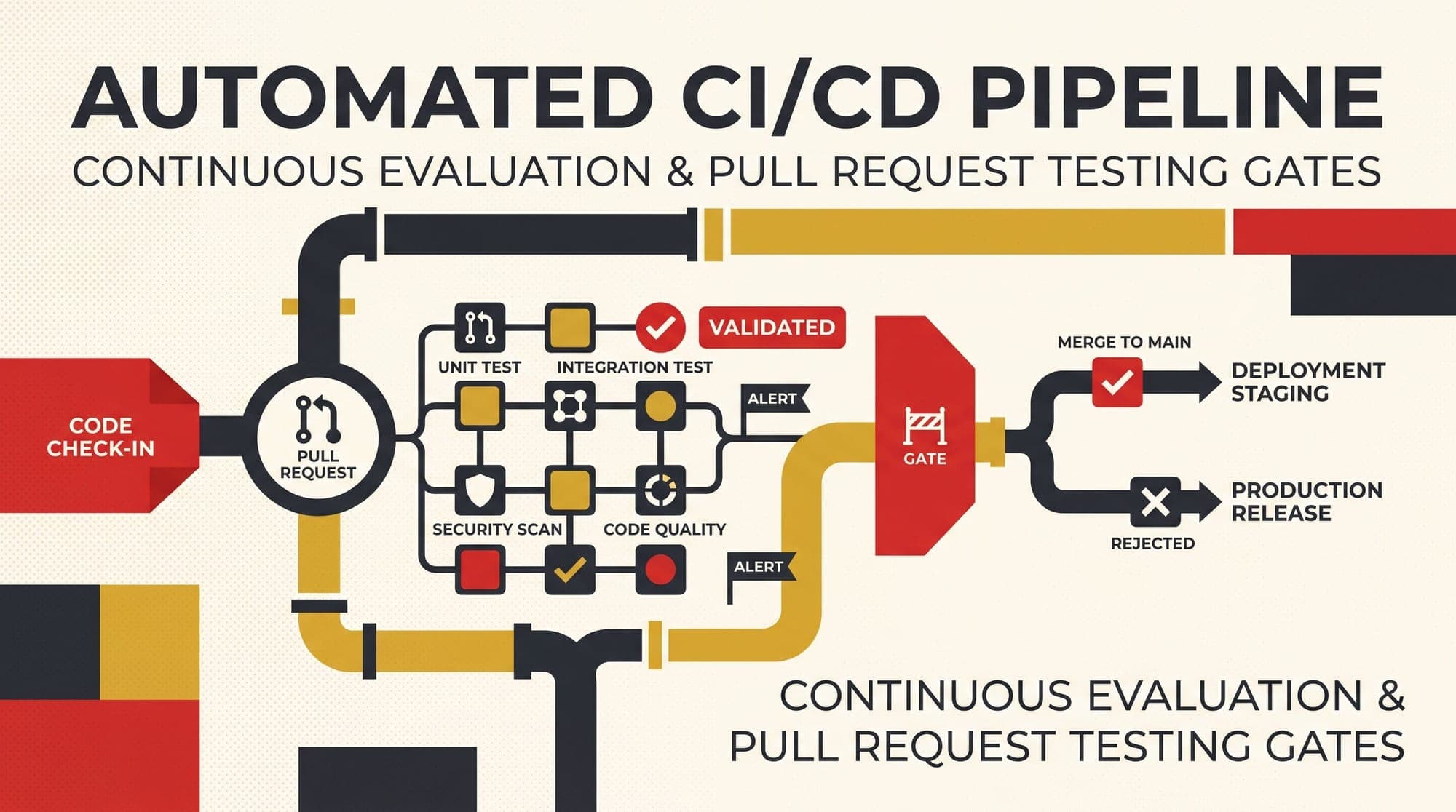
  3. CI/CD for LLM Applications: Automated Regression Testing, Golden Datasets, and Pull Request Quality Gates

    Deploying generative AI applications into production environments requires a fundamental shift in software quality assurance. Traditional continuous integration (CI) workflows rely on deterministic assertions: given a fixed input, a function must return an exact expected output. Large language models (LLMs) break this paradigm because their outputs vary across runs, token probabilities drift with prompt alterations, and natural language responses cannot be validated with binary equality checks.

    AI
    6 min read
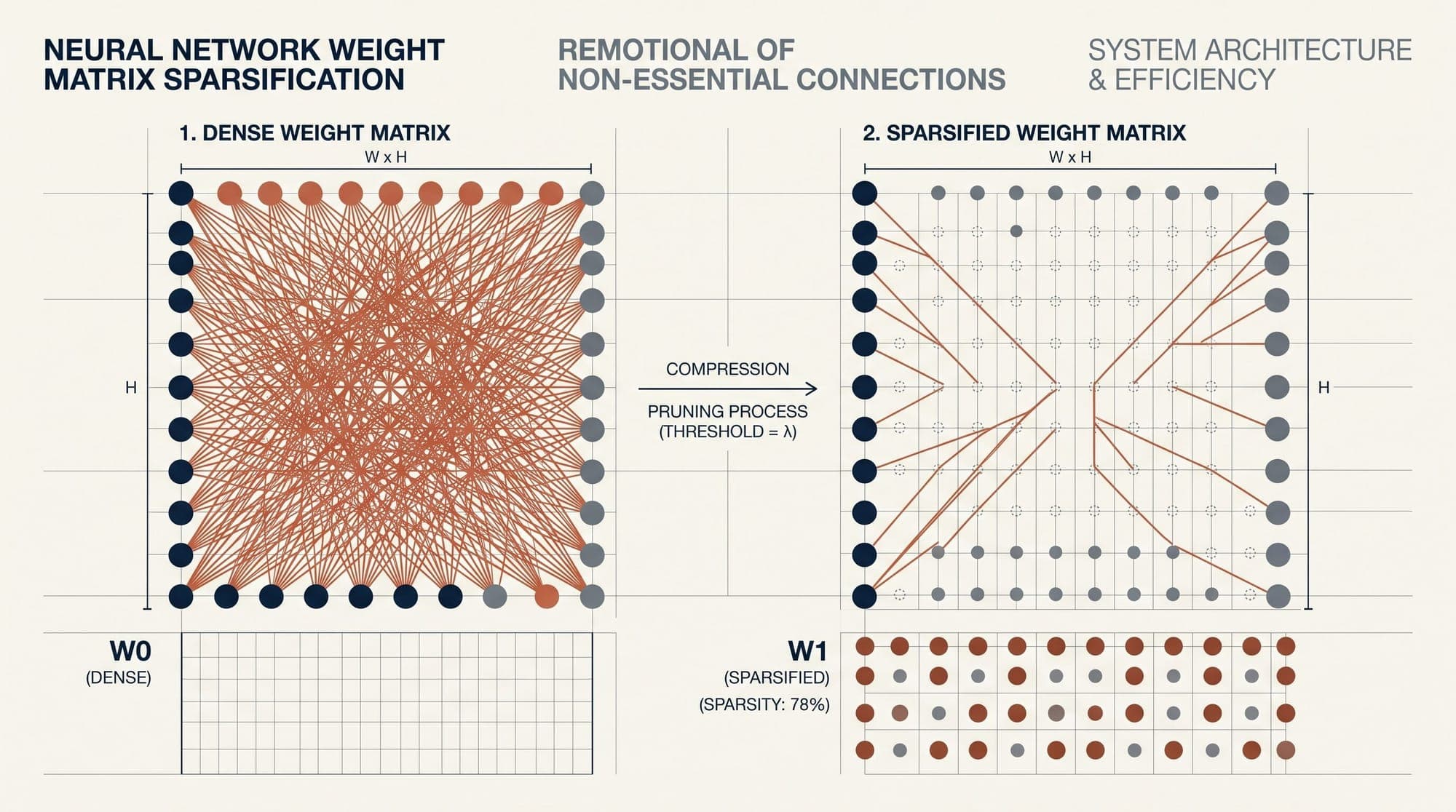
  4. Weight Pruning in Large Language Models: How SparseGPT, Wanda, and Semi-Structured 2:4 Sparsity Compress Neural Networks Without Retraining

    Modern large language models require tens to hundreds of gigabytes of high-bandwidth memory to store billions of parameters. While post-training quantization compresses model footprints by reducing numerical precision from 16-bit floating point to 8-bit or 4-bit integers, weight pruning attacks model size along an orthogonal axis: setting redundant parameter values exactly to zero. Historically, pruning deep neural networks required iterative cycles of magnitude thresholding and compute-heavy r

    AI
    6 min read
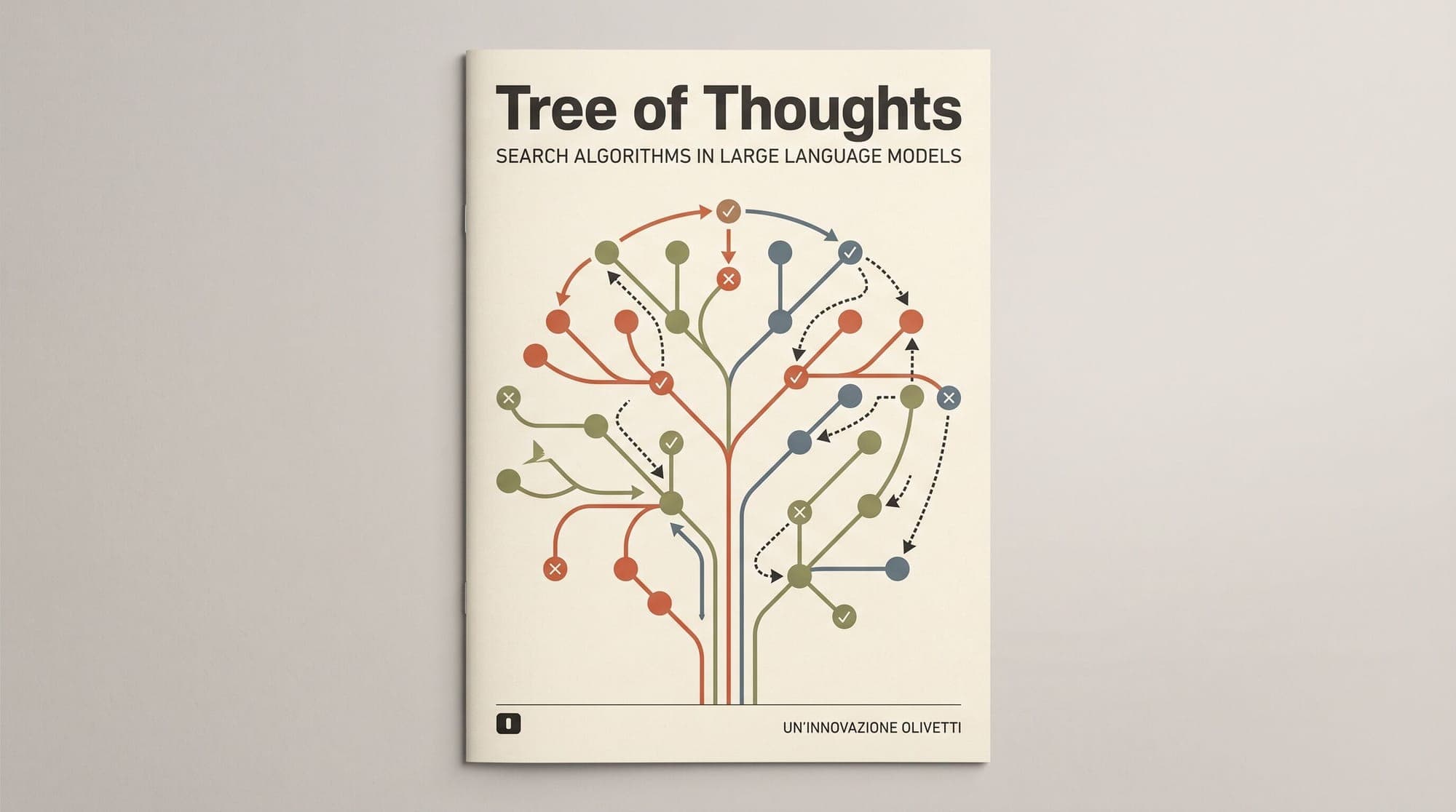
  5. Tree of Thoughts in Large Language Models: How Search Trees, State Evaluation, and Backtracking Expand Deliberate Reasoning

    Standard autoregressive large language models generate text sequentially from left to right. At each step $t$, the network samples the next token according to a conditional probability distribution over the vocabulary: P(w_t | w_1, w_2, ..., w_{t-1}) While Chain-of-Thought (CoT) prompting (Wei et al., 2022) encourages models to output intermediate reasoning steps, the underlying computational process remains a linear path through token space. If the model makes an early logical error or choose

    AI
    6 min read
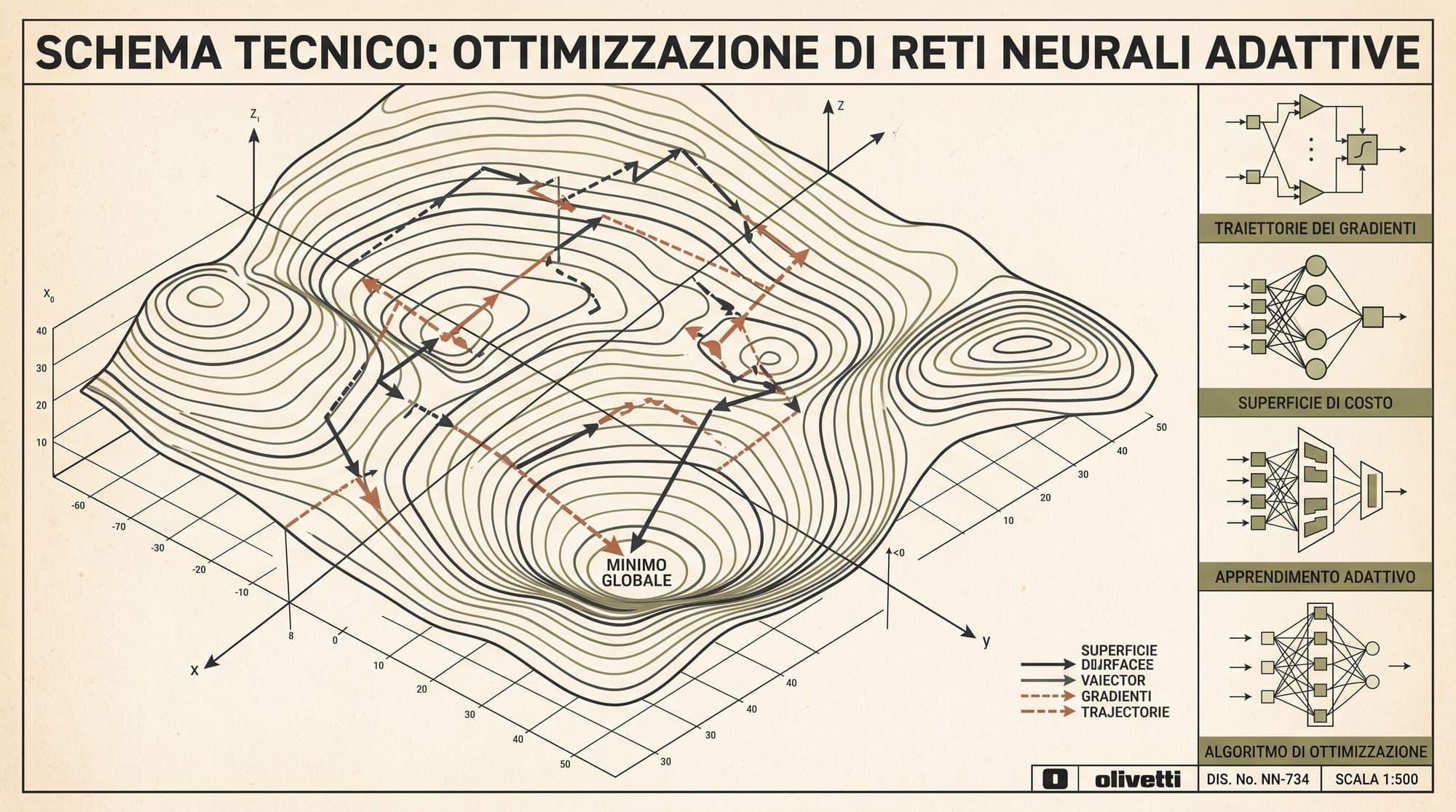
  6. Adaptive Optimizers in Large Language Model Pre-Training: How AdamW, Adafactor, and Lion Scale Gradient Updates Across Billions of Parameters

    Adaptive Optimizers in Large Language Model Pre-Training: How AdamW, Adafactor, and Lion Scale Gradient Updates Across Billions of Parameters Large language model pre-training requires optimizing billions of parameters over trillions of tokens across distributed GPU clusters. Standard stochastic gradient descent (SGD) fails in this regime because Transformer loss landscapes are severely ill-conditioned, with gradient magnitudes differing by orders of magnitude across layers and token positions.

    AI
    11 min read
  7. Classifier-Free Guidance: How Score Extrapolation and Implicit Classification Steer Generative Models

    Conditional generative models face an inherent tension between mode coverage and prompt adherence. When a model is trained to maximize data log-likelihood, its learned distribution matches the broad, messy variety of the underlying dataset. In unconditional generation, this diversity is desirable. In conditional generation, however, unconditional priors dilute the prompt: models generate generic, average samples that only weakly align with nuanced text descriptions, spatial layouts, or class lab

    AI
    9 min read
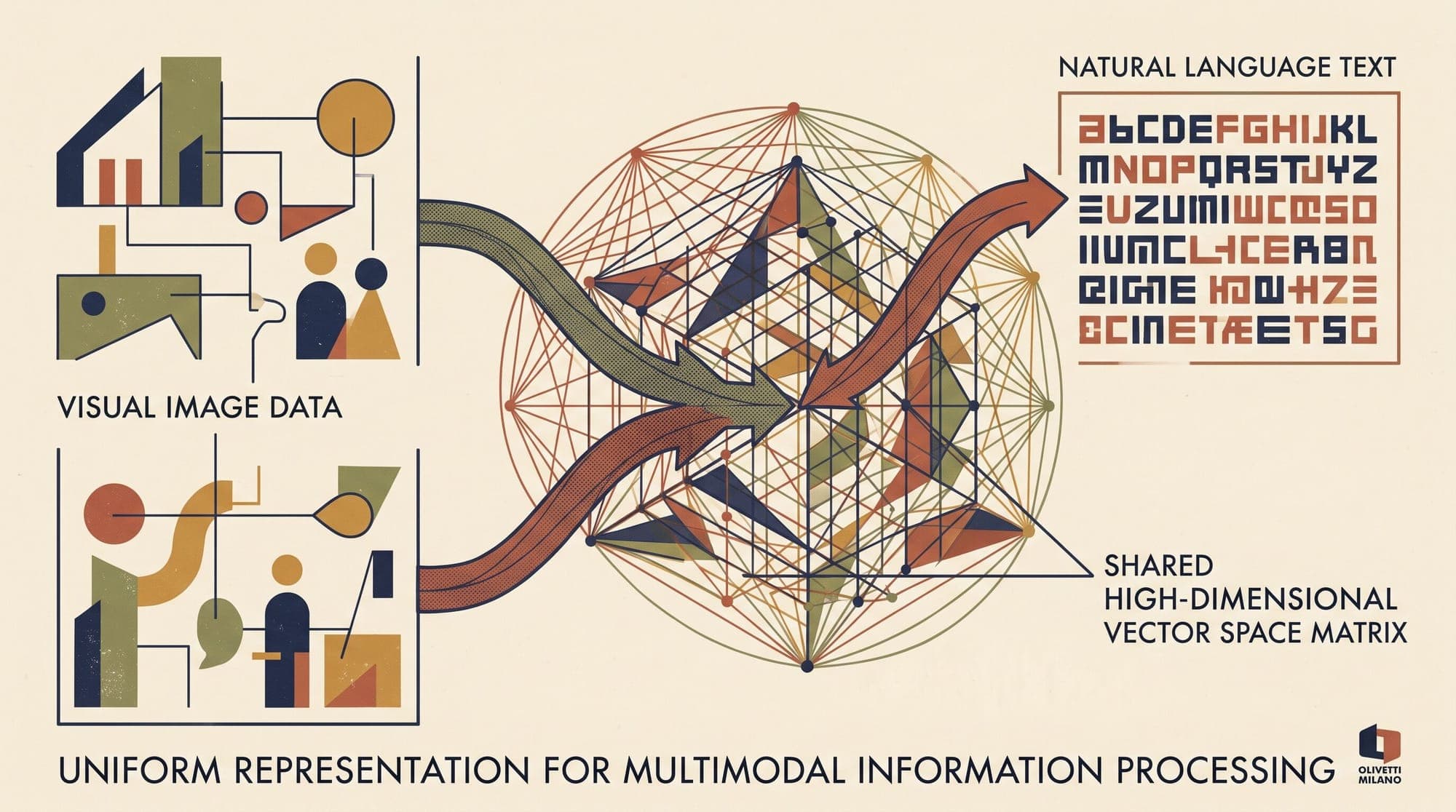
  8. Contrastive Language-Image Pre-Training (CLIP): How Joint Multi-Modal Embeddings Bridge Vision and Language

    Before 2021, computer vision models were largely constrained by closed-set supervised classification. Deep convolutional networks like ResNet were trained to predict one of exactly 1,000 discrete categories on ImageNet via a final linear layer and a softmax cross-entropy objective. This setup created rigid models: classifying an unencountered category or adapting to downstream domain shifts required throwing away the classification head, collecting thousands of labeled samples, and retraining or

    AI
    8 min read
  9. Chain-of-Thought Reasoning in Large Language Models: How Intermediate Rationales Expand Computational Expressivity and Transformer Capacity

    Autoregressive large language models operate by predicting the next token in a sequence conditioned on preceding context. When presented with complex multi-step problems in mathematics, symbolic manipulation, algorithmic planning, or formal logic, standard standard models tasked with providing immediate answers often fail. This failure stems from a fundamental structural constraint: a model forced to output a final answer immediately must compress the entire multi-step derivation into a single f

    AI
    7 min read
  10. Rich Sutton: Relying on Synthetic Data to Scale Foundation Models Is a 'Big Mistake'

    Reinforcement learning pioneer Richard Sutton has challenged the artificial intelligence industry's accelerating pivot toward synthetic data, characterizing the strategy as a fundamental misstep that cannot resolve the scaling bottlenecks confronting foundation models. Speaking alongside Oak Lab co-founder Khurram Javeed, the author of the foundational 2019 essay "The Bitter Lesson" argued that synthetic data generation inherently runs counter to the principles that govern general intelligence.

    AI
    2 min read
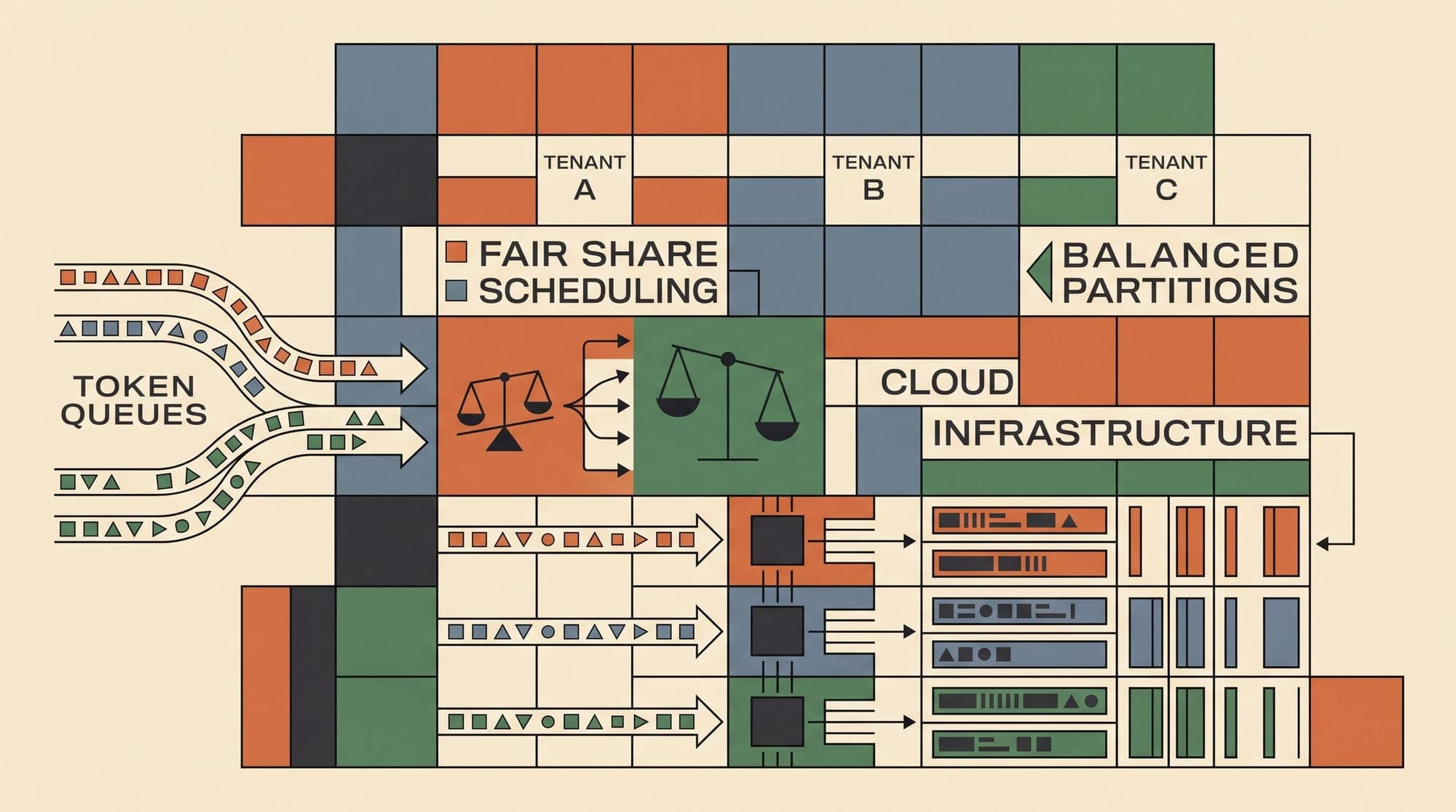
  11. Multi-Tenant LLM Serving in Production: Fair-Share Scheduling, Dynamic KV Cache Quotas, and Noisy Neighbor Isolation

    Operating a shared, multi-tenant large language model (LLM) serving cluster differs fundamentally from traditional stateless web tier hosting. In conventional microservices, tenants consume CPU cycles and static memory footprints in predictable, linear increments. In LLM serving, however, requests exhibit severe non-uniformity across multiple competing hardware dimensions: compute-bound prefill operations, memory-bandwidth-bound autoregressive decoding, and persistent High-Bandwidth Memory (HBM)

    Inference
    7 min read
  12. ReAct in Large Language Models: How Interleaving Reasoning and Action Traces Built the Foundation of AI Agents

    ReAct in Large Language Models: How Interleaving Reasoning and Action Traces Built the Foundation of AI Agents Before autonomous agents could interact reliably with APIs, search engines, and bash environments, large language models (LLMs) operated in one of two disconnected paradigms: internal reasoning without external interaction, or external action generation without internal deliberation. In pure reasoning paradigms such as Chain-of-Thought (CoT) prompting, models generate intermediate natu

    AI
    10 min read
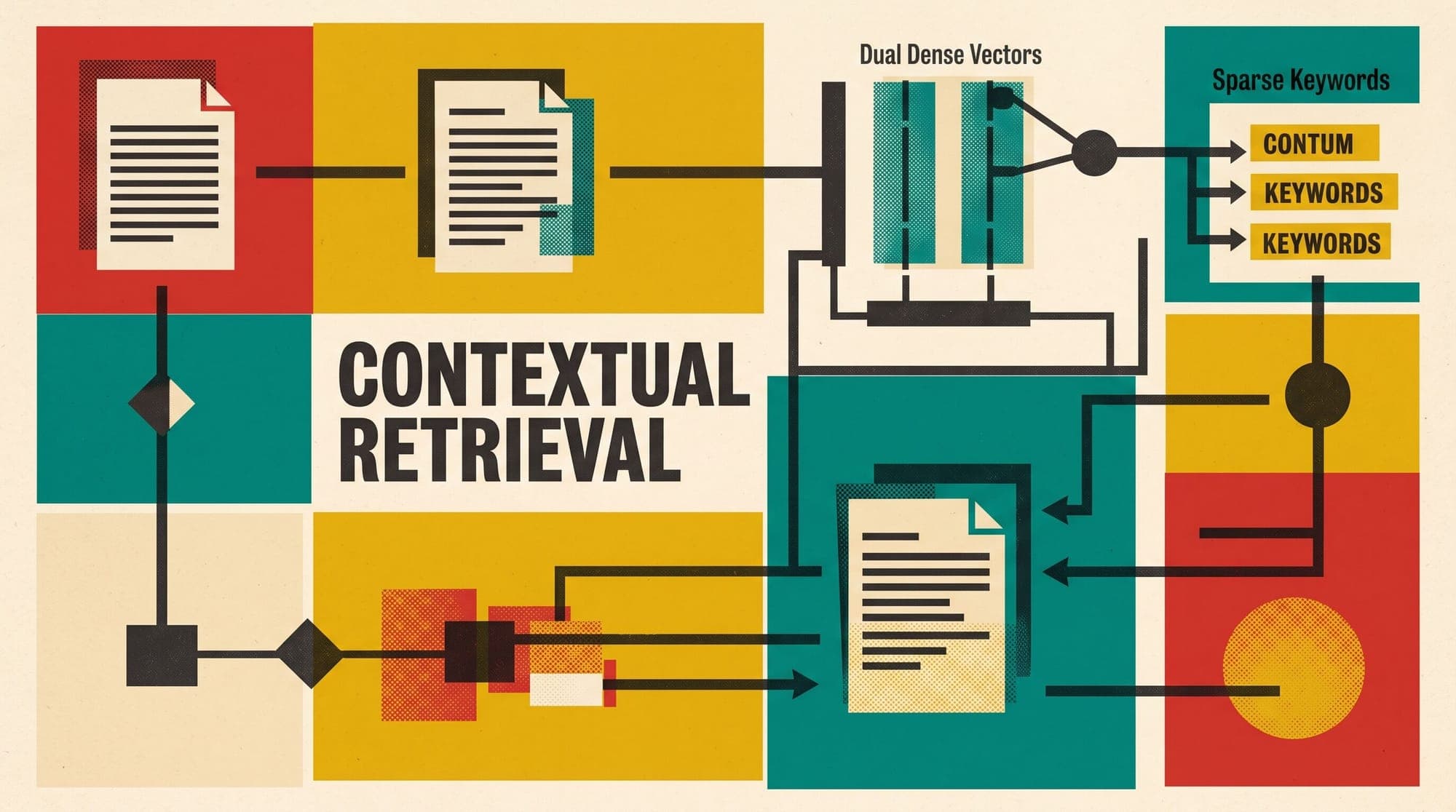
  13. Contextual Retrieval in Production RAG: Architecture, Prompt Caching Economics, Hybrid Fusion, and Reranking Pipelines

    Contextual Retrieval in Production RAG: Architecture, Prompt Caching Economics, Hybrid Fusion, and Reranking Pipelines Standard Retrieval-Augmented Generation (RAG) architectures suffer from an inherent design flaw at the preprocessing stage: chunking destroys document hierarchy. When a system divides a large document corpus into fixed-size passages (such as 300 to 800 tokens) or applies semantic boundaries, the resulting chunks lose their surrounding narrative, parent headings, entity definiti

    AI
    7 min read
  14. Self-Consistency Decoding: How Sampling Diverse Reasoning Paths Eliminates Single-Trajectory Fragility in LLMs

    Self-Consistency Decoding: How Sampling Diverse Reasoning Paths Eliminates Single-Trajectory Fragility in LLMs Standard inference pipelines in large language models rely on greedy decoding or low-temperature sampling to generate answers. For tasks requiring direct factual recall or basic classification, greedy token selection generates fluent and accurate outputs. However, when large models are tasked with complex multi-step reasoning, greedy generation exhibits severe structural fragility. In

    AI
    6 min read
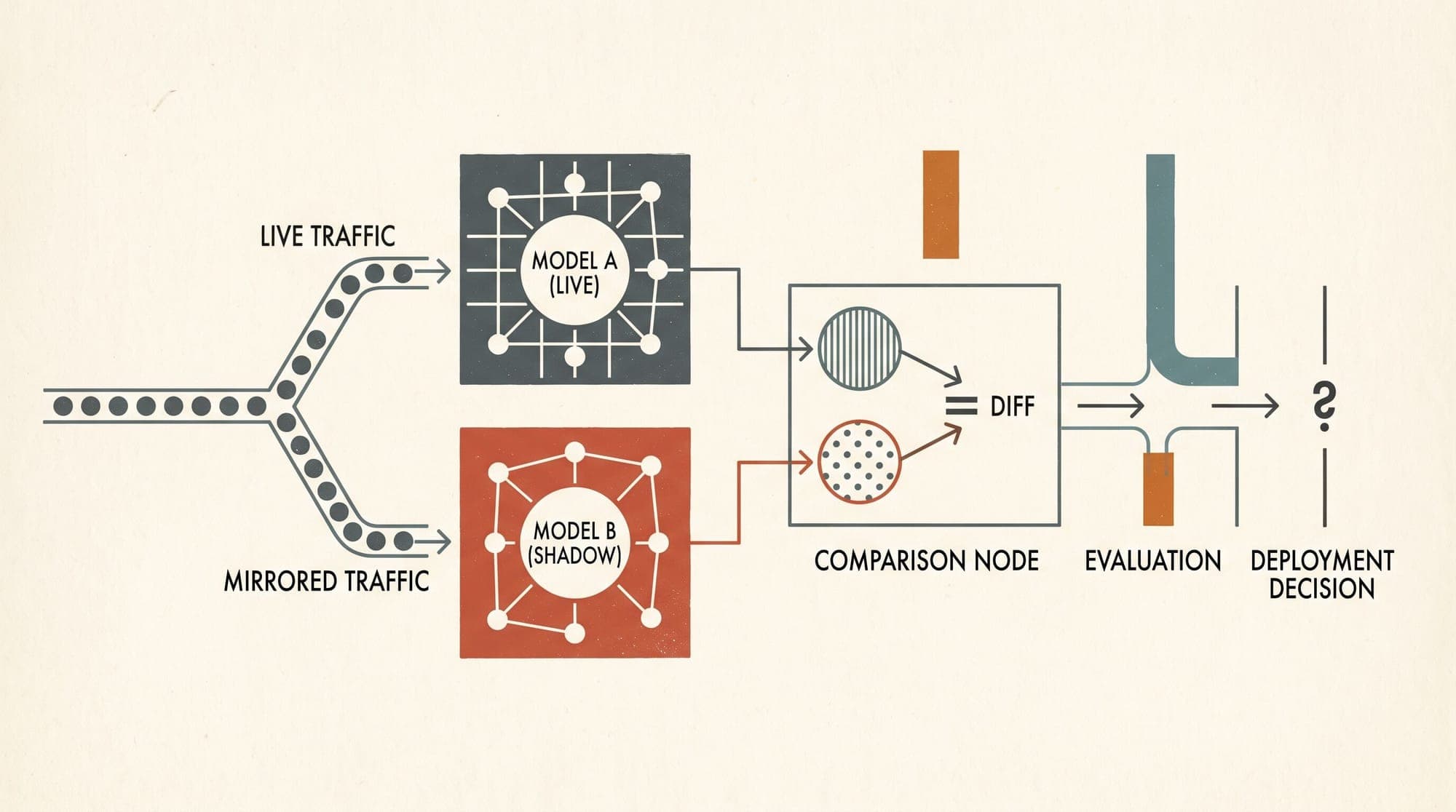
  15. Traffic Shadowing and Canary Deployments in Production: Architecture, Semantic Divergence, and Automated Rollbacks for LLM Upgrades

    Upgrading large language model pipelines in production presents an operational challenge distinct from traditional software deployments. In microservice architectures, canary deployments rely on deterministic signals: HTTP 5xx error rates, unhandled runtime exceptions, CPU saturation, and latency percentiles. When updating an LLM system (whether swapping a base model checkpoint, updating a system prompt, tweaking sampling hyperparameters, or attaching a newly fine-tuned LoRA adapter), the servic

    AI
    6 min read
  16. Terence Tao Warns AI-Driven Proof Abundance Risks Mathematical Comprehension Crisis

    In a paper prepared for the 2026 International Congress of Mathematicians, mathematician Terence Tao argues that artificial intelligence will force a restructuring of mathematical research practices, publication criteria, and education. The essay, released on arXiv (2608.16753), outlines how the transition from proof scarcity to proof abundance creates operational and epistemological challenges distinct from earlier debates over automated theorem proving. Tao frames the incoming disruption agai

    AI Research
    2 min read
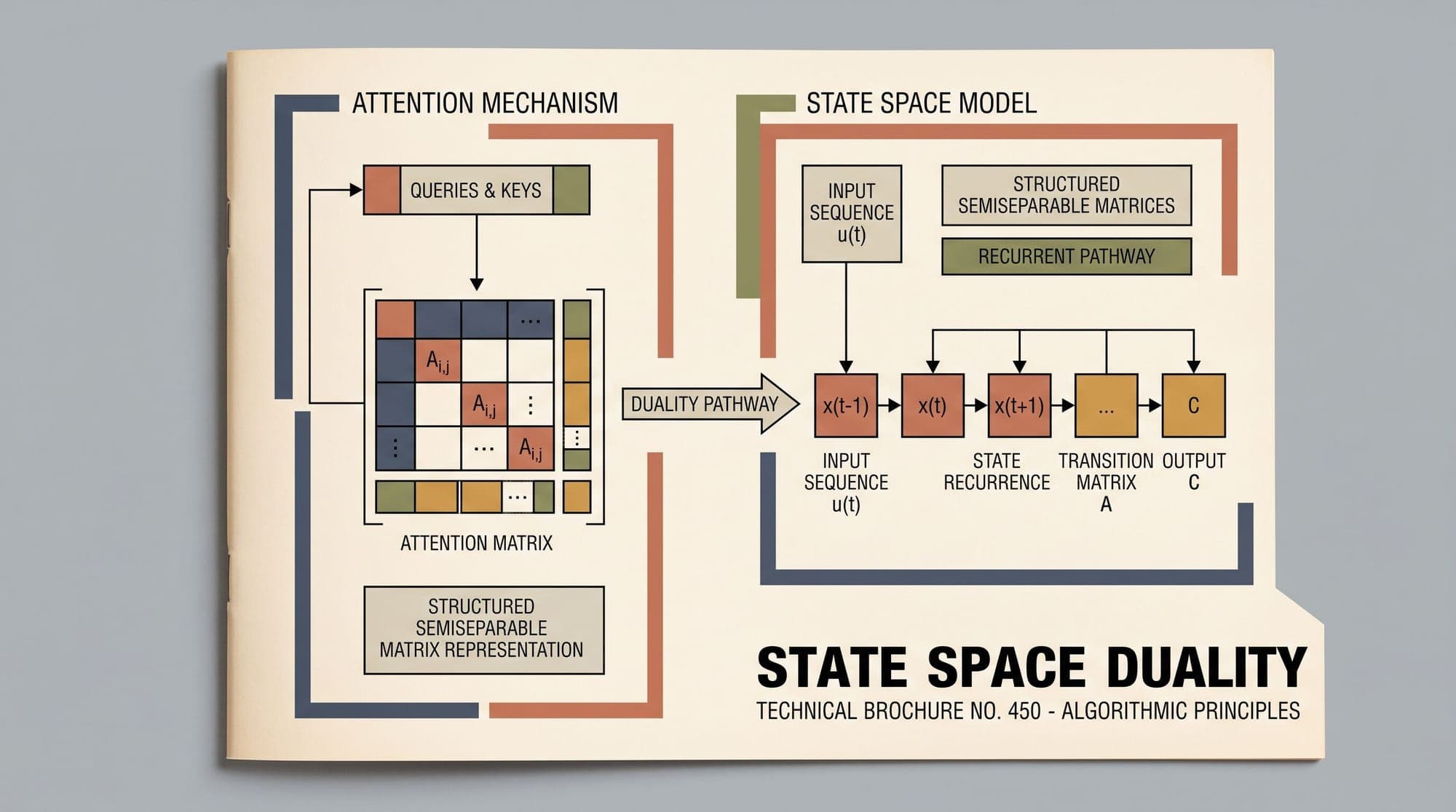
  17. State Space Duality and Mamba-2: How Semiseparable Matrices Unify Attention and SSMs

    For years, deep sequence modeling operated under a structural divide. On one side stood the Transformer architecture, anchored by softmax attention. Softmax attention scales quadratically in compute and memory with sequence length (O(T^2)), but its operations map cleanly to dense General Matrix Multiplications (GEMMs), maximizing utilization of GPU Tensor Cores. On the other side stood Structured State Space Models (SSMs), such as S4 and Mamba-1. Structured SSMs scale linearly in time (O(T · N))

    AI
    6 min read
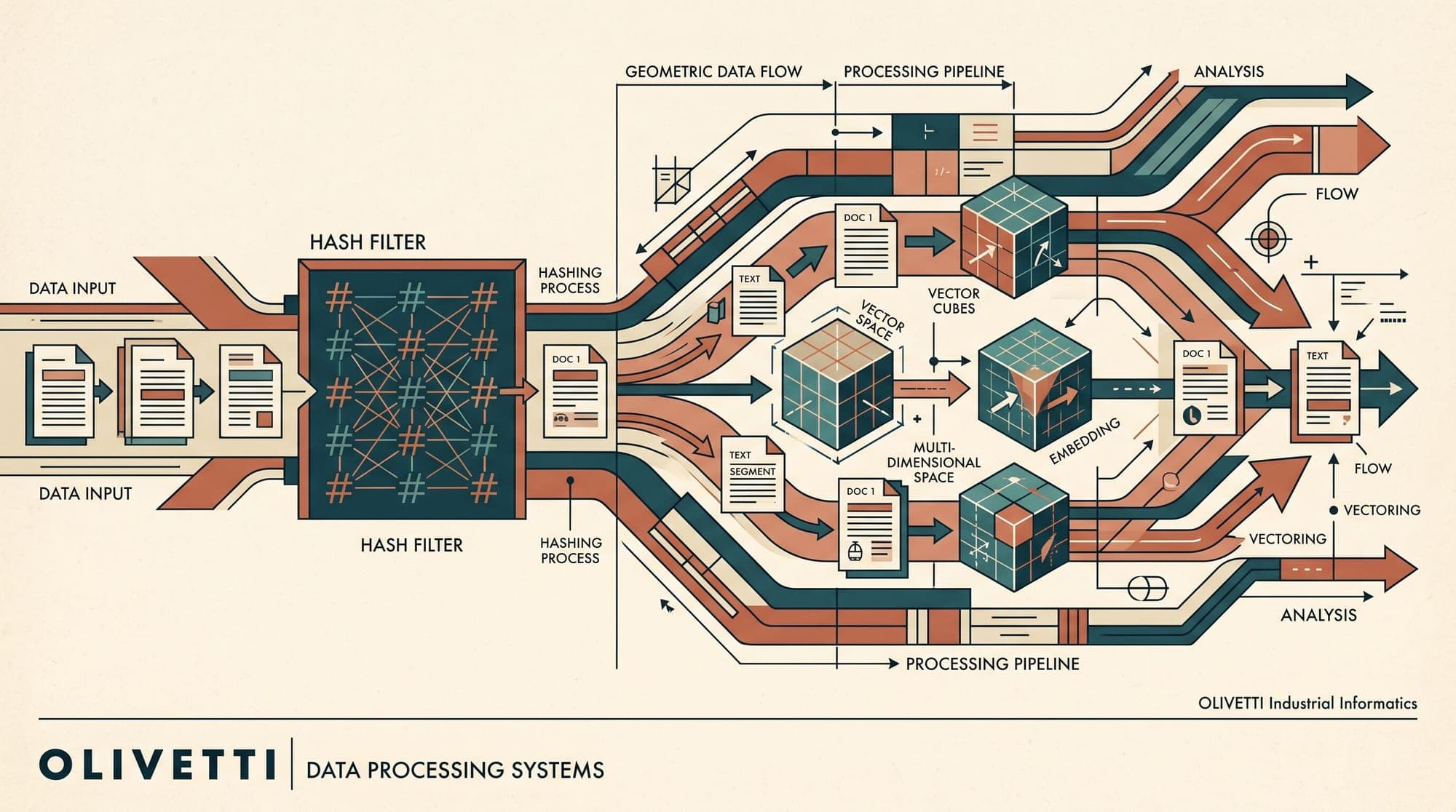
  18. Data Ingestion and Incremental Sync for Production RAG: CDC Streams, Content Hashing, Backpressure, and Zero-Downtime Indexing

    Maintaining retrieval-augmented generation (RAG) systems in production introduces a fundamental distributed systems challenge that rarely surfaces in proof-of-concept architectures: state synchronization. While initial ingestion across a static document corpus is straightforward, production data sources (PostgreSQL databases, transactional stores, object storage, and enterprise knowledge hubs) undergo continuous mutation. Records are inserted, updated, soft-deleted, and reassigned new access per

    RAG
    8 min read
  19. Unsloth Releases Dynamic V3.0 GGUFs for Qwen 3.8 27B with 1-Bit Mode and MTP

    Unsloth AI has published its Dynamic V3.0 quantization suite for Alibaba's Qwen 3.8 27B model family, releasing optimized GGUF and NVFP4 checkpoints alongside public calibration matrices. The release claims a greater than 10 percent increase in top-1 percent accuracy at identical file sizes compared to standard baseline quantizations, while introducing an ultra-low-bit dynamic tier that operates within 8GB of memory. Qwen 3.8 27B is a dense vision-language model utilizing hybrid attention layer

    Open Weights
    2 min read
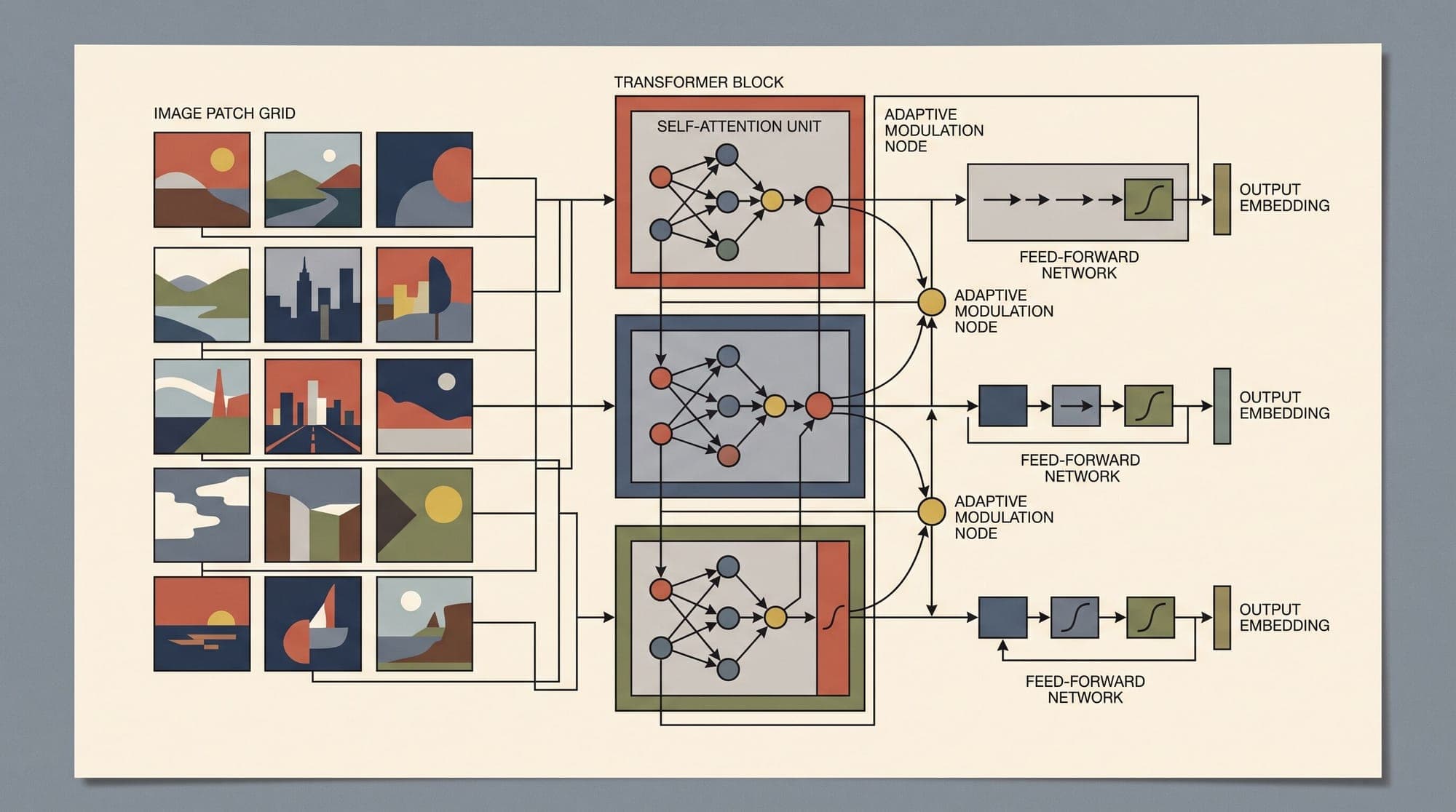
  20. Diffusion Transformers (DiT): How Patchification and adaLN-Zero Replaced U-Nets in Generative AI

    Generative visual models relied for years on convolutional U-Net architectures to execute iterative denoising. From Denoising Diffusion Probabilistic Models (DDPM) and Ablated Diffusion Models (ADM) to Latent Diffusion Models (LDMs) behind Stable Diffusion, convolutional backbones served as the default engine for image synthesis. While convolutional inductive biases provided translation equivariance and local spatial hierarchies, they imposed architectural rigidities that resisted compute scalin

    AI
    8 min read