
Your Zero-Retention Flag Only Binds the First Hop
An AI router is a broker. A developer's app sends a prompt to OpenRouter or Vercel's AI Gateway instead of Anthropic or OpenAI directly, and the router picks an upstream inference provider on price or fit. The pitch is cost and flexibility. The fine print is that the prompt, often carrying source code, credentials and internal documents, passes through companies the customer never chose.
How often does that data leave the path you paid for? HD Moore, Dragos' chief research officer and the author of Metasploit, ran the experiment himself. Between July and November 2026 his team sent roughly two million prompts containing unique, never-used-before secrets through widely used AI services, then watched the internet for the secrets to show up somewhere they should not. Dragos published the findings on November 21; Ars Technica's Dan Goodin covered the effort the same day.
How the tripwires worked
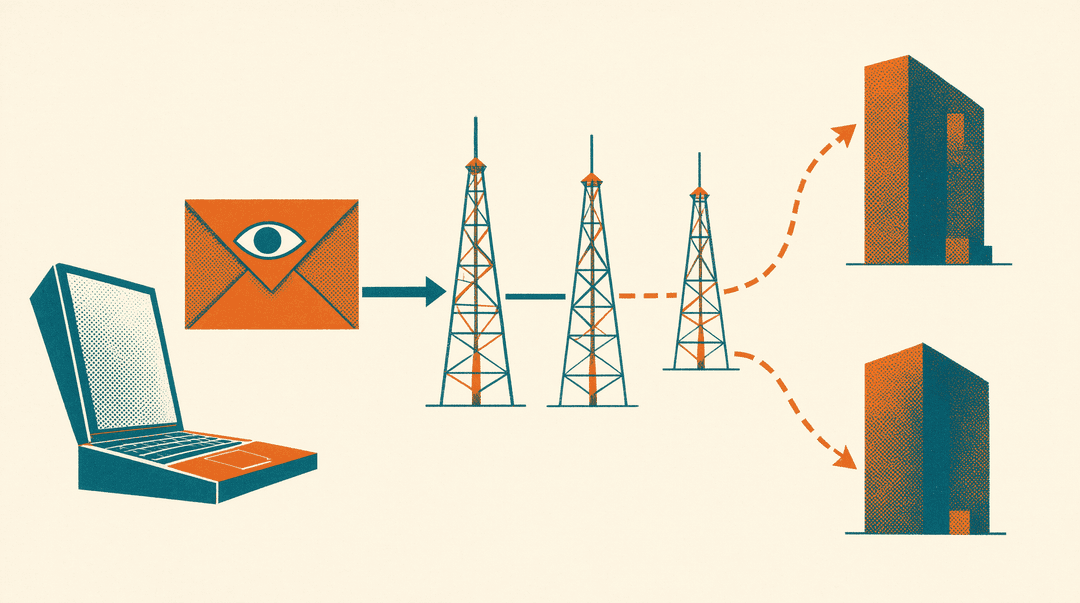
Each prompt carried one canary: a real AWS access key bound to an empty, fully logged account, an SSH password, a unique URL or DNS name, or a private git repository reference. Every secret was seeded into exactly one prompt sent to one provider, and Moore controlled the infrastructure the secrets pointed at. If a key gets used or a URL gets fetched, the team knows precisely which prompt, model, router and privacy setting leaked. Thinkst's free Canarytokens service started the experiment; it scaled so well that Dragos built a dedicated seeding platform with its own DNS, web, git, SSH, database and mail services.
Three findings came back, and they get worse in order.
Someone is already inside
Activity indicated that data from at least three AI providers had been exposed. Seeded prompts appeared in attempts against Dragos' controlled systems and canary AWS accounts. None of the three providers knew they were breached until Dragos notified them.
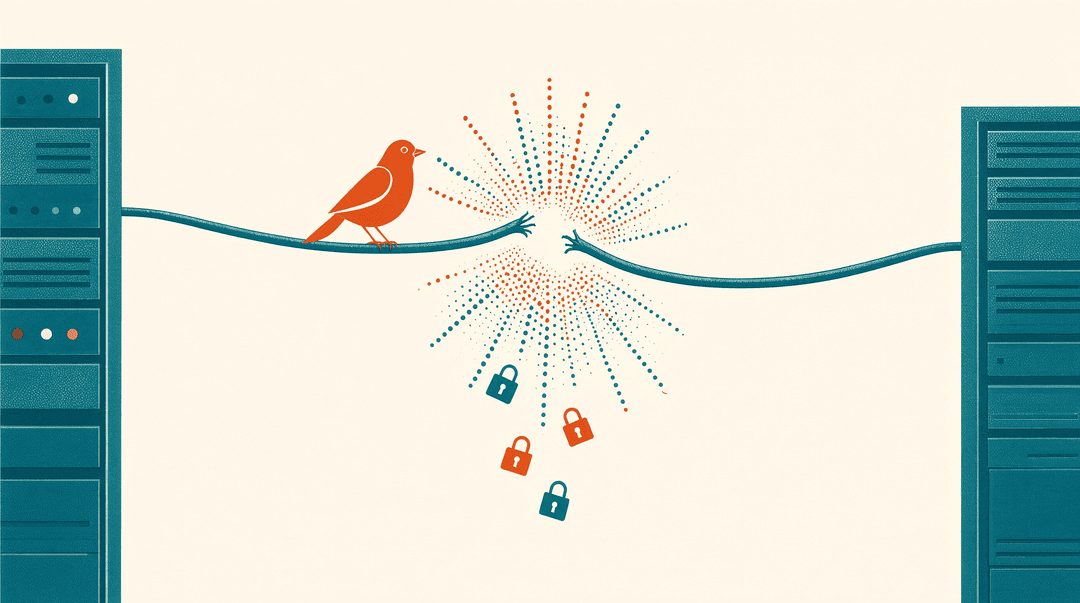
The largest incident: a couple hundred AWS keys sent in one provider's windows in late October. Every request in those windows was stolen, including requests the provider had rejected before a model even ran. That places the copying at the provider's front door, not deep in the inference stack. Attacker behavior after theft was predictable and fast. Keys were tested within hours. Then S3 bucket listings, sweeps of Secrets Manager and Parameter Store, then attempts to enable hosted models in Bedrock, mint Bedrock API keys, and add IAM users for persistence. The bait keys triggered tens of thousands of AWS API calls in total. One adversary appears to have held two providers at once: secrets from both were used almost immediately from a single rented server, with tooling that migrated from a script faking Chrome on Windows to Boto3 in OrbStack to the AWS CLI on Kali Linux. On November 1 the same actor added ARTEX, the LLM-driven pentesting framework we covered last week as the tool behind the European Commission cyberattack. Dragos notes ARTEX barely contributed here, but its user agent strings, artex-agent and artex-judge-r121, are worth adding to detections.
The mid-July victim initially assumed a misconfigured internal tool. It was a compromise of the provider's own credentials tooling. That provider has still not publicly disclosed the incident, and its stolen data was still producing login attempts in late October.
The reseller bazaar needs no exploit
The second finding required no attacker at all. In inference marketplaces, sellers offering popular models at the lowest price can simply enable request logging and read every prompt that comes through. What surprised the team was how manual it was. One seller opened two seeded URLs from a home broadband connection a day and a half later and began guessing usernames at a login page by hand. Someone on a Mac in France typed seeded passwords into root SSH attempts, four tries in two minutes, then tested several AWS keys in one session. Prompts routed through other sellers for the same model were never touched: the leak follows the seller, not the platform. And one router that advertised direct paths was quietly forwarding traffic into the marketplace. Told about it, the router said it had stopped.
The privacy checkbox binds no one
The third finding is the one that touches every compliant-looking deployment. A Chinese AI lab's systems fetched secret URLs from more than half of the prompts sent to its models between July and October, including roughly two-thirds of requests explicitly marked no data collection or zero data retention. The scraper typically appeared two or three days after the request. Because several US hosting providers resell that lab's models, prompts sent to US providers, chosen specifically to keep data in the US, triggered the identical scraper.
Large US providers failed their own policies too.
One kept crawling a seeded URL for more than two months after a single call to its search endpoint. Another runs a scraper that returns days after each request regardless of which router delivered it. The strangest data point: 24 days after a ZDR-flagged prompt went to a US-based provider, its secret link was posted into a Feishu company chat in China and opened from three desktops and three phones in Beijing and Shanghai within two minutes. Dragos' disclosure to that provider included only the first eight characters of the link, so whoever pasted it was reading a stored copy of the full prompt.
To find out who was actually serving requests, the team built a traceroute for inference: a callback image URL exposes every system that fetches it, and nested error formats from stacked routers reveal undisclosed hops. About two thousand routes traced so far; several hundred include an unidentifiable system, a handful route through a company that was never on the advertised path, and one marketplace seller was quietly adding around a thousand hidden tokens to every prompt it served.
What it costs to opt out
Dragos' own advice, in rough order of protection: self-host, with a price ladder from a $6,950 NVIDIA DGX Spark to a $22,299 Mac Studio with 512 GB to $570,000 for an eight-GPU B300 server; or go directly to a first-tier provider, one contract and one privacy policy; or use routers only after picking the upstream providers yourself and verifying the privacy setting actually changes where requests go, while avoiding reseller marketplaces, some of which pay in cryptocurrency for a reason. Failing all of that: seed your own canaries into agent contexts and treat any use as an incident, and turn on secret filtering, which helps but cannot scrub the data that does not look like an API key.
The summary line from the report is the one to put on the wall of every procurement meeting: where your prompts go is a decision, and if you do not make it, the lowest price will make it for you.
Sources
