

The European Commission spent more than ten days fending off a cyberattack in which international hackers used ARTEX, a publicly available AI-powered penetration-testing framework, according to a POLITICO Brussels Playbook exclusive published November 19, 2026. CERT-EU, the cybersecurity service for EU institutions, detected the use of the tool earlier this month.
It is the first confirmed case of an agentic AI hacking framework being turned against a major supranational institution, and it landed on systems every Commission employee touches: payroll, leave and timesheets.
What went down
Two internal platforms were taken offline as a precaution. Sysper, the HR system staff use to view payslips, log work hours and request leave, and MyPMO, which handles medical reimbursements, stayed down for more than ten days. Both were restored earlier this week, though Sysper briefly crashed again on November 18. Translation services were also disrupted on November 17.
Salaries, for what it says about blast radius, landed as usual. Some officials, according to POLITICO, could not complete routine HR tasks and complained about the lack of internal communication; IT initially attributed one Sysper outage to a "general issue" without mentioning the attack.
The Commission convened an emergency meeting of its Corporate Management Board, its highest internal crisis body, and Henna Virkkunen, the executive vice president responsible for technology, briefed fellow commissioners on Wednesday. Spokesperson Thomas Regnier confirmed the institution was targeted and said the Commission believes most of the attack is contained. Whether staff personal data was accessed or stolen is still unknown, and no attacker has been named.
What ARTEX actually is
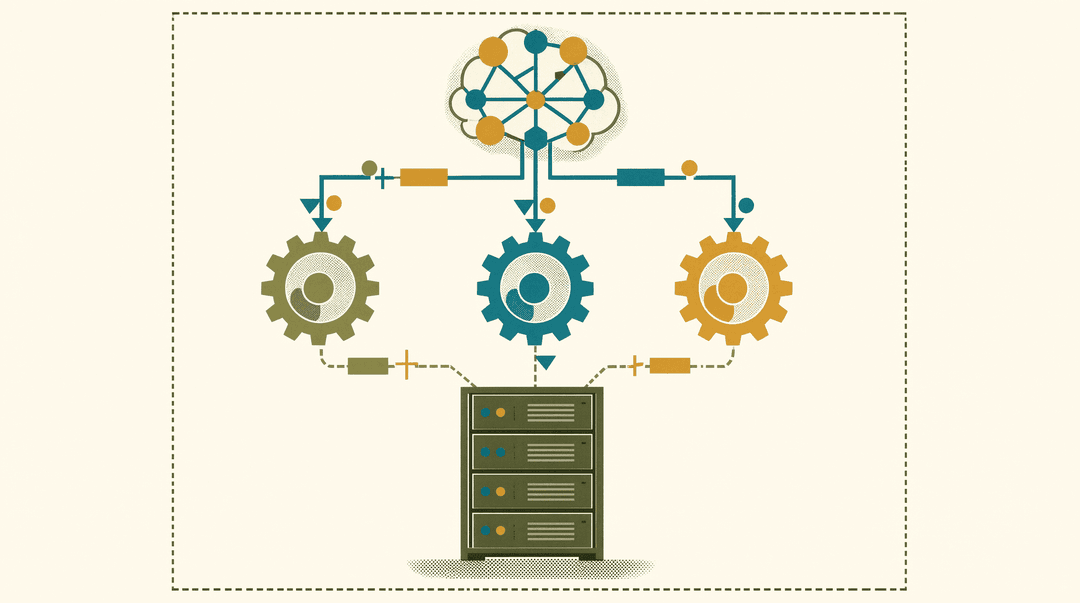
Per CERT-EU's own description, ARTEX is an open-source, LLM-driven autonomous penetration-testing platform. An operator states a security objective in natural language. ARTEX decomposes it into goals and intents, then agent workers execute reconnaissance and testing steps autonomously within a declared scope, using real tooling rather than simulations. It ships no model of its own; operators plug in any compatible external LLM.
Two details from the CERT-EU advisory matter for defenders. First, scope compliance relies on configurable rules and the model's own judgment. There is no hard technical enforcement keeping the agents inside the lines. Second, the tool's value to attackers is scale, speed and persistence: it can grind through large numbers of low-complexity misconfigurations that human testers would notice but never have time to check, and it can work long attack chains without fatigue.
Following reports of misuse, the original author took the repository offline in October 2026. What circulates now are independent forks, so takedowns do not stop supply.
A pattern, not an isolated incident
CERT-EU says it has observed multiple threat actors worldwide using ARTEX recently, and that similar AI-driven campaigns against EU institutions highly likely involved the same tool. Its assessment: public availability will accelerate adoption by threat actors, producing more frequent, faster and more scalable automated attacks with higher success rates.
The vendor research trail is consistent. Microsoft documented a tracked intrusion (Storm-0940) that used ARTEX in a ConnectWise supply-chain compromise in October. Google's Threat Intelligence Group has written on ARTEX's entry into agentic offensive frameworks. South Korean financial institutions were probed by an unidentified actor using the tool, per CrowdStrike. The FBI issued a FLASH alert on ARTEX on November 13, and security vendor Barracuda reported attackers using it to move through 10 percent of its cloud tenant accounts in 44 hours.
The Commission has now had three incidents this year: a January breach of its staff mobile-device management system that exposed limited names and phone numbers, a March cloud breach tied to the Trivy supply-chain attack that hit the public Europa platform, and this one.
The uncomfortable summary for the rest of us: the tool is the story more than the target is. Anyone can run ARTEX forks, so the framework says nothing about who pulled the trigger, while telling defenders a great deal about what automated, patient, LLM-driven intrusion looks like at scale.
Sources
- POLITICO Brussels Playbook: Cyberattack hits the Commission
- CERT-EU: From Penetration Testing to Cyber Threat, Beware of ARTEX
- Cyber Security News: Hackers Target European Commission with ARTEX AI Tool
- Techmeme: European Commission confirms cyberattack, ARTEX use
- Microsoft Security: Storm-0940 uses ARTEX in ConnectWise supply-chain compromise
- Google Threat Intelligence: ARTEX and Friends Enter Agentic Offensive Frameworks
- CrowdStrike: Unknown threat actor uses ARTEX to target South Korean finance
