
Every major AI vendor now sells the same headline promise: "we don't train on your data." The sentence is true or false depending on which product tier you are on, which endpoint you call, and whether anyone on your team clicked a thumbs-down button. Reading the published policies of OpenAI, Anthropic, Google, Microsoft and xAI side by side makes one thing clear: there are not one or two privacy switches in this market. There are three, and no vendor gives you all three at once without a signed agreement.
Three separate promises
The controls that matter, and that the vendors keep bundling rhetorically, are:
- Training exclusion. Is your prompt eligible to become a future model's weight update?
- Retention. Does the vendor store the prompt and the response after answering you, and for how long?
- Human review. Can a person, or a safety pipeline, read the content?
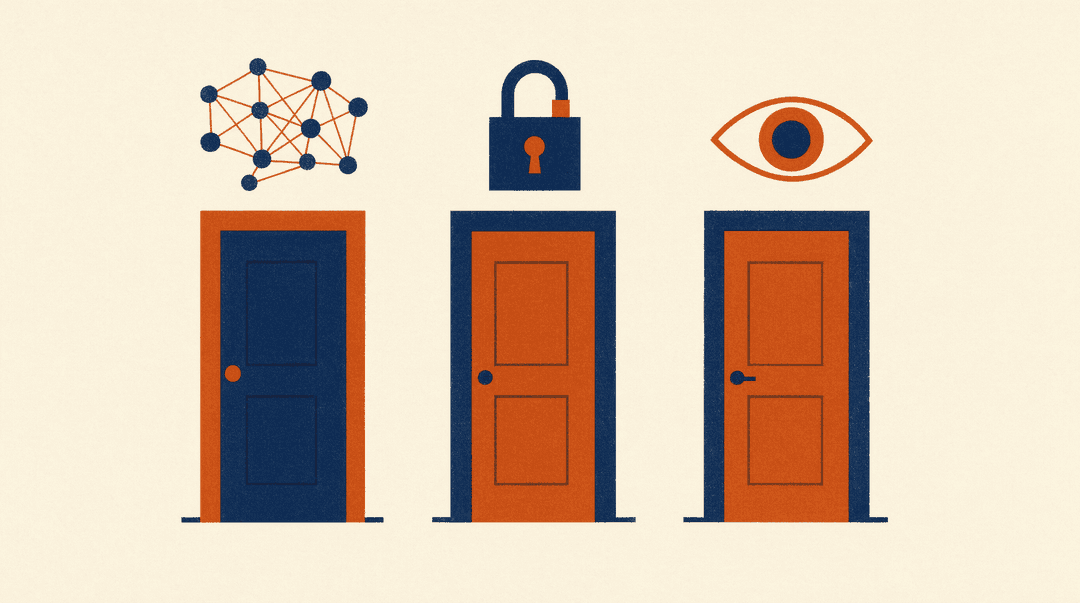
Security teams routinely treat the first as a proxy for the other two. It is not. OpenAI's own help documentation spells out that the training control and the chat history control are separate settings, and that turning off training leaves your conversations in place in your history. Teleskope's analysis of zero-data-retention policy makes the sharper version of the point: "no training" governs model improvement, "no retention" governs storage, and conflating them "leaves a real gap."
The practical consequence is that each promise is procured separately. Training exclusion usually comes free at the business tier. Retention limits come with an approved agreement. Removal of human review comes almost nowhere, because every vendor keeps abuse-monitoring rights even when it promises not to train.
What the no-training promise actually covers
OpenAI. Business data is excluded from training by default: the enterprise privacy page commits that inputs and outputs from ChatGPT Business, Enterprise, Edu and the API are not used to train models unless you explicitly opt in. The consumer story is inverted. On Free and Plus accounts, OpenAI may use your conversations to improve its models unless you switch the control off, a default that triggered a public backlash in September 2025. The API has had a no-training default since March 1, 2023, which makes it the most privacy-relevant tier difference in the largest AI product on the market: the employee using their personal ChatGPT login is on the training-by-default side of the line, and the same employee's company API key is on the other.
Anthropic. The Commercial Terms of Service carry what reads as the strongest sentence in the industry: "Anthropic may not train models on Customer Content from Services." That is a contractual prohibition rather than a revocable policy page, and it covers Claude for Work, Claude Gov, Claude for Education, and the API, including via Amazon Bedrock and Google Vertex. Consumer plans moved the other way. Anthropic's September 2025 consumer terms update trains new models on chats and coding sessions from Free, Pro and Max accounts when the user's setting is on, including Claude Code used from those accounts. Commercial accounts were explicitly excluded from that change.
Google. The split is by billing, not by product polish. Under the Gemini API terms, paid-service traffic (anything under a project with an active Cloud Billing account) is not used to improve Google products, while free-tier and unbilled AI Studio submissions are used for product improvement and may be reviewed by humans. One 2026 wrinkle: AI Studio turned developer logging on by default for projects created on or after October 26, 2026. The policy page is careful that logs are yours by default and sharing them for model training is a separate dataset opt-in, but it is a reminder that defaults move.
Microsoft. Azure's documentation for Foundry models sold by Azure is blunt: the models are stateless, prompts and completions are not stored in the model, are not available to other customers, are not available to OpenAI, and are not used to train foundation models without your permission. The caveats live in features rather than inference: Assistants threads, files, vector stores and stored completions keep content under their own lifecycle rules.
xAI. The consumer default is the most permissive of the five. Grok may use your conversations to train xAI's models unless you opt out, and for non-EU users your public X posts are also training inputs by default. xAI's consumer FAQ adds a region-dependent trap: in some regions outside the EU and UK, usage of Grok without logging in cannot be opted out of training at all. The API side is conventional by comparison: xAI says it never trains on API inputs or outputs without explicit permission, retaining them encrypted for 30 days for abuse auditing, with zero-data-retention available.
The feedback exception
Here is where the policies converge in a way no marketing page mentions: your rating clicks reopen the training door that the tier closed.
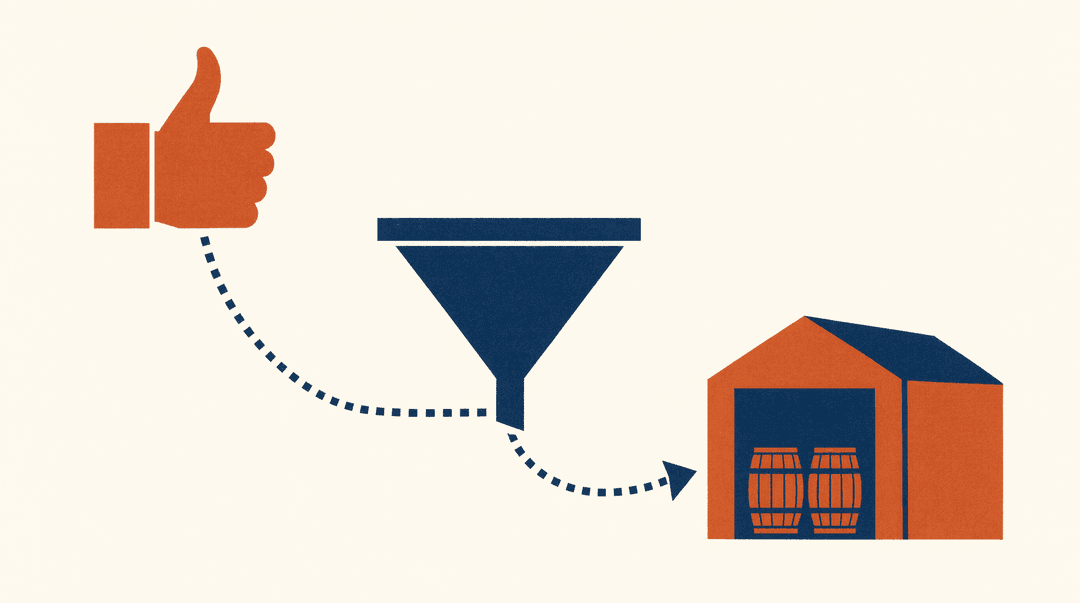
- OpenAI's data-controls help page states that if you give thumbs-up or thumbs-down feedback, "the entire conversation associated with that feedback may be used to train OpenAI models." Not the message. The whole thread.
- Anthropic's privacy center says a conversation you rate or report as a bug may be used for training, and Anthropic retains that feedback for up to 5 years after separating it from your account identifiers. Team and Enterprise owners have to know to block it, via the Rate chats setting.
- xAI's FAQ states that even after you opt out of training, voluntarily submitted feedback may still be used.
One employee habitually thumbs-downing bad answers turns a no-training tier into a sampling program. This is a configuration decision, not a policy loophole, and almost nobody configures it.
Retention is a different contract
With training covered, the storage clock keeps running. The standard API posture across OpenAI, Anthropic, xAI and Azure is roughly 30 days of prompt-and-response logging for abuse monitoring, with Google's paid tier configurable and its free tier holding data for 55 days. Zero-retention products exist on top of that base, and each comes with its own fine print:
- OpenAI ZDR is an approved, opt-in control for eligible endpoints, not a portal toggle. Under it, prompts and responses are not retained after the request completes and the
storeparameter is forced false. It does not apply to ChatGPT plans at all. Notably, safety review was the reason labs said they had to keep prompts: OpenAI's ZDR page says it began rolling out "Private Safety Processing" to API customers on September 22, 2026, which is its term for running safety checks without storing content, offered explicitly so that ZDR can survive more capable models. The technical premise deserves scrutiny from every buyer, but the framing concedes the old point: retention existed because safety review existed. - Google ZDR is per-feature paperwork. The Gemini Enterprise Agent Platform documentation lists separate actions required to reach zero retention:
store=falseon Interactions (logging defaults to true), disabling Gemini Live session resumption, and no route at all for Grounding with Google Search, whose prompts are kept 30 days regardless. Google also states that its 24-hour in-memory cache does not violate ZDR, which is a definition of "retention" worth knowing before you inherit it in a contract. - Azure has no self-service ZDR toggle. The documented path is stateless APIs, verified
ContentLogging=false, avoidance of storage-backed features, and a negotiated modified-abuse-monitoring approval. - Anthropic sells no ZDR product at the API level; the commercial posture is the 30-day deletion window, shortened once in 2025 and since back at baseline per its privacy center.
What to actually ask a vendor
If you take the market as it is documented in November 2026, the diligence checklist writes itself:
- Which tier is this product on, and does training exclusion ride the contract or a setting an admin can flip?
- What is the storage clock on prompts and completions, and what survives it (feedback, threads, vector stores, eval traces)?
- Does feedback capture reopen training, and can it be disabled org-wide?
- Does ZDR, if you buy it, cover every endpoint you call, or does one grounding or live feature put you back on a 30-day clock?
- Who reviews content for safety, under what retention, and did that review just change its name to "processing" on-device?
The market has converged on the same three promises and the same three escapes. Training is mostly off by default where the money is. Retention is thirty days plus exceptions. Human review is forever, it just got quieter about it.
Sources
- OpenAI, Enterprise privacy: https://openai.com/enterprise-privacy
- OpenAI, Data controls in ChatGPT (help center): https://help.openai.com/en/articles/7730893-data-controls-in-chatgpt
- OpenAI, Offering Zero Data Retention for frontier models (incl. September 22, 2026 Private Safety Processing update): https://openai.com/index/offering-zero-data-retention-for-frontier-models
- Anthropic, Is my data used for model training? (Privacy Center): https://privacy.claude.com/en/articles/7996868-is-my-data-used-for-model-training
- Anthropic, How do you use personal data in model training?: https://privacy.claude.com/en/articles/7996885-how-do-you-use-personal-data-in-model-training
- Anthropic, Updates to Consumer Terms and Privacy Policy (September 2025): https://www.anthropic.com/news/updates-to-our-consumer-terms
- Google, Gemini API Additional Terms of Service: https://ai.google.dev/gemini-api/terms
- Google, AI Studio logs policy: https://aistudio.google.com/docs/logs-policy
- Google Cloud, Gemini Enterprise Agent Platform and zero data retention: https://docs.cloud.google.com/gemini-enterprise-agent-platform/resources/zero-data-retention
- Microsoft Learn, Data, privacy, and security for Foundry Models sold by Azure: https://learn.microsoft.com/en-us/azure/foundry/responsible-ai/openai/data-privacy
- xAI, Consumer FAQs: https://x.ai/legal/faq
- xAI, API Security FAQ: https://docs.x.ai/developers/faq/security
- Teleskope, Zero Data Retention: What It Means for AI Security: https://www.teleskope.ai/post/zero-data-retention
- Witness.ai, AI Data Retention: ChatGPT, Claude, Gemini Policies (2026): https://witness.ai/blog/ai-data-retention
