

Signal blocks screenshots by default to keep OS AI agents out of private chats
Signal announced on November 20 that it will restrict screenshots inside the app on iOS 27 and automatically enable a Screen security setting on Android whenever it detects an AI assistant trying to read the Signal screen. The change puts a messaging app in direct conflict with the agentic features Apple and Google have spent 2026 wiring into their operating systems, and Signal is calling its own fix incomplete.
The capture problem, restated
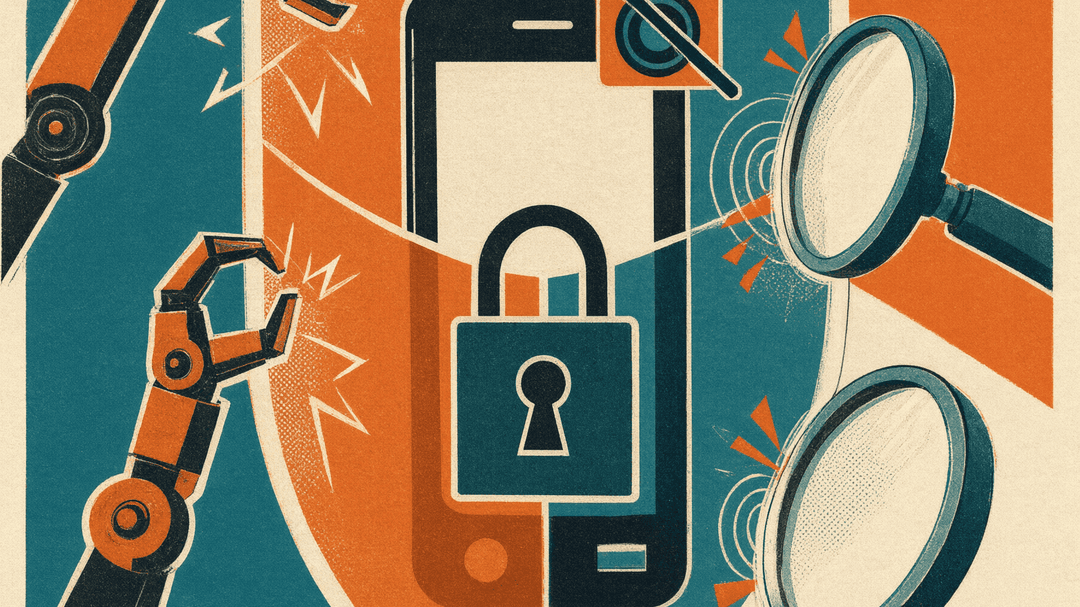
OS-level agents do not read message APIs. They scan whatever is on the screen. Meredith Whittaker, writing for the Signal Foundation, says that once Gemini Intelligence on Android or Siri AI's Onscreen Awareness feature sees a Signal conversation, the data is captured, stored, and made available to whatever local database or remote server the agent uses at that moment, outside Signal's control and imperiling every participant in the chat. That is the same argument Signal made last year when it used screenshot blocking against Microsoft Recall on Windows 11, and the same playbook is now running on mobile.
The remedy has honest gaps, which Signal enumerates. It does not stop agents from reaching content already on the device through the filesystem. It is not active on macOS at all: Signal says it cannot reliably block screenshots there, and points to deprecated APIs whose replacements only work for streaming media and DRM content. Until Apple fixes that, Signal's advice to macOS 27 users is manual, adding Signal to Excluded Apps under Siri in System Settings. Android coverage is also patchy; on many vendor builds Signal cannot detect a screenshot attempt when screenshots are already disabled, so it targets detection of AI screen access instead rather than silently breaking screenshots for users. Users who want screenshots back can disable the protection in app settings, which Signal warns breaks the privacy guarantee for you and your contacts.
What Signal wants from Apple and Google
The post is also a policy document with two concrete asks. First, developers should get an easy, well-documented way to opt an app out of AI data access and processing, covering screen reading, filesystem access, notifications, APIs and other OS frameworks, without gutting the app's core utility. Second, OS vendors should publish technical specifications for how their agents access and process data. Signal explicitly rejects confidential computing as a fix, arguing it leaves the extent of privacy guarantees in the hands of the provider.
Signal says it spent considerable developer time on forensic investigations across Android and iOS just to learn what the agents actually do with application data, and that it is cautiously optimistic Google and Apple are now engaging. It flags third-party agents too, naming Meta's Muse, which it says uses the deep permissions users grant during setup, exploiting accessibility settings designed for people with disabilities as a skeleton key into app data.
The coal mine
Whittaker calls the current state of agentic OS integrations an existential threat to privacy at the application layer and positions Signal as the canary in the coal mine, crediting EFF, which pushed for the app-exclusion control in Siri AI in October. The structural point applies well beyond messaging: if the operating system's default assistant can read any app's screen, every app-level privacy guarantee becomes a negotiation with three platform vendors. For now, Signal's answer is one toggle: Block Siri AI, enabled by default.
Sources
- Signal is Serious About Protecting Your Privacy, Signal Foundation blog, November 20, 2026
- Signal says it will restrict screenshots by default to stop AI agents reading private chats, Reuters, November 20, 2026
- Victory: You can now exclude apps from Siri AI, EFF, October 2026
- Techmeme item on the Signal announcement, November 20, 2026
