

The bottleneck in AI infrastructure is no longer only compute. It is getting data from one chip to another without spending a fortune in electricity. Avicena, a Sunnyvale, California startup, is betting that the answer is light, but not the kind of light everyone else is using.
On 25 November the company announced a Series C of more than $100 million, led by Korean growth investor InterVest, with Tiger Global, Cerberus Capital Management, SK hynix Ventures, Samsung Catalyst Fund, AMD Ventures, Prosperity7 Ventures, Mitsubishi Chemical's Diamond Edge Ventures and Hitachi Ventures participating. The company had raised $120 million in total before the round, according to its Series B announcement, so cumulative funding now sits above $220 million. No valuation was disclosed.
In conjunction with the round, Kevin Pope takes over as CEO from Marco Chisari, and InterVest director John Dongwoo Ha joins the board. Pope said the money will go to expanding the team, accelerating product development and bringing the first product to market next year.
What LightBundle actually does
Avicena's platform, called LightBundle, replaces the lasers in conventional optical interconnects with dense arrays of microLEDs. Data leaves a transmitter chip as light from hundreds of tiny LEDs, travels through multicore fiber, and is picked up by silicon photodetectors on the receiving side. The March 2026 evaluation platform reported by industry press integrates 320 microLED channels running at up to 3.5 Gbps each.
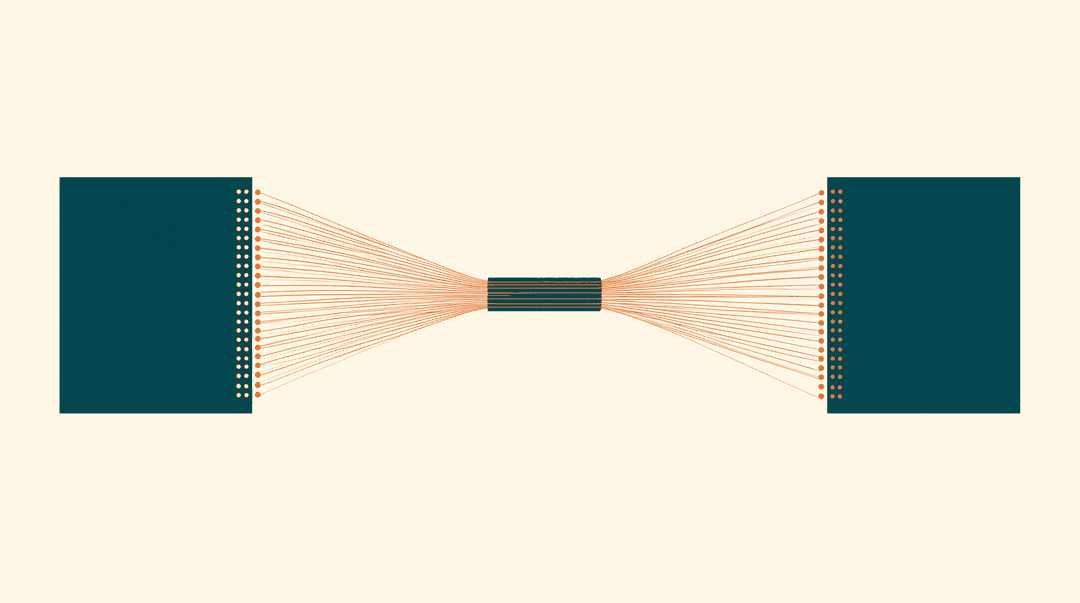
The architecture is what the company calls "wide and slow." Instead of squeezing bandwidth through a handful of very fast laser channels that need complex signal processing, LightBundle spreads it across many slower channels. That removes the need for heavy digital signal correction, which is where much of the power in a link goes. Laser-free designs also sidestep the temperature sensitivity and reliability questions that have kept co-packaged optics out of volume deployment, and microLEDs can ride existing display manufacturing processes.
The problem being attacked is real and shared by everyone building frontier AI systems. Copper links are running into limits on reach, routing density and energy per bit as rack-scale systems grow, and memory bandwidth increasingly caps system performance. Training and inference clusters now move more bytes between accelerators, memory and switches than they used to move inside the chips themselves.
The strategic investors are the story
The investor list says more than the check size. SK hynix and Samsung are the two companies that make the world's HBM, the memory at the center of the current supply crunch. AMD is the second big accelerator vendor. Their ventures arms all put money into a connectivity startup in the same round, and their public quotes point the same direction.
"Energy-efficient optical interconnects are becoming increasingly important to next-generation memory architectures," said Rene Do of SK hynix Ventures. David (Dede) Goldschmidt of Samsung Catalyst Fund framed AI infrastructure growth as "constrained by energy and data movement bandwidth." Patrick Rundell of AMD Ventures said moving data efficiently between compute, memory and networking silicon is "becoming increasingly critical."

When memory makers invest in interconnects, they are hedging the obvious next step: if memory becomes a composable resource instead of packages soldered next to one accelerator, someone has to move those bits cheaply, and whoever controls that link controls a chokepoint in the system.
Racing the incumbents, without orders yet
Avicena is not alone. Ayar Labs raised $500 million in March 2026 for its optical chip-to-chip links, and startups like Celestial AI and majors like Broadcom and Marvell are all working on co-packaged or near-package optics. Dealroom places the Avicena round in the 91st percentile of all-time US semiconductor Series C deals.
The caveat is on the revenue side. The company has shipped 1Tbps evaluation kits since August and demoed a connectorized version at ECOC 2026 in Malaga in September, steps toward serviceability and customer trials. But no production orders have been reported, and first product is still slated for 2027. Optical interconnect startups have a long history of winning demos and losing sockets, because the incumbents' copper roadmaps keep getting extended.
The bet behind this round is that copper cannot be extended again at the bandwidth densities AI systems now demand, and that the firms buying memory at ten times spot prices will pay for anything that moves it cheaper.
Sources
- The Next Web via Techmeme, 26 Nov 2026: Avicena raises $100M+ Series C led by InterVest
- Semiconductor Today, 25 Nov 2026: Avicena raises $100m in Series C funding
- Dealroom News: Avicena raises $100M Series C for microLED optical links
- optics.org, May 2025: Avicena Series B, total capital $120M
- MicroLED-Info: Avicena evaluation platform, 320 microLED channels
