

Four-year-old AI data and annotation startup Micro1 has reached a $500 million gross annualized run rate, expanding fivefold from $100 million eight months ago as foundation model builders scale spending on post-training datasets and reinforcement learning environments.
After accounting for contractor compensation paid to specialized annotators, Micro1 retains approximately 60% to 70% of gross billings, placing its net annual run rate between $150 million and $200 million.
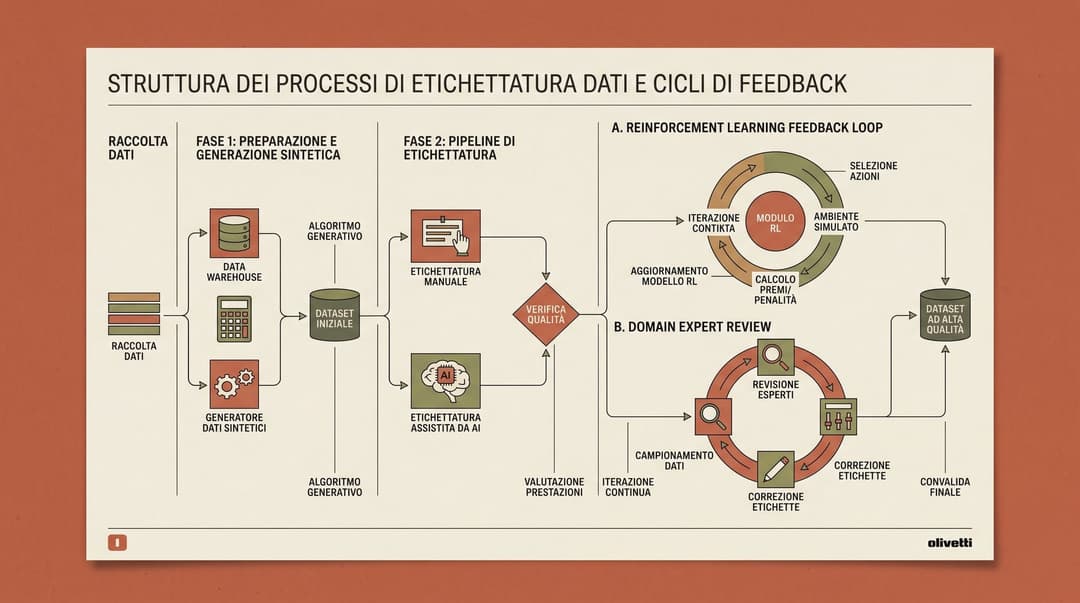
The Shift Toward Expert Human Annotators and Synthetic Data
Originally established as an automated recruiting platform, Micro1 pivoted into data curation after observing that frontier AI developers used its screening systems to source and vet technical talent for model evaluation. The company now structures contractor pools around high-skill domains, employing physicians, lawyers, and scientific researchers to produce ground-truth reasoning trajectories and critique frontier model outputs within reinforcement learning gyms.
In parallel with human-in-the-loop pipelines, the startup has expanded into synthetic data production, including programmatic descriptions of complex video datasets. Reusable, multi-client datasets have yielded gross margins between 80% and 90%, helping offset the higher delivery costs associated with bespoke domain-expert annotation contracts. The firm is also compiling a physical AI dataset for robotics pre-training, employing contributors to capture structured interactions with physical objects in home environments.
Data Spending Scales Across the Ecosystem
The rapid expansion of data suppliers reflects a broader structural change in frontier model development budgets. While infrastructure spend has historically concentrated on compute clusters and GPU procurement, frontier labs are allocating growing fractions of post-training budgets to specialized data curation to sustain reasoning benchmarks.
Micro1 operates in an increasingly crowded marketplace of specialized data vendors. Competitor Mercor reached a $2 billion annualized gross revenue pace earlier this summer, while student and expert hiring platform Handshake crossed $1 billion in annualized gross billings.
Founder Ali Ansari has positioned the company against cross-border data distribution, noting on X that Micro1 restricts its datasets from Chinese AI labs. The company raised its Series A funding at a $500 million valuation in September 2025.
From $7 Million to $500 Million in Under Two Years
Micro1's growth has been steep even by AI standards. CEO Ali Ansari told TechCrunch the company started 2025 with about $7 million in annual recurring revenue. By September 2025 it reported $50 million, when it raised a $35 million Series A at a $500 million valuation led by 01 Advisors, the firm co-founded by former Twitter executives Dick Costolo and Adam Bain. Bain joined the board. In December 2025, Ansari said Micro1 had passed $100 million in ARR. The latest $500 million figure is a gross run rate, which counts the money paid through to contractors.
TechCrunch also reports that Micro1 may have recently raised another round at a significantly higher valuation, according to a person familiar with the company. Micro1 did not comment.
Why Labs Buy Expert Data
The market opened up after Meta invested $14 billion in Scale AI and hired its CEO in 2025. OpenAI and Google said they planned to cut ties with Scale, and rivals such as Micro1, Mercor, and Surge moved in. Scale has denied that it shares confidential information with Meta.
Ansari's pitch is that labs now need data from domain experts, not low-cost generalist labelers. Micro1's AI recruiter, called Zara, interviews and vets applicants. In December the company said it managed thousands of experts across hundreds of domains, many earning close to $100 an hour. "There are Harvard professors and Stanford PhDs spending half their week training AI through Micro1," Ansari said at the time. Experts grade model outputs inside reinforcement learning environments, simulated workspaces used to train AI agents on realistic tasks.
The China Question
Reselling the same off-the-shelf datasets to many buyers is profitable, but it is also controversial. Critics argue that selling such data to Chinese AI developers helps their models catch up with top U.S. models. Ansari posted on X in July that Micro1 does not sell data to Chinese model makers. "Some human data companies work with foreign adversaries. [A]nd the results show today in Kimi K3," he wrote. "We believe it's shameful to claim American AI dominance desires while selling millions worth of data to countries that we are in adversarial competition with."
Where the Market Goes Next
Ansari has said he expects the human data market to grow from $10 billion to $15 billion in late 2025 to nearly $100 billion within two years. He points to two newer segments. The first is large enterprises outside the AI industry that build internal agents and need experts to evaluate them; he predicts evals and human data will grow from 0% to at least 25% of their product budgets. The second is robotics pre-training data, which Micro1 collects from hundreds of generalists recording everyday object interactions at home.
TechCrunch notes that some researchers think future AI spending on data could rival spending on compute. Those are forecasts, not results. For now, Micro1 still trails Mercor and Handshake in gross revenue, and most of its growth comes from frontier AI labs and AI-heavy enterprises.
