Latest / page 39

The latest stories

1230 articles

Articles, page 39

761-780 of 1230
  1. Speculative RAG in Production: Architecture, Multi-Perspective Sampling, and Draft Verification Trade-Offs

    Standard Retrieval-Augmented Generation (RAG) pipelines face an escalating trade-off between retrieval recall and inference latency. To ensure sufficient coverage for ambiguous or complex knowledge-intensive queries, production systems commonly ingest between 10 and 20 candidate passages per query. However, concatenating large document sets directly into the prompt context of a large language model introduces severe bottlenecks: quadratic attention scaling during the prefill phase, elevated Time

    Architecture
    7 min read
  2. OpenAI Adds Native Alpha Transparency to GPT-Image-2 API

    OpenAI has added native transparent background generation to its GPT-Image-2 model via the developer API, enabling direct creation of PNG images with integrated alpha channels. The feature bypasses post-processing segmentation pipelines, allowing developers to generate isolated visual assets directly during the synthesis step. Direct Alpha Generation vs. Post-Processing Traditional visual asset pipelines rely on secondary background-removal models, such as semantic segmentation masks or matti

    AI
    2 min read
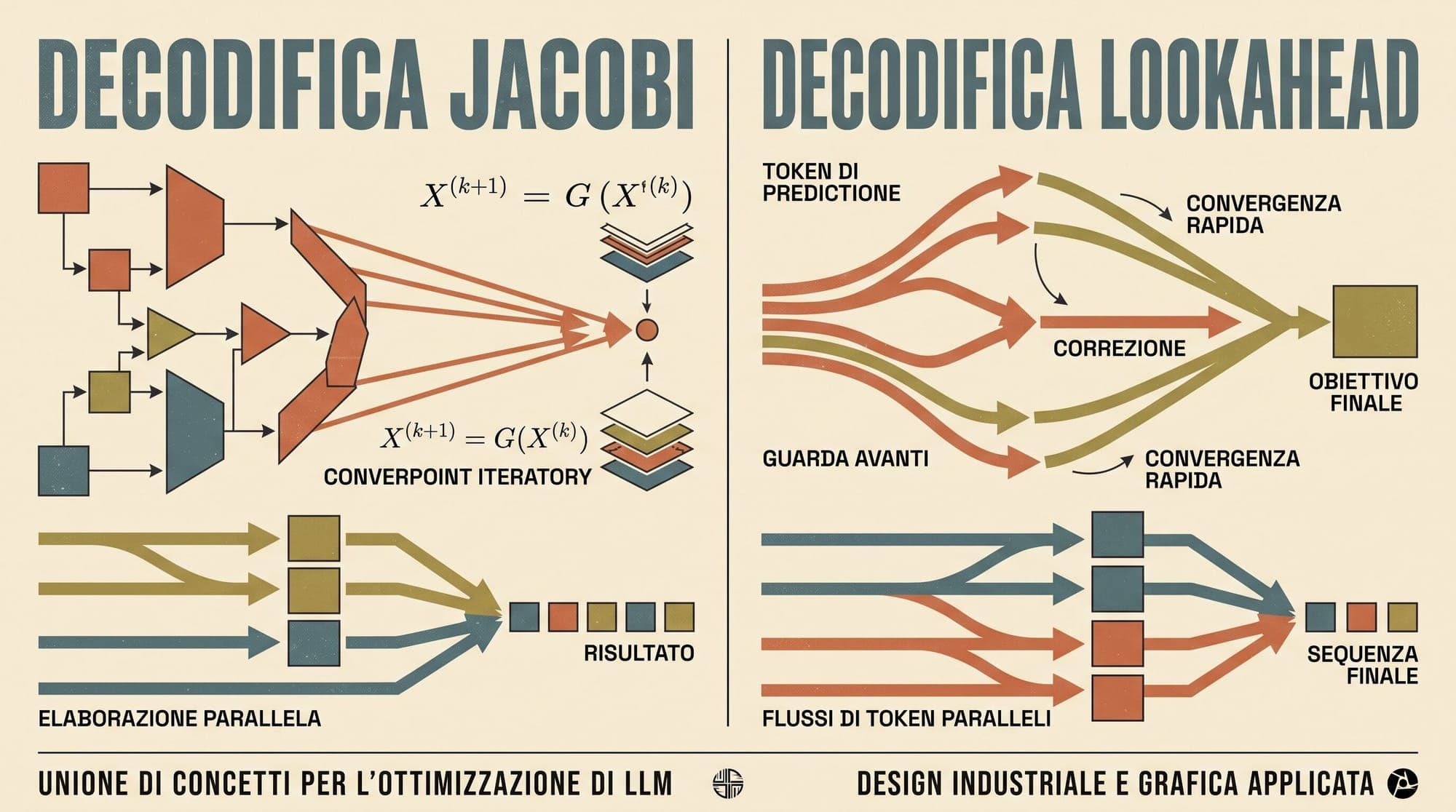
  3. Jacobi and Lookahead Decoding: How Parallel Fixed-Point Iteration Accelerates Autoregressive Inference Without Draft Models

    Standard autoregressive generation in large language models operates as a strictly sequential process. To generate a sequence of $K$ tokens, an inference engine must execute $K$ successive forward passes through the network. In single-request serving regimes (batch size 1), each forward pass is heavily memory-bandwidth bound: the GPU must stream billions of model parameters from High Bandwidth Memory (HBM) into on-chip SRAM to process a single token, leaving tensor compute cores severely underut

    AI
    7 min read
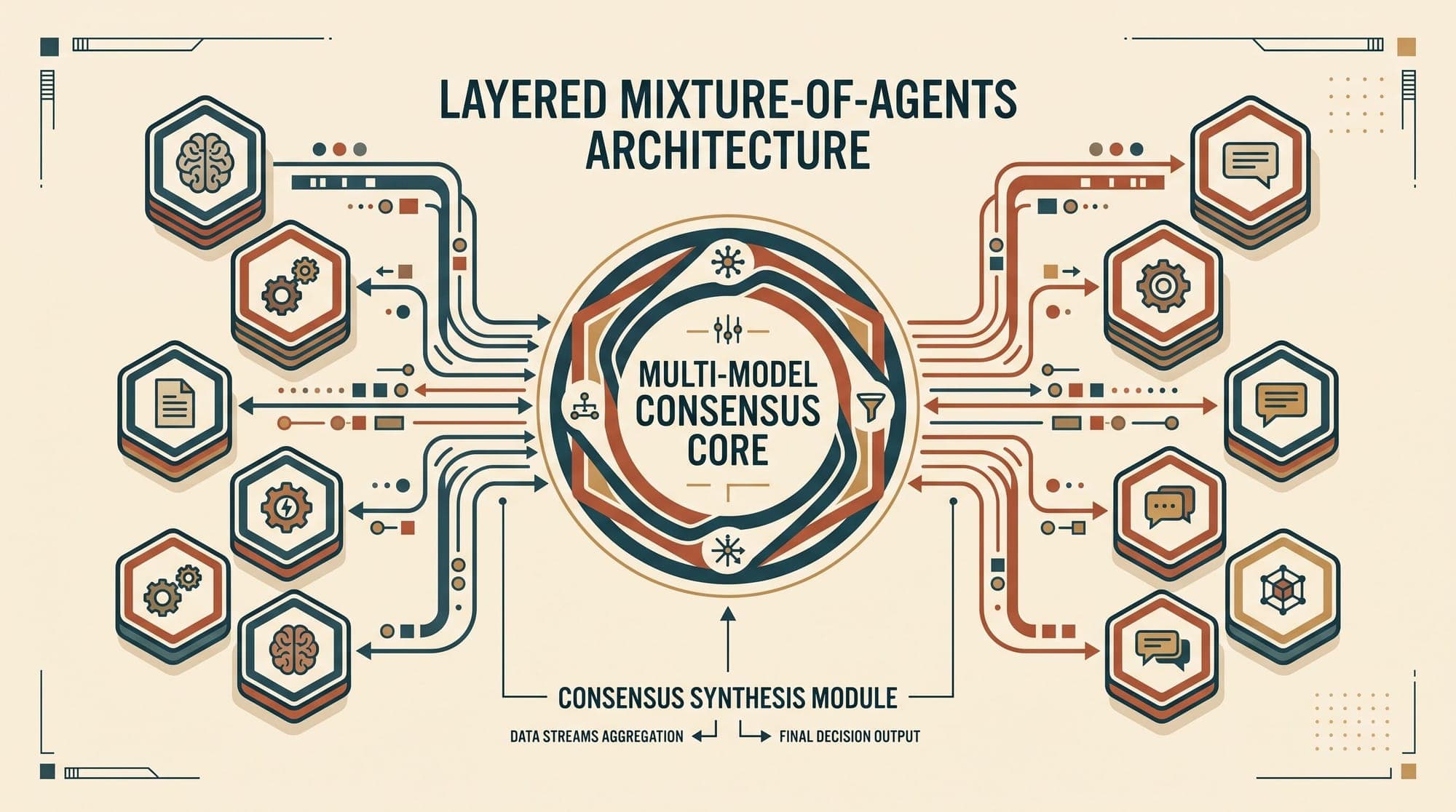
  4. Mixture-of-Agents and Multi-LLM Consensus in Production: Architecture, Layered Synthesis, Latency Budgets, and Cost Trade-Offs

    Single frontier models face physical and economic scaling limits. While model developers continue to scale pre-training compute and post-training reinforcement learning, individual foundation models still exhibit persistent failure modes: domain blind spots, subtle reasoning hallucinations, and inconsistent instruction adherence. To break past the performance ceilings of single models, production engineering teams increasingly deploy multi-model ensemble architectures. The most prominent of the

    AI
    7 min read
  5. Differential Attention in Large Language Models: How Denoising Subtraction Eliminates Attention Noise and Outlier Activations

    In standard transformer architectures, the self-attention mechanism computes pairwise token interactions through the scaled dot-product operator followed by a softmax normalization. While this formulation has underpinned modern large language models, it suffers from an architectural limitation: attention noise. Because the softmax function maps input logits to a strictly positive probability distribution summing to one, it forces probability mass onto irrelevant context tokens. In sequences span

    AI
    6 min read
  6. LLM Output Calibration and Uncertainty Estimation in Production: Token Entropy, Semantic Clustering, and Risk-Controlled Abstention

    Production deployments of large language models frequently fail not because models lack capability, but because they lack reliable uncertainty estimation. Autoregressive language models generate hallucinations with the exact same fluent, assertive cadence as verified ground truth. When an enterprise application relies on downstream actions, database writes, or customer-facing advice, uncalibrated generations introduce severe operational risk. Treating raw token probabilities as calibrated confi

    AI
    6 min read
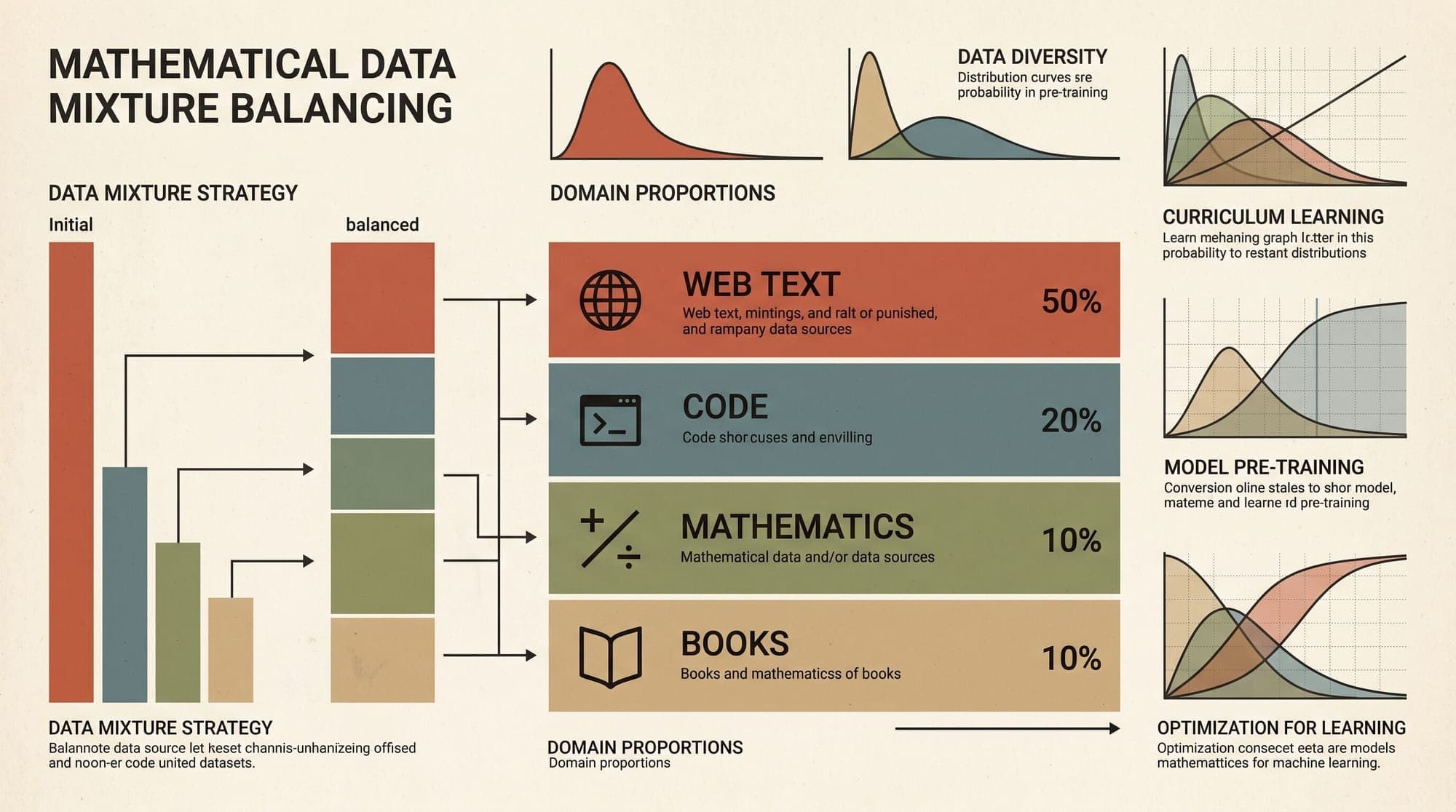
  7. Data Mixing and Domain Scheduling in Large Language Models: How DoReMi, RegMix, and Multi-Stage Annealing Shape Pre-Training Dynamics

    Data Mixing and Domain Scheduling in Large Language Models: How DoReMi, RegMix, and Multi-Stage Annealing Shape Pre-Training Dynamics In large language model pre-training, data composition is as consequential as parameter count and compute budget. While early foundation models relied on raw natural frequencies or manual heuristic filtering to construct training corpora, empirical scaling laws have shown that arbitrary domain ratios cause severe compute inefficiencies. Over-sampling redundant te

    AI
    6 min read
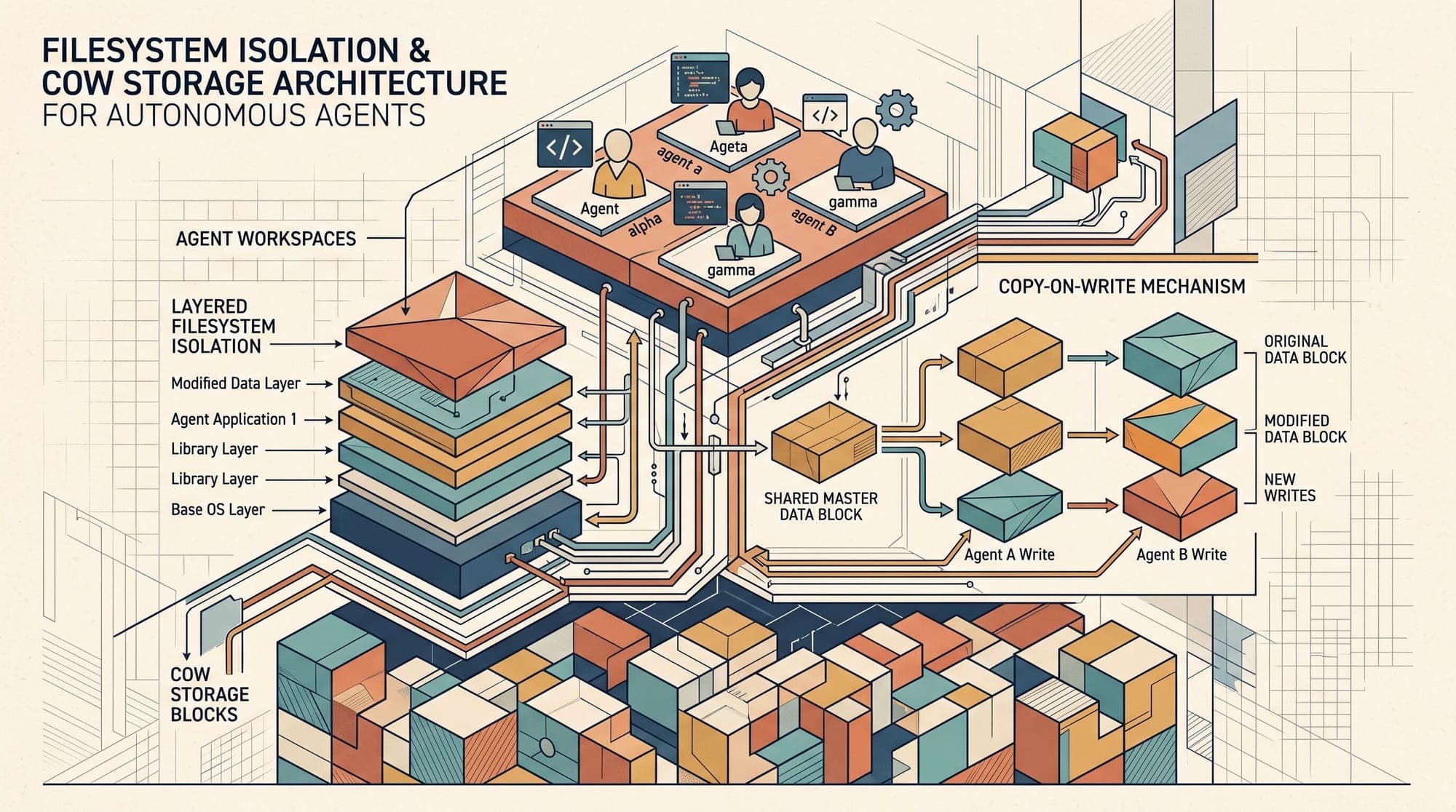
  8. Ephemeral File Systems for AI Coding Agents: Git Worktrees, Rootless OverlayFS, and Copy-on-Write Isolation

    Autonomous AI coding agents frequently execute arbitrary shell commands, modify source code, install third-party dependencies, and run test suites. Granting an unconstrained agent direct write access to a developer's active working tree creates immediate operational hazards: accidental destruction of untracked files, workspace corruption from speculative refactoring, and state leaks across parallel tasks. Heavyweight virtualization solutions like full virtual machines or freshly initialized con

    Analysis
    7 min read
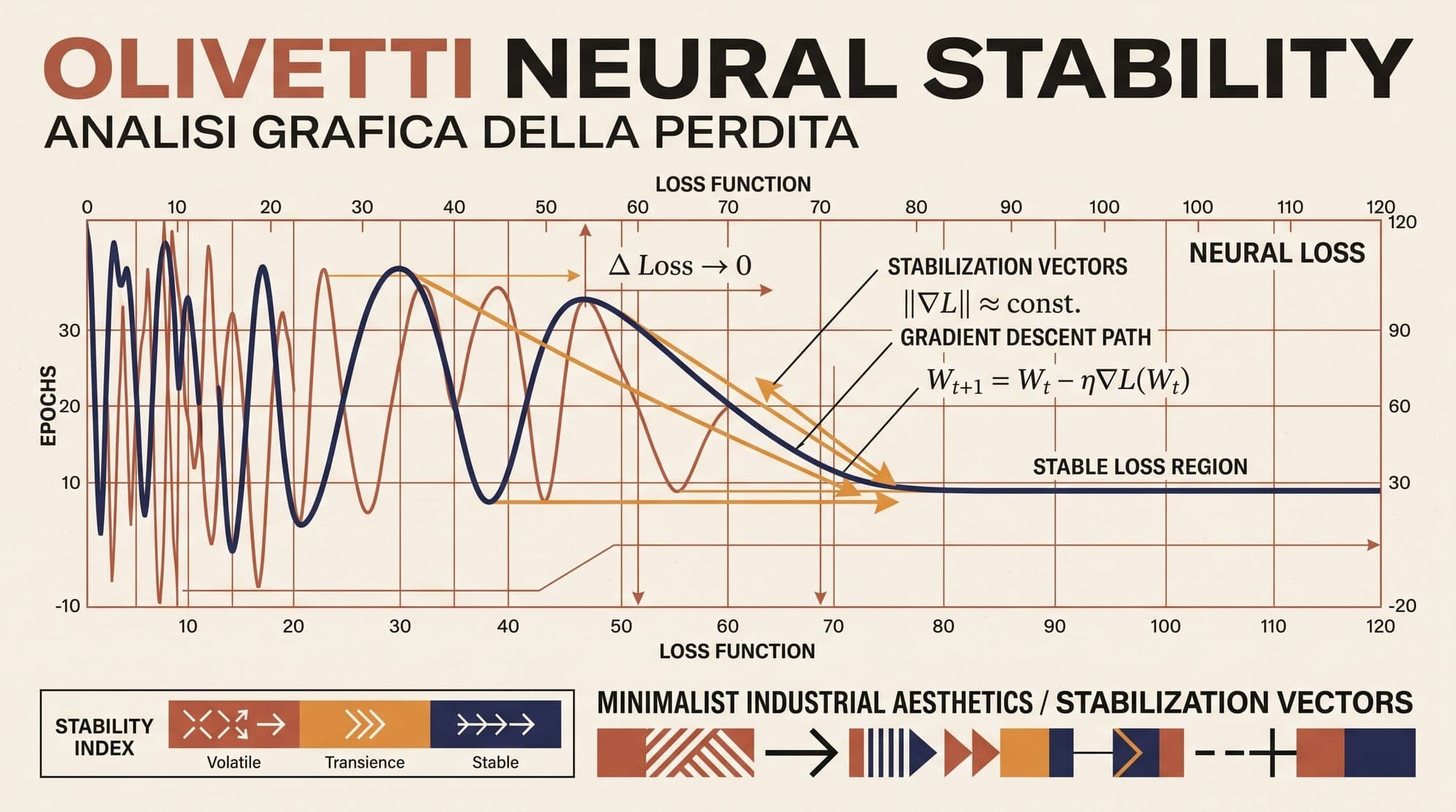
  9. Loss Spikes and Training Stability in Large Language Models: How Attention Logit Drift, z-loss, and QK-Norm Prevent Gradient Explosions

    During the pre-training of modern large language models, few operational failures are as costly as loss spikes. When training clusters containing thousands of GPUs run for weeks across trillions of tokens, a sudden, discontinuous surge in cross-entropy loss can corrupt optimizer momentum buffers, induce numerical overflow in half-precision representations, and permanently degrade downstream model capabilities. In severe cases, models experience catastrophic divergence, forcing engineering teams

    AI
    11 min read
  10. Anthropic-Backed Enterprise Venture Ode Acquires AI Consultancy Casper Studios

    Ode with Anthropic, an enterprise AI transformation company established by Anthropic alongside private equity and growth investors, has acquired AI services consultancy Casper Studios. The transaction combines Ode's custom AI systems engineering with Casper's practice of embedding Anthropic's Claude models into corporate software environments. Financial terms of the transaction were not disclosed. Strategic Focus and Investor Backing Ode was formally established in 2026 through a joint initi

    AI
    2 min read
  11. Deterministic Replay for Production AI Agents: Architecture, Event Sourcing, and State Playback

    Deterministic Replay for Production AI Agents: Architecture, Event Sourcing, and State Playback Debugging multi-step autonomous AI agents in production is notoriously difficult. Unlike traditional deterministic software systems where a stack trace and a fixed set of inputs reproduce an error, autonomous agent workflows suffer from compound non-determinism across multiple infrastructure layers. A failure occurring at step 24 of a coding or research agent cannot reliably be reproduced simply by r

    AI
    6 min read
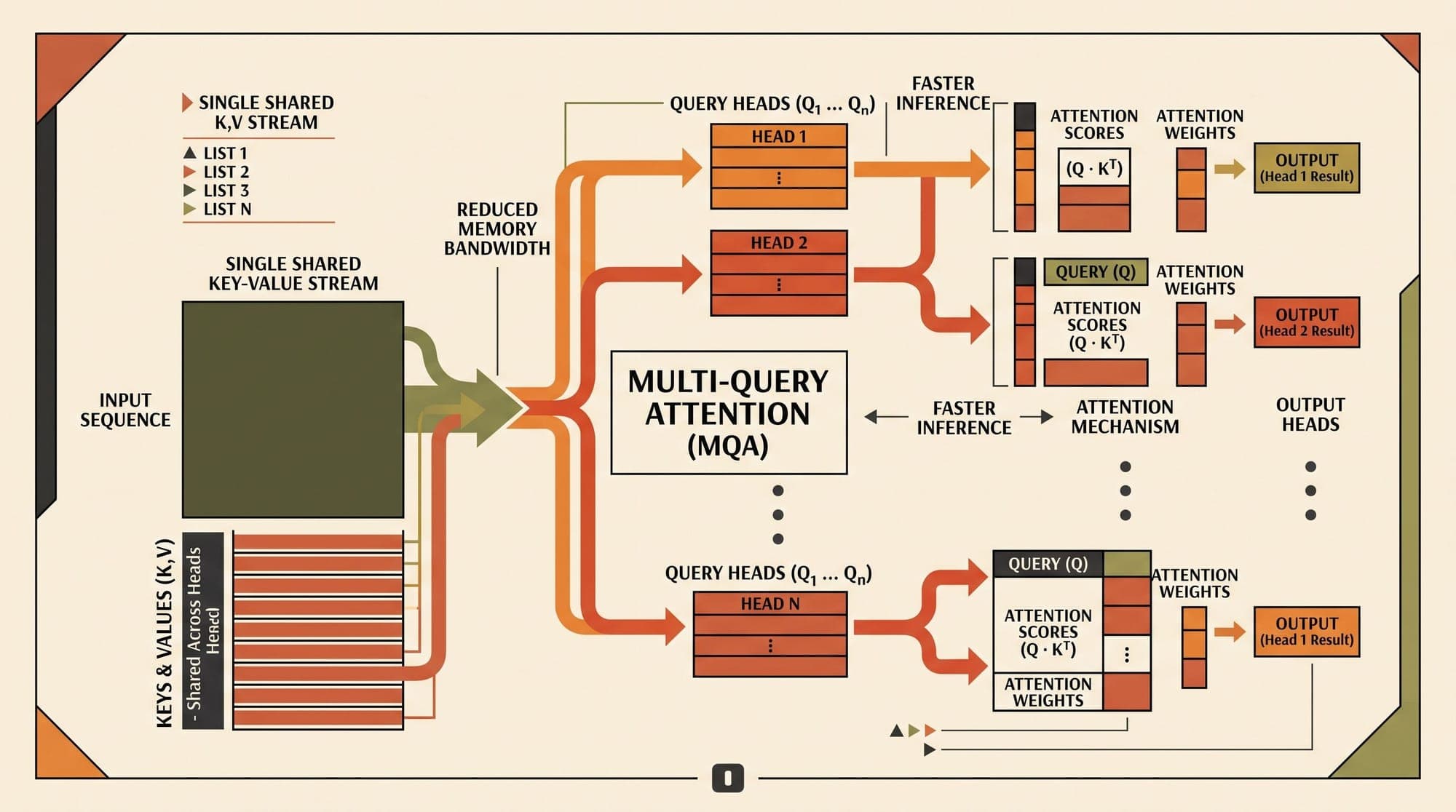
  12. Multi-Query Attention: How Single Key-Value Head Sharing Slashed Transformer Serving Bottlenecks

    Multi-query attention (MQA) is an architectural modification to the Transformer attention mechanism designed to resolve the memory bandwidth bottleneck during autoregressive token generation. First proposed by Noam Shazeer in the 2019 paper Fast Transformer Decoding: One Write-Head is All You Need, MQA alters the ratio of query, key, and value heads by sharing a single key head and a single value head across all query heads in each Transformer layer. While standard multi-head attention (MHA) pr

    AI
    7 min read
  13. Anthropic Prepares Historic IPO Targeting SpaceX Record Offer Size

    Anthropic is preparing an initial public offering designed to match or exceed the scale of SpaceX's record-setting market debut, according to report details from Bloomberg News. The artificial intelligence firm is evaluating preliminary filing schedules that could see public registration documents submitted as early as late August, with underwriting led by Morgan Stanley, Goldman Sachs Group, and JPMorgan Chase. Target Offer Size and Market Context SpaceX raised $75 billion at the launch of

    Anthropic
    2 min read
  14. Brazil Commits 44M to Sovereign AI, Splitting Compute Between Huawei, iFlytek, and US Suppliers

    Brazil has launched a national artificial intelligence infrastructure program totaling 2.3 billion reais ($444.2 million), dividing major compute and development contracts between Chinese and American technology providers to maintain technological sovereignty and avoid vendor lock-in. The initiative, announced by the administration of President Luiz Inacio Lula da Silva, allocates resources through the National Fund for Scientific and Technological Development (FNDCT). The funding structure est

    AI
    2 min read
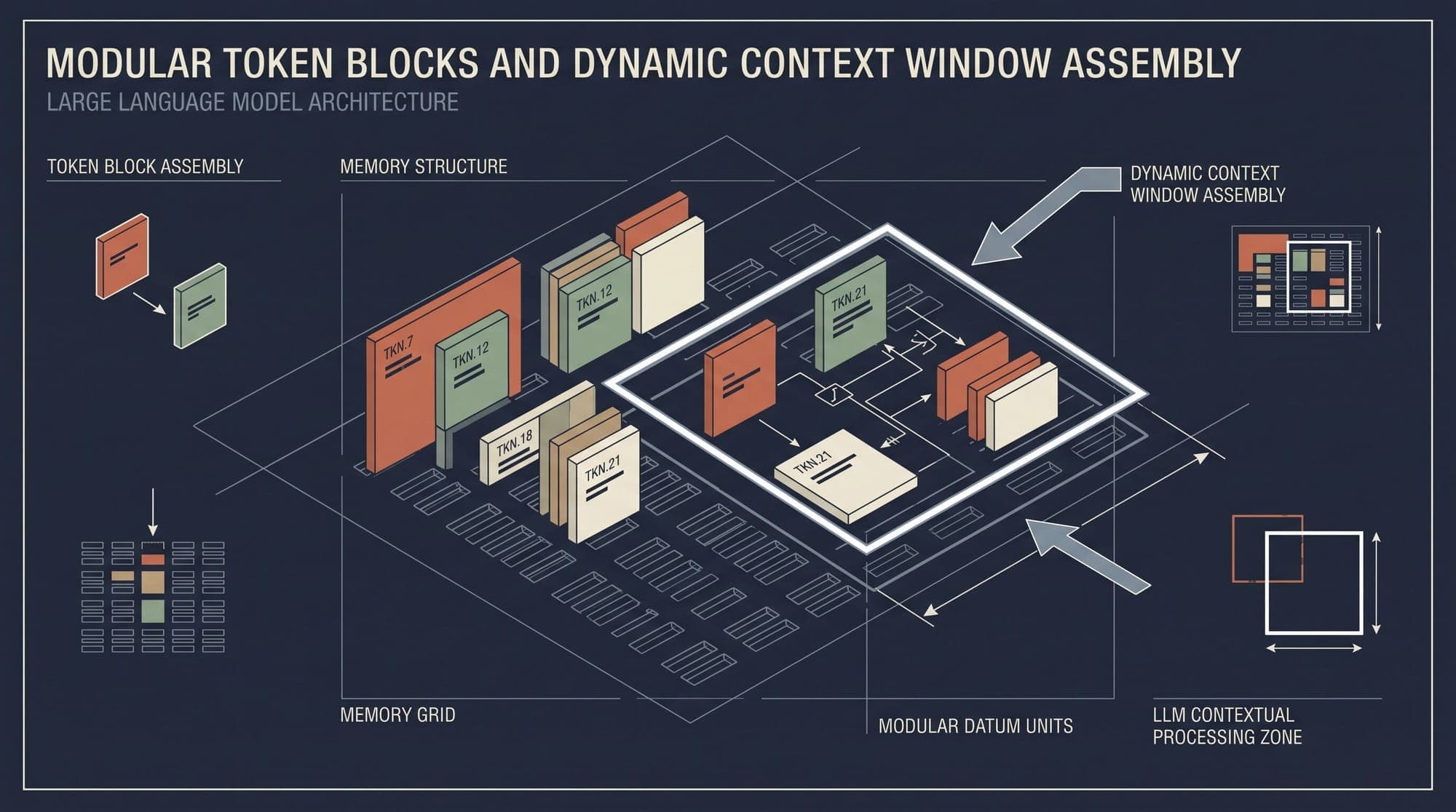
  15. Dynamic Context Assembly and Token Budget Allocation in Production: Priority Packing, Prefix Cache Alignment, and Degradation Fallbacks

    In production large language model systems, prompt construction is frequently treated as simple string concatenation. Engineers assemble system instructions, tool schemas, retrieved document snippets, memory state, and multi-turn conversational history using template strings. In low-throughput prototypes, this approach functions adequately. In high-throughput production systems and multi-agent workflows, naive assembly introduces critical failure modes: abrupt context window overflows triggering

    LLM
    6 min read
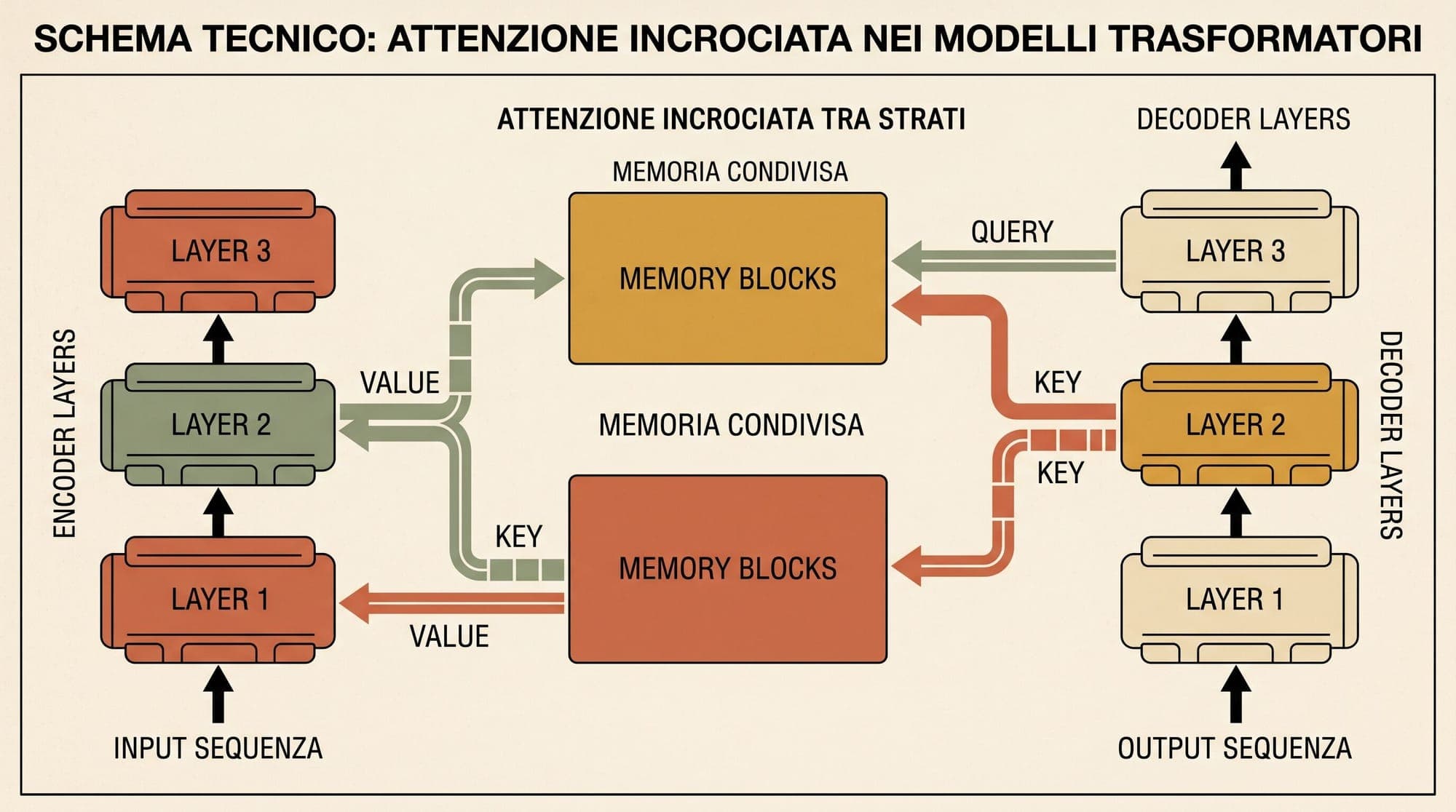
  16. Cross-Layer Attention: How Sharing Key-Value Tensors Across Transformer Layers Slashes KV Cache Memory

    In autoregressive large language models, the primary operational ceiling for serving long sequences and high batch concurrency is the Key-Value (KV) cache. During standard generation, every transformer layer computes and stores key and value activations for every token in the sequence to prevent quadratic recomputation during subsequent autoregressive decoding steps. While this mechanism transforms inference time complexity from $O(N^2)$ to $O(N)$ per generated token, it introduces a massive me

    AI
    9 min read
  17. Nevada Approves Commercial Robotaxi Permits for Up to 8,000 Vehicles Across Tesla, Waymo, and Uber

    The Nevada Transportation Authority (NTA) has unanimously approved commercial robotaxi operating permits for Tesla, Waymo, and Uber across Clark County, establishing the regulatory foundation for up to 8,000 autonomous passenger vehicles in the Las Vegas metropolitan area over the next 12 months. The regulatory decision marks one of the largest single-county autonomous vehicle authorizations in the United States, distributing operating rights across three primary commercial applicants: * Tesl

    Autonomous Vehicles
    2 min read
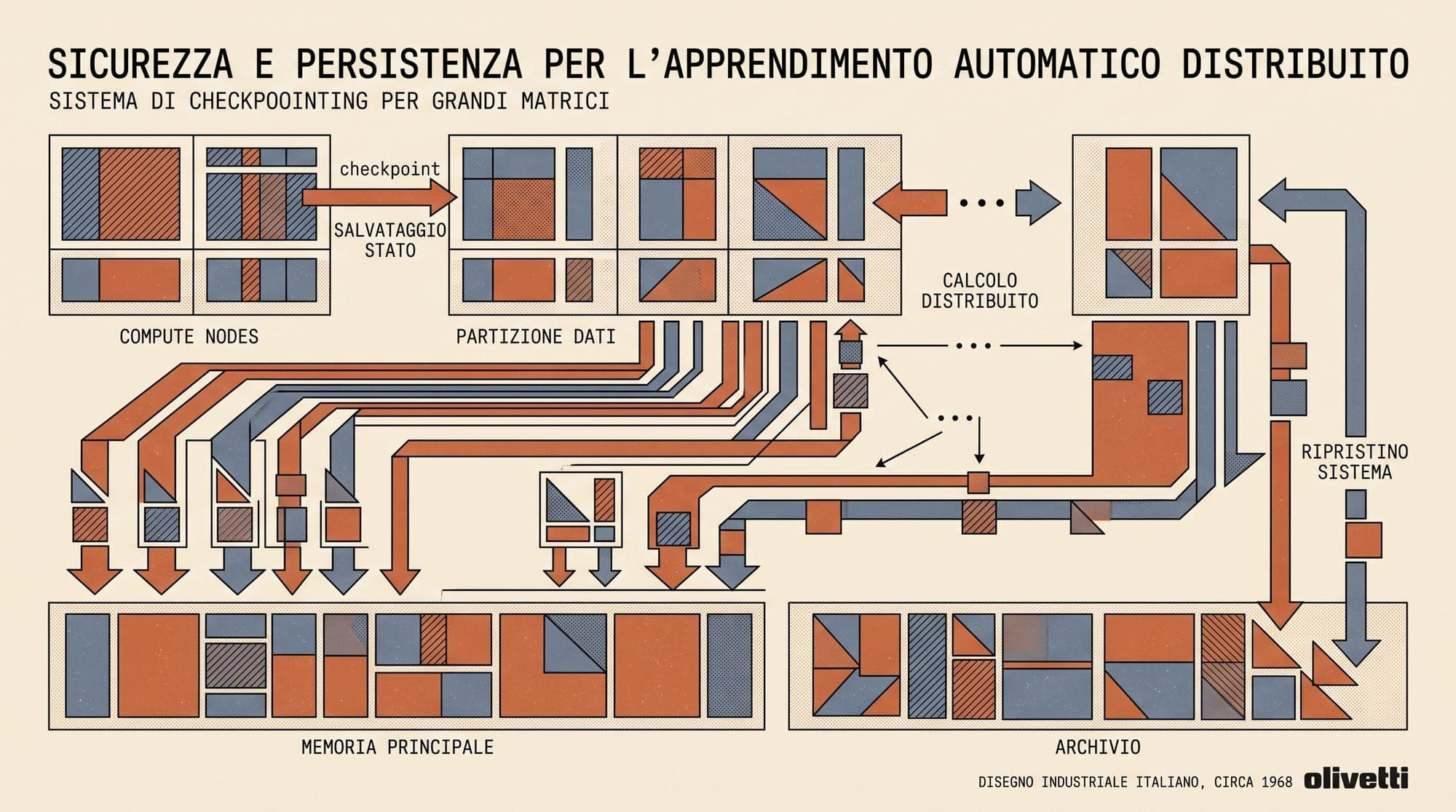
  18. Distributed Checkpointing in Production: PyTorch DCP, Asynchronous Staging, and Dynamic Topology Resharding

    Distributed Checkpointing in Production: PyTorch DCP, Asynchronous Staging, and Topology Resharding In multi-node distributed deep learning, checkpointing is often the largest single source of unforced downtime and degraded Model Flops Utilization (MFU). As models scale to tens or hundreds of billions of parameters across thousands of GPUs, saving model weights and optimizer states using traditional serialization primitives creates severe cluster stalls, memory exhaustion on root ranks, and rig

    AI
    6 min read
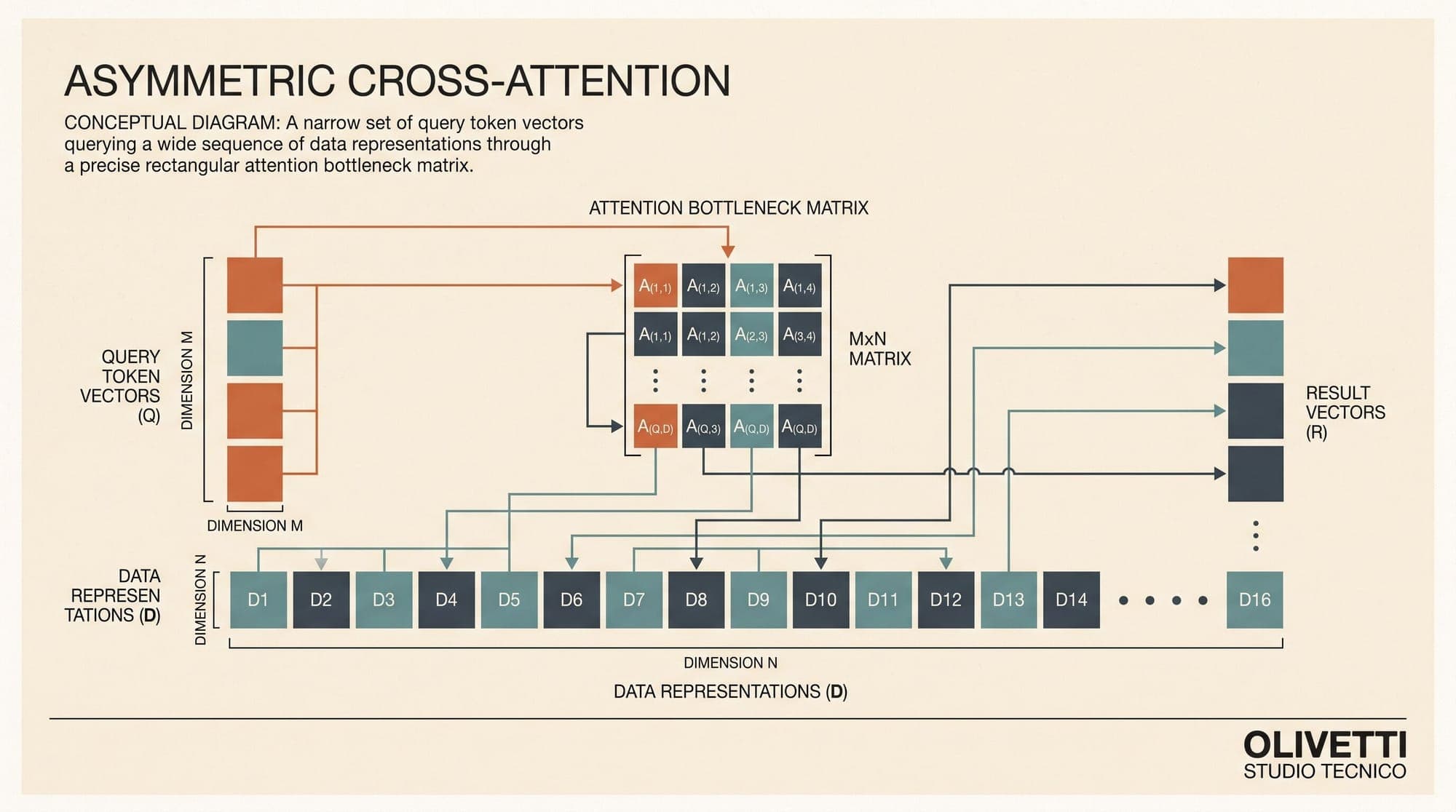
  19. Cross-Attention and Latent Bottlenecks: How Asymmetric Queries Fuse External Modalities in Transformer Architectures

    Standard self-attention mechanisms in Transformer architectures process tokens symmetrically: every token in a sequence queries every other token within the same sequence. While this symmetric formulation drives autoregressive sequence generation and dense contextual representations, it exhibits a quadratic compute and memory profile of O(N^2) relative to sequence length. When scaling to high-resolution sensory inputs (such as raw video frames, high-density audio waveforms, or millions of point

    AI
    8 min read
  20. Hugging Face Summer 2026 Report: Qwen Derivatives Top 150K as AI Agents Become Hub's Top Users

    Hugging Face has published its State of Open Models: Summer 2026 report, detailing seven months of platform metrics that highlight a widening divergence between benchmark attention and production deployment. According to the analysis covering January through August 2026, public model repositories on the Hub grew from 2.43 million to 2.96 million, public datasets surpassed 1 million for the first time, and Spaces expanded to 1.44 million. Despite the catalog expansion, usage remains heavily conc

    AI
    3 min read