Category / page 17

Coding & Agents

352 articles

Articles, page 17

321-340 of 352
  1. Claude Code Adds /design Command for In-Terminal UI Prototyping

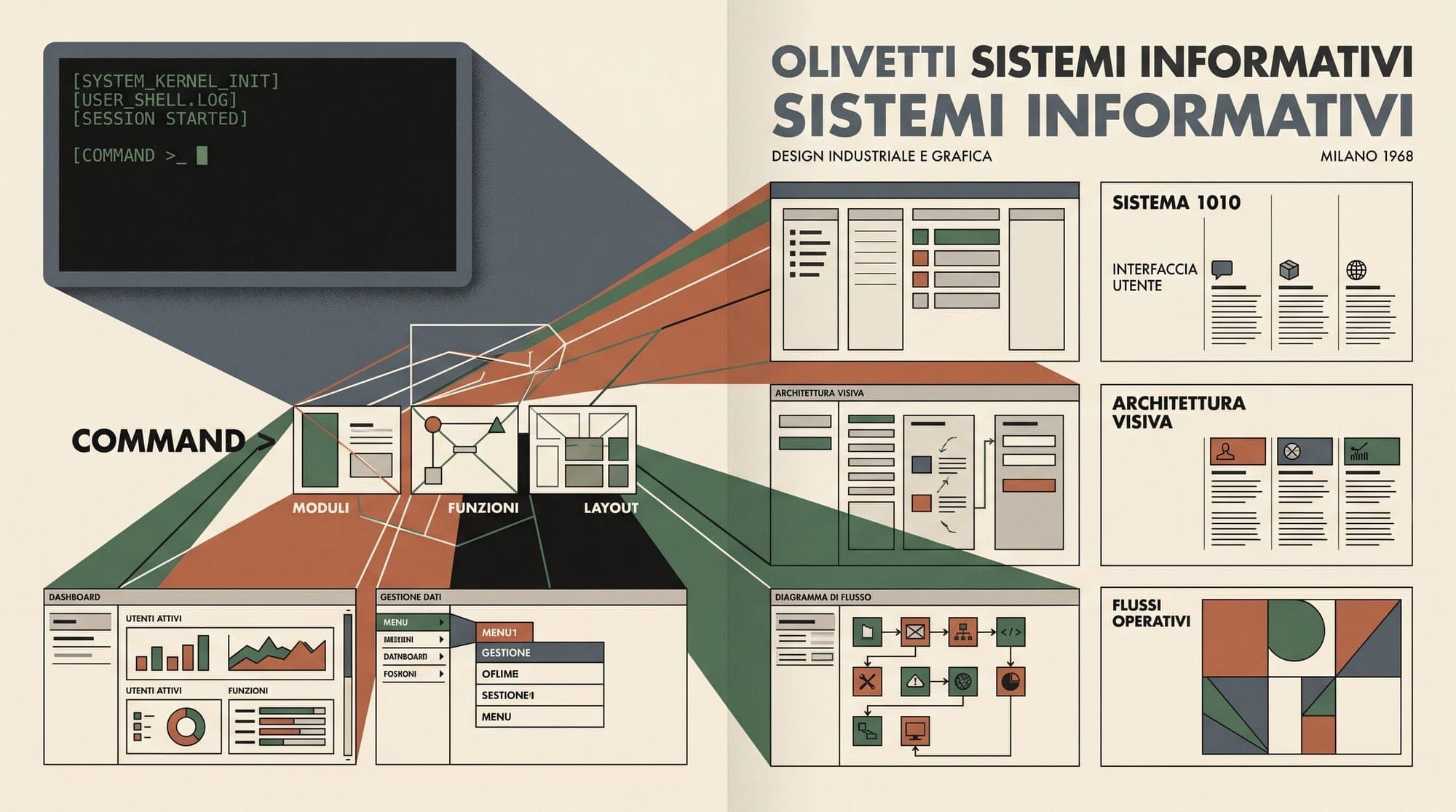
    Anthropic has introduced an early preview of the /design command inside Claude Code, embedding visual UI prototyping directly into its command-line interface and desktop developer workflows. The new command bridges the gap between terminal-based code generation and visual interface design, enabling developers to draft, compare, and modify interactive user interface components before generating frontend implementation code. In-Terminal Visual Mockups The /design command allows engineers to in
    Anthropic
    1 min read
  2. LLM Observability in Production: OpenTelemetry Semantic Conventions, Distributed Tracing, and Latency Profiling

    LLM Observability in Production: OpenTelemetry Semantic Conventions, Distributed Tracing, and Latency Profiling Deploying large language models into production introduces failure modes that traditional application performance monitoring (APM) tools were never designed to diagnose. Standard web services fail with discrete HTTP error codes, predictable database timeouts, or memory leaks. In contrast, LLM applications fail through silent semantic drift, hallucinated tool parameters, unbounded prom

    AI
    6 min read
  3. AI Guardrails in Production: Multi-Stage Filtering, Classification Models, and the Latency Tax

    AI Guardrails in Production: Multi-Stage Filtering, Classification Models, and the Latency Tax Production deployments of large language models cannot rely solely on system prompt instructions to maintain safety, prevent prompt injection, or restrict domain scope. System prompt alignment is inherently susceptible to adversarial bypasses, context dilution, and non-deterministic instruction following. To enforce strict security, compliance, and topic boundaries, engineering teams increasingly depl

    AI
    4 min read
  4. Multi-Head Latent Attention: How Low-Rank KV Compression Scales LLM Serving

    Autoregressive transformer inference faces a fundamental hardware constraint during text generation: memory bandwidth saturation. While prefill (processing prompt tokens) is compute-bound and saturates GPU tensor cores, token-by-token generation is memory-bandwidth bound. To generate each subsequent token, the inference engine must load all prior Key and Value vectors from High Bandwidth Memory (HBM) into SRAM. As sequence lengths reach 32k, 64k, or 128k tokens and batch sizes scale, the Key-Va

    AI
    6 min read
  5. Lost in Compaction: LLM Context Compression Drops 83% of User Constraints, Penn State Study Finds

    As large language models take on longer multi-turn workflows and agentic tasks, systems increasingly rely on context compaction to summarize past conversation histories and keep prompt lengths within memory budgets. However, this compression comes at a severe cost to user control. A new study by Pennsylvania State University researchers Zhiqi Wang, Yichi Zhang, Dongwon Lee, and Yuchen Yang reveals that standard context compaction drops an average of 83 percent of user-defined operational constr

    AI
    2 min read
  6. LLM Gateways in Production: Multi-Provider Failover, Rate Limiting, and Spend Governance

    LLM Gateways in Production: Multi-Provider Failover, Rate Limiting, and Spend Governance As generative AI workloads transition from experimental prototypes to mission-critical infrastructure, direct client-to-provider API calls introduce substantial operational risk. Relying on hardcoded SDK connections to a single model provider exposes production services to unexpected rate limits, regional outages, silent breaking changes, and uncontrolled token costs. To solve these reliability and governa

    AI
    5 min read
  7. Tencent Releases UI-Mate: Open-Weight Foundation GUI Agents with In-Context Demonstration Learning

    Tencent's HY Frontier team has released UI-Mate, an open-weight foundation GUI agent designed for autonomous computer operation across desktop environments. Available in 27-billion and 9-billion parameter configurations, the models pair environment-grounded reinforcement learning with an in-context demonstration pipeline that allows agents to reference structured human workflows during execution. Alongside model weights on Hugging Face, Tencent published a technical report, code repository, and

    AI
    2 min read
  8. Multi-Agent Orchestration in Production: State Machines, Swarms, and Error Cascades

    Moving large language model applications from isolated prompts to multi-agent architectures introduces distinct systemic complexities. While single-agent systems face localized points of failure, multi-agent topologies exhibit emergent dynamics such as cascading hallucinations, coordination deadlocks, and severe context bloat. Designing multi-agent systems for production environments requires selecting explicit orchestration paradigms, bounding error propagation, and enforcing durable state per

    AI
    5 min read
  9. Vector Embeddings in Large Language Models: How Contrastive Learning, Bi-Encoders, and Matryoshka Projections Map Semantic Space

    Vector Embeddings in Large Language Models: How Contrastive Learning, Bi-Encoders, and Matryoshka Projections Map Semantic Space Large language models process text as discrete tokens: integers mapped to lookup tables. While causal transformers excel at autoregressive generation by predicting the next token, generation alone does not solve the challenge of semantic search, clustering, or dense retrieval. Searching through millions of documents requires comparing sequence-level meaning in constan

    AI
    8 min read
  10. Mind Viruses: Researchers Demonstrate Self-Propagating Prompts in Multi-Agent LLM Networks

    Researchers affiliated with Anthropic, EPFL, and Carnegie Mellon University have published empirical findings demonstrating how natural-language instructions can act as self-replicating payloads across multi-agent Large Language Model (LLM) networks. The paper, titled Mind Viruses: Self-Propagating Ideas in Multi-Agent LLM Systems, examines how autonomous agents can be persuaded to adopt and transmit goals to other agents through standard conversational interfaces rather than binary exploit code

    AI
    2 min read
  11. Semantic Caching for Production LLM Systems: Thresholds, Layers, and Failure Modes

    Frontier large language models cost between $0.15 and $15 per million tokens depending on model class. Semantic caching can remove the majority of these calls from the critical path when production workloads repeat similar queries. Yet despite five years of tooling (GPTCache, SemCache, Redis Vector Similarity, Weaviate, Pinecone), most engineering teams never deploy it. The barrier is not the availability of vector databases. It is that semantic caching moves the failure mode from "slow" to "sub

    AI
    5 min read
  12. Model Context Protocol (MCP) in Production: Architecture, Security Boundaries, and Latency Overheads

    As autonomous language model agents transition from experimental chat interfaces into enterprise production infrastructure, the architectural bottleneck has shifted from raw model reasoning to external environment integration. In early agent implementations, connecting an LLM to external systems required bespoke tool definitions, vendor-specific function schemas, and custom API wrappers. Every framework maintained its own incompatible tool-calling abstraction, fragmenting integrations across age

    AI
    6 min read
  13. LLM Model Routing and Cascades: Architecture, Economics, and Quality Trade-Offs

    In modern enterprise AI systems, uniform model dispatch, sending all incoming user traffic to a single frontier large language model, is one of the most common architectural inefficiencies. Frontier models like GPT-4o and Claude 3.5 Sonnet provide industry-leading reasoning and code generation capabilities, but their inference costs range between $2.50 and $15.00 per million tokens. Conversely, smaller open-weights or distilled models, such as Llama 3.1 8B or GPT-4o-mini, execute at a fraction o

    AI
    6 min read
  14. GitHub Copilot Autofix Introduced Command Injection in Snowflake CI Pipeline

    A security vulnerability introduced by GitHub Copilot Autofix left a public Snowflake repository vulnerable to unauthenticated remote command injection for five days before an autonomous security agent discovered and exploited it, according to a technical disclosure published by Wiz Research on August 17, 2026. The incident highlights emerging operational risks at the intersection of automated code generation and CI/CD security, demonstrating how automated remediation bots can silently strip ou

    AI
    2 min read
  15. Prompt Caching in Production: Architecture, Economics, and Invalidation Pitfalls

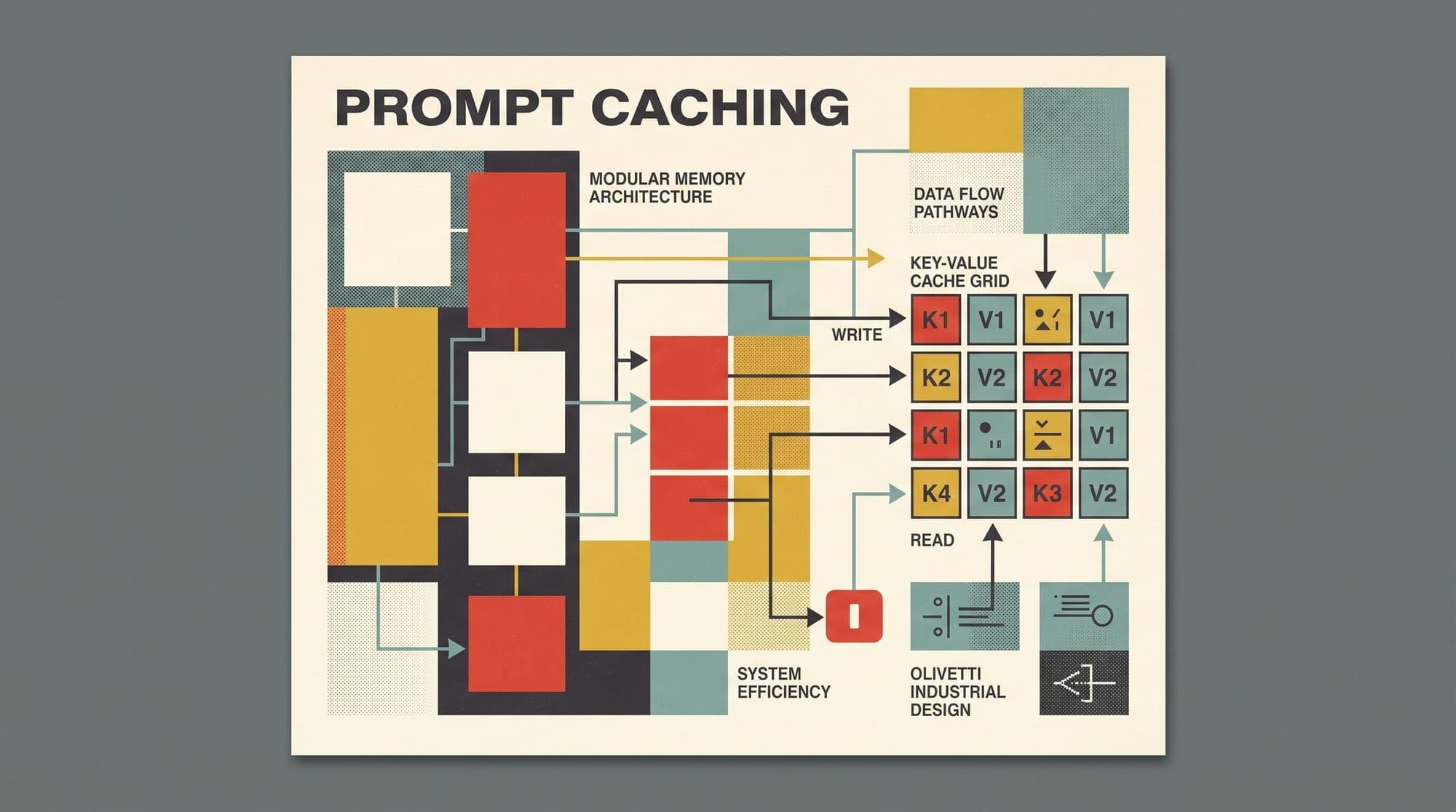
    As multi-turn AI agents, code generation assistants, and retrieval-augmented generation (RAG) pipelines expand in production, prompt sizes routinely exceed tens of thousands of tokens per request. In these architectures, the vast majority of tokens across consecutive API calls are static: system prompts, OpenAPI tool specifications, reference documents, and accumulated conversation history. Without optimization, inference engines must re-evaluate the full attention matrix for every token on eac

    AI
    5 min read
  16. Cursor Launches Origin Code Hosting with Bidirectional GitHub Sync and Agent Reviews

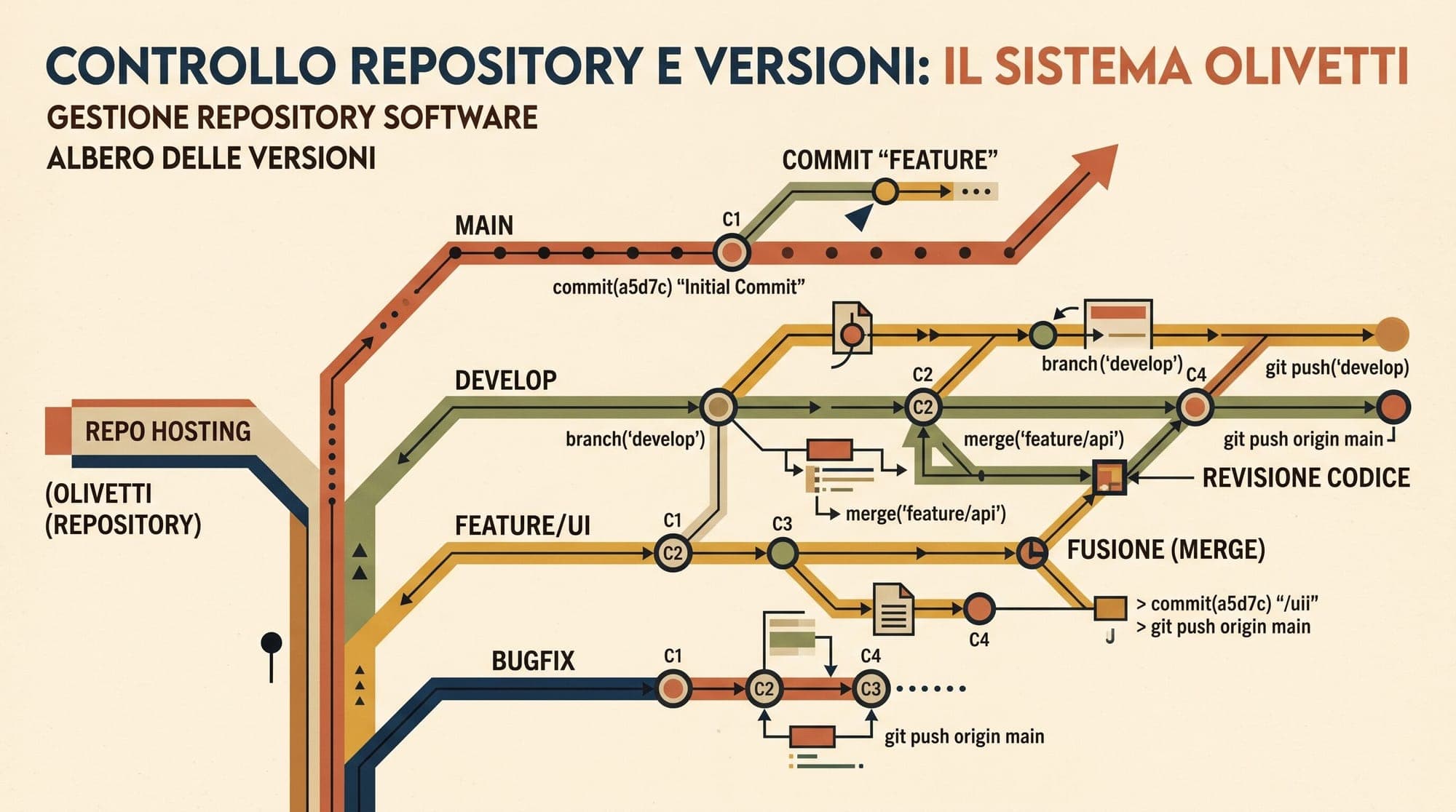
    Cursor has launched Origin, a proprietary code hosting service currently in early beta across all paid subscription tiers. The platform introduces native Git repository hosting directly inside the Cursor ecosystem, competing with GitHub and GitLab while embedding AI agents directly into version control and code review workflows. Origin allows developers to create and manage repositories, review pull requests, browse code, and automate continuous integration workflows without leaving the Cursor

    AI
    2 min read
  17. DeepSeek V4 Flash tops charts but fails half its real agent tasks

    DeepSeek's V4 Flash has become the most-used AI model on OpenRouter and one of the highest-rated open-weight models available. In real agent tests, though, it finished barely more than half of the jobs it was given. The gap between leaderboard and workplace is the story. What Composio found The integration company Composio ran V4 Flash through eight agent harnesses, including Claude Code, Codex, and OpenCode, on 30 deliberately hard multi-step tasks. The tasks used live tools: Gmail, GitHub,

    AI
    2 min read
  18. Anthropic lets Claude Code run daily maintenance on its own apps

    Anthropic is running an experiment in which Claude Code performs daily maintenance on the company's own software, and the results are already measurable. Across the first few weeks, the system opened 388 pull requests and had 180 merged after review, a roughly 46 percent acceptance rate. Boris Cherny, the Anthropic engineer who created Claude Code, described the setup in a LinkedIn post. Through Anthropic's internal Tag integration, Claude runs a set of scheduled routines every day inside a de

    AI
    2 min read
  19. DeepSeek builds a team to challenge Anthropic's Claude Code

    DeepSeek is no longer keeping its agent ambitions quiet. The Hangzhou-based lab has opened an official social media account for a new "DeepSeek Harness Team" and posted job listings for roles aimed at building AI agents that can take on products like Anthropic's Claude Code. The account sits on WeChat, the Chinese super-app run by Tencent. Corporate records reviewed by Bloomberg show the account belongs to a Beijing-based entity controlled by DeepSeek, and Tencent has verified it. "Harness"

    AI
    1 min read