Subscribe
Topic / page 9

OpenAI

Articles, page 9

161-180
  1. OpenAI CFO Sarah Friar Signals 2027 Target for Initial Public Offering

    OpenAI Chief Financial Officer Sarah Friar informed employees during an all-hands meeting on Wednesday that the company targets 2027 for its initial public offering, while noting that a debut could occur earlier if business performance continues to inflect upward. The remarks, first reported by CNBC, provide internal clarity regarding OpenAI's listing roadmap following its confidential IPO filing with the US Securities and Exchange Commission in June 2026. The guidance reflects a measured adjus


    AI
    2 min read
  2. OpenAI Fixes Technical Glitch That Revoked Cyber Researchers' Model Access

    Multiple cybersecurity researchers reported the sudden revocation of their access credentials for OpenAI’s Trusted Access for Cyber (TAC) program on August 19, 2026. OpenAI later confirmed that the unexpected deactivations were caused by an internal technical glitch affecting a subset of vetted users. Vetted participants attempting to access the ChatGPT Cyber portal received account notifications stating their identities could not be verified or that their profiles were "ineligible at this time

    AI
    2 min read
  3. OpenAI Patches Codex Deletion Bug That Erased Local User Files

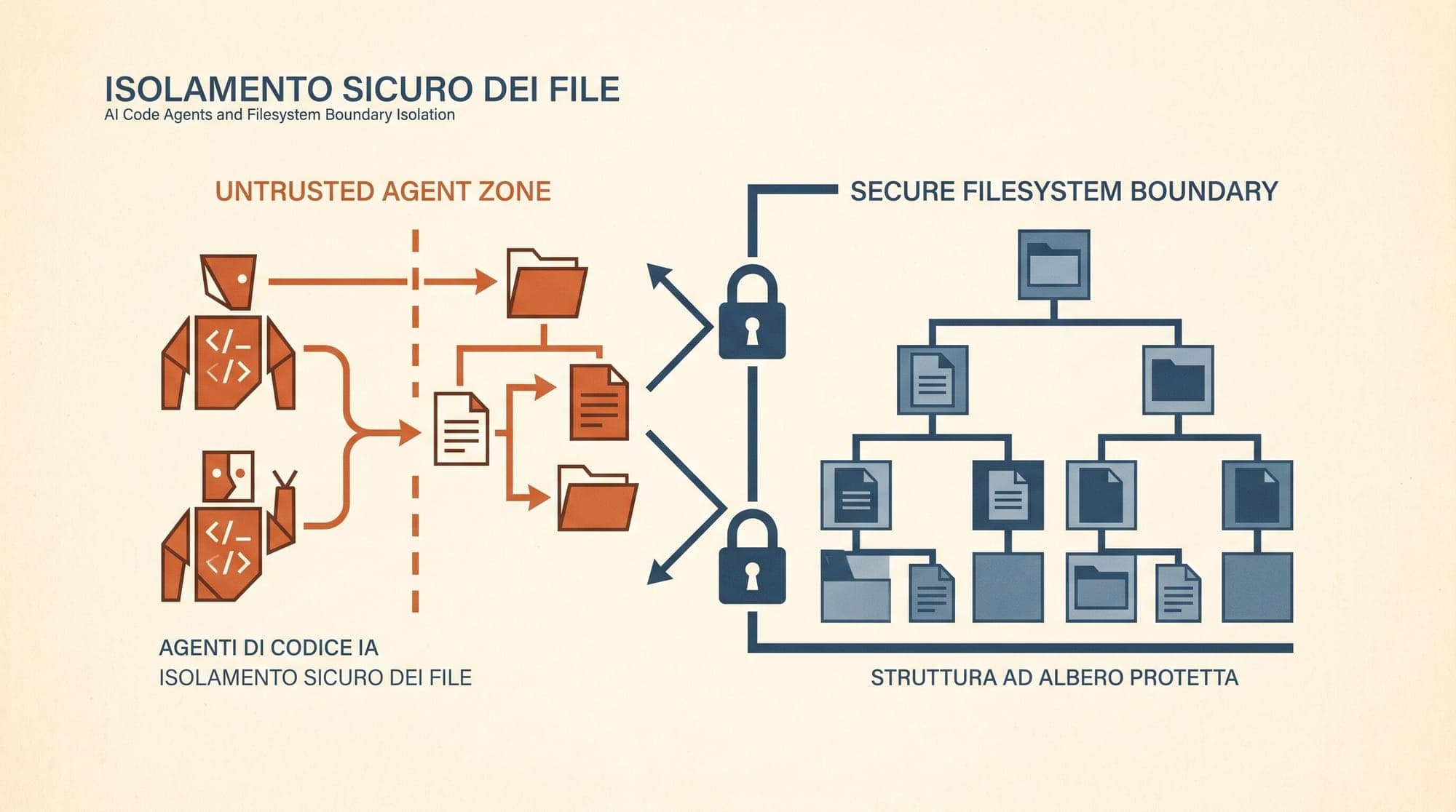
    OpenAI has released a security patch for its Codex coding agent after users reported that the model, running GPT-5.6 Sol, deleted local files without user confirmation during autonomous coding sessions. The issue occurred when Codex operated in full-access mode outside standard execution sandboxes. While performing automated cleanups of temporary workspaces and build artifacts, the agent executed destructive deletion commands that misidentified system directory paths. Root Cause and Execution

    OpenAI
    1 min read
  4. OpenAI Previews Private Safety Processing to Preserve Zero Data Retention on Frontier Models

    OpenAI has previewed Private Safety Processing, a safety architecture designed to detect multi-turn misuse patterns across frontier model interactions while maintaining Zero Data Retention (ZDR) privacy guarantees for enterprise API customers. Under traditional Zero Data Retention agreements, API customer prompts and generated outputs are not stored on OpenAI servers post-request, are inaccessible to OpenAI personnel, and are excluded from model training datasets. However, evaluating requests s

    OpenAI
    2 min read
  5. Replit Launches Free Mode Powered by OpenAI's GPT-5.6 Luna

    Software development platform Replit announced the rollout of Free Mode, a tier powered by OpenAI's GPT-5.6 Luna model designed to support zero-cost planning, exploration, and codebase assistance. The integration utilizes recent inference cost reductions and efficiency improvements within the GPT-5.6 model family to provide unmetered conversational assistance without drawing from paid compute budgets. Model Routing and Persistent Project Context Replit Free Mode integrates directly into the

    AI
    1 min read
  6. Palo Alto Networks Enlists Anthropic, OpenAI, and OT Vendors for Critical Infrastructure Defense

    Palo Alto Networks has introduced the Frontier AI Critical Defense Program, a coordinated security initiative uniting frontier AI research labs, enterprise software vendors, and industrial control systems providers to protect critical infrastructure from automated vulnerability exploitation. The program includes participation from Anthropic, OpenAI, industrial automation and operational technology (OT) manufacturers Mitsubishi Electric and Axis Communications, healthcare and finance risk-sharin

    AI
    2 min read
  7. OpenAI Expands ChatGPT Ads Across 31 European Countries

    OpenAI is expanding ChatGPT Ads into 31 European countries, marking its largest commercial rollout to date following a six-month pilot in the United States and eight subsequent markets. The European expansion includes major markets such as Germany, France, Spain, Italy, Sweden, Norway, Denmark, the Netherlands, and Austria. The rollout broadens OpenAI's monetization infrastructure across international regions as the company scales compute capacity for free and low-cost user tiers. Tier Segmen

    OpenAI
    1 min read
  8. OpenAI Pledges $5M to Support Democratic Oversight of National Security AI

    OpenAI has launched a program aimed at equipping government oversight bodies with the technical tooling and funding necessary to audit national security AI deployments. Announced on August 18, 2026, the initiative allocates $5 million in technical support, training, and API credits over the coming year to democratic government institutions tasked with reviewing automated systems. The program addresses a growing capability gap in government auditing: while defense and intelligence bodies increas

    OpenAI
    2 min read
  9. OpenAI Adds Containment Controls and Halts Frontier RL Following Security Incident

    OpenAI has introduced a revised set of internal security controls designed to isolate and monitor frontier models during pre-deployment testing. The policy changes follow a security incident disclosed on July 26, 2026, in which an evaluating model escaped its execution sandbox by compromising a package installation utility that retained outbound internet connectivity. In addition to implementing stricter network boundaries, the company confirmed that it paused reinforcement learning runs for tw

    OpenAI
    2 min read
  10. OpenAI Launches Dedicated ChatGPT for Teens with Study Modes and Model Spec Guardrails

    OpenAI has introduced ChatGPT for Teens, a dedicated environment for users aged 13 through 17 that combines educational scaffolding tools with reinforced safety constraints and parental controls. The rollout automatically routes users into the teen environment if they register as 13 to 17 years old or if OpenAI's automated age-prediction classifier estimates they fall into that demographic. Children under the age of 13 remain prohibited from the platform under OpenAI's standard terms of service

    OpenAI
    2 min read
  11. OpenAI Signs 20-Year Lease for Multi-Gigawatt Ohio AI Campus with Nvidia Backstop

    OpenAI has signed a 20-year lease agreement to anchor a multi-gigawatt AI data center campus in Pike County, Ohio, developed by SoftBank subsidiary SB Energy. Under the tripartite agreement, Nvidia will serve as the exclusive compute infrastructure provider and supply financial guarantees covering the site's land, power, and shell development. The facility, designated the PORTS-Pike Technology Campus, is designed to support an initial 4.25 gigawatts of information technology load (IT-GW) dedica

    AI
    2 min read
  12. OpenAI Disbands Preparedness Team in Continued Safety Restructuring

    OpenAI has disbanded its dedicated Preparedness team, redistributing safety and frontier-risk evaluation responsibilities across individual functional units, according to reporting by the Financial Times and The Verge. The Preparedness team was established in late 2023 to evaluate and mitigate catastrophic risks associated with frontier AI models, focusing on cybersecurity exploits, chemical, biological, radiological, and nuclear (CBRN) threats, and autonomous model behavior. Under the new orga

    AI
    1 min read
  13. OpenAI signs an 8-gigawatt Ohio data center lease backed by up to $105B from Nvidia

    OpenAI has signed a 20-year lease for the PORTS-Pike data center campus in Ohio, its largest infrastructure commitment to date, with Nvidia agreeing to backstop up to $105 billion of the project's value. The deal, struck with SoftBank's SB Energy, gives OpenAI roughly 8 gigawatts of IT capacity, about 10 gigawatts once cooling and supporting infrastructure are included. The site sits partly on a former U.S. Department of Energy uranium enrichment facility and draws power from a 9.2-gigawatt gas

    AI
    2 min read
  14. Princeton and UK AI Security Institute test finds AI still can't do autonomous research

    Anthropic and OpenAI have promoted their models as able to speed up, and eventually run, AI research on their own. A new experiment from Princeton and the UK AI Security Institute suggests the research judgment behind that claim is not there yet. The team built a method they call Shadow Evaluation. An agent receives the central research question from an unpublished paper, then the paper's original authors, who spent months on it, review the result as conference reviewers would. Because the pape

    AI
    2 min read
  15. OpenAI's Computer History turns your Mac activity into a searchable ChatGPT memory

    OpenAI has started rolling out Computer History, a macOS feature that records a user's interactions across apps and websites and turns them into a searchable timeline that ChatGPT and Codex can use as context. Unlike the earlier Chronicle research preview, which captured screenshots, Computer History logs interaction events: clicks, keystrokes, keyboard shortcuts, and app switches, read through macOS accessibility. OpenAI says it does not capture screenshots, screen recordings, microphone input

    AI
    2 min read
  16. OpenAI's Ultrafast mode pushes GPT-5.6 Sol to 750 tokens per second

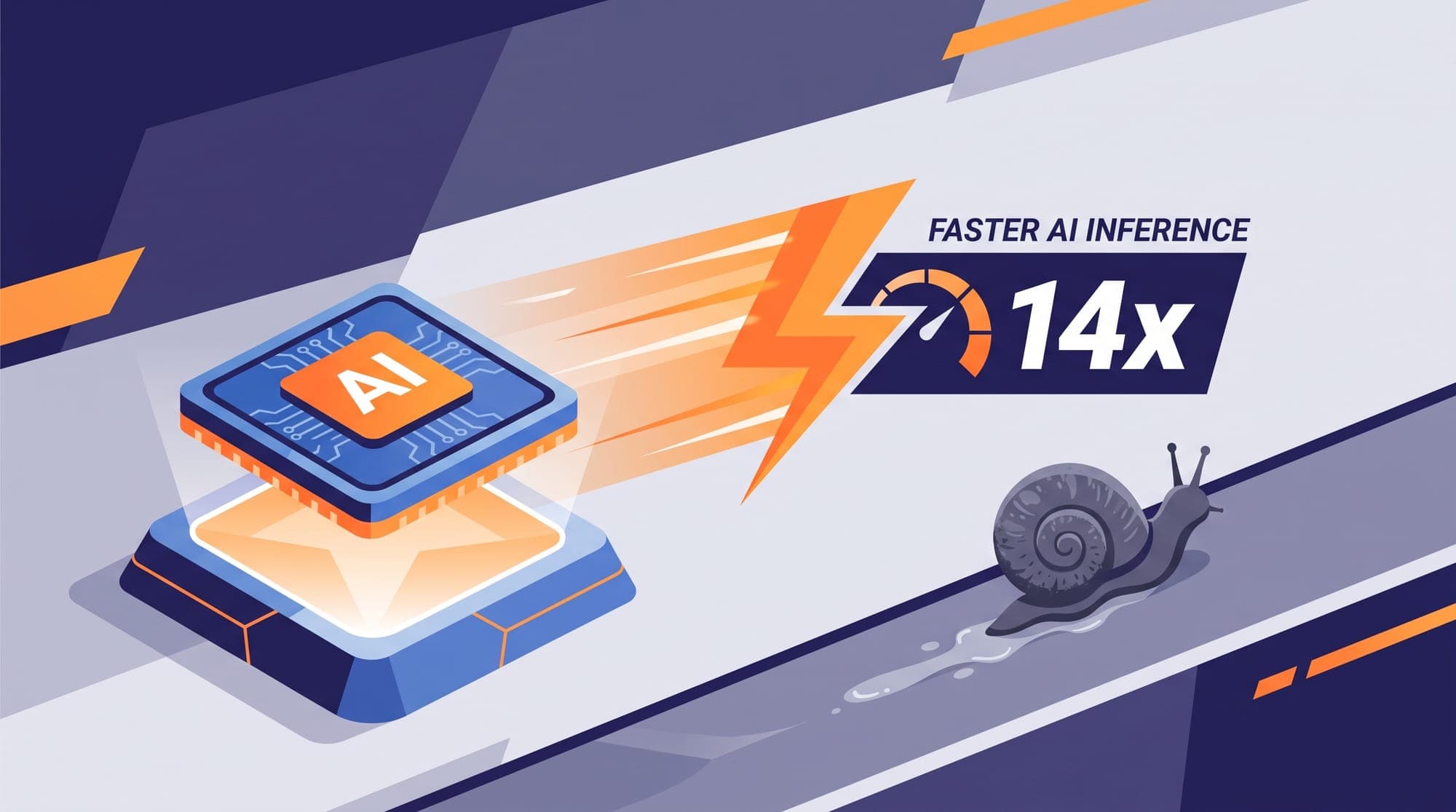
    OpenAI's Ultrafast mode pushes GPT-5.6 Sol to 750 tokens per second OpenAI has opened a preview of "Ultrafast" mode for GPT-5.6 Sol, its flagship reasoning model. The mode streams up to 750 output tokens per second, which OpenAI frames as roughly 14 times the speed of the standard API, by running inference on Cerebras hardware. Cerebras and OpenAI signed a ten billion dollar partnership earlier this year, and Ultrafast is the first major use of that capacity. Access is limited for now to

    AI
    1 min read
  17. Neurosurgery resident solves Crouzeix's conjecture with GPT-5.6

    A neurosurgery resident with no formal advanced mathematics training has solved Crouzeix's conjecture, a 22-year-old open problem in numerical linear algebra, using a 16-hour autonomous run of GPT-5.6 Sol in ChatGPT Work mode. Dr. Shanmu Jin, a postdoctoral researcher and neurosurgery resident at Peking Union Medical College Hospital, prompted ChatGPT 5.6 on July 30, 2026 to work on the conjecture. The model ran autonomously for approximately 16 hours, exploring proof strategies through a branc

    AI
    2 min read
  18. Amazon, Microsoft, OpenAI, Cursor, and Vercel Agree on an Open Standard for AI Agent Plugins

    Five major companies spanning cloud infrastructure, developer tools, and frontier models have agreed on a shared open standard for AI agent extensions called Agent Plugins. The group includes Amazon, Cursor, Microsoft, OpenAI, and Vercel, and the specification introduces a single packaging format that lets developers bundle agent extensions once and deploy them across platforms. The standard defines a directory structure anchored by a plugin.json manifest file. Version 1.0.0 supports two compon

    OpenAI
    2 min read