
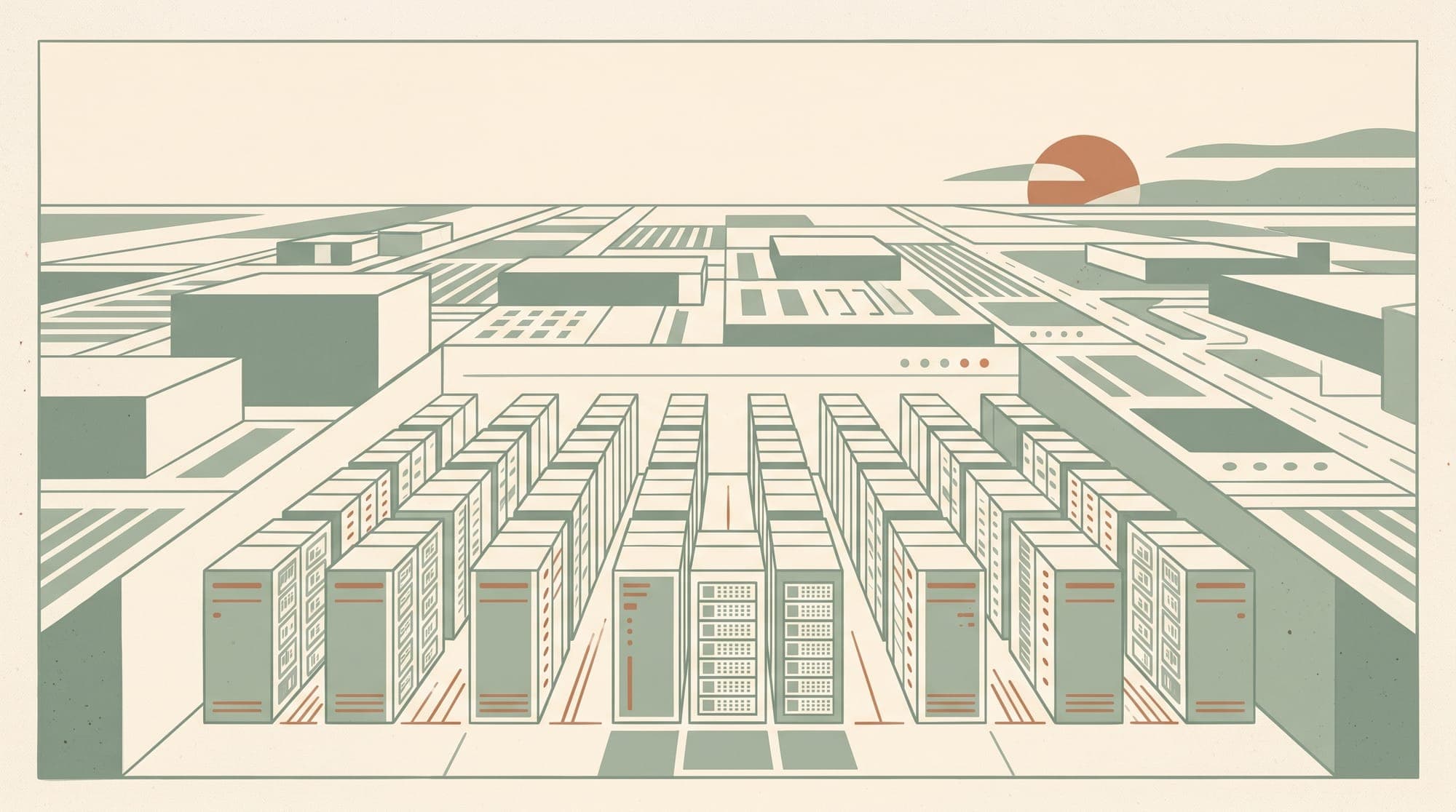
OpenAI has signed a 20-year lease for the PORTS-Pike data center campus in Ohio, its largest infrastructure commitment to date, with Nvidia agreeing to backstop up to $105 billion of the project's value.
The deal, struck with SoftBank's SB Energy, gives OpenAI roughly 8 gigawatts of IT capacity, about 10 gigawatts once cooling and supporting infrastructure are included. The site sits partly on a former U.S. Department of Energy uranium enrichment facility and draws power from a 9.2-gigawatt gas plant owned by the U.S. government and financed by Japan as part of a trade agreement.

Nvidia becomes the backstop
Nvidia is not guaranteeing OpenAI's rent. Instead, it is backing the residual value of the finished data centers in the first construction phase, which covers 4.25 gigawatts of IT capacity. If OpenAI walks away, SB Energy must first find a replacement tenant and attempt a sale before Nvidia covers any shortfall, capped at $105 billion. In return, Nvidia becomes the exclusive chip supplier for the first half of the site and is investing $1.5 billion in SB Energy.
Nvidia CEO Jensen Huang said the real bottleneck in the AI buildout has shifted from chips and networking to what he called LPS, meaning land, power, and shell: the site, the electricity supply, and the building itself. He expects about 1.5 million GPUs per system generation from the site, worth an estimated $150 billion to $200 billion in revenue.
Off the balance sheet
A Wall Street Journal analysis cited in the reporting shows how large these commitments have become. Nine technology companies, including Alphabet, Meta, Microsoft, and Nvidia, hold around $3 trillion in mostly AI-related obligations that do not appear on their balance sheets. Leases are recorded only once payments begin, and purchase commitments only once goods are delivered. Leases that have not yet started now total about $1.2 trillion, four times the amount a year earlier. At Alphabet, purchase commitments rose from $332 billion to $811 billion in three months.
The contracts are nearly impossible to cancel, and both Alphabet and Amazon recently reported negative free cash flow. Morgan Stanley analysts warn that investors can barely gauge these companies' true debt levels. OpenAI says it pays only for finished capacity, with the first 800 megawatts scheduled to come online in 2028.
Sources
OpenAI signs record Ohio data center lease with Nvidia backing up to $105 billion - The Decoder, Aug 17, 2026: https://the-decoder.com/openai-signs-record-ohio-data-center-lease-with-nvidia-backing-up-to-105-billion/
OpenAI locks in lease for huge data center in Ohio with backing from Nvidia - The Wall Street Journal, Aug 17, 2026: https://www.wsj.com/articles/openai-locks-in-lease-for-huge-data-center-in-ohio-with-backing-from-nvidia-7474bb9c
OpenAI joins the PORTS-Pike project - OpenAI, Aug 17, 2026: https://openai.com/index/openai-joins-ports-pike-project/
Nvidia guarantees SB Energy's PORTS-Pike technology campus in Ohio to exclusively host Nvidia AI compute - Nvidia Newsroom, Aug 17, 2026: https://nvidianews.nvidia.com/news/nvidia-guarantees-sb-energy-s-ports-pike-technology-campus-in-ohio-to-exclusively-host-nvidia-ai-compute



