
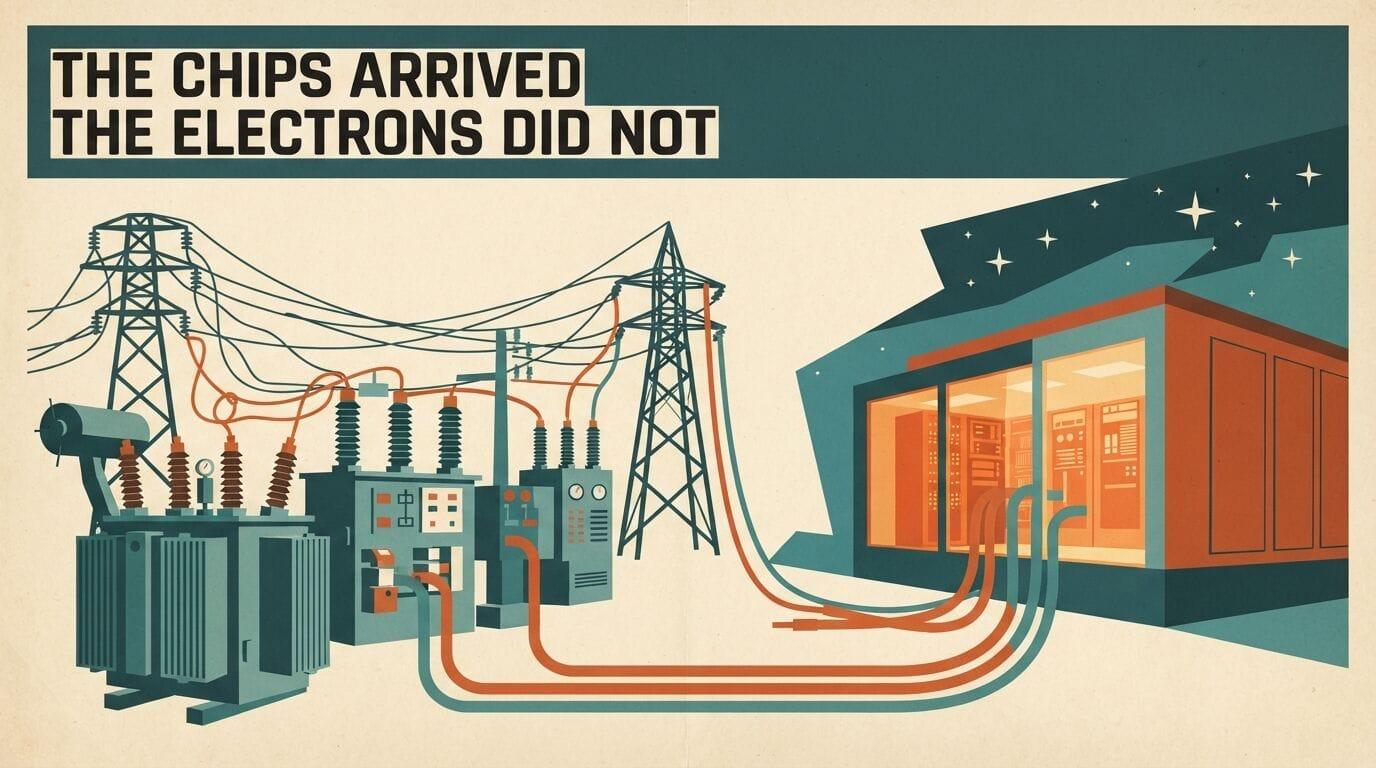
For most of the AI boom, the binding constraint was a chip. Nvidia allocation lists, H100 wait times, and $40,000 GPUs were the vocabulary of scarcity. In 2025 and 2026 that constraint quietly moved. Microsoft CEO Satya Nadella, on the Bg2 Pod, described the new problem plainly: "The biggest issue we are now having is not a compute glut, but it's power... you may actually have a bunch of chips sitting in inventory that I can't plug in. In fact, that is my problem today. It's not a supply issue of chips; it's actually the fact that I don't have warm shells to plug into."
That is not a talking point. It is a procurement state that several independent data sources now describe in numbers, and it is the condition that will set the pace of model releases, GPU rental prices, and utility bills for the rest of the decade.
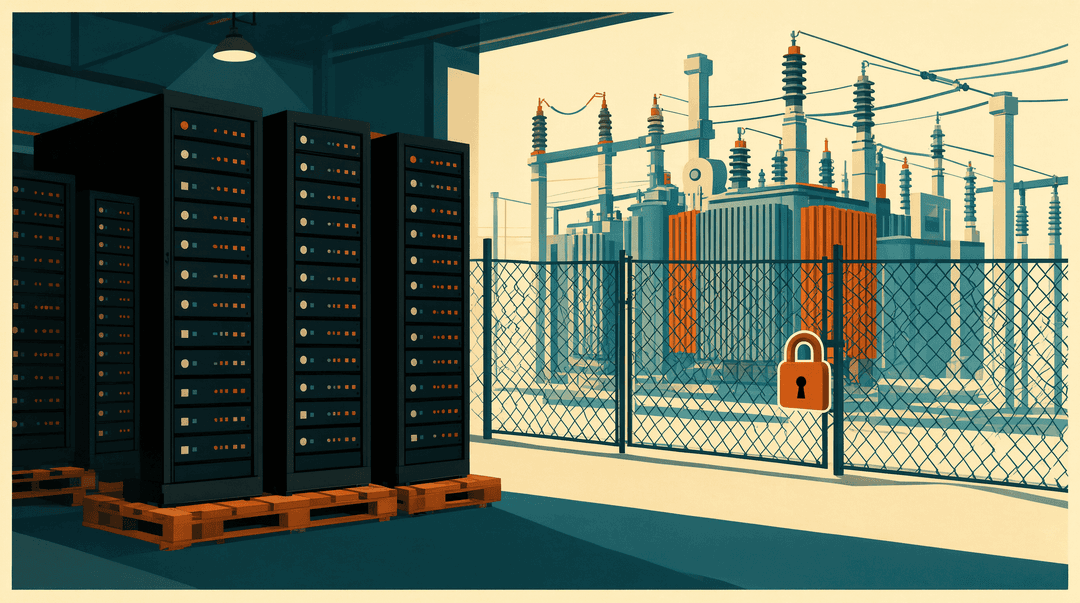
Demand is now measured in gigawatts
The International Energy Agency's Energy and AI report estimates global data center electricity consumption at roughly 415 TWh in 2024, about 1.5% of world electricity, and projects it more than doubles to around 945 TWh by 2030, just under 3% of the global total. Growth runs at about 15% a year, and the US and China account for close to 80% of the increase.
The American share is where the squeeze is sharpest. Lawrence Berkeley National Laboratory's 2024 baseline report found data centers consumed 4.4% of US electricity in 2023 and projected a 6.7% to 12.0% share by 2028. The lab's 2025 update, published in 2026, raised the near-term forecast by roughly 20% and now puts the reference case at 649 TWh in 2030, 11.8% of total US electricity, with a scenario range of 9.5% to 15.3%. The grid did not get a 20% head start when the forecast moved; the build pipeline did not change, the demand estimate did.
The bill arrives before the racks do
Capacity markets show the cost arriving first. PJM, the grid operator for 13 states and DC, cleared its capacity auctions at $28.92 per megawatt-day for 2024/25, then $269.92 for 2025/26, then $329.17 for 2026/27, a regulated cap in the last two years, per the Institute for Energy Economics and Financial Analysis. The market monitor's own attribution is explicit: including existing and forecast data center load raised 2026/27 auction revenues by 82.1% compared with a no-data-center forecast, about $7.3 billion, and the last three auctions together added roughly $23.1 billion in system costs driven largely by data center demand. IEEFA estimates the 2026/27 auction alone adds about $1.4 billion in capacity costs from June 2026 and lifts the average residential bill by $18 a month in western Maryland.
The pattern held in the next auction. PJM's following capacity auction cleared at the price collar for the third consecutive year, with PJM estimating an uncapped clearing price around $555 per megawatt-day, and attributed $6.3 billion, or 38% of total auction charges, to data center load growth. Gartner predicted, back in November 2024, that 40% of existing AI data centers would be operationally constrained by power availability by 2027. That forecast now reads as conservative framing rather than an outlier.
The physical queue is five years, not five months
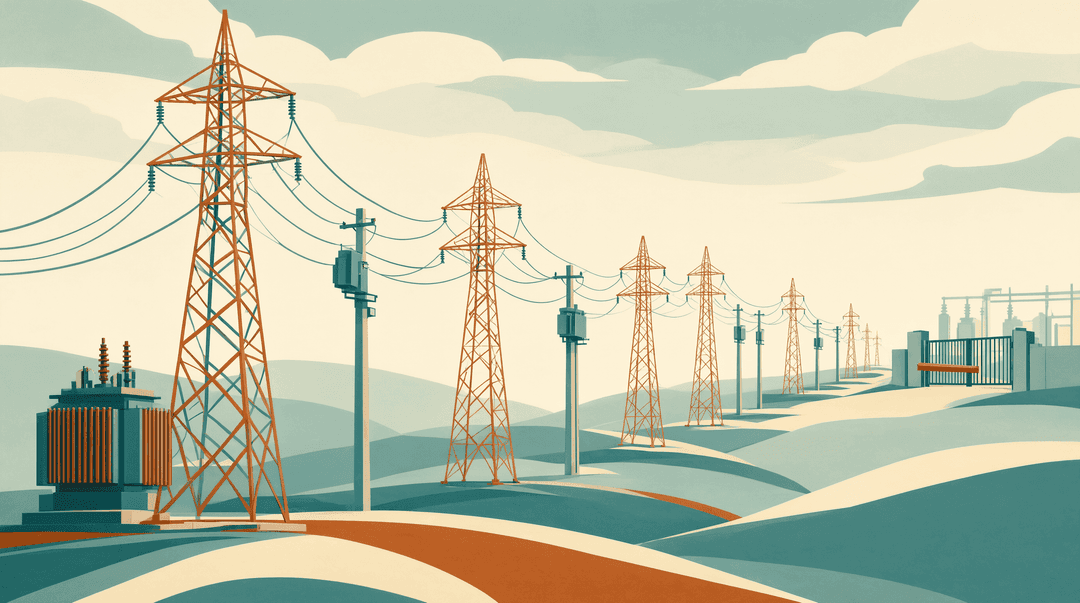
The constraint is not mystifying. New power plants wait years to connect. Berkeley Lab's Queued Up dataset (2026 edition) counts about 8,200 projects actively seeking grid interconnection as of the end of 2025, roughly 2,060 gigawatts of generation and storage combined, about twice the existing US fleet. The median time from request to commercial operation for projects that actually got built in 2025 exceeded five years, and historically only about one in five queue entries ever reaches operation.
Load-side waits are just as long. Dominion Energy, the utility for northern Virginia's Data Center Alley, said in August 2024 that connection times for new loads above 100 MW would stretch to as long as seven years.
The transformer market is the most literal bottleneck. Wood Mackenzie's 2025 surveys put average lead times at 128 weeks for large power transformers and 144 weeks for generator step-up units, with demand for the latter up 274% since 2019 and unit prices up as much as 77%. Roughly 80% of large power transformers used in the US are imported, and domestic production of the grain-oriented electrical steel they need depends on a single producer. Ordering a substation now means planning around a delivery date in 2029.
Washington and the states are rewriting the rules mid-flight
The federal response started in October 2025, when Energy Secretary Chris Wright invoked Section 403 of the DOE Organization Act and directed FERC to fix large-load interconnection, proposing a national 20 MW threshold. FERC skipped a generic rule and, on June 18, 2026, issued show-cause orders to all six regional grid operators, putting the burden on each RTO to justify or replace its large-load tariffs.
Congress moved on cost allocation. The House passed the Ratepayer Protection Act 417 to 3 in September 2026, which would require loads above 100 MW to pay for the grid upgrades they cause, and pressures state regulators to adopt large-load tariffs. Only 13 states currently lack any large-load tariff requirements.
The political backlash is now a state-level phenomenon. By mid-2026, eleven states had active moratorium bills and more than 150 data-center-related energy bills were moving through statehouses, per Quartz. New York enacted the first statewide moratorium on new large data centers in July 2026. North Carolina repealed the sales-and-use tax exemption on data center electricity in August 2026 after opposition in more than fifty communities. Data center siting is no longer a zoning story; it is a ratepayer story with incumbents on both sides.
The workarounds have their own queues
Hyperscalers have responded by trying to buy their own power. Constellation Energy is restarting the 835 MW former Three Mile Island Unit 1 as the Crane Clean Energy Center on a 20-year PPA with Microsoft, at roughly $1.6 billion of capital, still subject to full NRC relicensing. Amazon and Talen learned the limits of that playbook the hard way: FERC rejected their behind-the-meter expansion at Susquehanna in November 2024 on cost-shifting grounds, and the June 2025 replacement, a roughly $18 billion deal for 1.9 GW, had to be rebuilt as a front-of-the-meter retail arrangement that routes every electron across the shared grid anyway.
The lesson from the nuclear deals is the same as from the capacity auctions. There is no off-ramp from the grid that skips the regulatory and physical timeline. New generation, co-located or otherwise, still needs transformers, transmission upgrades, and federal sign-off, all measured in years.
What this means for anyone buying or selling AI
Three consequences follow directly from the data, not from speculation.
First, compute pricing now has a second derivative. GPU rental prices will increasingly track regional power costs and availability, not just chip supply. The providers that pre-contracted power (the Constellation, Talen, and utility partnerships of the world) hold an inventory advantage that looks a lot like what Nvidia had in 2023.
Second, model release cadence is an energy schedule. Frontier training runs are gigawatt-scale events, and gigawatts of newly energized space come with five-year interconnection timelines and 128-week transformer queues. The gap between "we can train it" and "we can plug it in" is where roadmap slippage will live.
Third, AI has become an electricity-bill issue with an election attached. The 417-3 House vote and the wave of state moratoria mean the permitting, cost-allocation, and tax treatment of your inference provider are now legislative variables. Subscriptions and API prices priced against cheap, invisible power are the exposed position.
The chips got built. That was the hard part everyone watched. The electrons are the hard part nobody put on a roadmap, and in late 2026 they are the constraint that decides how fast the rest of AI can move.
Sources
- Data Center Dynamics: Microsoft has AI GPUs sitting in inventory because it lacks the power to install them
- IEA: Energy demand from AI (Energy and AI)
- LBNL: United States Data Center Energy Usage Report: 2025 Update
- LBNL: United States Data Center Energy Usage Report (2024)
- Berkeley Lab news center: Report evaluates increase in electricity demand from data centers
- LBNL: Queued Up (2026 edition)
- IEEFA: Projected data center growth spurs PJM capacity prices by factor of 10
- Monitoring Analytics: Analysis of the 2026/2027 RPM Base Residual Auction
- Environ Energy: PJM Capacity Prices 2026, auction hits the cap for third year
- Gartner: Power Shortages to Restrict 40% of AI Data Centers by 2027
- Energy Connects (Bloomberg): Data Centers Face Seven-Year Wait for Dominion Power Hookups
- POWER Magazine: Transformers in 2026, Shortage, Scramble, or Self-Inflicted Crisis?
- Crowell & Moring: DOE Directs FERC to Act on Large Load Interconnections
- Duane Morris: FERC Acts to Advance Data Center and Large Load Integration in Six RTO Regions
- Utility Dive: House passes ratepayer protection bill to limit data center cost shifts
- Utility Dive: Constellation plans 2028 restart of Three Mile Island unit 1
- Utility Dive: Talen to sell Amazon 1.9 GW from Susquehanna nuclear plant
- Quartz: States are cracking down on AI data centers. Your electricity bill is why
- Electric Choice: Data Center Moratoriums and Restrictions tracker
