
The top score on Zapier's AutomationBench has changed hands three times since September 30, and each time the new owner was the same company: Google. Its Gemini 4 Neon model, released November 18, passes 56.3 percent of the benchmark's 657 simulated business workflows at extra-high effort, ahead of Gemini 4 Carbon's 53.9 percent from late October and Gemini 4 Argon's 51.3 percent from late September. The number buried under the records is the cost. Argon's record-setting run cost $1.63 per task. Neon at medium effort scores 53.3 percent, above what Carbon sold for in October, at $0.58 per task. A passing-quality frontier agent now costs roughly a third of what the previous frontier demanded, and it did that in seven weeks.
What the benchmark measures
AutomationBench is not a QA set or a coding drill. Each task boots a small simulated company across 47 mock business applications, roughly 500 API endpoints, and six functions: Sales, Marketing, Operations, Support, Finance and HR. The agent gets one trigger message, the kind an operations person would actually receive, plus tools to search, read, update and send. It cannot ask clarifying questions and there is no human in the loop. Grading is deterministic: fixed assertions check the final state of the simulated world, including negative assertions designed to block shotgun behavior like emailing the whole company. Zapier says the task mix is built on patterns from over 2 billion monthly tasks run across 3.7 million companies. An LLM judge never touches the score.
The record book, and the price column
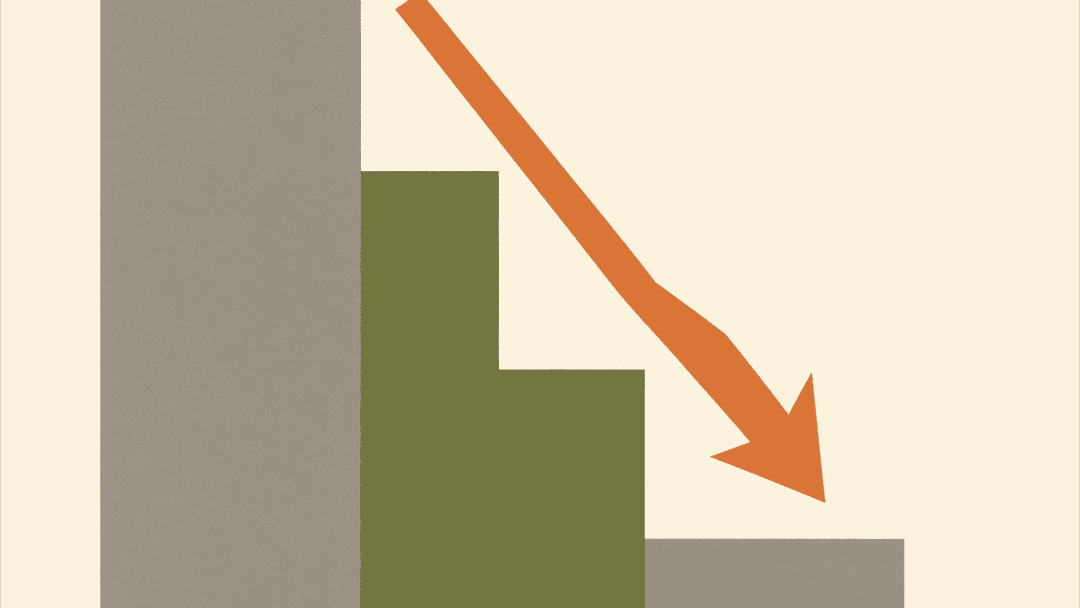
Zapier's release report puts the three Gemini records in sequence. Argon became the first model above 50 percent on September 30, scoring 51.3 percent at $1.63 a task. Carbon raised the bar to 53.9 percent on October 28 at $1.94. Neon's xhigh run passes 370 of 657 tasks at $1.69, 13 percent cheaper than Carbon in the same comparison, and 3.9 points above GPT-6.2 Astra's 52.4 percent, OpenAI's current top entry, which ran at $0.83.
The more interesting rows are Neon's lower effort settings. At high, it scores 54.3 percent, still above Carbon's record, for $0.88 a task, 55 percent less. At medium, $0.58 buys 53.3 percent, beating Astra at max on both cost and accuracy. At low, 49.6 percent costs $0.40. Zapier CEO Wade Foster framed the trend bluntly: a score close to September's record now costs about a quarter of what it did then. On the cost-versus-accuracy plot, four of the five frontier points are Neon settings. Above $0.40 a task, the cheapest route to any score in the comparison is a Neon setting.
Anthropic is the cautionary contrast. Claude Fable 5.2, running with Anthropic's default fallbacks at max effort, scores 51.45 percent at $4.64 per task, eight times what Neon charges for a better result at medium. Sonnet 5.5 at max manages 44.75 percent for $1.14. Two caveats Zapier itself flags: the leaderboard ranks use standard list pricing, not the promotional rates some Gemini models currently carry, and the per-task figures are estimates at Google's published token rates ($3 in, $15 out per million), not billed invoices.
Where the money goes
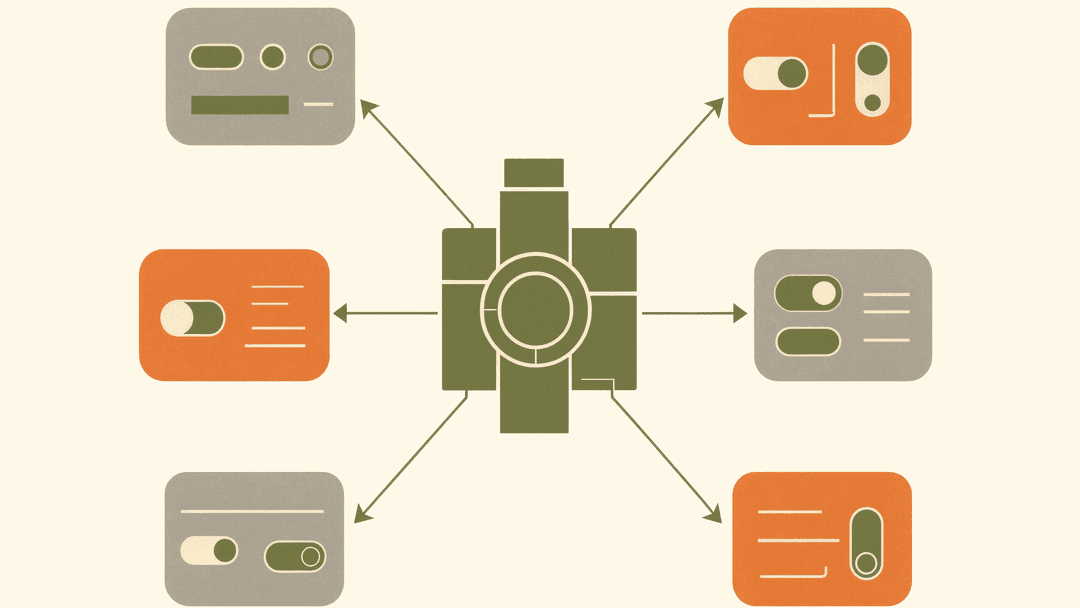
The cost structure explains why the curve moved so fast. Raising Neon from low to xhigh effort adds 13 percent more passed tasks, from 326 to 370, while cost per task rises 320 percent. The bill is reasoning: per task, thinking tokens grow 8.8 times, from about 6,700 to 58,500, and make up 82 percent of all output at xhigh. Input context grows from 272,000 to 1.3 million tokens per task, of which 81 to 89 percent is cache reads at a dollar-fifteenth of the standard input price. Without that caching discount, the frontier would look a lot more expensive than $1.69.
The efficiency figures have a trap inside them. At xhigh, a failed task costs $2.21 while a passed one costs $1.29, so misses, not wins, drive the bill. Counting failures, actual spend per passed task is $3.01 at xhigh against $0.81 at low effort. Buying the record score costs nearly four times as much per success as buying the cheapest setting.
What more thinking does not fix
Domain scores flatten the capability story. Marketing gains the most from extra reasoning, climbing 13 points from low to xhigh to reach 68.0 percent, and Finance tops out at 65.0. Operations does not move at all: 68.0 percent at low, medium and xhigh alike, with a dip at high. Some work either needs the right tool call or it does not, and thinking harder does not buy it. HR stays the weakest domain at every setting, ending at 37.5 percent at best, 5.8 points behind Astra.
There is also a concentration story here that the OpenAI-versus-Anthropic framing misses. Every top entry on this leaderboard except GPT-6.2 Astra and the Claude rows is a Google model, and Google has now held the record continuously since Argon broke 50 percent in September. Google's own launch post leans on the same result, pairing the AutomationBench win with first place on Andon Labs' Vending-Bench 2, a long-horizon business simulation. Artificial Analysis, for its part, ranks Neon third overall on its intelligence index behind Claude Fable 5.2 and Astra. The two leaderboards are not in conflict. Neon may not be the smartest model in production. On back-office work that gets graded by what it leaves behind, it is currently the cheapest way to be wrong least often.
Sources
- Zapier, Gemini 4 Neon AutomationBench release report: https://zapier.com/benchmarks/gemini-neon-4-report
- Zapier, AutomationBench leaderboard and methodology: https://zapier.com/benchmarks
- Wade Foster on LinkedIn, three records in seven weeks: https://www.linkedin.com/posts/wadefoster_google-just-set-the-top-score-on-zapiers-activity-7528934499028676610-rErA
- Google, Introducing Gemini 4 Neon: https://blog.google/innovation-and-ai/models-and-research/gemini-models/introducing-gemini-4-neon
- 9to5Google, Gemini 4 Neon launch coverage: https://9to5google.com/2026-11-18/gemini-4-neon-announcement
- Neurohive, Gemini 4 Neon benchmarks, pricing and Carbon comparison: https://neurohive.io/en/news/gemini-4-neon-benchmarks-pricing-carbon-comparison
