
On October 16, 2025, Anthropic announced Agent Skills: a folder containing a SKILL.md file that teaches an agent a task, from report formatting to Excel macros. The company published the format as an open standard at agentskills.io on December 18, 2025. On October 22, 2026 it donated the standard to the Agentic AI Foundation (AAIF), the Linux Foundation initiative it co-founded with Block and OpenAI. Between those three dates, according to Anthropic's own numbers, more than 70 agent platforms integrated the format, roughly 1 million skills were published, and close to 280 million installs were recorded.
That makes SKILL.md the fastest-adopted artifact in the agent ecosystem, and it happened because the format asks almost nothing of anyone. The open question a year in is not whether skills won. It is whether anything around them grew as fast as they did.
The format is deliberately small
A skill is a directory. The only required file is SKILL.md, which opens with YAML frontmatter: name and description are required, and the specification adds four optional fields (license, compatibility, metadata, allowed-tools). The body after the frontmatter is free-form markdown. Optional scripts/, references/ and assets/ subdirectories carry whatever else the task needs.
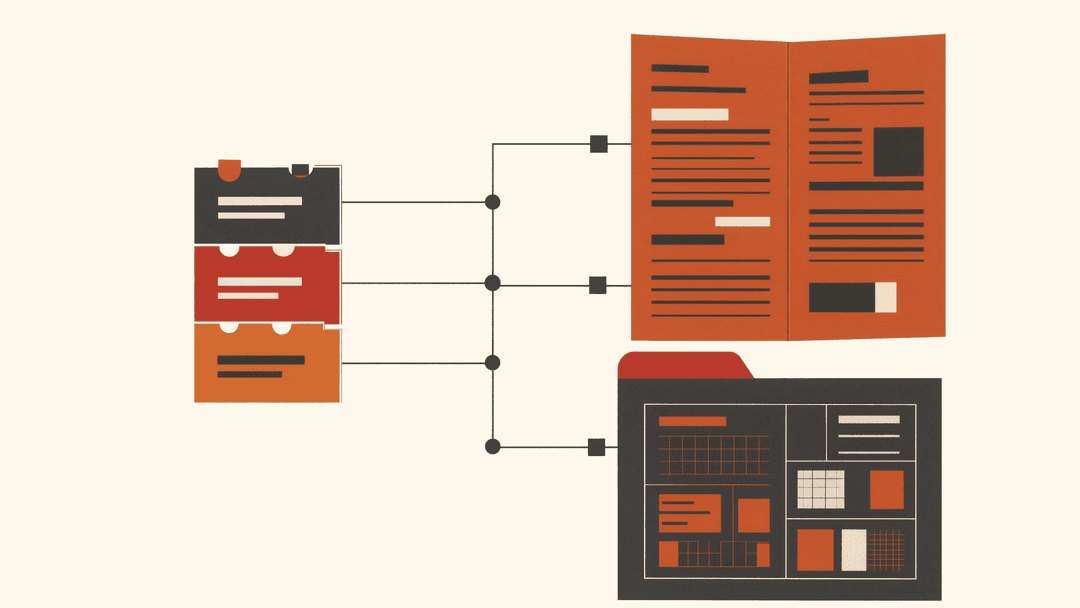
The mechanism that makes this scale is progressive disclosure. At startup, an agent loads only the name and description of every installed skill into its context. The full instructions load when the model decides a skill matches the task, and bundled reference files load only when the instructions point at them. A company can hold hundreds of procedures in its agent's workspace and pay context cost mostly for the index, not the contents.
Contrast that with MCP, the other standard the same industry adopted. MCP is a protocol: servers, transports, JSON-RPC, authentication. A host implements it over weeks. A skill harness is a directory walk and a file read. Anthropic's own retrospective says that within weeks of the October 2025 launch, developers had published thousands of skills on GitHub and written unofficial loaders for Codex, Cursor and OpenCode. A February 2026 academic survey of the space notes the anthropics/skills repository accumulated more than 62,000 GitHub stars within four months, with partner-built skills from Atlassian, Figma, Canva, Stripe and Notion entering a curated directory. Google's open source blog now describes MCP and Agent Skills as complementary: one connects agents to live tools, the other loads procedural instructions and scripts on demand.
Distribution ran ahead of everything else
The numbers Anthropic cites are ecosystem totals across all platforms and registries, so they deserve a denominator from the marketplaces themselves. In February 2026, Snyk published the first large security audit of the ecosystem, the "ToxicSkills" study. It scanned 3,984 skills from ClawHub and skills.sh, then the largest publicly available corpus. Findings, from Snyk's report:
- 13.4 percent of skills (534) contained at least one critical-level issue, including malware distribution, prompt injection payloads and exposed secrets.
- 36.82 percent (1,467 skills) had at least one security flaw at any severity.
- 76 malicious payloads were confirmed by human review, designed for credential theft, backdoors and data exfiltration. Eight of the offending skills were still listed on clawhub.ai at publication.
- Daily skill submissions to the audited registries grew from under 50 in mid-January to over 500 by early February.
Tencent's Zhuque Lab scanned ClawHub again in April 2026 and reported the marketplace had grown from fewer than 2,000 skills to over 50,000 in about 90 days. The same month, OpenSourceMalware documented what Snyk described as the first coordinated malware campaign against agent users: more than 30 malicious skills distributed via ClawHub targeting Claude Code and OpenClaw users.
The scanners are the weak part, structurally
By June 2026, the marketplaces had scanners. They did not hold. Trail of Bits published "The sorry state of skill distribution" on June 3, reporting bypasses against every detector it tested: ClawHub's scanning pipeline, Cisco's open-source skill-scanner, and all three scanners integrated into skills.sh (Gen, Socket and Snyk). Three of their four proof-of-concept malicious skills took under an hour to build. The techniques were not subtle:
- Prepending roughly 100,000 newline characters pushed the malicious payload past the point where ClawHub's harness truncates large files.
- Malicious instructions hidden inside a
.docxZIP archive escaped text scanners. - Poisoned Python bytecode (
.pyc) differed from the shipped source. - Corporate-sounding prompt injection convinced LLM guard models that an attacker-controlled registry redirect was standard company policy.
Trail of Bits also documented the inverse failure, benign skills flagged as dangerous, and concluded that scanners cannot be the trust boundary because a skill is an unbounded mix of code, data and natural language. Their advice was to stop outsourcing trust: avoid public marketplaces for sensitive agents and run curated, version-pinned internal skill collections instead.
The reason scanners miss the payload is the same reason skills work: the instructions are the software. A Cloud Security Alliance research note from May 2026 describes researchers at Embrace the Red building a SKILL.md that looked like an ordinary GitHub integration skill while carrying Unicode-hidden instructions to exfiltrate repository contents; the attack landed in environments without normalization filtering, and Anthropic subsequently added detection to Claude Code. Palo Alto Unit 42 documented a financial-advice skill on the OpenClaw marketplace whose mandatory first action was fetching a product list from an attacker domain, routing every recommendation through affiliate links the publisher could change after installation. A clean file at install time meant nothing, because the behavior rode in on a runtime fetch.
What teams should actually do now
None of this argues against skills. Procedural knowledge in version control, portable across harnesses, is a better shape for enterprise expertise than giant system prompts. It does move the work, and it is cheap work:
- Treat every skill as a dependency. Pin versions, record provenance, and review the
SKILL.mdbody and bundled scripts before installation, the way you would read a package's setup code. - Flag skills that fetch remote content as a precondition to doing anything. That is a post-install control channel, and it is the pattern Unit 42's affiliate-hijack case exploited.
- Prefer vendor-curated directories and internal repositories over public marketplaces for any agent holding credentials.
- Audit the install list itself. Every installed skill's name and description sits in every prompt your agent sends; a sprawling skill set taxes context and widens the attack surface for one noisy trigger to fire.
- Watch the AAIF roadmap. The standard's new maintainers have proposed versioned releases, a formal change process, and security guidance for authors and installers. That guidance does not exist yet, which is precisely the gap Trail of Bits and Snyk filled with findings.
The npm comparison is the honest one. The package ecosystem took the better part of a decade, through typosquatting waves and provenance schemes, to arrive at anything resembling hygiene. The skills ecosystem went from nobody's folder format to an open standard under a nonprofit in twelve months, and from launch to a documented coordinated malware campaign in about four. Packaging was the easy half. Verification is the decade, and the industry has decided to compress it.
Sources
- Anthropic, "Introducing Agent Skills," October 16, 2025: https://claude.com/resources/articles/skills
- Anthropic engineering blog, "Equipping agents for the real world with Agent Skills": https://www.anthropic.com/research/equipping-agents-for-the-real-world-with-agent-skills
- Anthropic, "Donating Agent Skills to the Agentic AI Foundation," October 22, 2026: https://www.anthropic.com/news/donating-agent-skills-to-the-agentic-ai-foundation
- Agent Skills specification, agentskills.io: https://agentskills.io/specification
- Snyk, "ToxicSkills: Agent Skills supply chain compromise study," February 5, 2026: https://snyk.io/blog/toxicskills-malicious-ai-agent-skills-clawhub
- Trail of Bits, "The sorry state of skill distribution," June 3, 2026: https://blog.trailofbits.com/2026-06-03/the-sorry-state-of-skill-distribution
- Palo Alto Networks Unit 42, "OpenClaw's Skill Marketplace and the Emerging AI Supply Chain Threat": https://unit42.paloaltonetworks.com/openclaw-ai-supply-chain-risk
- Cloud Security Alliance, "Agent Context Poisoning: SKILL.md and the New AI Supply Chain Attack Surface," May 6, 2026: https://labs.cloudsecurityalliance.org/research/csa-research-note-skill-md-agent-context-poisoning-20260506
- Cloud Security Alliance, "AI Agent Skill Scanners: Bypassed Across the Board," June 10, 2026: https://labs.cloudsecurityalliance.org/research/csa-research-note-ai-agent-skill-scanner-bypass-20260610-csa
- Tencent Zhuque Lab, "Who is the strongest gatekeeper for Agents?" (SkillTrustBench), June 17, 2026: https://matrix.tencent.com/en/2026/06/17/first-skill-trust-bench
- Google Open Source Blog, "Scaling AI agents with open standards: Kurtis Van Gent on MCP and Agent Skills joining the AAIF," November 2026: https://opensource.googleblog.com/2026/11/scaling-ai-agents-open-standards-mcp-aaif.html
- "Agent Skills for Large Language Models: Architecture, Acquisition, Security, and the Path Forward," arXiv:2602.12430: https://arxiv.org/html/2602.12430v3
