
Tidal announced on Tuesday that it will remove every track it determines to be 100% AI-generated from its platform, effective December 9, and will ban distributors from delivering such tracks at all. Deliveries whose metadata says the music was generated solely with AI tools will be rejected outright. Tracks that used AI with human input remain allowed. The reasoning, in Tidal's own words: wholly AI music "diverts streams and royalties away from the artists, and confuses fans."
The numbers behind the ban
The scale of the inflow, as Tidal reported it:
- About 43% of tracks distributed to the platform over the past 90 days were identified as wholly AI-generated.
- On November 6 alone, 60% of newly uploaded songs were AI tracks.
- 96% of those AI-generated tracks have generated zero streams.
Robert Andersen, who runs Tidal at Block, said on X that the purge covers roughly 29 million songs and that the catalog should be clear of wholly AI tracks by the beginning of 2027. He put expected future rejections at 80,000 to 85,000 AI-generated songs per day and framed Tidal as the first streaming service to take this step, urging competitors to follow. The zero-stream statistic is the tell for what the economics look like: this is industrial-scale upload activity, not listening demand.
Tidal had already tagged and demonetized wholly AI tracks earlier this year. The December action upgrades that posture from suppression to deletion and a distribution ban.

Stricter than everyone else, by design
No other major streaming service goes this far. Spotify and Apple Music, the two largest platforms, label AI tracks and artists or pull them from recommendations, but still allow fully generated songs to be uploaded. Spotify reportedly removed some 50 million AI tracks from recommendations earlier this year. Bandcamp, the indie distributor, is the notable precedent for an outright ban.
The policy also answers a request the labels have been making publicly. On Universal Music Group's October earnings call, CEO Lucian Grainge urged streaming services to pay out less for AI-generated tracks, arguing that "AI slop degrades the fan experience and diverts value from real artists" and that removing the profit motive would disincentivize "industrial scale content production." Tidal has now removed the payout entirely.
Where the policy gets hard: the label, not the law
What counts as wholly AI is narrower in the announcement than in the contract. Tidal's terms, effective June 29, cover audio "wholly or substantially generated by generative AI" with limited or no direct human creative input beyond a prompt. The ban, as stated, targets the "100%" case.
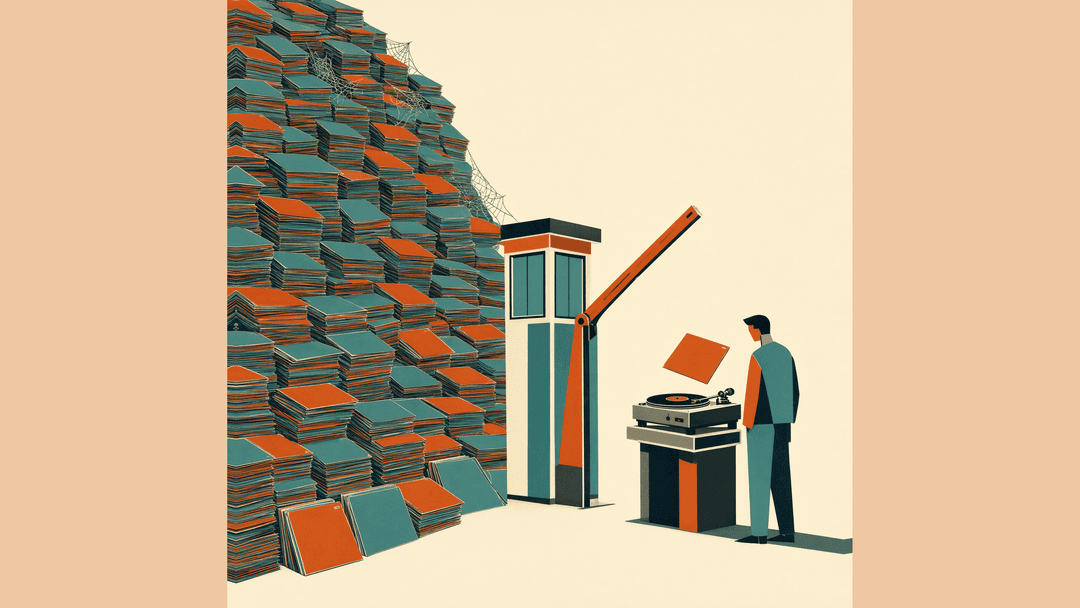
Detection is the load-bearing wall. Tidal's terms describe labeling as a best-efforts process using industry-standard detection technology and concede that it produces false positives and false negatives, with no warranty on the accuracy of a label or its absence. Uploads can be scanned for AI generation, AI-tagged uploads are ineligible for monetization, and users who believe a track was mislabeled can appeal to human moderators. Moving from label-and-demonetize to delete-and-block distributors raises the stakes of every false positive: a mistagged human record now leaves the catalog instead of just losing payout.
What the policy does not touch is AI-assisted production inside otherwise human workflows, impersonation-adjacent gray zones short of full cloning, or the far larger question of whether other platforms follow. Spotify and Apple Music have not signaled a move of comparable scope. For a service Tidal's size, the ban is cheap to enforce and expensive to copy.
