
Between October 2025 and April 2026, every major record label and the two biggest independent licensing bodies signed deals with AI music companies. The lawsuits did not end the generators. They repriced them. Fourteen months later, the shape of the licensed AI music economy is visible, and the honest summary is short: making a song is free, keeping one is metered, and almost nobody is listening.
The deal chain, in order
The settlements followed one repeating pattern: lawsuit or credible threat, then settlement, then an opt-in licensed product.
ElevenLabs got out first. It launched Eleven Music on August 5, 2025 with licenses from Merlin and Kobalt, and Music Business Worldwide reported a precedent-setting 50/50 royalty split between publishing and recorded music, with Kobalt holding a most-favored-nation clause that upgrades its terms if anyone else gets a better deal.
Then the majors moved. Universal Music Group settled with Udio on October 29, 2025, announcing a joint walled-garden platform where outputs cannot be exported and participating catalogs earn per-output royalties reported as calibrated to similarity against the training data. Five days later, on November 3, Udio opened a 48-hour window for users to download past creations, then closed it again. Warner Music Group settled with Suno on November 25, 2025 in a partnership that gives Warner artists control over whether their names, images, likenesses, voices and compositions appear in AI-generated music, and moved Suno's audio downloads behind paid accounts. That same week, KLAY became the first AI company licensed by all three majors for its planned Large Music Model.
The independents' doorways came next: Merlin (representing roughly 30,000 indie labels and distributors) signed an opt-in licensing framework with Udio in January 2026, and Kobalt added a publishing deal with Udio on April 9, 2026. Spotify announced an artist-first AI product framework with all three majors, Merlin and Believe on October 16, 2025, built on four principles: licensed in advance, opt-in, compensated, artist-fan connection.
Litigation runs parallel to all of it. Sony and Universal are still suing Suno in Massachusetts federal court, with the majors pushing in November 2026 for a partial pause pending resolution of the fair-use question. Elvis Presley Enterprises and Authentic Brands Group amended their Suno suit to add more allegedly infringing outputs. A deal and a docket are not opposites here; they are the same strategy.
What creators actually keep now
The settlements split using the machines from taking the file home, and every platform repriced the second half.
Udio went furthest. No plan allows downloads since October 2025. You can generate (free tier: up to three songs per day), play and share inside Udio, and nothing leaves. Pro costs 6,000 monthly credits of in-platform generation. The licensed rebuild with Universal has been in staged rollout through 2026; as of this writing there is no announcement that exports are coming back.
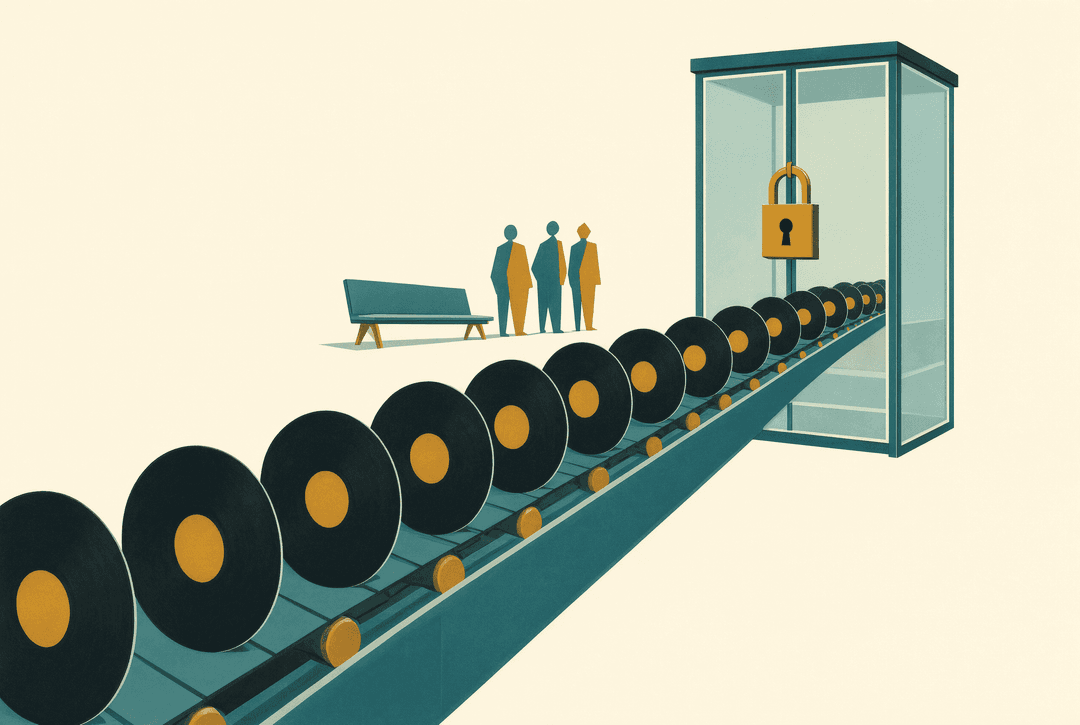
Suno kept its product but metered the exit. From September 3, 2026, free users get seven lifetime downloads total, personal use only. Pro subscribers ($10 per month, $8 billed annually) are capped at 20 downloads per month; Premier ($30, $24 annually) at 60. The generation credits are far larger than the download caps: Pro gets 2,500 song credits a month, Premier 10,000, free users 50 credits a day. The ratio is the business model. Unused downloads do not roll over; extra downloads can be purchased; Premier members keep unlimited downloads only inside the Suno Studio production suite. The new terms also prohibit obtaining a copy by any means other than a Suno download channel, naming recording and stream-ripping, with account termination and referral to law enforcement as the stated remedies. Suno's blog tied the caps directly to mass-exporters uploading generated tracks to streaming services for artificial royalty plays, after an artists' rights coalition called the platform a fraud-fodder factory in February.
Commercial rights are now download-gated everywhere. On Suno, a track carries commercial rights only if it was created on a paid plan and a download quota has been spent on it; remixes stay personal-use on every plan, and only paid-plan users get the ownership handover in the terms. On ElevenLabs Music, the free plan's roughly 11 minutes a month of generation (10,000 credits at 900 per minute) comes with a moving target: the September 2026 launch post promised free users five lossless downloads a day and commercial use with attribution, the October 9 terms list monthly downloads as not permitted for free users while allowing most commercial use except streaming distribution, and an ElevenLabs email to MBW said commercial use is allowed on any plan with no credit condition. Three statements, one company, one week. Read the current terms, not the launch blog.
The terms of service carry a quieter cost. Suno's agreement takes a broad, perpetual, royalty-free license to everything users submit, including for improving its models, and that applies on paid plans too.
What rights holders actually get
On paper: opt-in consent, per-output royalties, new revenue lines. In practice, the money is mostly theoretical so far.
Every signed deal is opt-in, which means the default for any catalog is out. No platform has published a per-output rate card. Chartlex, which audits independent catalogs against these new income streams, reports that AI licensing remains a marginal line item for independents, and that the artists positioned to earn are the ones whose label, distributor or publisher already sits at a table with Merlin, Kobalt or a major. The two products with the broadest rights coverage, KLAY's licensed Large Music Model and Spotify's artist-first initiative, are both pre-revenue for artists: licensed, announced, unshipped.
Suno's model is the outlier: its economics run through product tiers rather than reported per-output royalties, with opted-in Warner artists compensated when their name, voice or compositions are used. The partnership announcement cites an installed base of 100 million creators, the number that licensed catalogs are now being asked to share.
The supply flood the deals did not touch
Meanwhile, the streaming platforms are drowning in exactly what the generators make. Deezer reported in July 2026 that fully AI-generated tracks exceeded 50% of all daily new uploads at peak in June, a monthly average of roughly 90,000 synthetic tracks, up from about 10,000 a day (10% of uploads) when it started measuring in January 2025. It tagged 13.4 million AI tracks in 2025 alone. Consumption tells the inverse story: AI tracks drive only 1% to 3% of streams on the platform, and 85% of the streams those tracks do get are detected as fraudulent and demonetized. Deezer has gone further than any DSP: excluding AI tracks from recommendations, licensing its detection technology to Billboard and Sacem since January 2026, and announcing in July that it will take down AI tracks used in streaming fraud or unlistened to for six months.
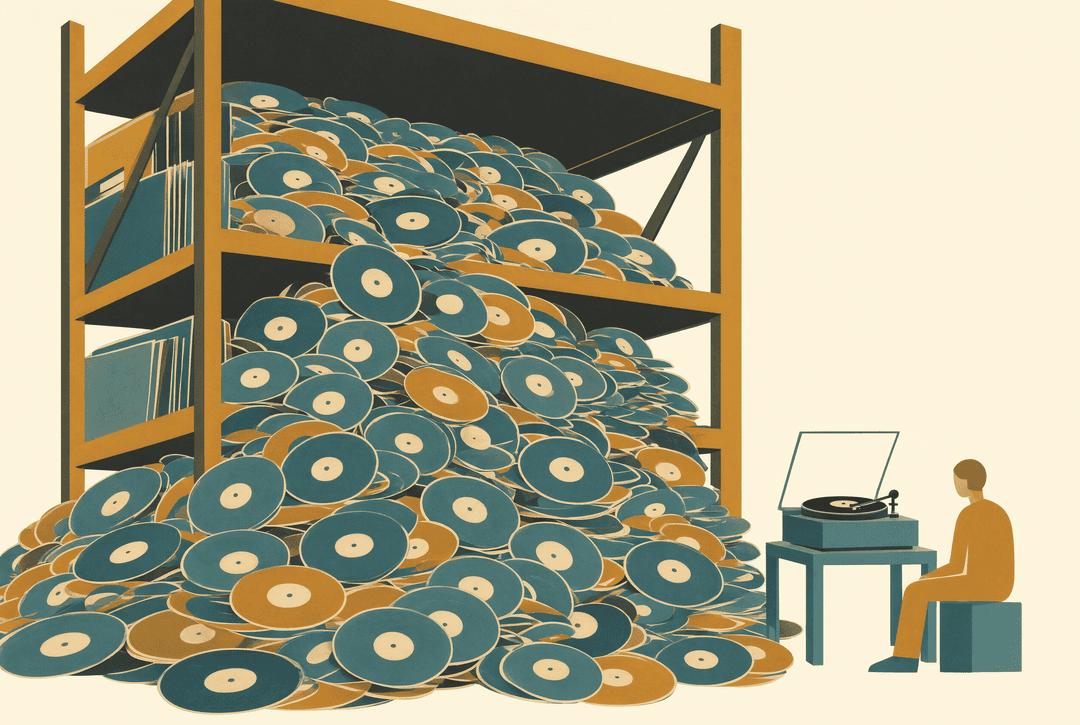
That gap, half of supply and about 2% of listening, is the fact the licensing deals were never designed to fix. The settlements sold catalogs protection from unlicensed training and a share of generation revenue that has not yet materialized at scale. They did not create demand.
The working read
If you make AI music to soundtrack a video or a birthday, use Suno's paid tiers: 20 downloads a month for $10 covers most casual creators, and commercial rights attach on download. Treat ElevenLabs' free music plan as preview software until its terms stop contradicting its blog. Treat Udio as a composition room you cannot leave. And if you are a catalog owner deciding on an opt-in, the rate cards are not public, so the only honest comparison available today is who you trust to show you the numbers later.
The licenses are real. The locks are real. The royalties are still a promise.
Sources
- Warner Music Group, "Warner Music Group and Suno Forge Groundbreaking Partnership," November 25, 2025 (also on PR Newswire)
- Music Business Worldwide, "Suno limits Pro subscribers to 20 song downloads per month"
- Digital Music News, "Mutiny on Udio's Deck: Subscribers Livid After Downloads Disabled," October 31, 2025
- Chartlex, "AI Music Licensing Deals 2026: Every Label Deal Tracked"
- Deezer Newsroom, "AI-generated tracks reach 44% of uploads" (April 20, 2026) and "AI Music Tops 50% of Daily Uploads on Deezer" (July 21, 2026)
- Billboard, "Deezer Says Over 50% of Daily Song Uploads Are Now Fully AI-Generated"
- Mubert, "AI Song Generator Free Plans: What You Keep in 2026"
- Digital Music News, "UMG v. Suno II Battle Continues," November 16, 2026
