

On the evening of 23 November, a pull request landed in a GitHub repository called formal-math, owned by Anthropic PBC. It added a folder named vp-vnp. Inside: a 70-page paper and a Lean 4 project. The paper is titled "VP ≠ VNP over every field." Its sole listed author is Claude (Anthropic).
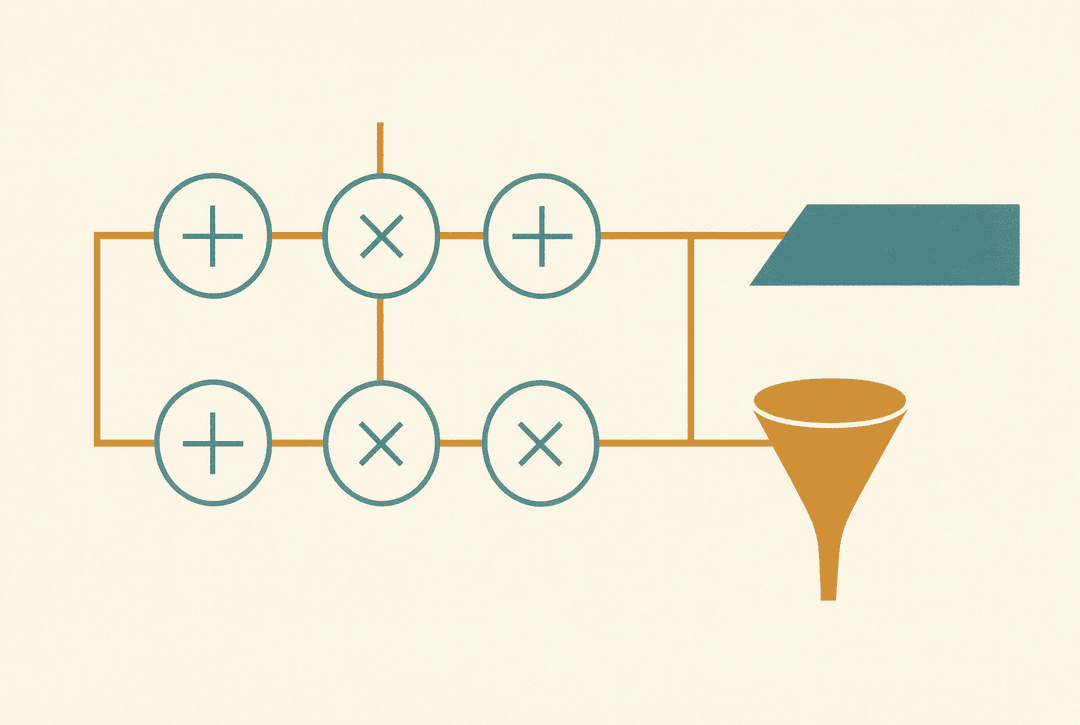
The claim is the central conjecture of algebraic complexity theory. Leslie Valiant set it down in 1979. It asks whether the class VP, polynomials computable by polynomial-size arithmetic circuits, is strictly smaller than VNP, the class whose answers can be verified by a polynomial-size circuit. VP ⊆ VNP is trivial. Whether the containment is proper has been open for 47 years, and it is the closest structural analogue of P versus NP that anyone has managed to formalize for ordinary algebra.
If the proof holds, the answer is yes, over every field at once.
What the paper actually proves
The headline is a lower bound, not an equality statement. Theorem 1.1 says there is an absolute constant c > 0 such that for every field characteristic p, and all sufficiently large m, any arithmetic circuit computing the m-th Hamiltonian cycle polynomial needs more than m^(c (log m)^(1/3)) gates. For the permanent, the same bound holds whenever p is not 2.
The characteristic 2 exclusion is not a technicality. Over a field of characteristic two the permanent and the determinant coincide, and the determinant has polynomial-size circuits, so any permanent lower bound fails there by construction. The Hamiltonian cycle polynomial is what rescues the universal claim: it is VNP-complete over every field, including characteristic 2.
Both results extend to approximate circuits, in the border-complexity sense where a circuit over the Laurent series field computes f + εg. That upgrade matters: it gives VNP not contained in the closure of VP, which is the stronger of the two separations and the one that speaks to the classical determinantal-complexity program.
Anthropic's formalization states five theorems: the main bound, its approximate form, the VP/VNP separation, the closure separation, and a real-field permanent statement.
The parts that are not claimed
The paper is blunt about where it stops, which is the most interesting thing about it after the result itself.
It does not touch P versus NP. The reasoning is stated plainly: an arithmetic circuit over a field must be correct on every element of that field and of all its extensions, while a Boolean circuit only needs to be correct on 0 and 1. So a superpolynomial algebraic bound says nothing about whether NP-complete problems have fast algorithms. Evaluating the permanent at 0/1 inputs is still #P-complete, and that is a statement about Boolean computation. The paper also notes that the known implication runs one way: a Boolean circuit-class separation would imply Valiant's conjecture over suitable fields, but nothing from algebraic back to Boolean.
The bound itself is described as weak in a specific way. It is quasipolynomial, and the best known upper bounds for the permanent are exponential, from Ryser and Glynn. There is room to tighten by a wide margin. Anthropic explicitly declines to claim the exponent 1/3 is optimal.
Most unusually for a lab announcement, the paper also admits it does not know which of its own two cases is true.
The two-case structure
The proof runs through tensors and geometry rather than through the permanent directly. The overview sets up prices on a network of wires, treats tensor rank as a distance, and shows two crossing wires force those distances to have nonpositive curvature. That yields a dichotomy: either the flat hypothesis holds or the contracting hypothesis holds.
Theorem 2.2 says at least one must hold over every field. Then, in the paper's own words: "We do not know which of the two hypotheses holds, even over R, nor do we show that the two are mutually exclusive."
The paper wins both branches. In the flat case, Euclidean configurations of prices produce a direct bound, and this is where the (log m)^(1/3) exponent comes from, through a balanced-sets counting argument. In the contracting case, the argument ends in a diagonalization over machines and programs. A proof that survives whichever world it turns out to live in is a legitimate and old trick, but publishing it while naming your own ignorance of which branch applies is not something the field sees often.
What verification does and does not cover
This is the crux of the announcement, and Anthropic does not obscure it. The folder README states that the paper and the formal proof were both written by AI models and that no human mathematician has checked the proof. The appendix repeats it: "No human mathematician has checked the development, the statement file or the proofs."

There is real machinery behind that caveat, and it is more than a build passing. The project pins Lean and Mathlib versions, builds with lake, and prints sorry warnings only from a Challenge file that deliberately states the theorems without proofs. An axiom check confirms that nothing beyond propext, Classical.choice and Quot.sound is in use, which is the standard set. The repository's continuous integration additionally runs a comparator that checks the proved statements against the sorry-only statements, and rechecks the proofs with nanoda, a second, independently written kernel. So the derivations have been through two kernels.
Lean verifies that steps follow from assumptions. It cannot verify that the assumptions written down are the ones intended. The paper concedes this directly: four statements that describe machines and account for their gate counts and running times "can be verified only in the Lean development," and the contracting case, "and with it every main result, rests on Lean at these points." On whether the formalized statements mean what the prose claims, the paper's answer is that it "was judged only by AI readers."
An appendix table lists the Lean counterpart of each numbered statement and records where they differ, which is the honest way to hand the work to a human. It also tells you exactly where a human would need to look first.
Why it arrived quietly
There was no blog post and no announcement. The formal-math repository carries three earlier Claude items: zeta23, from August, in which Claude improved a longstanding lower bound on the fraction of Riemann zeta zeros on the critical line; eth, added on 27 October, formalizing a claimed 2^o(n)-time algorithm for 3-SAT; and 3sum-apsp, formalizing truly subquadratic 3SUM and subcubic APSP results. Anthropic's research page for the zeta result lists human mathematicians who studied and validated the paper and outside experts who examined it on short notice. The vp-vnp folder lists none.
The timing is hard to ignore. Anthropic listed on Nasdaq on 19 November. On 20 November its mathematician Levent Alpöge claimed a proof of the Riemann hypothesis, a 17-million-line Lean development that the Lean and Mathlib communities said 24 hours later they had certified against four published criteria. VP ≠ VNP lands three days after that, with the same structure of evidence and a stricter statement about who has read it.
A machine-checked proof of Valiant's conjecture would be the most significant result in the history of algebraic complexity. What exists today is a claim, a formalization, two kernels that agree, and an open admission that no human has reviewed the statement with the authority the result requires. The gap between those two things is the actual story, and only mathematicians can close it.
Sources
- Anthropic formal-math repository, vp-vnp folder: https://github.com/anthropics/formal-math/tree/main/vp-vnp
- Paper PDF, "VP ≠ VNP over every field," authored by Claude (Anthropic): https://raw.githubusercontent.com/anthropics/formal-math/main/vp-vnp/paper.pdf
- Statement.lean and Challenge.lean, Lean 4 formalization: https://github.com/anthropics/formal-math/tree/main/vp-vnp
- Anthropic research page on the earlier Claude zeta-function result: https://www.anthropic.com/research/riemann-zeta
- TradingView News summary of the vp-vnp publication: https://www.tradingview.com/news/binance_news:44de072a6094b:0-anthropic-posts-claude-s-vp-vnp-proof-with-no-human-verification
- Lean and Mathlib community certification of the Alpöge Riemann hypothesis proof: https://leanprover-community.github.io/blog/posts/riemann-hypothesis/
- BBC News on Anthropic's record of AI math claims: https://www.bbc.com/news/articles/c6pqr2g7w059o
