
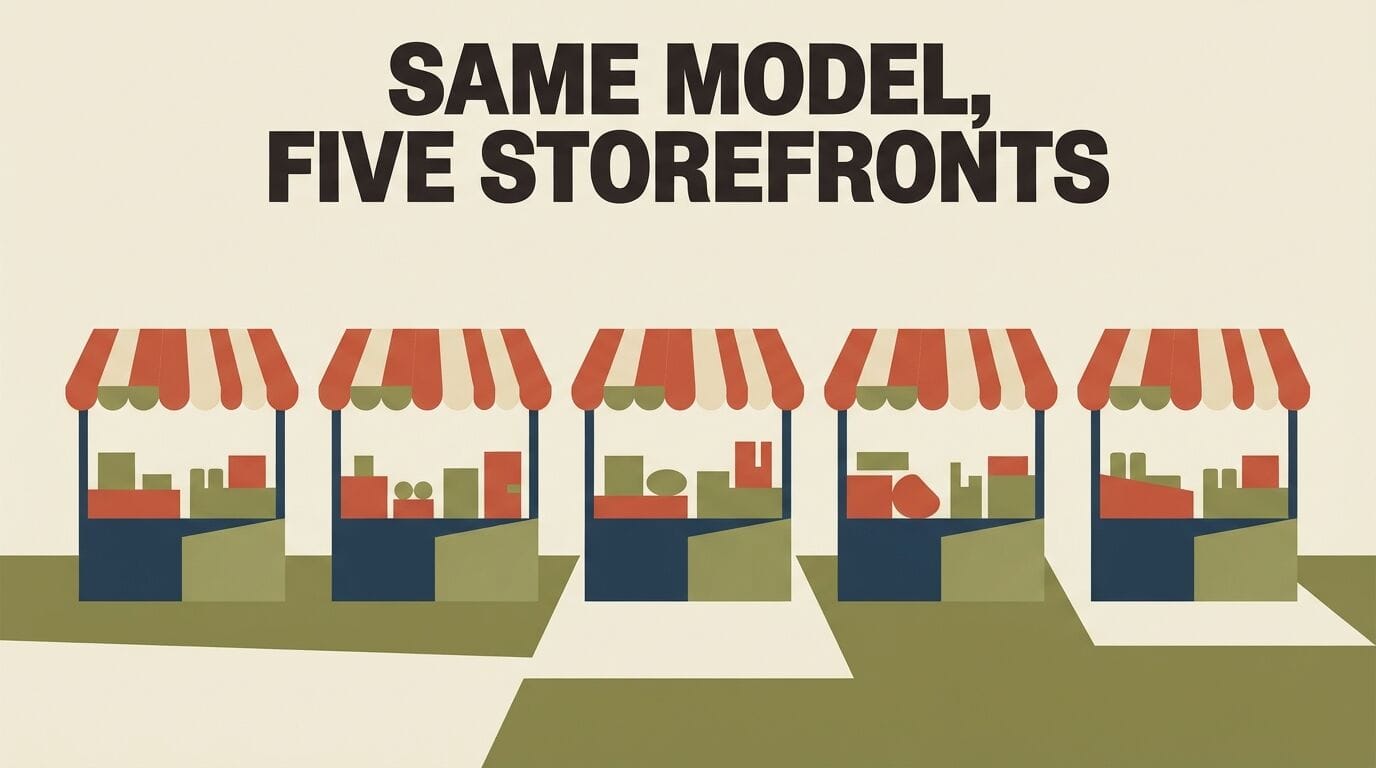
The same Claude Opus 5.5 request that costs $4 per million input tokens on Anthropic's own API also sells for $4 per million tokens on Amazon Bedrock, on Anthropic's marketplace platform inside AWS, on Google Cloud, and in Microsoft Foundry. That part of the story is simple. What is not simple is everything that sits around the list price: geography surcharges that add 10 percent on some lanes but are set independently on others, billing units that are not tokens, service tiers with different names at every shop, and feature gaps that no price table mentions. A rate card is not an invoice, and in late 2026 the storefront between you and the model is often what decides the difference.
One rate card, five counters
Take Anthropic's published pricing as the worked example, because Claude is now sold through more distribution lanes than any other frontier model. Anthropic's docs name the variants explicitly.
- The Claude API, first party, where the model pricing table lists Opus 5.5 at $4 input and $20 output per million tokens, Fable 5.2 at $8/$40, Sonnet 5.5 at $2/$10, and Haiku 5.5 at $0.10/$0.50 for prompts under 100,000 tokens.
- Amazon Bedrock, the AWS-operated lane, where AWS invoices you and sets its own price list.
- Claude Platform on AWS, an Anthropic-operated service billed through AWS Marketplace in Claude Consumption Units.
- Google Cloud in two flavors: "Claude Models on Google Cloud (Google managed)" and an Anthropic-managed variant that bills through the Google marketplace in the same CCU scheme.
- Claude in Microsoft Foundry, billed through Azure Marketplace, also in CCUs.
- And outside the big three, router lanes like OpenRouter that resell many vendors' models through one API.
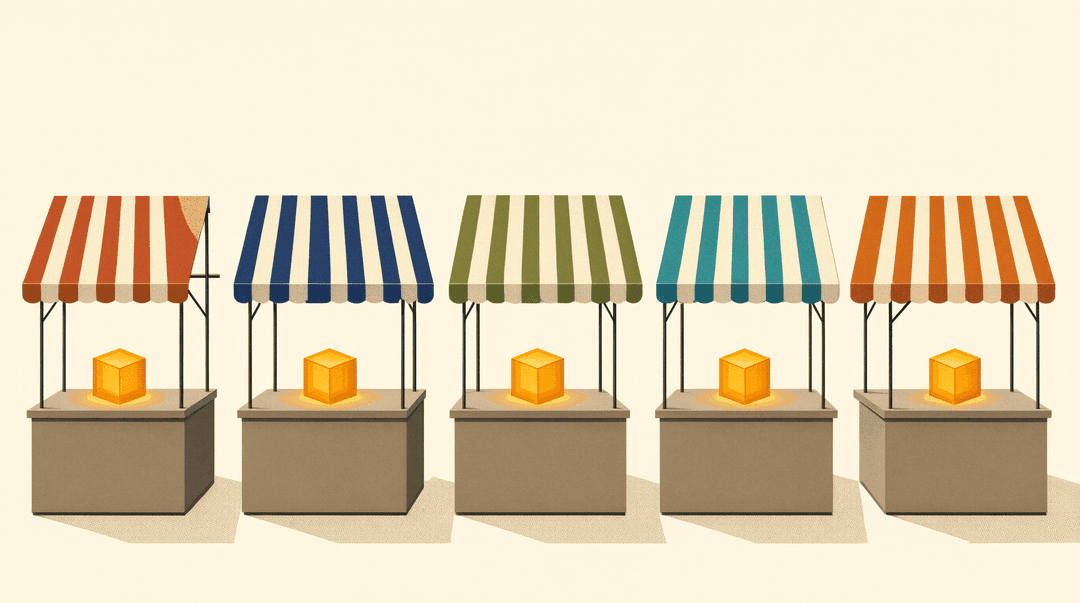
The parity claim holds up on the per-token rates. CloudZero checked the three main routes and found identical per-token rates on Bedrock global endpoints, Claude Platform on AWS, and the direct Anthropic API. The differences are in everything else.
The geography surcharge is where lanes actually diverge
Every major vendor now prices data residency, but they do it differently.
- On the first-party Claude API, requests that specify US-only inference (
inference_geo: "us", available on Claude 4.6 and later) pay a 1.1x multiplier on every token category, including cache reads and writes. Global routing, the default, is standard price. - On Bedrock and Google's Claude lane, geography is an endpoint property. Anthropic's docs state that regional and multi-region endpoints carry a 10 percent premium over global endpoints for Claude Sonnet 4.5, Haiku 4.5, Opus 4.5 and later. The partner-operated platforms set their own regional lists independently, which is why Anthropic's pricing page simply points at AWS and Google rather than restating them.
- OpenAI uses the same idea with its own semantics: its API pricing page charges a 10 percent uplift on regional processing (data residency) endpoints for models released on or after March 5, 2026, and a 10 percent uplift on FedRAMP endpoints.
- Google does it for its own models too: non-global endpoint pricing took effect on July 1, 2026 for the Gemini 3 and later families, running about 10 percent above global rates ($3.30 versus $3.00 input on Gemini 4 Neon). Tuned model endpoints on Vertex cost 1.5x the base model in non-global regions.
- On Bedrock, regional pricing is not one clean multiplier. The Bedrock price list sells DeepSeek v3.2 at $0.62 input and $1.85 output per million tokens in three US regions, and $0.74/$2.22 in Mumbai, São Paulo, Jakarta, Tokyo and Stockholm. That is roughly 19 to 20 percent more, model by model, region by region, set by AWS.
A budget built from a first-party rate card and executed on regional endpoints is silently 10 percent short before any usage surprises.
Each storefront invents its own billing unit
This is the part that surprises finance teams.
Claude Platform on AWS and Claude in Microsoft Foundry do not appear on your cloud bill as tokens. Anthropic meters usage hourly as Claude Consumption Units at a fixed $0.01 per CCU, with any negotiated discount applied as fewer CCUs metered rather than a lower CCU price. The invoice shows a single CCU line. AWS Cost Explorer and Azure Cost Management display the aggregated unit, not the token detail; the per-token breakdown lives in the Claude Console. Payment is postpaid only, no prepaid credits.
The Bedrock lane uses cloud-native tiers instead: AWS lists Standard, Flex, Priority and Reserved service tiers and sells batch inference from Anthropic, Meta, Mistral and Amazon models at 50 percent below on-demand, mirroring Anthropic's own Batch API discount. OpenAI's metering has drifted too: its pricing docs show the old Priority processing renamed to Fast mode on July 30, 2026, an Ultrafast lane at 3x standard rates until February 28, 2027 (rising to 6x on March 1), background requests at 30 to 40 percent below standard for 2-hour and 8-hour completion windows, and a Flex beta being wound down with no new models added.
The shops also reprice their accessories on their own schedule. Bedrock's page notes that cache reads for Claude Sonnet 5.5 dropped 50 percent starting October 7, 2026, a change that appeared on the AWS price list, not on Anthropic's.
The router storefront: free pass-through, charged at the door
OpenRouter runs the purest version of the resale model and states its mechanics plainly on its pricing page. There is no markup on inference: each provider's per-token rate passes through untouched. The money is in the door. Credit purchases carry a 5.5 percent fee on the Standard plan and 8 percent on Business, so a $100 top-up buys $94.50 of inference. Bring-your-own-key routing includes $25,000 per month of list-price inference with no OpenRouter fee, above which it charges 5 percent of the list-price equivalent. Two fine-print items matter in production: when a model is deprecated you get a 404, and when a provider reprices, the router bills the new rate automatically.
Router lanes also carry a security dimension that became public this month: canary-token research found third-party resellers logging requests inside an AI router chain, as covered here on llms.blog. A storefront that is cheaper or more convenient than the vendor is not automatically a neutral pipe.
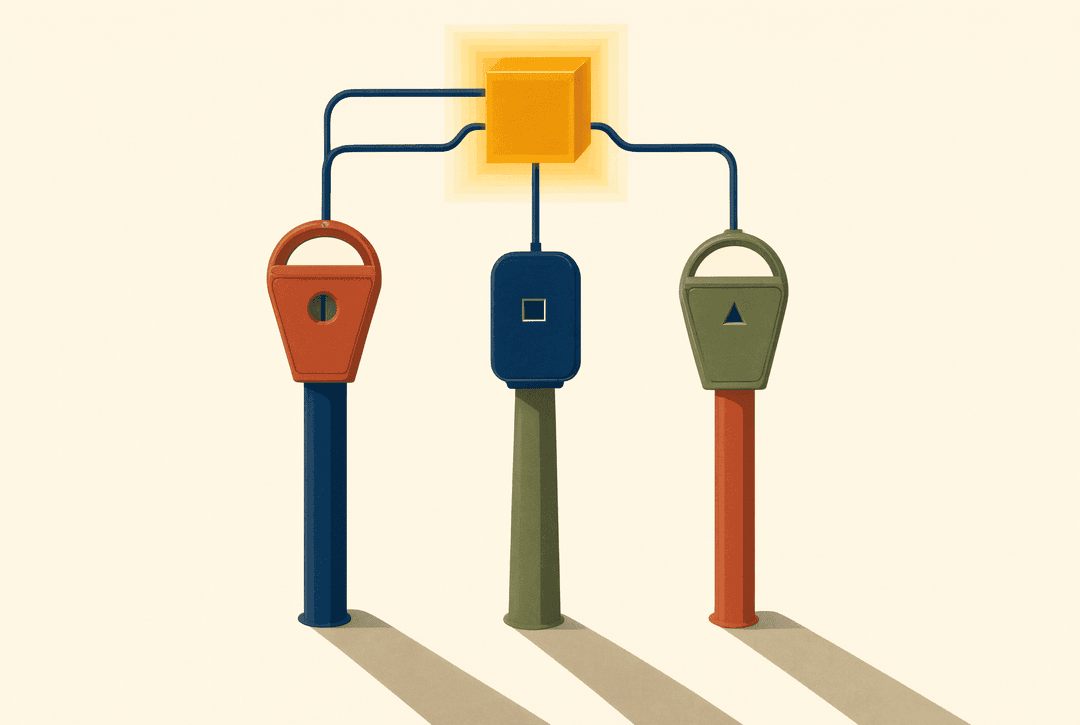
Availability, not price, is the real differentiator
List prices converge; features do not.
- Fast mode (the accelerated-lane premium) exists on the first-party Claude API, on the Anthropic-managed Google Cloud lane, and on some Foundry deployments, but CloudZero's comparison notes that server-side features like web search and code execution are absent from the plain Bedrock route, and Bedrock's batch lane is limited to models on a defined supported list.
- Access can be gated per storefront: Bedrock's price page states that Claude Mythos models require approval through an Anthropic account team.
- Retirement is lane-dependent: models pulled from the first-party API can remain available on Bedrock or Google Cloud at their old rates.
- The old assumption that Azure lags OpenAI on day-one availability weakened in 2026: GPT-5.6 reportedly reached OpenAI and Microsoft Foundry the same day in July 2026 (a consultancy's claim; verify per model before relying on it).
- Microsoft Foundry's catalog is the broadest single storefront, with published rates for OpenAI, Anthropic, xAI and Moonshot models side by side: GPT-6 Sol at $2/$10, Claude Opus 5.5 at $4/$20, Grok 4.7 at $2/$6, Kimi K2.6 at $0.95/$4.
On total cost in the enterprise lanes, be careful about parity claims. nOps estimates that private networking, identity and monitoring infrastructure can add 15 to 40 percent to Foundry total cost beyond the token line, a figure that is an engineering estimate, not a Microsoft price list.
One worked example
Claude Opus 5.5 at $4/$20, a monthly workload of 300 million input tokens and 75 million output tokens:
- First-party API, global routing: $1,200 input plus $1,500 output = $2,700.
- First-party API with US data residency, or Bedrock regional endpoints: multiply by 1.10 = $2,970.
- Bedrock batch or Anthropic Batch API (50 percent off): $1,350, for workloads that can wait.
- OpenRouter Standard at the same token rates: you must purchase $2,857 in credits to get $2,700 of inference, because the 5.5 percent fee applies at purchase. The effective surcharge is 5.8 percent.
- Claude Platform on AWS or Foundry marketplace lanes: still $2,700 at list, metered as 270,000 CCU, with your negotiated discount reducing the CCU count, not the visible rate.
Spread across those five lanes for the identical model and workload: $1,350 to $2,970, a factor of 2.2, and the cheapest option is the batch queue.
One more comparability trap: Anthropic's docs note that Claude 4.7 and later use a tokenizer that produces roughly 30 percent more tokens for the same text than pre-4.6 models. Per-million-token prices between model generations are not directly comparable unless you fix the text, not the token count.
Take
For most teams the rule is: buy the base token rate wherever you get it, then read the lane's modifiers. Pick the storefront by three criteria in order. First, which lane carries the features and the service tier your workload actually needs, since fast modes, server-side tools and gated models are not equally available. Second, which metering unit your finance stack can audit, since a CCU line on a cloud invoice is opaque in cost tools that expect tokens. Third, whether your data has to be somewhere specific, because geography is the one surcharge every lane applies, none of them at the same price, and a 10 percent premium for data residency is a pricing decision, not a compliance inevitability. The model is the product. The storefront is the bill.
Sources
- Anthropic Claude API pricing documentation
- Amazon Bedrock pricing page
- Google Cloud Vertex AI / Gemini pricing
- OpenAI API pricing documentation
- OpenRouter pricing
- CloudZero: Claude on AWS, Bedrock vs. Claude Platform costs
- AWS Builder Center: Claude Code, Bedrock vs. Claude Platform vs. Direct
- Infro: Claude on the Anthropic API, Bedrock or Google Cloud
- LiteLLM Azure AI Foundry model rate table
- nOps: Azure AI Foundry pricing guide
- CreditForStartups: Claude API pricing
- llms.blog: Two Million Tripwires (router reseller logging)
