
Most teams choose an open-weight model by leaderboard rank and read the license last. That order is backwards. A model that tops a chart can still stall a product launch in legal review, and the terms differ enough between families that the license is arguably part of the model choice.
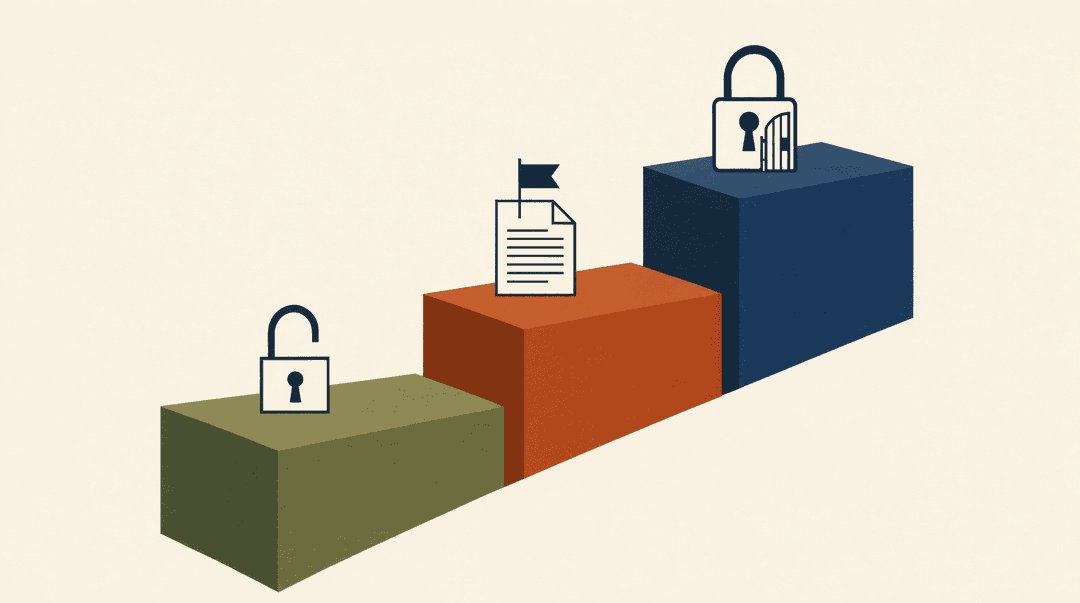
The licensing landscape in November 2026 has settled into three tiers, and the direction of travel is not uniform. Mid-size weights keep getting more permissive. Frontier weights keep getting more conditional. Here is the map, provider by provider, followed by the clauses that actually bite.
Tier one: plain permissive licenses
These are normal software licenses applied to model weights. Nothing to interpret, nothing to ask permission for.
- MIT. DeepSeek's V4 and V4.1 weights (V4-Pro, V4.1-Flash) ship under MIT, as do Z.ai's GLM-4.5 and GLM-4.6. MIT means commercial use, modification and redistribution with a copyright notice kept in copies. It carries no patent grant, which is the one thing Apache 2.0 has that MIT lacks.
- Apache 2.0. Gemma 4 in all sizes, Mistral Large 3 and the Ministral 3 dense line, most checkpoints across the Qwen3.x generations (Qwen3.8-27B among them), and OpenAI's gpt-oss models. Apache 2.0 adds an express patent grant on top of the permission MIT gives you. The obligations when redistributing: keep the license text and copyright notice, include the NOTICE file if one exists, and mark modified files.
If your requirement is "ship a product on open weights with zero license friction," an MIT or Apache 2.0 checkpoint is the path. Procurement still has to check the model's provenance separately from the license text, but at least the legal team has read this document before.
Tier two: permissive text, attached policy
A category that barely existed two years ago: a genuine permissive license wrapped around a vendor usage policy.
- gpt-oss weights are Apache 2.0, but OpenAI's help center states the grant is "subject to our gpt-oss usage policy," and the policy binds downstream users too. Treat the two documents as one compliance surface. OpenAI also does not offer hosted serving or fine-tuning for these models, so all customization runs on your infrastructure.
- EmbeddingGemma 2 lists Apache 2.0 on its model card, and the same card notes that usage must comply with the Gemma Prohibited Use Policy. New releases from other labs follow the same pattern: permissive weights, referenced acceptable-use document.
This is not the old Gemma problem, where the custom license itself carried the restrictions. But "Apache 2.0 plus a unilateral policy" still requires a legal read, and it is meaningfully more restrictive than plain Apache 2.0.
Tier three: bespoke community licenses
The terms nobody outside the vendor's counsel has read end-to-end.
Llama 4. The community license (version effective date April 5, 2025) grants royalty-free use with four teeth:
- A scale clause: if the licensee or its affiliates exceed 700 million monthly active users across their products in the preceding calendar month, you must request a license from Meta, granted at its sole discretion. Note the clause counts your total user base, not just traffic on Llama-powered features.
- Branding: prominent "Built with Llama" display on sites, interfaces and docs; any model built with Llama materials must carry "Llama" as a name prefix; a Notice file must ship with distributions.
- An incorporated Acceptable Use Policy.
- A regional carve-out: the AUP withholds Section 1(a) rights for Llama 4 multimodal models from individuals domiciled in the EU and companies with a principal place of business there. EU-domiciled organizations cannot use Llama 4 multimodal, including for research. Non-EU companies can still sell Llama-powered products into the EU.
Qwen3.8-2.4T-A95B. Alibaba's August 12, 2026 open-weights release of its Max-class flagship abandoned the Apache 2.0 terms used across the Qwen3 generation. Under the custom license, any provider offering the model as a service or an "AI Work Assistant" with more than $50 million in aggregate revenue over a consecutive 12-month period must negotiate a separate commercial license. MaaS is defined broadly: any third-party access to inference or fine-tuning where you control inputs or parameters. Embedded features inside a normal product do not count.
Mistral Large 4. Weights released with an unusual one-clause commercial term: internal use is unrestricted, but if you or an affiliate offer the model to third parties as a Model-as-a-Service, non-internal commercial use requires a separate license from Mistral. There is no revenue threshold at all. Mistral's other lines sit on both extremes: Mistral Large 3, Ministral 3 and Mistral Small 4 are plain Apache 2.0, while the research-preview models run under the Mistral AI Research License, which requires vendor permission for production use.
Chinese labs, custom terms. Kimi K3, MiniMax-M2/M3, Tencent's Hunyuan line and several GLM releases now use bespoke community licenses with attribution, notice or revenue-threshold conditions. NVIDIA's Nemotron releases have started shipping under OpenMDW-1.1, a license acronym your lawyers have probably not seen yet.
The pattern underneath
The last four years rhyme, which makes the trajectory easy to read. Meta's 700-million-user clause survived two generations unchanged. Google's custom Gemma terms, including a prohibited-use policy Google could update unilaterally and pass through to every derivative model, were flagged by enterprise legal teams for years; when Gemma adoption stalled, Google switched the entire Gemma 4 line to Apache 2.0 in April 2026 and Ars Technica reported it as the release's most consequential change.
Qwen shows the other direction. Early Qwens used a Tongyi Qianwen license, the largest Qwen2.5 checkpoint kept a 100-million-MAU clause, and the whole Qwen3 generation moved to Apache 2.0. Then the flagship Qwen3.8 weights came back under a revenue-capped license. Forkast's reading of that release is the honest one: labs are permissive where they want ubiquity and restrictive where the weights compete with their own API revenue. The clause is not a fee so much as a negotiating table for exactly the customers big enough to matter.
Open weight is not open source
One vocabulary note that keeps sinking procurement slides. The Open Source Initiative's Open Source AI Definition requires the freedoms to use, study, modify and share an AI system for any purpose, plus sufficient information about training data, code and architecture to rebuild a substantially equivalent system. Open weights satisfy the "share" freedom only partially and none of the study requirement. OSI states plainly that open weights differ from Open Source AI because they ship without training code and data documentation. Llama 4 is not OSI-open. Neither is anything else above. Apache 2.0 weights are closer, but "closer" is not a compliance finding.
A pre-ship checklist
- Read the LICENSE file in the weights repo and the model card. They are sometimes different documents with different obligations, as gpt-oss and EmbeddingGemma 2 show.
- Check the scale clause against your whole organization, not the one product. Llama counts total MAU across licensee and affiliates; Qwen counts revenue across any consecutive 12 months.
- Ask whether your product form is "Model-as-a-Service" under that license's definition. Mistral Large 4 has no threshold; Qwen3.8 sets one at $50 million; an embedded feature is usually exempt.
- Verify whether the usage or prohibited-use policy passes through to your customers, and whether you can enforce it contractually.
- Screen regional clauses. If you are EU-domiciled, Llama 4 multimodal is off the table. If you are not, selling into the EU is still allowed.
- Budget naming and branding obligations into marketing before you pick the derivative model's name. Llama requires a "Llama" prefix; Apache and MIT prohibit using the vendor's trademarks instead.
- If you plan to redistribute fine-tuned derivatives, re-run steps 1 through 6 with the downstream obligations included, because they bind your recipients.
The boring conclusion: the license is a model feature. A checkpoint with a clause you cannot satisfy is worth less than a weaker one you can ship today, and the vendors writing these terms know it.
Sources
- Llama 4 Community License Agreement (Meta)
- Llama 4 Community license summary (canirun.ai)
- Llama 4: what you can and can't do, EU AUP carve-out (Compliance Made Simple)
- OpenAI open-weight models (gpt-oss), license and usage policy (OpenAI Help Center)
- Google announces Gemma 4, switches to Apache 2.0 (Ars Technica)
- Open weight vs open source licenses, October 2026 state (Kevin Welter)
- Open-weight LLM licenses compared 2026 (CelestInfo)
- Open-weight model licenses compared (Licenseware wiki)
- Open-weight AI model licenses: commercial use rules explained (IntuitionLabs)
- Qwen release and license history (Wikipedia)
- Alibaba's Qwen 3.8 license as a platform play (Forkast)
- Mistral Large 4 MaaS clause and policy pass-through patterns (Runelab)
- Open weights are not open source (Open Source Initiative)
- 10 best open-source LLMs 2026, license table incl. GLM-5.3 and Nemotron OpenMDW-1.1 (Intuz)
