
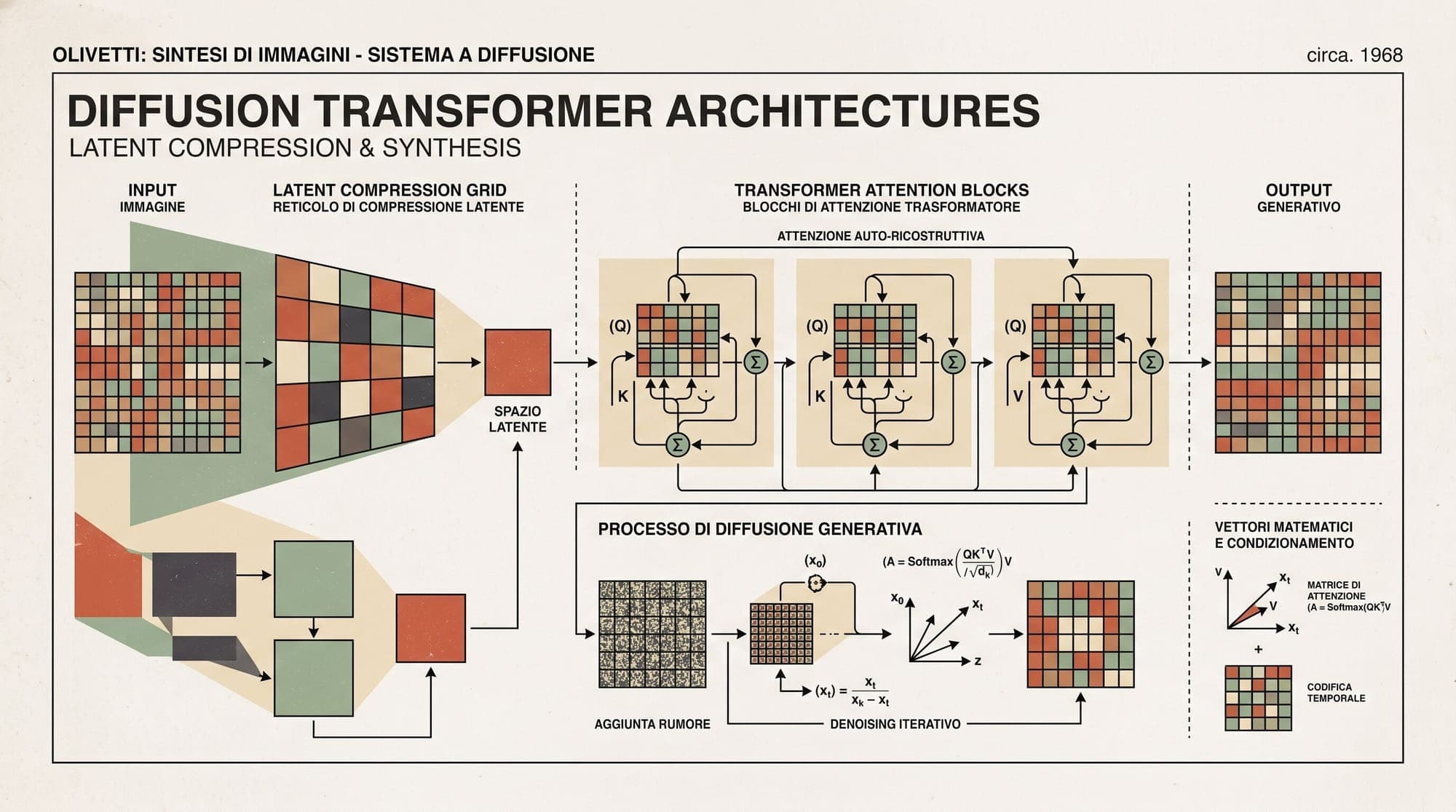
Production deployments of text-to-image generative systems have undergone a structural transition over the past two years. The classical convolutional U-Net architectures that powered Stable Diffusion 1.5 and Stable Diffusion XL have largely been superseded by transformer-based backbones. Modern open-weight models rely on Diffusion Transformers (DiT), Multimodal Diffusion Transformers (MMDiT), Linear DiTs, and Flow Matching formulations.
Choosing an open-source text-to-image foundation model for production requires balancing prompt adherence, typographic accuracy, resolution scaling, memory footprint, and serving latency. Four architectures represent distinct design philosophies across this spectrum: Black Forest Labs' FLUX.1, Stability AI's Stable Diffusion 3.5, Huawei Noah's Ark Lab's PixArt-Sigma, and NVIDIA/MIT's Sana.
Architectural Profiles
FLUX.1 (Black Forest Labs)
FLUX.1 is a 12-billion-parameter rectified flow transformer introduced by Black Forest Labs in August 2024. Available in open-weight formats as FLUX.1 [dev] (non-commercial guidance-distilled model) and FLUX.1 [schnell] (Apache 2.0 4-step distilled model), it represents the heavyweight quality frontier for open-weight image synthesis.
- Backbone Architecture: 12B parameter multimodal transformer combining dual-stream and single-stream transformer blocks with Rotary Position Embeddings (RoPE). In early layers, text and image representations maintain distinct parameter streams; later layers concatenate them into a unified sequence for joint attention.
- Formulation: Rectified Flow Matching, which constructs linear probability paths between Gaussian noise and target image distributions rather than curved diffusion paths.
- Text Encoders: Dual-encoder pipeline consisting of CLIP ViT-L/14 (for semantic pooling) and T5-XXL (for granular linguistic tokens up to 512 tokens).
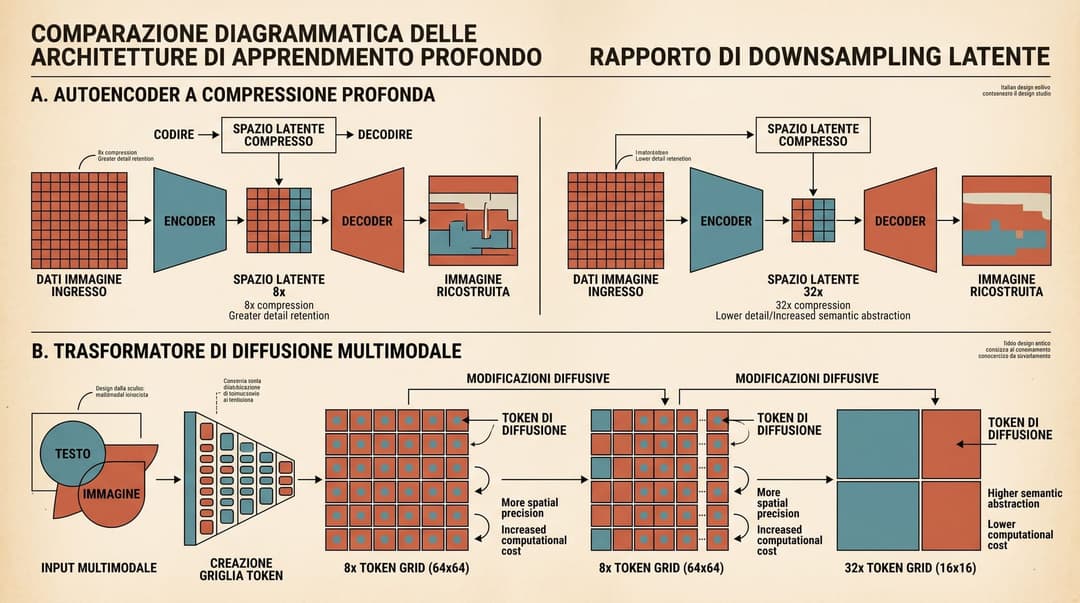
- Autoencoder: 16-channel VAE with an 8x spatial downsampling factor (F8C16), producing 16,384 spatial latent tokens for a standard 1024x1024 input image.
- Sampling Dynamics: 28 to 50 steps for
[dev]using classifier-free guidance; 4 steps for[schnell]via adversarial and trajectory distillation.
Stable Diffusion 3.5 (Stability AI)
Released in October 2024 under the Stability Community License, Stable Diffusion 3.5 builds on the Multimodal Diffusion Transformer (MMDiT and MMDiT-X) framework, introducing structural refinements to fix the spatial distortion and training instability observed in earlier SD3 releases.
- Backbone Architecture: Offered in two core variants: SD 3.5 Large (8.1B parameters) and SD 3.5 Medium (2.5B parameters). Both utilize MMDiT blocks with separate weight matrices for text and image paths, merging solely during attention score computation.
- Stability Enhancements: Incorporates Query-Key Normalization (QK-Norm) within attention layers to prevent attention logit drift during large-scale pre-training and LoRA fine-tuning.
- Text Encoders: Triple-encoder pipeline combining CLIP ViT-L/14, OpenCLIP ViT-bigG/14, and T5-XXL. SD 3.5 Medium can run without the T5 encoder during memory-constrained inference at the cost of text comprehension.
- Autoencoder: 16-channel VAE with 8x spatial downsampling.
- Sampling Dynamics: 28 to 40 steps for standard checkpoints; 4 steps for SD 3.5 Large Turbo.
PixArt-Sigma (Huawei Noah's Ark Lab)
PixArt-Sigma represents a lightweight, highly efficient diffusion transformer design published at ECCV 2024. It scales high-resolution text-to-image synthesis to native 4K (3840x2160) resolutions while maintaining a minimal 0.6B parameter parameter footprint.
- Backbone Architecture: 0.6B parameter DiT structure built with standard cross-attention modules rather than unified multimodal streams.
- Key-Value (KV) Token Compression: Compresses key and value tokens in deep transformer layers (layers 14 to 27) across spatial windows (). This design abstracts high-level semantic content while preserving dense textures in shallow layers, reducing overall attention computational overhead by approximately 34%.
- Training Strategy: Weak-to-strong progressive initialization from PixArt-alpha, utilizing high-density custom synthetic captions and multi-resolution aspect ratio buckets.
- Text Encoders: Single T5-XXL encoder without auxiliary CLIP encoders.
- Autoencoder: Standard 4-channel SDXL VAE (8x spatial downsampling).
Sana (NVIDIA, MIT Han Lab, Tsinghua University)
Sana, accepted at ICLR 2025, reimagines the efficiency boundaries of diffusion transformers. By combining linear attention complexity with deep latent compression, Sana achieves sub-second 1024x1024 and 4096x4096 image generation on consumer and laptop GPUs.
- Backbone Architecture: Available in 0.6B and 1.6B parameter variants based on Linear DiT. Standard quadratic softmax attention is replaced by linear attention using ReLU feature maps (), complemented by Mix-FFN blocks for local context aggregation.
- Deep Compression Autoencoder (DC-AE): Replaces standard 8x downsampling autoencoders with a 32x spatial compression factor (F32C32P1). A 1024x1024 image is compressed to a latent grid (1,024 tokens), yielding a 16x reduction in token count compared to 8x VAEs.
- Text Encoders: Replaces traditional CLIP and T5 pipelines with a modern decoder-only language model (Gemma-2 2B). Sana uses Complex Human Instructions (CHI) and in-context learning to achieve high instruction following and prompt-image alignment.
- Sampling Dynamics: Flow-DPM-Solver executing in 14 to 20 steps, producing 1024x1024 outputs in under 1 second on single GPUs.
Core Architectural Mechanisms Compared
1. Latent Compression and Token Economics
In diffusion transformers, inference latency and memory consumption scale directly with the number of latent tokens processed per denoising step:
- Standard 8x Autoencoders (FLUX.1, SD 3.5, PixArt-Sigma): A input image compresses to a spatial latent map. With patch size or , the transformer processes between 4,096 and 16,384 spatial tokens. Scaling to 4K resolution () creates over 129,000 latent tokens, causing quadratic memory explosions in standard self-attention.
- 32x Deep Compression (Sana): Sana's DC-AE compresses a image into only 1,024 spatial latent tokens (). Even at 4K resolution (), the latent grid contains only 16,384 tokens, equivalent to a standard 1024px image in FLUX.1. This reduction enables native 4K generation without out-of-memory errors.
2. Attention Topologies
- Dual-Stream MMDiT (FLUX.1, SD 3.5): Image and text tokens pass through independent linear projections and normalization layers before computing joint self-attention across the concatenated sequence. This allows text tokens to actively influence image spatial layout while image tokens simultaneously adjust text representations.
- Cross-Attention with KV Compression (PixArt-Sigma): Image tokens attend to themselves via self-attention and query text features via cross-attention. In deeper layers, key and value spatial tokens are pooled, preventing memory bottlenecks during high-resolution processing.
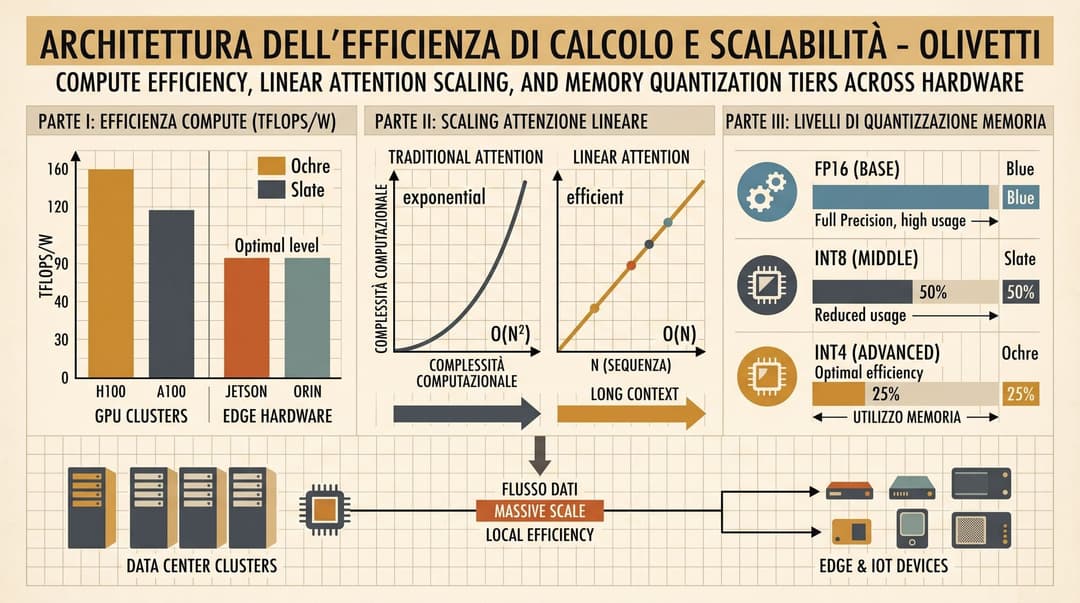
- Linear Attention (Sana): Standard softmax attention is linearized to complexity by changing the matrix multiplication associativity through non-negative kernel mappings. Local spatial awareness is recovered via depthwise convolutions in the Mix-FFN blocks.
3. Text Conditioning and Prompt Adherence
- CLIP + T5 Hybrid (FLUX.1, SD 3.5): CLIP provides global semantic alignment and style steering, while T5-XXL handles fine-grained compositional relationships, character counts, and spelling. FLUX.1 and SD 3.5 excel at complex typographic rendering on signage and labels.
- Single T5-XXL (PixArt-Sigma): Prioritizes descriptive sentence parsing over short keyword tags, requiring detailed multi-sentence prompts for optimal scene composition.
- Decoder-Only LLM (Sana): Gemma-2 2B brings pre-trained reasoning and world knowledge directly into text conditioning. The model understands spatial relationships, negation, and complex programmatic prompts without requiring auxiliary CLIP embeddings.
Serving Economics and VRAM Footprints
Deploying these models in production environments requires matching parameter scale and precision formats to hardware availability.
Memory Footprints by Precision Tier
- FLUX.1 (12B):
- Unquantized BF16: Requires approximately 24 GB to 32 GB of VRAM solely for weights (model plus T5-XXL), demanding an A100/H100 (80GB) or dual L40S setup for multi-batch serving.
- FP8 (E4M3): Compresses the transformer backbone to ~12 GB VRAM, fitting comfortably on a single RTX 4090 or L40S with full batch throughput.
- NF4 / 4-bit Quantization: Runs in under 12 GB of total VRAM on consumer GPUs, though with a minor degradation in typographic edge sharpness.
- Stable Diffusion 3.5 Large (8.1B):
- BF16: Requires ~18 GB to 24 GB VRAM with all three text encoders active.
- FP8: Runs within 12 GB to 16 GB VRAM on single-GPU instances.
- SD 3.5 Medium (2.5B): Requires ~6 GB to 9 GB VRAM, enabling high-density multi-tenant serving on single 24GB GPUs.
- PixArt-Sigma (0.6B):
- FP16: The transformer backbone occupies only ~1.2 GB of VRAM. With T5-XXL offloaded or shared across processes, active inference requires under 8 GB of VRAM.
- Ultra-low memory footprint makes it suitable for cost-effective microVM and serverless container deployments.
- Sana (0.6B / 1.6B):
- FP16: Sana-1.6B requires ~4 GB to 6 GB total VRAM including the Gemma-2 2B encoder.
- 4-bit Quantization (SVDQuant / Nunchaku engine): Runs within 8 GB VRAM even when generating 4096x4096px images with DC-AE tiling.
- Sub-second execution speeds achieve over 1.5 to 2 images per second per GPU on standard hardware.
Production Deployment Breakdown
FLUX.1 [dev / schnell] (Black Forest Labs)
- Model Parameters: 12B
- Core Architecture: MMDiT Flow Transformer with RoPE
- Autoencoder Topology: 16-channel 8x VAE (16,384 tokens at 1024px)
- Text Conditioning Pipeline: Dual-encoder (CLIP ViT-L + T5-XXL)
- Inference Steps: 4 steps (
[schnell]) to 28-50 steps ([dev]) - Serving Latency (1024px): 2.5s to 12.0s per image depending on step budget
- Native Resolution Ceiling: 1024px to 2048px
- Licensing: Apache 2.0 for
[schnell]; Non-commercial / API license for[dev]
Stable Diffusion 3.5 (Stability AI)
- Model Parameters: 8.1B (Large) and 2.5B (Medium)
- Core Architecture: MMDiT-X with Query-Key Normalization (QK-Norm)
- Autoencoder Topology: 16-channel 8x VAE
- Text Conditioning Pipeline: Triple-encoder (CLIP ViT-L + OpenCLIP ViT-bigG + T5-XXL)
- Inference Steps: 4 steps (Large Turbo) to 28-40 steps (Large standard)
- Serving Latency (1024px): 2.0s to 8.0s per image
- Native Resolution Ceiling: 1024px to 2048px
- Licensing: Stability Community License
PixArt-Sigma (Huawei Noah's Ark Lab)
- Model Parameters: 0.6B
- Core Architecture: Cross-Attention DiT with Deep-Layer Key-Value (KV) Compression
- Autoencoder Topology: 4-channel 8x SDXL VAE
- Text Conditioning Pipeline: Single-encoder (T5-XXL)
- Inference Steps: 20 to 30 steps
- Serving Latency (1024px): 1.2s to 2.5s per image
- Native Resolution Ceiling: Native 4K (3840x2160)
- Licensing: Apache 2.0
Sana (NVIDIA / MIT Han Lab / Tsinghua)
- Model Parameters: 0.6B and 1.6B
- Core Architecture: Linear DiT with ReLU Attention and Mix-FFN
- Autoencoder Topology: 32-channel 32x DC-AE (1,024 tokens at 1024px, 16x token reduction)
- Text Conditioning Pipeline: Decoder-only LLM (Gemma-2 2B with Complex Human Instructions)
- Inference Steps: 14 to 20 steps (Flow-DPM-Solver)
- Serving Latency (1024px): 0.4s to 0.9s per image (sub-second)
- Native Resolution Ceiling: Native 4K (4096x4096)
- Licensing: Apache 2.0
Workload Selection Criteria
- Enterprise Asset Generation and Typographic Design: Use FLUX.1. When rendering readable text, brand packaging, or complex multi-subject interactions, FLUX.1 maintains the highest compositional consistency among open-weight models.
- Balanced Commercial Production: Use Stable Diffusion 3.5. SD 3.5 Large provides strong prompt adherence and high visual fidelity under a well-defined community license, with SD 3.5 Medium offering an efficient fallback for high-concurrency API tiers.
- Low-Cost Cloud and Serverless Pipelines: Use PixArt-Sigma. Its 0.6B parameter backbone minimizes GPU rental costs while delivering solid 1024px and 4K outputs when paired with detailed descriptive prompts.
- Real-Time Interactive Generation and Edge Hardware: Use Sana. With sub-second generation times, 32x latent token compression, and a compact 1.6B footprint, Sana is the premier choice for latency-critical user-facing applications, local client deployment, and high-throughput batch generation.
Sources
- Black Forest Labs: FLUX.1 Model Announcement and Technical Overview
- Black Forest Labs: FLUX.1-dev Repository
- Stability AI: Stable Diffusion 3.5 Large Release and Architecture Specification
- Stability AI: Stable Diffusion 3.5 Medium Release
- Huawei Noah's Ark Lab: PixArt-Sigma: Weak-to-Strong Training of Diffusion Transformer for 4K Text-to-Image Generation (arXiv:2403.04692)
- MIT Han Lab, NVIDIA, Tsinghua University: Sana: Efficient High-Resolution Image Synthesis with Linear Diffusion Transformers (arXiv:2410.10629)
- NVIDIA Labs: SANA GitHub Repository
