Mistral AI has released Agentic Search, a document retrieval system and developer toolkit designed to replace standard one-shot retrieval-augmented generation with an interactive navigation loop. The capability is integrated into the Mistral Search Toolkit and available within Libraries across Mistral Studio and Vibe.
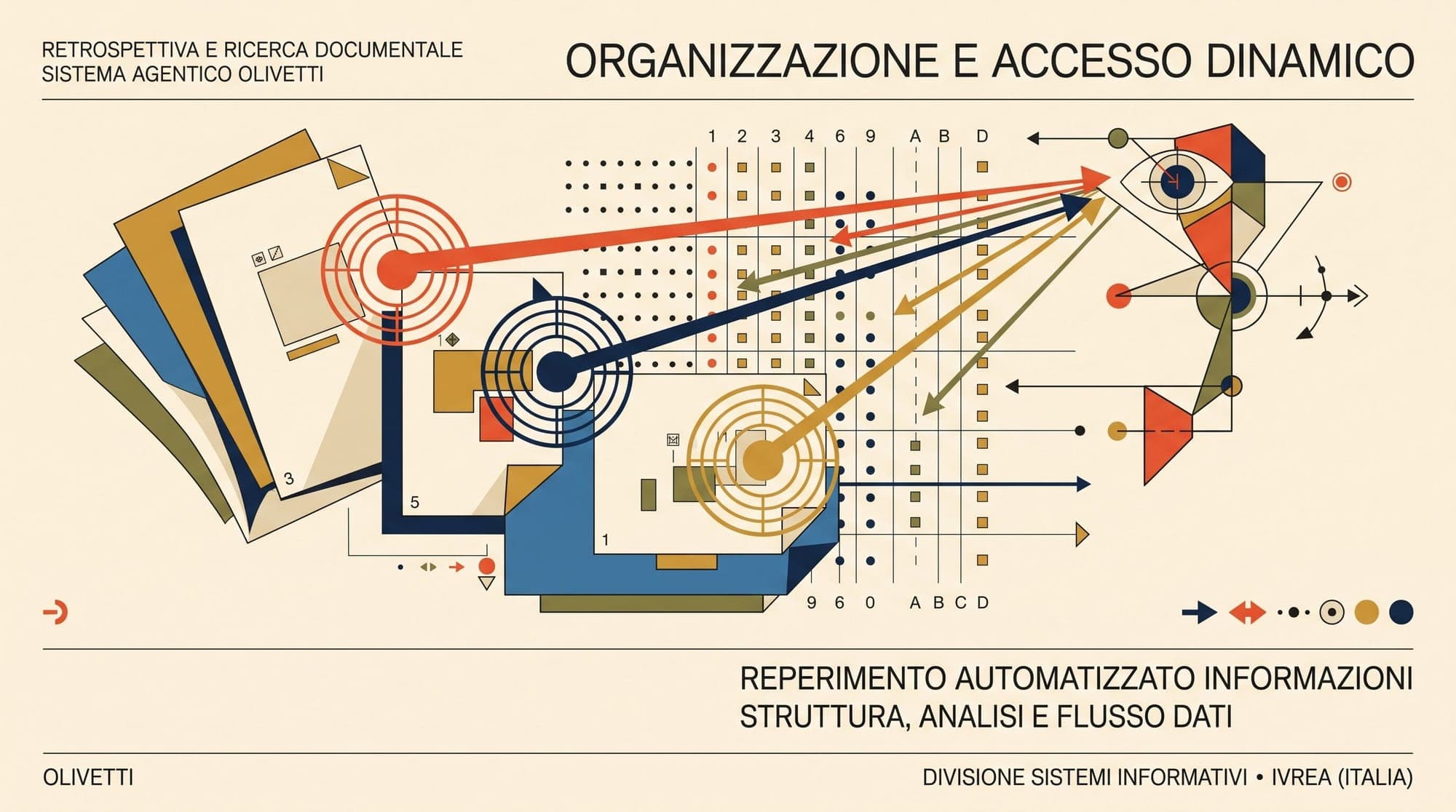
Traditional RAG architectures retrieve a fixed set of top-k text chunks during an initial query pass and require the language model to generate a final answer immediately. In long financial filings, regulatory reports, and scanned multi-column tables, this rigid chunking frequently isolates data from necessary context, misses footnotes, or truncates cross-page tables. Mistral's Agentic Search restructures retrieval around an active agent loop using five primitives modeled on standard file system operations:
- search: Queries the underlying corpus index to surface candidate files.
- open: Loads a specific document container.
- navigate: Jumps directly to specified pages, headers, or structural sections.
- read: Extracts textual and tabular data at the designated position.
- grep: Performs exact string and pattern matching within open documents.

Benchmark Results on Dense Enterprise Corpora
Mistral evaluated the system across two multi-page enterprise benchmark suites: FinanceBench and OfficeQA Pro.
On FinanceBench, which spans 368 SEC filings across 150 complex questions, shifting from one-shot RAG to an iterative search loop improved accuracy by 47.3 percentage points on Mistral Medium 3.5 and 52.6 percentage points on GLM-5.2. Adding navigation tools (open, navigate, read, and grep) yielded an additional 8.7 point lift for Mistral Medium 3.5 and a 6.7 point lift for GLM-5.2, bringing overall correctness on GLM-5.2 to 86%, compared to 26.7% under static RAG.
Targeted navigation also improved execution efficiency by eliminating redundant broad queries. Token consumption decreased by 23.9% on Mistral Medium 3.5 and 33.7% on GLM-5.2 compared to search-only loops. Latency at the 90th percentile dropped from 255 seconds to 154 seconds (a 39.6% reduction), while mean response time fell from 108 seconds to 71 seconds.
On OfficeQA Pro, a benchmark requiring numeric reasoning over 696 historical U.S. Treasury Bulletins totaling approximately 89,000 scanned PDF pages, GLM-5.2 correctness increased from 6.3% under one-shot RAG to 51.9% under the full agentic loop. Mistral Medium 3.5 gained 27.1 percentage points over its baseline. When benchmarked against alternative runtime environments, GLM-5.2 scored 51.9% within Mistral's harness versus 41.4% when evaluated using the Claude Code harness on the same dataset.
Deployment and Portability
Agentic Search operates on top of existing search indexes using Vespa schemas for document ingestion and hybrid ranking. The retrieval tooling is model-agnostic, executing on both first-party Mistral weights and third-party foundation models without requiring model fine-tuning.
For enterprise deployments with regulatory or data sovereignty constraints, the toolkit can run self-hosted on-premises or within isolated virtual private clouds. Mistral has published the open-source Search Starter App on GitHub alongside documentation for custom chunking, parsing, and Vespa index configurations.