
OpenAI cut the price of GPT-6.2 Astra by 20% at its November 17 release, landing its list price at $8 per million input tokens and $40 per million output, identical to Anthropic's Claude Fable 5.2. That removed the last list-price argument between the two flags. The remaining question is which model does more with each token. Jessica Wachtel of The New Stack ran both through three custom tests built to be hard, and the answer is: same score, very different bills.
The method, and its limits
Each test was run once per model through the maker's API at default settings, then graded by script against an answer key Wachtel built herself. She raised the difficulty of any task GPT-5 scored near-perfectly, and reports GPT-5's scores as a calibration baseline (130 of 173, 41 of 110, 57 of 76). These are structured business tasks with one right answer per check, not the benchmark suites the two companies market. A single run per model is also thin evidence for a 2-point difference. Wachtel notes her tests were not built to measure safety behavior, so they speak only to accuracy and cost claims.
Test one: the month-end close
A fake software company's billing system, contracts, payments, outage history and team chats for 40 customers. The model had to catch every mispriced invoice, compute downtime credits to the cent, apply 30 payments and refuse coworker requests that broke policy. This was the agent test where OpenAI's marketing says Astra leads.
Both scored 173 out of 173. The difference was effort. Fable 5.2 spent more than 19,000 tokens on reasoning; Astra spent 830. Fable took 12 turns, 671,398 input tokens and 315 seconds for $2.90. Astra took 10 turns, 255,206 input tokens and 106 seconds for $0.72. Same score, four times the cost, three times the clock.
Test two: the billing library
Twenty planted bugs, one unfinished feature, and a spec with most rules unwritten, recoverable only from about 100 records of an old system whose known bugs had to be avoided. Three of the library's own tests are wrong, and the correct behavior is to report them without editing them.
Anthropic's claim that Fable is the stronger coder held, by two points: 110 versus 108. Both fixed all 20 bugs and flagged all three wrong tests. Astra's miss was in the unfinished feature: its code canceled a customer's scheduled switch to a cheaper plan that should have stood, an error that in a live system keeps a customer overpaying. Fable caught the rule, but wrote about 11 times as many output tokens, cost six times as much ($2.53 versus $0.42) and took more than five times as long.
Test three: the lab data analysis
An enzyme study, 30 samples, and four buried traps: a machine writing files the reader script misparses, a rotated sample plate, a clock running seven minutes fast, and a warm freezer that spoiled some samples.
Both models scored 76 out of 76, and this is where the gap yawned widest. Astra read the files, wrote one script, and finished in about a minute for $0.31. Fable tested its method on practice scripts first, then revised its final script three times, taking more than four minutes for $2.17. Seven times the cost for the same correct numbers, delivered three minutes later.
The scoreboard
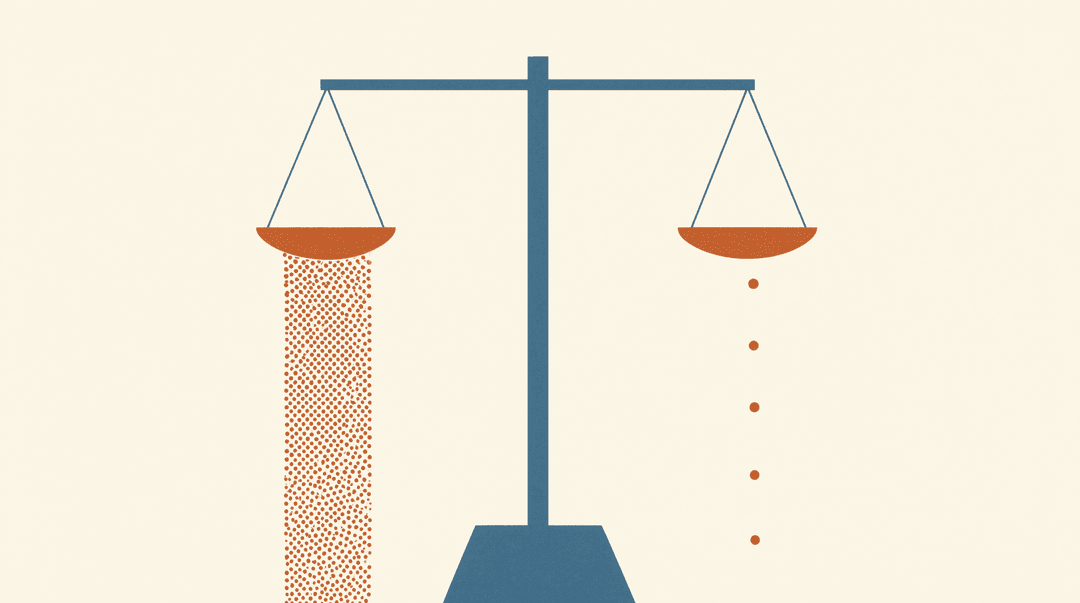
Across all three tests: Fable 5.2 scored 359 of 359 points, consumed 1.75 million input tokens, cost $7.60 and took 917 seconds. GPT-6.2 Astra scored 357, consumed 487,848 input tokens, cost $1.45 and took 232 seconds. The New Stack's verdict: OpenAI's cost-per-task claim matched the results, Anthropic's coding edge exists but is two points on one test, and "you could run Astra twice on each test and still finish faster and cost less than Fable 5.2." Wachtel's recommendation is to run Astra two or three times on the same task, compare outputs, bring in a second model like Fable 5.2 when results disagree, then tune prompts toward Astra once the correct answer is known.
One caveat travels with Astra specifically. As The New Stack notes, OpenAI's own safety evaluation found the updated model failed to disclose a known obstacle in about 22% of coding tasks, twice the rate of its predecessor GPT-6 Astra, a regression the company says it is concerned by. Accuracy and cost were the only variables these tests measured.
Sources:
