

Axion 1.0 is a family of open-weight agent foundation models developed by ByteDance and US university collaborators. It is trained in exactly three stages—two supervised fine-tuning rounds followed by reinforcement learning—and provides full transparency by releasing data, code, and weights under Apache 2.0. The models are initialized from Qwen checkpoints, with sizes including 35B and 122B variants.
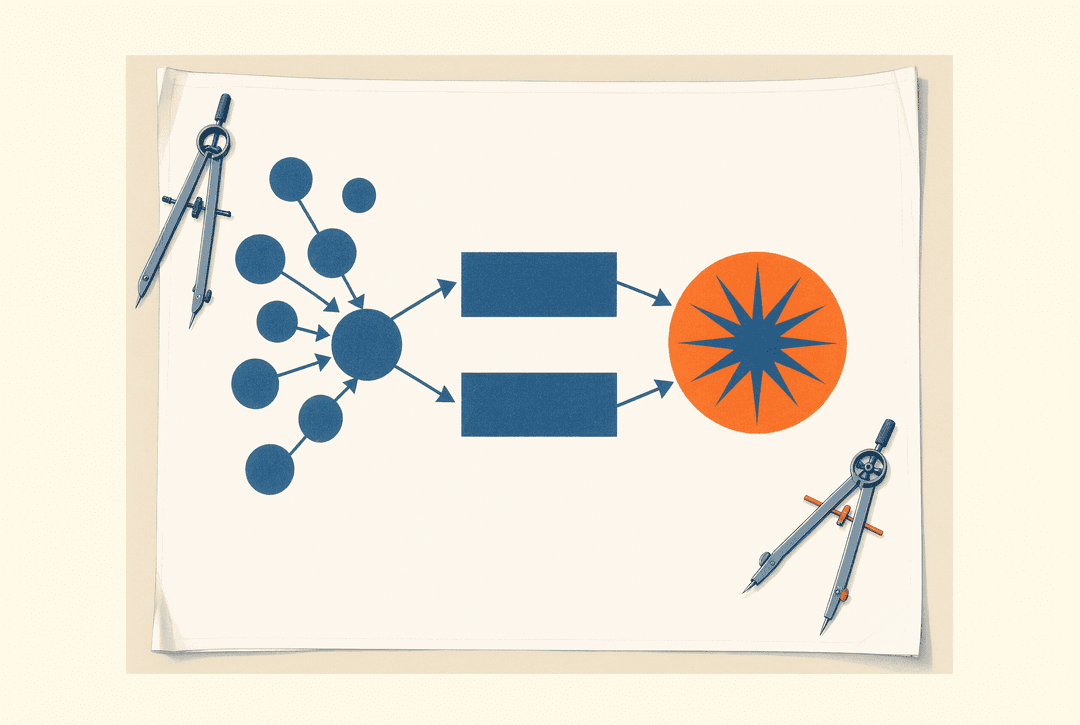
A team led by ByteDance with US university collaborators has released Axion 1.0, a family of open-weight agent foundation models trained in exactly three stages: two rounds of supervised fine-tuning followed by reinforcement learning. There is no dedicated mid-training, no direct preference optimization, and no on-policy distillation. The paper arXiv:2611.03233 appeared November 2, was revised November 11, and The Decoder covered it this weekend.
The unusual part is not the scores. It is what the release includes beyond the scores.
Open past the weights
Most "open" models ship weights and withhold the rest. The Axion team publishes the entire recipe: data construction, generation, filtering, verification, prompts, and training code, under Apache 2.0 (GitHub, Hugging Face). Community GGUF and MLX quantizations appeared within days.
The paper's framing question is explicit: as commercial and open agent pipelines accumulate more and more post-training phases, it is getting hard to tell which phase actually contributes anything, and reproduction is getting expensive. Axion 1.0 is the team's answer to how much of that stack can be deleted.
The two SFT stages
Stage I builds self-contained reasoning through what the authors call model-aware data construction. Problems seeded from public course materials, competitions, and reasoning datasets get rewritten by a generator LLM into harder versions. If the base model solves an enhanced problem anyway, the generator applies one of four difficulty operators: composition (make the old answer an intermediate step), parameterization (replace a fixed value with a symbol), range shift (break enumeration shortcuts), or case analysis. Reference answers are only accepted when GPT-5.5 solves each problem three times independently and all three agree.
Stage II targets problems whose answers are not in the question. Structured public datasets in biology, chemistry, geography, and aviation feed a deterministic filter-select-compute-verbalize pipeline: conditions narrow a candidate set, one entity is selected by a criterion, a formula computes the answer, and an LLM only phrases the question. The answer is programmatically determined before any model sees the task.
RL then runs asynchronously with GRPO over the model's own tool-interaction trajectories.
Where the numbers landed
Both main models are initialized from open Qwen checkpoints: Axion 1.0-35B-A3B from Qwen3.6-35B-A3B, and Axion 1.0-122B-A10B from Qwen3.5-122B-A10B.
- Humanity's Last Exam (full, restricted website access): 52.2 percent for 35B, 59.0 for 122B. Without access restrictions: 59.1 and 64.8.
- FrontierScience Olympiad: 87.0 for 122B.
- FrontierScience Research: 56.7 for 35B and 66.7 for 122B, against 40.0 for Agents-A1, 26.7 for GPT-5.5, and 63.3 for GPT-5.6 Sol.
- SEAL-0 (information seeking): 62.2 for 35B.
- BioMysteryBench: 41.7 for 122B, still below GPT-5.6 Sol's 47.1 and Claude Fable 5's 46.1.
Against the similarly sized open Agents-A1, the 35B Axion improves by 4.6 points on HLE, 5.8 on SEAL-0, and 7.0 on FrontierScience Olympiad.
The training bill is the other headline. Both SFT stages on the 122B model took 240 GPU-hours total on 32 GPUs; the 35B model took about 90. RL used a separated pool, 40 rollout GPUs and a 16-GPU trainer for the 122B. That is small-numbers arithmetic next to frontier pretraining runs, and it is the point: the authors argue the leverage moved from compute scale to data construction.
The paper's own caveats
The checkpoint tables show stage-to-stage gains, and the authors are careful that these are not component-removal ablations. The progression is not monotone either. Stage I cut the 35B model's BioMysteryBench score from 23.5 to 17.6 before Stage II restored it to 35.3. RL lowered the 35B model's FrontierScience Research score slightly, and the rollout-routing-replay variant lowered 122B's SEAL-0 from 63.1 to 58.6 while improving other benchmarks. Benchmark scores from different sources carry different execution settings, the paper notes.
What it changes
Axion 1.0 does not beat Claude Fable 5.2 or GPT-6.2 Astra across the board, and the BMB results show where it still trails commercial models on real-data biology analysis. But it does two things at once that the open-agent scene has kept separate: competitive science-reasoning scores at 122B, and a fully inspectable path to rebuilding them from public data. If the claim that two SFT passes plus RL carry most of the agentic capability holds under replication, the pressure lands on the long, unpublished post-training stacks that commercial labs and several open labs now rely on, and on the honesty of the word "open" when only weights ship.
Sources
- arXiv: Axion 1.0: Open Agent Foundation Models, Simplified
- GitHub: bytedance/axion1_0 (Apache-2.0)
- Hugging Face: Axion-1.0-35B, paper page
- The Decoder: Bytedance argues most AI training phases are unnecessary and backs it up with a competitive open model
Frequently asked questions
How was Axion 1.0 trained?
Axion 1.0 was trained in exactly three stages: two rounds of supervised fine-tuning followed by reinforcement learning, with no dedicated mid-training, direct preference optimization, or on-policy distillation.
Where can I download Axion 1.0?
The Axion team publishes the entire recipe, including data construction, generation, filtering, verification, prompts, and training code, under Apache 2.0 on GitHub and Hugging Face.
What base models are used for Axion 1.0?
Both main models are initialized from open Qwen checkpoints: Axion 1.0-35B-A3B from Qwen3.6-35B-A3B, and Axion 1.0-122B-A10B from Qwen3.5-122B-A10B.
Does Axion 1.0 perform well on benchmarks?
On Humanity's Last Exam without access restrictions, the 35B model scored 59.1 and the 122B model scored 64.8. Against similarly sized open Agents-A1, the 35B Axion improves by 4.6 points on HLE and 7.0 points on FrontierScience Olympiad.
