
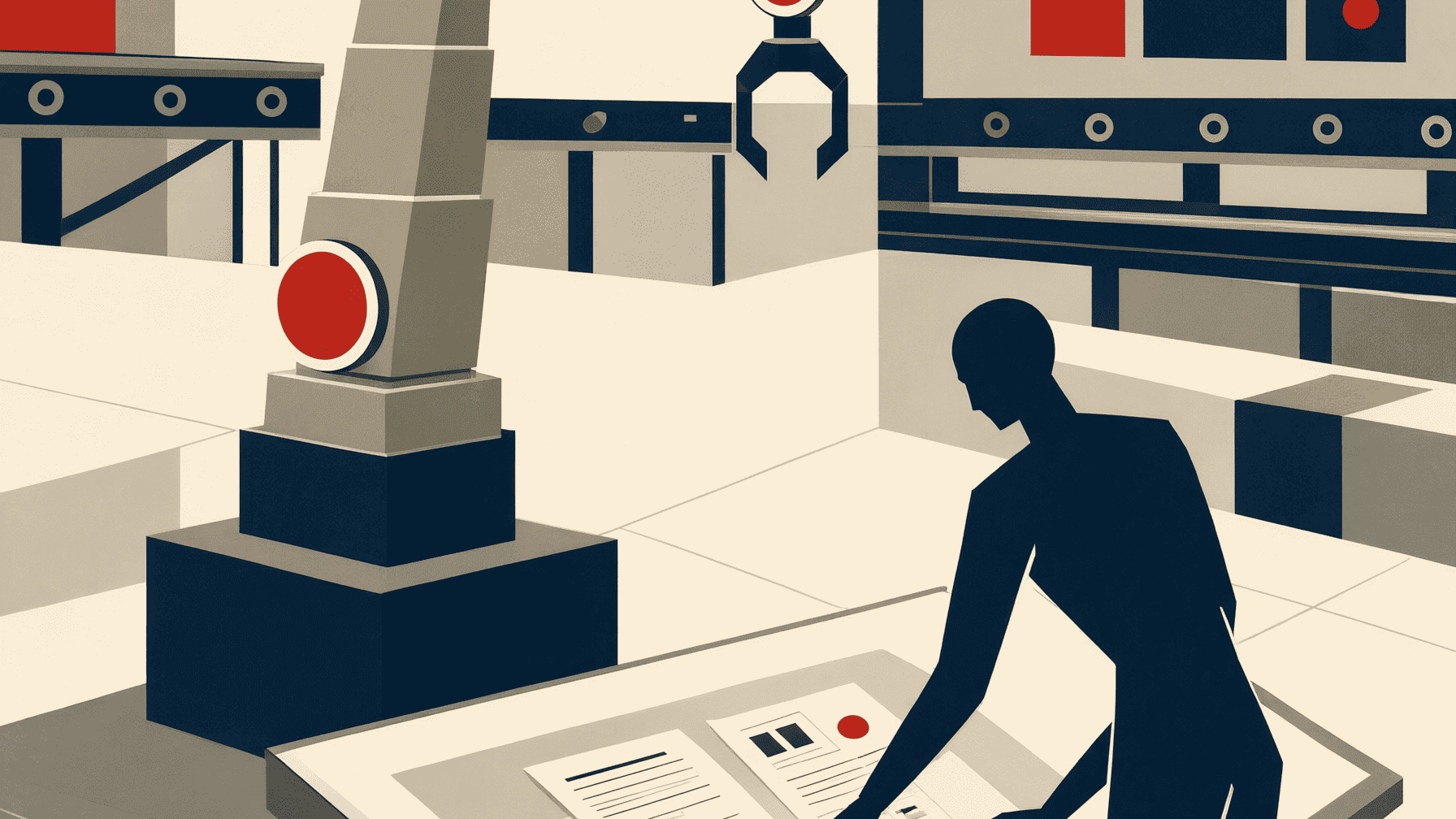
Anthropic launched Claude for Manufacturing on November 12, 2026, a plugin that packages 17 task-specific skills and four enterprise connectors around a single design rule: the software drafts, a named human approves, and nothing reaches a customer or supplier until it does, according to the announcement. The positioning matters as much as the product. After a year of industrial AI demos promising autonomous plants, Anthropic is selling to the people who write requests for quotations and corrective action reports, not the people who run CNC machines.
The plugin connects to Autodesk Fusion, Infor, Microsoft 365 and Oracle NetSuite, and works from a manufacturer's existing records. Anthropic's announcement cites a 2025 Manufacturing Leadership Council survey in which 79% of manufacturers said they still enter data manually. The pitch is to make Claude the clerk so the estimator, quality engineer or plant manager can stay the decision maker.
What the 17 skills actually do
The announcement lists representative workflows rather than a full inventory. An estimator can have Claude read a customer's request, list what is missing, compare costs on similar past jobs and draft the quote. A quality engineer facing a failed inspection can have Claude document the failure, search past reports for recurrence, rank likely causes and draft the corrective action report. A maintenance technician can feed Claude sensor exports, repair notes, photos and the equipment manual and get a ranked diagnosis to check first. Buyers get drafted requests for quotes and bid comparisons; engineers get design variants generated from an existing Autodesk Fusion model with a draft decision memo scored against their targets; plant managers get production reporting against output targets and downtime, including what the downtime cost.
The skills run singly or in sequence, Claude carries a process up to the point of review, and organizations can build on the preset skills for their own operations. Installation starts with the phrase "Set us up," after which Claude asks which systems the team uses, tests the connectors and reports which skills cannot yet run fully. That setup audit is a candid admission: on partial data, some skills will be crippled at first.
The connector layer is where the differentiation argument lives. Anthropic's support docs define connectors as the mechanism by which Claude accesses company apps, retrieves data and takes actions within connected services. Autodesk Fusion gives the model access to CAD records, so quoting and design work read from actual engineering data instead of re-keyed summaries. Infor covers the ERP side, with purchase order and inventory lookups. Oracle NetSuite supplies order, inventory, production-step and job-cost records for quote pricing. Microsoft 365 sweeps up the files, emails and procedure documents in shared mailboxes. For the many factories running systems with no connector, Anthropic's answer is export-based: save regular exports into Microsoft 365 and Claude works from the files.

Infor is also shipping its own plugin for the same directory, and the two products split read from write access. Claude for Manufacturing's connector looks records up. Infor's plugin lets Claude make changes in Infor: a buyer can ask which customer orders are hit if a steel shipment slips two weeks, then approve the plugin releasing a purchase order to another supplier and rescheduling production. Claude's write access follows the buyer's own Infor permissions, the announcement says.
The guardrail is the product
Anthropic Enterprise GTM lead Lauren Collett framed the launch as relief from "internal toil," the daily cycle of chasing information between systems, writing up results and doing it again tomorrow, in remarks to Manufacturing Dive. The stated targets are more quotes out, harder pricing decisions, stopping repeat defects and getting machines running sooner.
What the plugin deliberately does not do is touch equipment. The announcement says Claude for Manufacturing doesn't operate equipment. For that, Anthropic is separately developing the Model Hardware Standard, a research preview intended to give programmable machines a standard way to describe their measurements, settings and safety limits. Manufacturing AI sold under an explicit human-review-at-every-step rule is an easier procurement conversation than a system that could actuate a press brake, and Anthropic is drawing that line on purpose. Review is also traceable: Claude can link figures and claims in its drafts back to the underlying data and documents.
Reading the launch against the market
Claude for Manufacturing arrived bundled with a same-day cluster of enterprise product releases, including self-hosted Claude Managed Agents and Claude Meetings, per Anthropic's newsroom. The plugin runs on Claude Team or Enterprise plans rather than as a separately priced SKU, which puts the seat economics of those plans in front of any usage costs.
The bet inside the plugin is that manufacturing's AI gap is administrative, not operational. The skills aim at a plant's paperwork stack, where AI output today is mostly plausible, and leave the machine-tool loop to a standards project. The competitive question for the category is who owns the connectors. Autodesk, Infor and Oracle NetSuite integrations are the moat claim, and Infor publishing its own write-capable plugin signals that ERP vendors intend to sit between Claude and their own data, not merely be plumbed into it.
Sources
- Anthropic/Claude: Introducing Claude for Manufacturing (November 12, 2026)
- Manufacturing Dive: Anthropic launches 'Claude for Manufacturing'
- Infor: Infor and Anthropic Announce Partnership That Turns Insights into Actions for Manufacturing Operations
- Anthropic: Model Hardware Standard research preview
- Claude support docs: Use connectors to extend Claude's capabilities
- Manufacturing Leadership Council survey (2025)
