
Two documents landed within 48 hours in early September 2026 and settled, for now, how the AI industry polices model copying. On September 8, the NSA, CISA and the FBI issued a joint cybersecurity advisory naming six China-based AI companies, DeepSeek, Moonshot AI, Alibaba, MiniMax, StepFun and Z.AI, for running industrial-scale distillation campaigns against US frontier models, extracting, in the agencies' words, "billions of tokens" from Claude, GPT, Gemini and Grok since at least late 2024. On September 10, Anthropic published its threat intelligence report documenting roughly 190 million unauthorized exchanges with Claude across seven labs, 151 million of them from a single Alibaba campaign.
Here is what neither document mentions, because it does not exist: a lawsuit. Two years of accusations, named companies, and government advisories have produced no filed case testing whether mass extraction of model outputs is theft, misappropriation, or a breach of contract. The dispute has migrated out of the legal system entirely. The enforcement that does happen runs through terms of service, account graphs, and product design.
The most ordinary technique in machine learning

Distillation in itself is boring. You prompt a capable teacher model, collect the responses, and train a smaller student model on those pairs. Every lab does it to itself. Anthropic's September report describes Claude Haiku as distilled from more powerful Claude models. The DeepSeek-R1 paper is the canonical public example: DeepSeek curated 800,000 reasoning samples from R1 and fine-tuned Qwen2.5 and Llama 3 checkpoints on them, open-sourcing six distilled models that beat RL applied to the same base models. Anthropic conceded as much in its February disclosure: frontier labs "routinely distill their own models to create smaller, cheaper versions for their customers."
What made the technique a security story is doing it to someone else's model, covertly, at scale. Anthropic's definition of the offense: an industrial-scale, covert campaign to extract a model's capabilities and replicate them in another model without authorization, typically enabled by fraud. The February 23, 2026 disclosure put first numbers on it: 16 million exchanges through about 24,000 fraudulent accounts attributed to DeepSeek, Moonshot and MiniMax, with one proxy network alone managing over 20,000 accounts. The Institute for Law and AI noted the uneven split in that report: MiniMax 13 million exchanges, Moonshot 3.4 million, DeepSeek a comparatively modest 150,000.
The economics are the whole motive. Anthropic's own framing, quoted by CNBC: the practice acquires capabilities "in a fraction of the time, and at a fraction of the cost" of developing them. Renting the teacher at list price is still cheaper than training one.
How the campaigns actually work
The September report escalated the detail level, and the methods described are not one trick but three.
The first is prompt engineering against the reasoning trace. Alibaba's campaign, as summarized by Better Stack, injected a fixed instruction into every request that forced Claude Opus 4.6 and 4.7 to write out full chain-of-thought reasoning inside inline tags, then extracted only the tagged text. Reasoning traces teach a student how the teacher thinks, not just what it concludes, which is why they command a premium.
The second is replay. Moonshot saved the compressed "thinking signature" Claude attaches to extended-thinking sessions, opened a fresh session, and fed the signature back to make Claude expand it into the full reasoning trace at a fraction of the token cost.
The third is the relay. Moonshot and DeepSeek, per the report, quietly routed real customer requests from the Kimi and DeepSeek apps to Claude, showed users Claude's answers as if their own model had produced them, and kept the exchanges. Nearly 300,000 customer requests were relayed in one ten-day window through 5,380 fraudulent accounts. DeepSeek added targeting: its system inspected user-agent strings for claude-code, claude-agent-sdk and opencode, flagging agentic coding sessions as high-value harvest. The user data caught in these relays, per Anthropic's examples, included municipal police surveillance systems and live credentials from foreign government contractors.
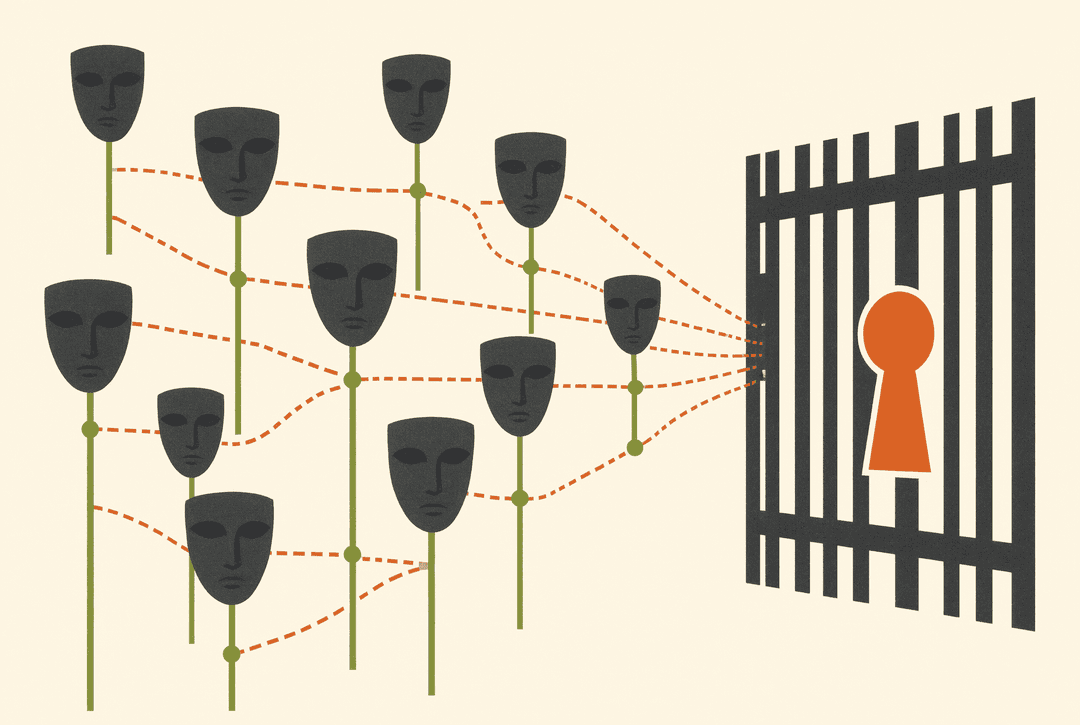
The access itself is laundered through what the federal advisory calls a gray market of API proxies, or "transfer stations": intermediary services that resell frontier model access at scale through pools of fraudulent accounts, stolen payment instruments, and residential proxies, breaching terms of use and regional restrictions en route. OpenAI described the same infrastructure to the House China Select Committee as "obfuscated third-party routers" masking DeepSeek-linked traffic.
The accused parties reject everything. China's commerce ministry called the September findings baseless, and Alibaba's main internal response, per Better Stack, was to ban employees from using Claude Code. Anthropic's report is a selection of notable cases from its own systems, not an independently audited account. That caveat cuts both ways: the numbers are only as good as the detector that counted them.
Why the courts are empty
Every legal theory the labs could use has a hole in it, which is the thesis of a November 2026 Berkeley Technology Law Journal analysis that concludes, flatly, that AI model distillation "is not obviously illegal, and that is precisely the problem."
Copyright fails first. Under the US Copyright Office's human-authorship rule, raw model outputs are not protectable works, so harvesting a million Claude answers is not, in itself, copying anything owned.
Trade secret law is closer but still broken. The secret is the weights and the training distribution, and distillation never touches them. It collects API responses, which are disclosed, by design, to anyone with a subscription. The Institute for Law and AI makes the blunt point: calling it theft has no limiting principle when the extraction runs entirely through paid, ordinary access.
The Computer Fraud and Abuse Act needs unauthorized access, and a validly obtained API key is authorized access, however dishonest the purpose. Post-Van Buren, a pure terms-of-service breach is a weak hook. Fraudulent account creation and stolen payment instruments are the conduct that might actually support civil or criminal claims, but proving who stood behind a 24,000-account proxy mesh, across jurisdictions with no enforcement cooperation, is a different problem from proving it in an engineering report.
Contract binds only the counterparty. A terms violation is grounds for suspension, not damages, and the accused labs never signed anything. They bought access through resellers using fabricated identities.
So the tools the labs actually picked up are contractual and technical. The terms of service themselves are worth reading for how specifically they hardened: OpenAI's Services Agreement bars using outputs to develop competing models, with narrow carve-outs for internal classifiers and its own fine-tuning; Anthropic's Usage Policy now names "model scraping" and "model distillation" and separately bans coordinating activity across many accounts to avoid detection, a clause written, obviously, for hydra networks; Google's Cloud terms allow immediate suspension on a merely suspected violation. Since October 2025, when Anthropic revoked OpenAI's own Claude access after Sam Altman admitted staff used Claude to build product ahead of GPT-5, the sanction on display has been termination, not litigation. Rivals even cooperate on detection: OpenAI, Google and Anthropic now share indicators through the Frontier Model Forum, and Google's 2026 threat report logged rising attack volume in late 2025 without naming anyone.
The defenses are product features now
The interesting enforcement is happening in API design. Anthropic's September report describes three countermeasures: Claude's API now returns a summary of reasoning rather than the full trace by default, devaluing the harvest; the Fable 5.1 "preserved thinking" feature cryptographically locks conversation context so a new session cannot replay a thinking signature; and identity verification is mandatory for accounts from China, Russia and Iran. Both labs publish scorecards on the arms race: Anthropic reported a 90 to 99 percent drop in reasoning extraction under the new safeguards, and OpenAI reported cutting extraction attack success from 54.0 percent to 0.2 percent.
Academic defenses have existed longer, and they show why this is a race with no finish line. Distillation-Resistant Watermarking (EMNLP 2022) injects a statistical signal into output probabilities that provably survives a student model trained to convergence. But a 2025 study tested the assumption that watermarks make distilled models radioactive: paraphrasing the training corpus before distillation, or neutralizing the watermark at inference time, removed inherited marks thoroughly while keeping the capability. Detection works upstream, where you own the accounts; it does not work downstream, where you own nothing.
That asymmetry produces the collateral damage ordinary API customers keep absorbing. The October 2026 OpenCode Console breach exposed provider keys stored by users, which were then run as harvesting workloads: some users woke up to more than $1,700 in overnight charges, and Google suspended projects for "abusive activity consistent with hijacked resources." A stolen key generating maximal frontier-model traffic looks, to the defender's classifiers, exactly like the attacker. The account holder eats the suspension and the bill, then appeals.
What would change the picture
Three things, none scheduled. A first lawsuit, probably on fraud and identity grounds rather than intellectual property, would test whether a court treats mass extraction as anything more than a contractual dispute. Regulator-mandated know-your-customer rules for API resale, which the transfer-station market exists to defeat. And Congress acting on the narrowly tailored extraction rule the Berkeley analysis calls for, targeting method and scale rather than distillation itself.
Until then, the practical lesson for anyone shipping models is one the frontier labs learned in the order they complained: you cannot protect a capability by suing over it, only by metering it. And the lesson for anyone renting frontier models through an API is the sharper one. Your key is now attack surface in a trade war, the terms make you answerable for what runs on it, and the referee, as Anthropic's own report concedes, grades its own homework.
Sources
- CISA/NSA/FBI joint advisory: China-Based AI Companies Conducting Industrial-Scale Distillation Campaigns (aa26-251a)
- Anthropic: Countering misuse of AI, September 2026 threat intelligence report
- Better Stack: Anthropic's September 2026 Threat Report overview
- Anthropic: Detecting and preventing distillation attacks (February 2026)
- CNBC: Anthropic accuses DeepSeek, Moonshot and MiniMax of distillation attacks
- Asahi Shimbun/Reuters: OpenAI memo to House Select Committee on DeepSeek distillation
- WIRED: Anthropic Revokes OpenAI's Access to Claude
- Berkeley Technology Law Journal: Learning or Extraction? The Legal Gray Zone of AI Model Distillation
- Institute for Law and AI: Responding to AI Distillation Without Panic
- INFRO: Can you train on AI outputs? What provider terms say
- arXiv: DeepSeek-R1: Incentivizing Reasoning Capability in LLMs via Reinforcement Learning
- EMNLP Findings 2022: Distillation-Resistant Watermarking for Model Protection in NLP
- arXiv: Can LLM Watermarks Robustly Prevent Unauthorized Knowledge Distillation?
- Anthropic: Distillation defenses research
- OpenAI: Combatting adversarial distillation
- BleepingComputer: OpenCode hack exposes API keys amid AI distillation attacks
- Built In: OpenAI, Google, Anthropic Unite Against AI Model Theft
