
Compute Desk Raises $45 Million to Turn GPU Rental Into a Futures Market
Compute is getting a derivatives layer. On November 17, Compute Desk announced a $45 million round led by Lightspeed Venture Partners to build what it calls capital markets infrastructure to price, trade, hedge and clear compute. Axios reported the raise on November 23.
The company's premise is that the AI economy's largest input is still bought and sold through contracts built for a different scale. In its own release, Compute Desk points out that hyperscalers will spend $1 trillion in debt-backed dollars on AI, and that the market can no longer digest that level of risk. Its evidence: sharp increases in bond yields of neoclouds like CoreWeave and expanding credit default swap spreads on hyperscalers like Oracle.
Today, compute risk moves from seller to buyer through multi-year offtake contracts. Neoclouds and their lenders want buyers to commit to years of capacity even when they are not sure they need it. Compute Desk argues lenders have started to worry that even hyperscaler offtakers might default, which slows deployment at the same time that demand keeps capacity effectively sold out.
What the money buys

Compute Desk's platform has three parts, and it is careful in its materials to describe the tradable one as still in progress.
First, pricing. Compute prices are negotiated privately, so there is no agreed reference.

Compute Desk built a family of indexes, DESKB300, DESKB200, DESKH200 and DESKH100, from private transaction data gathered through exclusive price-sharing partnerships with neoclouds. The company has partnered with Bloomberg and General Index to put these indexes on the terminals of some 350,000 CFOs, traders and CIOs, and says the daily figures are tracked by firms including JP Morgan, Citibank, VanEck, Blackstone, Apollo, KKR and Citadel Commodities. Its Compute Signal assessment platform is already used by AI companies and hyperscalers such as Meta, according to the release.
Second, instruments. Exchange partners Nodal Exchange, Architect Financial and Liquid Compute are undergoing a regulatory process to offer compute futures and options based on the indexes. No such contracts are available to trade yet; the release describes the funding as infrastructure for that effort. A liquidity program called Compute Trader is meant to route the risk to trading firms, hedge funds and family offices, with the release citing, as one illustration, a teachers' pension fund exposed to compute loans.
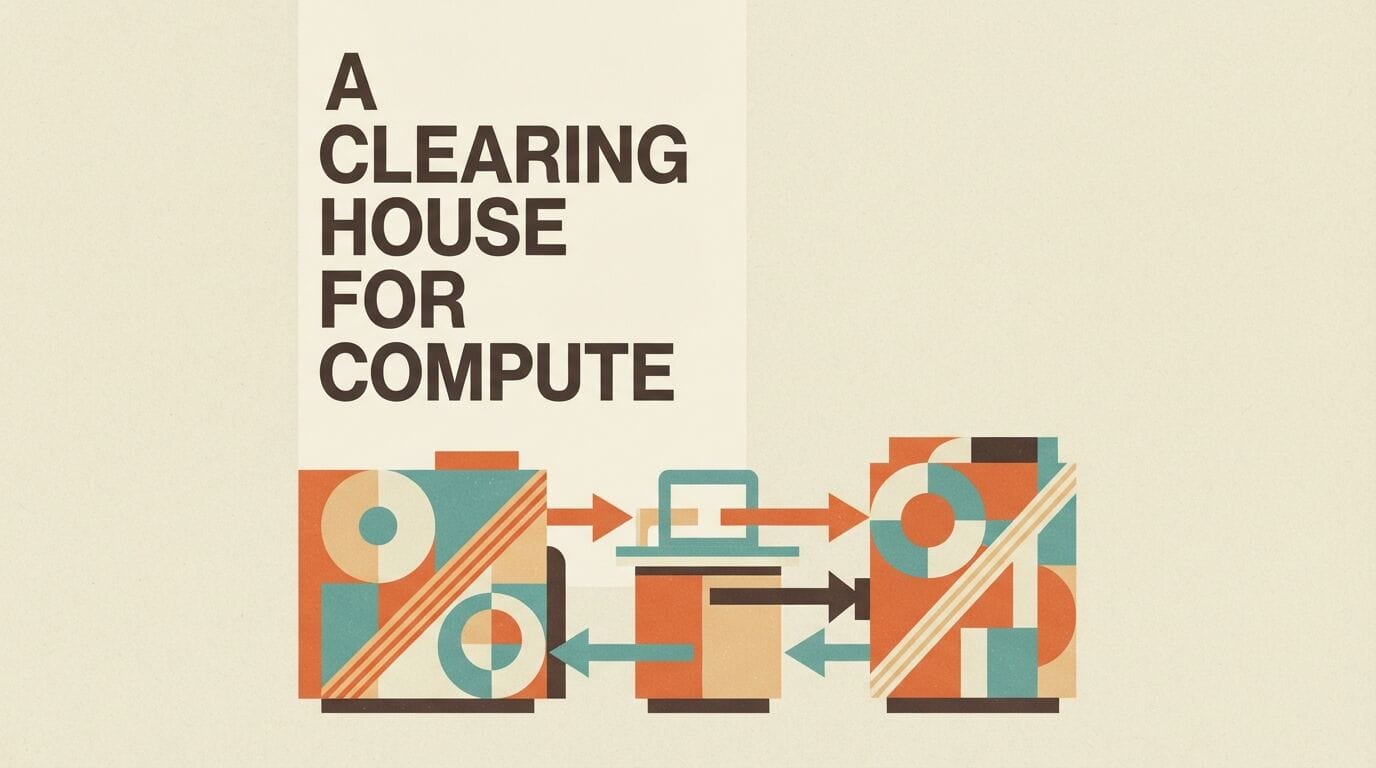
Third, physical clearing. A product called Compute Clear is designed to let clearinghouses convert derivative positions into deliverable compute, so a hedge can settle in GPU time rather than cash.
Who is behind it
Compute Desk was founded by Andrawes Bahou, formerly of Meta, who serves as CEO, and David Lopez Mateos, the CTO. The company says its team combines quant portfolio managers from Citadel and Two Sigma, commodities traders from Winton, and GPU engineers from Meta and AWS. Lightspeed partner Justin Overdorff framed the thesis bluntly: compute, glut or shortage, is bought and sold through outdated contracts, and this market is missing a clearing platform.
Companies quoted in the release include Hydra, a baremetal cloud whose CTO Ariel Deschapell said Compute Desk's expertise in approaching compute financialization "can only be achieved by actual engineering experience as well as financial acumen" and called it "a critical partner for Hydra," and Conduit Intelligence, a brain-computer interface startup whose CEO Clem von Stengel said the company wants access to compute only for as long as it needs it.
Why it matters
For the past year the industry's compute arguments have been about balance sheets: how long to depreciate a GPU, who underwrites a neocloud, whether a data center pipeline can outlast the offtakes signed for it. Compute Desk is proposing that none of those questions have stable prices until compute itself has one. A benchmark family derived from private deals, a presence on the screens of 350,000 CFOs, traders and CIOs, and futures that do not exist yet is a long runway, but the sequencing is deliberate: establish the reference price, clear the regulatory path for contracts, then settle them in hardware.
Whether traders ever hold a genuine basis risk hedge in GPU time is unproven. What is new is that a Lightspeed-backed company with former Citadel quants and neocloud data partnerships now treats the world's scarcest input as a commodity waiting for its exchange.
Sources
- Compute Desk press release (GlobeNewswire, corrected), November 17, 2026: https://finance.yahoo.com/technology/ai/articles/correction-compute-desk-raises-45m-192000434.html
- Lucinda Shen, Axios: https://www.techmeme.com/261123/p3#a261123p3
- Justin Overdorff on LinkedIn: https://www.linkedin.com/posts/jmover_we-at-lightspeed-are-excited-to-lead-compute-activity-7528555042233233410-whGa
- Pulse 2.0: https://pulse2.com/compute-desk-raises-45-million-to-build-compute-risk-markets
