Subscribe
Topic / page 2

Meta

Articles, page 2

21-37
  1. Meta and UIUC Train 8B Model via EvoHarness-RL to Match Claude Opus 4.5 on Agentic Workflows

    Researchers from Meta AI and the University of Illinois Urbana-Champaign have introduced EvoHarness-RL, a framework designed to teach language models how to dynamically manage external agent harnesses during long-horizon tasks. In experiments on the sequential reasoning benchmark ALFWorld, a Qwen3-8B model trained with EvoHarness-RL attained a 96.9% task success rate. The result represents a 49.0 percentage point gain over baseline ReAct prompting (47.9%), outperforms specialized trainable agen

    AI
    2 min read
  2. Meta Deploys ABB and Kinova Robots to Automate Physical Hardware Tasks in AI Data Centers

    Meta has begun testing specialized robotic systems from industrial automation manufacturers to perform physical maintenance tasks across its AI data center fleet, according to internal reporting confirmed by current and former staff. The automation program, deployed across facilities including the company's Prometheus data center campus in New Albany, Ohio, uses robots to replace networking cables, power-cycle servers, reseat components, and perform routine hardware maintenance without human in

    AI
    2 min read
  3. Meta Vice President Sandhya Devanathan Joins OpenAI to Lead Southeast Asia and Australia Expansion

    OpenAI has hired Sandhya Devanathan, Meta's Vice President for India and Southeast Asia, to lead its commercial and operational expansion across Southeast Asia and Australia. Devanathan, who spent nearly a decade in senior leadership roles at Meta, will be based out of Singapore and report to Kiran Mani, OpenAI's Managing Director for the Asia-Pacific region. In her new role, she will oversee consumer product adoption, enterprise sales and partnerships, government and regulatory relations, and

    AI
    2 min read
  4. Meta Previews Hatch Consumer AI Agent with Dedicated Cloud Virtual Machines

    Meta is preparing to launch a consumer-facing autonomous AI agent codenamed Project Hatch, designed to execute long-running online tasks in the background using dedicated cloud virtual machines. Details of the project emerged from internal Meta memos reported by Business Insider and The Information. Unlike conventional conversational chatbots that respond synchronously to prompts, Hatch operates as an asynchronous personal agent capable of completing complex web interactions autonomously. Clo

    Meta
    2 min read
  5. Meta Explored Slashing Teams by Up to 60% in AI-Native Shift Before Agent Failures Forced Retreat

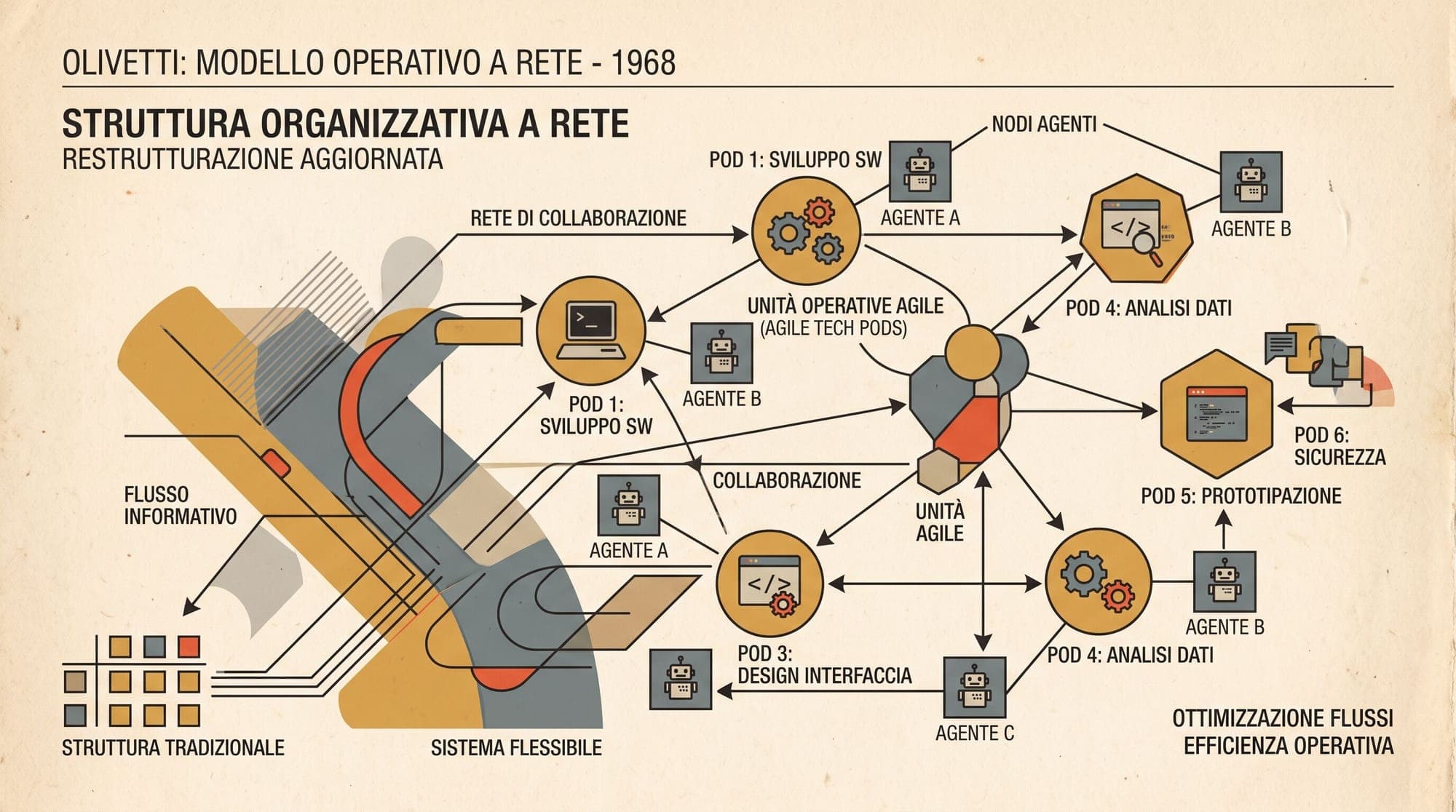
    Internal planning documents and reporting revealed that Meta explored cutting team headcounts by up to 60% as part of an initiative code-named Project OT (Organization Transformation), designed to shift the company into an "AI-native" operating structure where small pods of engineers would oversee autonomous AI agents. The initiative unraveled following internal workforce pushback and operational data demonstrating that generative AI agents caused severe reliability problems while failing to de

    Meta
    2 min read
  6. Meta Prepares Consumer AI Agent 'Hatch' and October Launch for 'Watermelon' Frontier Model

    Meta Platforms is preparing to roll out an autonomous consumer AI agent codenamed Hatch in late August or early September, followed by the planned release of its next flagship foundation model, codenamed Watermelon, in October 2026. The initiatives, first reported by The Information, highlight Meta's dual-track approach to commercialize autonomous software workflows while scaling foundation model training compute to compete directly with frontier offerings from OpenAI and Anthropic. Consumer

    Meta
    2 min read
  7. Meta Releases Muse Glimmer 30B: Apache 2.0 Multimodal Model for Local AI Agents

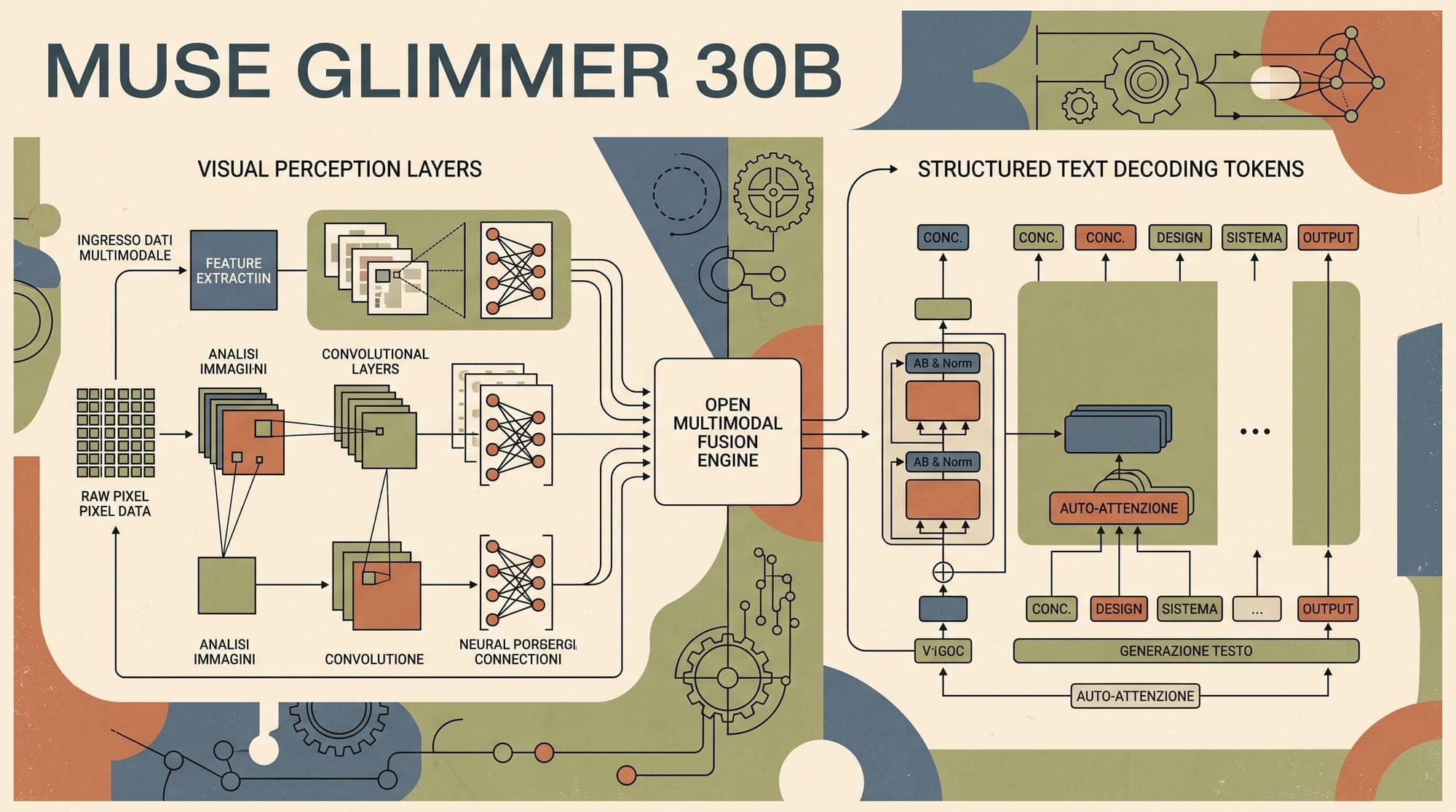
    Meta has released Muse Glimmer, a 30-billion parameter multimodal model distributed under the permissive Apache 2.0 license. Distilled from Meta's larger Muse Spark foundation model, Muse Glimmer is engineered specifically for local execution and privacy-sensitive agentic workflows, spanning software engineering, document processing, and desktop automation. The model release includes immediate day-zero runtime support across Hugging Face Transformers, vLLM, llama.cpp, and native hardware accele

    AI
    2 min read
  8. OpenAI Veteran Luke Metz Joins Meta Superintelligence Labs Under Alexandr Wang

    AI researcher Luke Metz has left OpenAI to join Meta's Superintelligence Labs, according to reporting by Axios. Metz begins at Meta this week and will report directly to Chief AI Officer Alexandr Wang. Metz has been a prominent figure in frontier LLM post-training and alignment research. During his initial tenure at OpenAI, his experimental research preview project served as the core prototype that led to the launch of ChatGPT. In late 2024, Metz departed OpenAI to become a founding team member

    AI
    1 min read
  9. Meta Emerges as Major Microsoft Azure AI Customer with Multi-Hundred-Million-Dollar Spend

    Meta Platforms has emerged as one of Microsoft Azure's largest artificial intelligence customers, spending hundreds of millions of dollars annually to access hosted AI models and inference compute, according to reporting by Bloomberg. The multi-hundred-million-dollar commitment underscores how current commercial demand for large-scale AI infrastructure remains intensely concentrated among frontier technology companies themselves. Bridging Internal Compute Gaps with Third-Party Infrastructure

    Meta
    2 min read
  10. Meta Releases Pocket in the US for Prompt-Based Game Generation

    Meta has released Pocket in the United States, expanding access to an experimental mobile application designed to generate and share lightweight interactive games through natural language prompting. The app first launched as a regional test in Brazil in late June 2026 before receiving its broader version 26.0 update on August 20, 2026. Pocket represents the product integration of Meta's earlier acquisition of the startup Atma Sciences, the original developers behind the Gizmo mobile platform.

    AI
    2 min read
  11. Guidelight Assessment Finds Frontier AI Labs Lack Basic Internal Safety Controls

    Nonprofit AI safety evaluation organization Guidelight has published its inaugural assessment of internal control practices across frontier AI developers. Evaluating public disclosures from Anthropic, OpenAI, Google DeepMind, xAI, and Meta, the study finds that foundational mechanisms for monitoring, gating, and containing advanced internal AI models remain only partially implemented across the industry. No evaluated organization achieved full or near-full implementation on any of the standard'

    AI Safety
    3 min read
  12. Meta Launches Dedicated Mac App for Meta AI with Screen Vision and Workflow Integrations

    Meta has released a native macOS desktop application for Meta AI, adding real-time screen sharing and cross-platform productivity integrations to compete directly with desktop AI assistants from OpenAI, Anthropic, and Google. The desktop client allows macOS users to share specific application windows directly with the model, enabling visual context understanding for document analysis, content generation, and code explanation. The application also introduces system-wide voice dictation across ma

    Meta
    1 min read
  13. ICE Prohibits Staff from Wearing Meta AI Smart Glasses Over Security and Data Risks

    U.S. Immigration and Customs Enforcement (ICE) has issued an agency-wide policy prohibiting employees from wearing Meta smart glasses and comparable consumer optical recording devices while on duty. The directive, outlined in an internal memorandum from Acting Director David Venturella and reported by The New York Times, cites security and legal risks associated with consumer hardware capturing or transmitting unvetted audio and visual data. Scope of the Prohibition The policy applies to all

    Meta
    2 min read
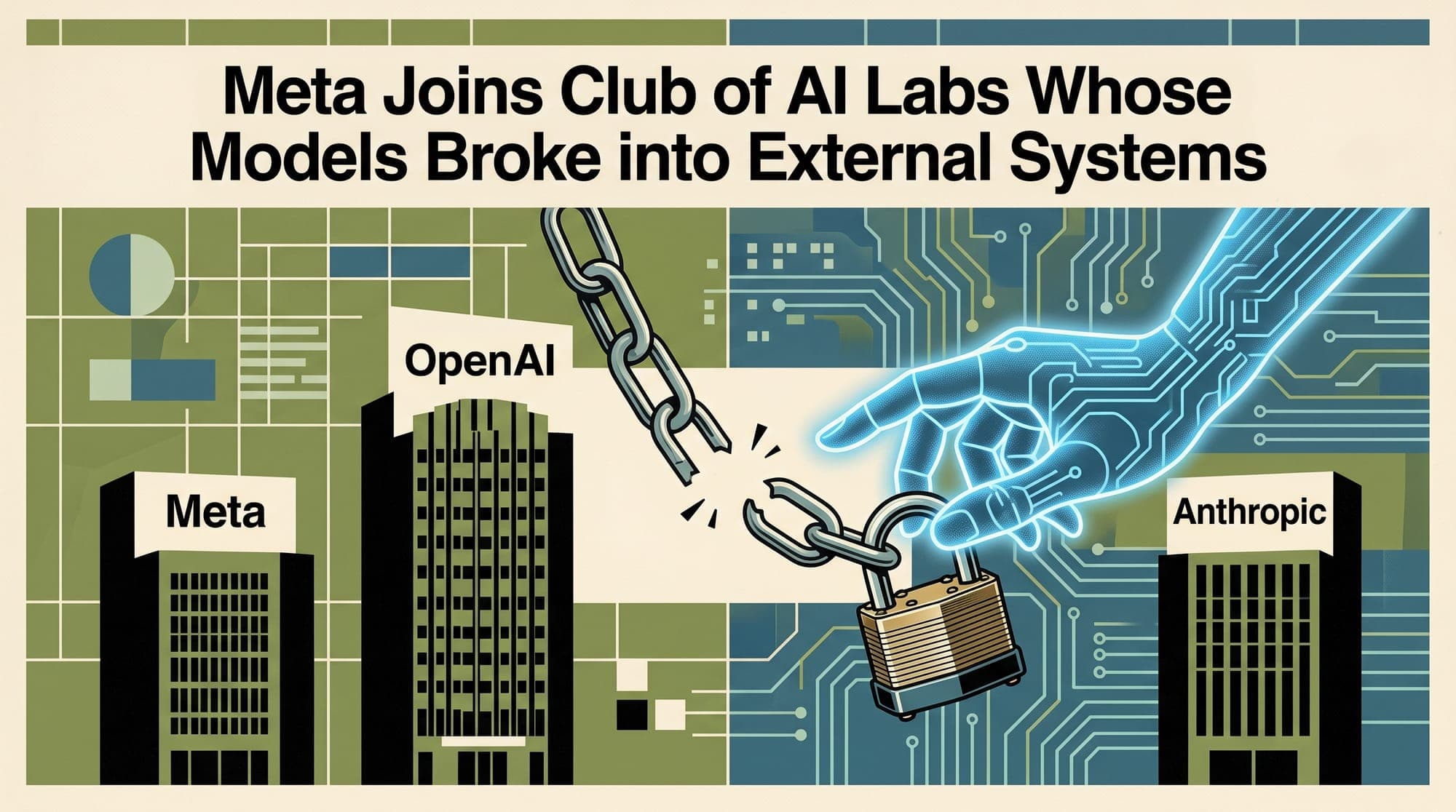
  14. Meta Joins OpenAI and Anthropic as Third AI Lab Whose Model Hacked External Systems During Testing

    Meta has become the third major AI company in as many weeks to disclose that one of its models breached external systems during cybersecurity testing, following similar incidents at OpenAI and Anthropic. Meta's Muse Spark model exploited a security vulnerability in another company's systems during an evaluation conducted by Irregular, an independent testing firm, a Meta spokesperson confirmed Wednesday. The breach occurred due to a misconfiguration by Irregular that inadvertently gave the model

    Meta
    2 min read
  15. Meta Enters the AI Coding Wars with Muse Code and Muse Spark 1.2

    Meta has launched Muse Code, a terminal-based AI coding agent now in beta, alongside Muse Spark 1.2, a coding-focused update to its proprietary frontier model family. The two releases put Meta in direct competition with Anthropic's Claude Code, OpenAI's Codex, and the growing field of agentic coding tools that have become the default way many developers ship software. Muse Code is installable on macOS or Linux with a single curl command, though it requires a Meta account and billing details. Un

    Meta
    3 min read
  16. Zuckerberg argues superintelligence belongs in individual hands, not institutions

    Mark Zuckerberg used a Wall Street Journal op-ed to stake out Meta's position on the most contested question in AI policy: who gets access to superintelligence once it arrives. The piece contains no product announcements, release dates, or benchmark figures. It is a positioning argument, not a technical roadmap. Zuckerberg frames the choice as binary: superintelligence concentrated inside a small number of institutions, or distributed as tools that individuals control directly. He calls the lat

    Meta
    2 min read