Subscribe
Topic / page 7

Hardware

Articles, page 7

121-140
  1. Marvell Issues Google $12.2B Stock Warrant in Custom AI Silicon Deal

    Marvell Technology has granted Alphabet's Google a warrant to purchase up to 58.9 million shares of common stock at an exercise price of $206.58 per share, establishing an equity arrangement valued at up to $12.18 billion. The agreement expands the companies' partnership to co-develop custom artificial intelligence silicon, specialized networking, and next-generation datacenter infrastructure. Following the announcement, Marvell shares rose more than 11% in premarket trading, while primary cust

    AI
    2 min read
  2. On-Device LLM Inference in Production: Architecture, Runtimes, and Hardware Constraints

    Deploying generative language models directly onto edge devices such as smartphones, laptops, embedded systems, and browser sandboxes marks a fundamental shift in AI systems engineering. Moving inference from centralized GPU clusters to client silicon eliminates cloud API costs, cuts network latency to zero, guarantees data privacy by keeping user inputs local, and enables offline functionality. However, executing modern autoregressive models on resource-constrained client hardware presents str

    AI
    7 min read
  3. Relativity Networks Raises $22M and Lands $40M Hyperscaler Deal for Hollow-Core AI Data Center Fiber

    Optical fiber startup Relativity Networks has secured $22 million in SAFE note funding and booked a $40 million follow-on order from an unnamed hyperscaler to deploy hollow-core fiber across distributed AI data center facilities. The funding round included participation from Rhapsody Venture Partners, Bell Ventures Inc., and Faster Than Glass LLC. The capital will support scaling production and deployment of hollow-core fiber cables engineered specifically for low-latency interconnects between

    AI
    2 min read
  4. DDR5 Memory Prices Climb 500% in 12 Months as AI Hyperscalers Corner Global DRAM Capacity

    Spot and contract prices for standard DDR5 dynamic random-access memory (DRAM) have climbed by up to 500 percent over the past 12 months, driven by hyper-scaler procurement teams reserving global semiconductor fabrication lines for enterprise AI accelerator memory. Historical retail and channel tracking data compiled by PCPartPicker and reported by Tom's Hardware highlights severe price spikes across high-density modules. A 128GB DDR5-6400 kit that carried an all-time low of $329 now retails fo

    Hardware
    2 min read
  5. Nvidia's AI Moat Shifts to Capital with $48.5B Free Cash Flow and $500B Wall Street Financing Engine

    Nvidia's AI Moat Shifts to Capital with $48.5B Free Cash Flow and $500B Wall Street Financing Engine Nvidia is executing a structural transition in its competitive strategy, moving beyond silicon performance leadership to construct an institutional capital moat. With quarterly free cash flow expanding 18-fold over the past three years to reach $48.5 billion, the company is deploying its balance sheet liquidity, investment-grade credit rating, and strategic equity investments to lock in multi-gi

    AI
    3 min read
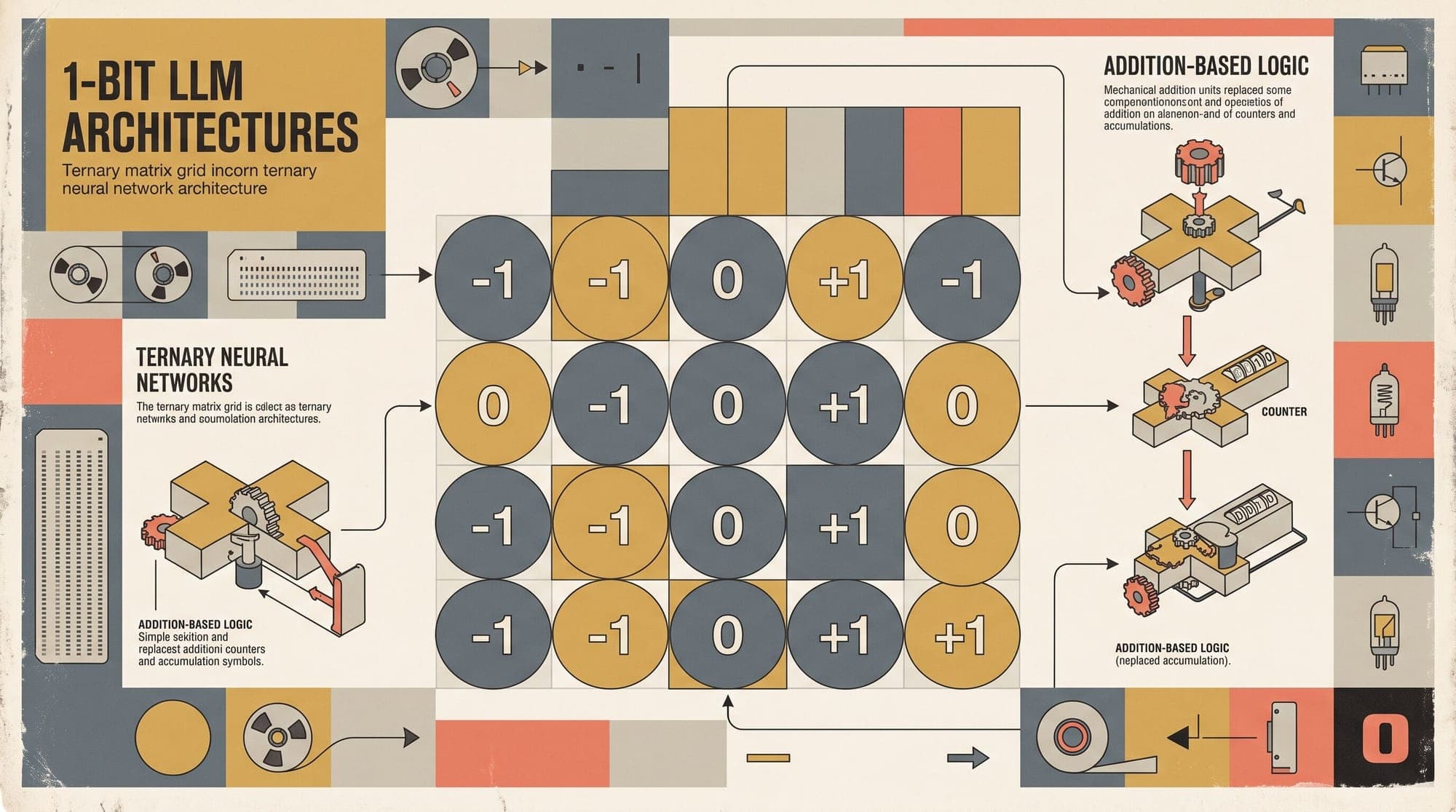
  6. 1-Bit Large Language Models and BitNet b1.58: How Ternary Weights and Additive Kernels Eliminate Matrix Multiplications

    Standard large language model architectures run on high-precision floating-point arithmetic. Foundation models are typically pre-trained in 16-bit bfloat16 or 8-bit FP8 formats, requiring compute-heavy Multiply-Accumulate (MAC) units inside GPU Tensor Cores. During autoregressive decoding, these models face a severe memory-bandwidth bottleneck: every generated token requires streaming gigabytes of model weights from high-bandwidth memory (HBM) into on-chip cache and registers. The 1-bit model p

    AI
    6 min read
  7. ICE Prohibits Staff from Wearing Meta AI Smart Glasses Over Security and Data Risks

    U.S. Immigration and Customs Enforcement (ICE) has issued an agency-wide policy prohibiting employees from wearing Meta smart glasses and comparable consumer optical recording devices while on duty. The directive, outlined in an internal memorandum from Acting Director David Venturella and reported by The New York Times, cites security and legal risks associated with consumer hardware capturing or transmitting unvetted audio and visual data. Scope of the Prohibition The policy applies to all

    Meta
    2 min read
  8. Beijing Clears Initial Shipments of 10,000 Nvidia H200 Chips to ByteDance and Tencent

    Chinese regulators have authorized the delivery of initial batches of Nvidia H200 artificial intelligence processors to mainland tech giants, marking a pivotal development in Beijing's management of high-performance compute access. According to reporting from the Financial Times, ByteDance and Tencent have each received roughly 10,000 H200 accelerators at their mainland data center facilities in recent weeks. Several additional domestic technology companies are currently awaiting clearance for

    AI
    1 min read
  9. FlashDecoding: How Sequence Partitioning Solved the Memory Bandwidth Bottleneck in LLM Generation

    FlashDecoding: How Sequence Partitioning Solved the Memory Bandwidth Bottleneck in LLM Generation In large language model serving, execution divides into two distinct operational regimes: prompt prefill and autoregressive token generation (decoding). While FlashAttention transformed prefill throughput by eliminating High Bandwidth Memory (HBM) round-trips for intermediate attention matrices, standard FlashAttention algorithms encounter a severe hardware utilization bottleneck during decoding.

    AI
    7 min read
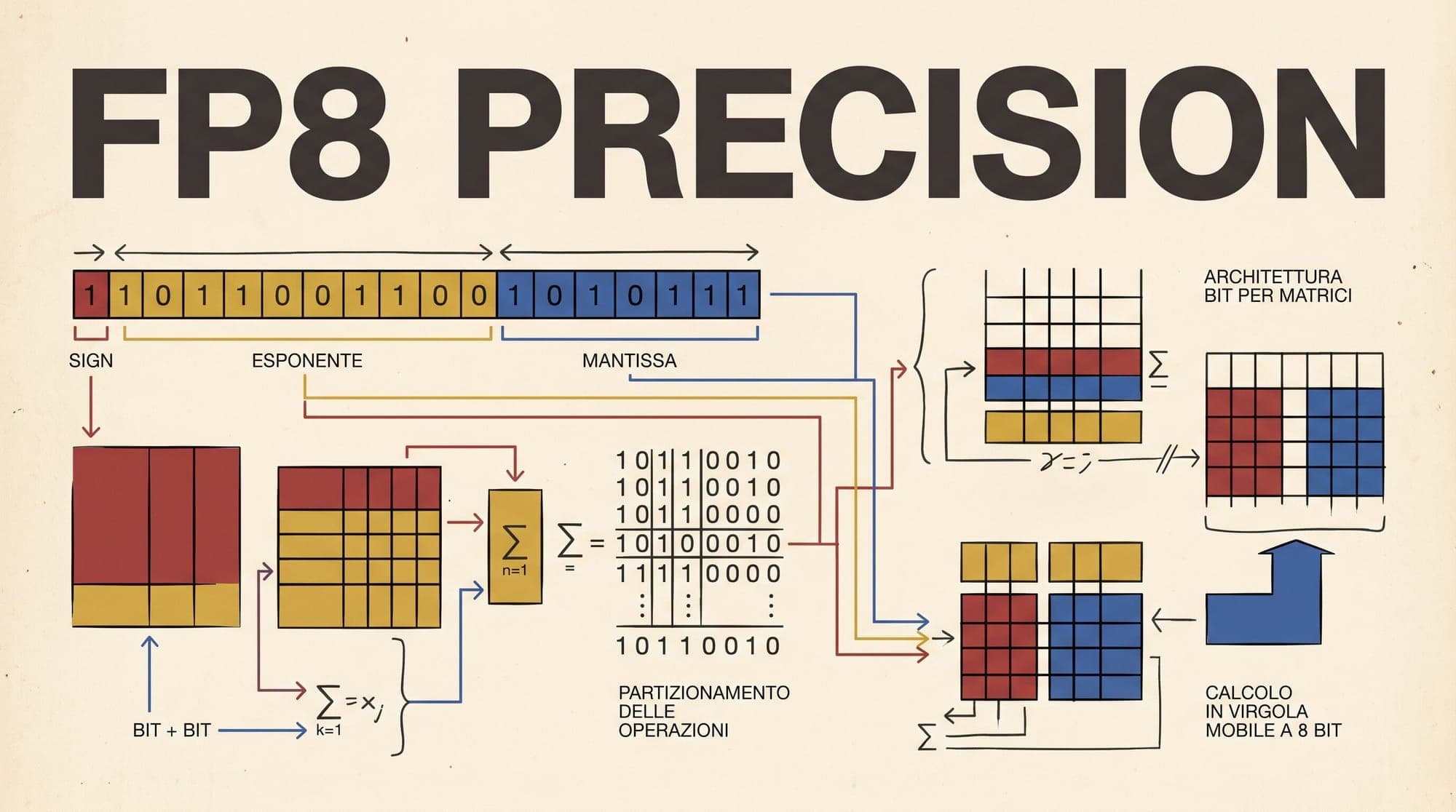
  10. FP8 Mixed-Precision Training: Formats, Scaling Recipes, and Fine-Grained GEMMs

    FP8 Mixed-Precision Training: Formats, Scaling Recipes, and Fine-Grained GEMMs Training frontier large language models requires navigating harsh memory bandwidth and compute boundaries. For years, 16-bit formats such as IEEE FP16 and Brain Floating Point (BF16) served as the standard arithmetic precision for deep learning workloads. While BF16 provided sufficient dynamic range to prevent gradient underflow without manual loss scaling, training clusters still spent substantial time bounded by me

    AI
    8 min read
  11. Cerebras Unveils CS-4 Rack-Scale System Powered by Three WSE-3 Turbo Chips and Nexus Architecture

    Cerebras Unveils CS-4 Rack-Scale System Powered by Three WSE-3 Turbo Chips and Nexus Architecture Cerebras Systems has announced the CS-4, a rack-scale AI accelerator system designed around three of its next-generation Wafer Scale Engine 3 Turbo (WSE-3 Turbo) chips and a modular hardware architecture dubbed Nexus. Cerebras confirmed that initial customer shipments for the CS-4 are scheduled to begin in the current quarter. The new system marks a structural shift from Cerebras's single-wafer CS

    Hardware
    2 min read
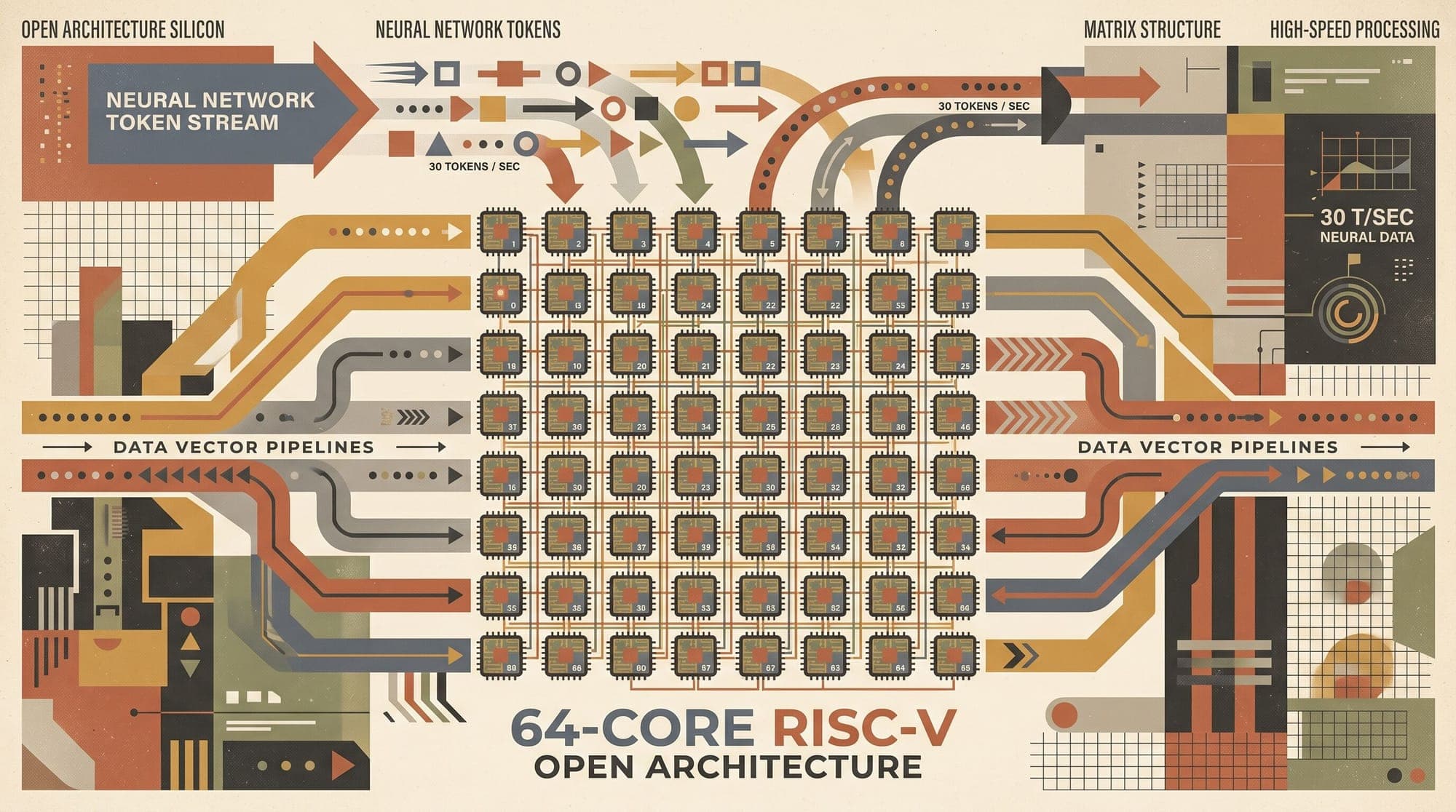
  12. Alibaba Demonstrates Native Qwen 3.8 27B Inference on XuanTie C950 RISC-V CPU at 30 Tokens per Second

    Alibaba's semiconductor division, T-Head, announced day-zero native inference support for its latest open-weight model, Qwen 3.8 27B, running directly on the XuanTie C950 RISC-V server processor. Operating without discrete graphics processing units, the 64-core RISC-V chip delivered sustained decode throughput of 30 tokens per second alongside a time-to-first-token latency of 1.9 seconds. Update, October 29, 2026: a developer has since gone the other way and compiled a 32-bit RISC-V CPU into th

    Hardware
    2 min read
  13. Local LLM Inference on Apple Silicon: Architecture, Unified Memory, and Serving Benchmarks for MLX, llama.cpp, and Ollama

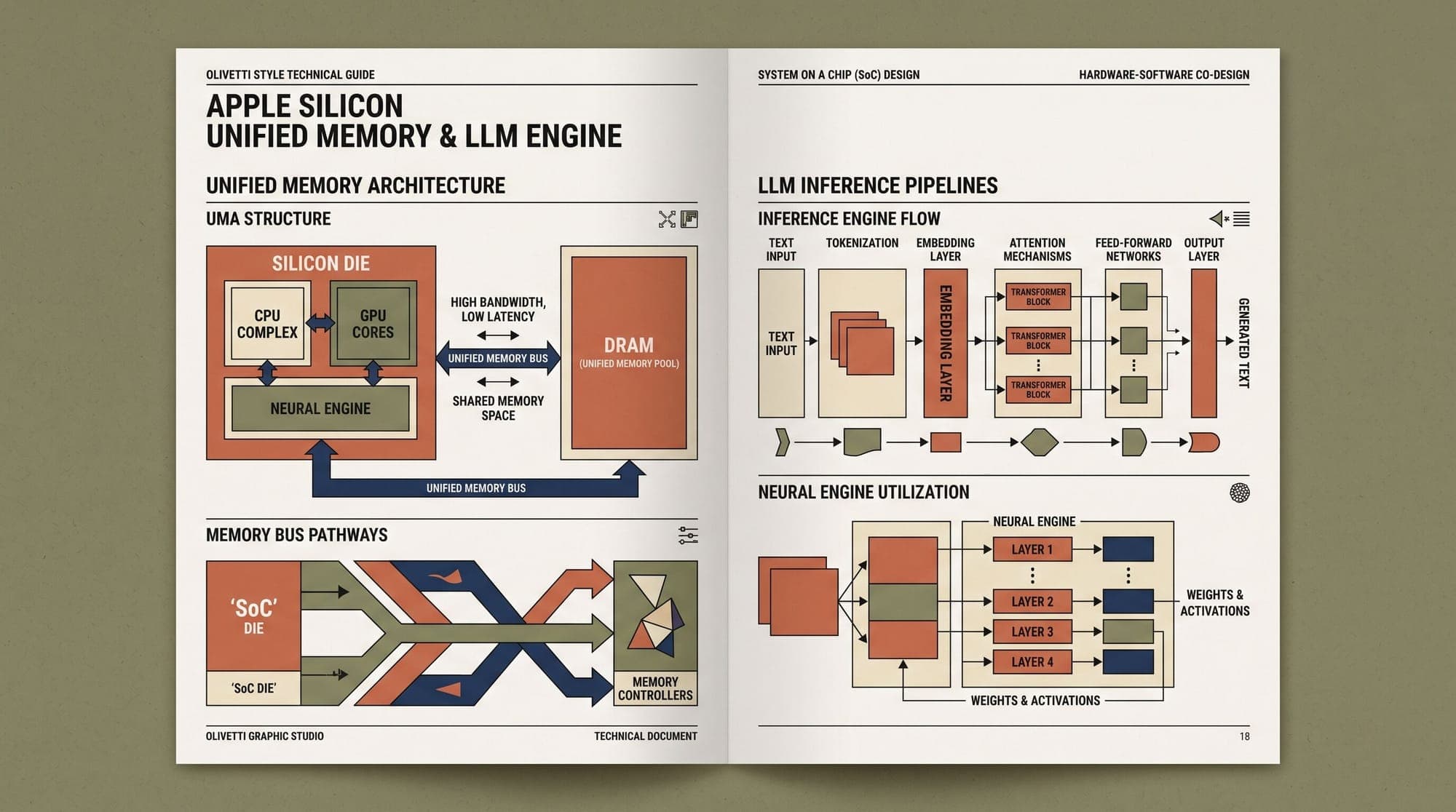
    Local large language model (LLM) serving on consumer hardware has historically faced a hard trade-off between memory capacity and execution bandwidth. Discrete consumer GPUs offer high memory bandwidth (up to 1,008 GB/s on an Nvidia RTX 4090) but are capped at 24 GB of VRAM, requiring model sharding or quantization to fit models beyond 14 billion parameters. Apple Silicon platforms bypass this capacity ceiling through a Unified Memory Architecture (UMA), where the CPU, GPU, and Apple Neural Eng

    LLM
    5 min read
  14. Velaura AI Raises $110M Series A at $1B Valuation for Low-Power AI Silicon

    Velaura AI Raises $110M Series A at $1B Valuation for Low-Power AI Silicon Velaura AI has closed a $110 million Series A funding round at a valuation exceeding $1 billion. The financing was led by Seligman Ventures, with participation from Capricorn Investment Group alongside existing backers including Samsung Catalyst Fund, StepStone Group, Maverick Silicon, Celesta Capital, and Mayfield. The capital will fund the commercialization and deployment of Velaura's silicon IP and physical design te

    AI
    3 min read
  15. Etched in Talks to Raise $700M Led by Jane Street at $21B Valuation

    AI inference chip startup Etched is in negotiations to raise $700 million in a new financing round led by existing investor Jane Street, according to reporting from The Wall Street Journal. The proposed financing would value the San Jose-based semiconductor company at approximately $21 billion. The planned round follows a $300 million Series C led by Sequoia Capital that valued the startup at $10.3 billion, effectively doubling its valuation within weeks amid intensifying enterprise demand for

    Hardware
    2 min read
  16. LG Partners with Nvidia on 10,000-Square-Meter Robot Data Factory Targeting 100,000 Training Hours

    LG Electronics hosted senior Nvidia leadership at its Yangjae R&D Campus in Seoul on August 18, 2026, advancing a joint initiative to build physical AI training pipelines and target 100,000 hours of embodied robotics data by the end of the year. The site review took place five days after LG Group and Nvidia signed a strategic memorandum of understanding at Nvidia headquarters in Santa Clara on August 13. The accelerated timeline reflects LG's effort to convert its industrial manufacturing infra

    Robotics
    2 min read
  17. FlashAttention: How IO-Aware Tiling and Online Softmax Solved Transformer Memory Bottlenecks

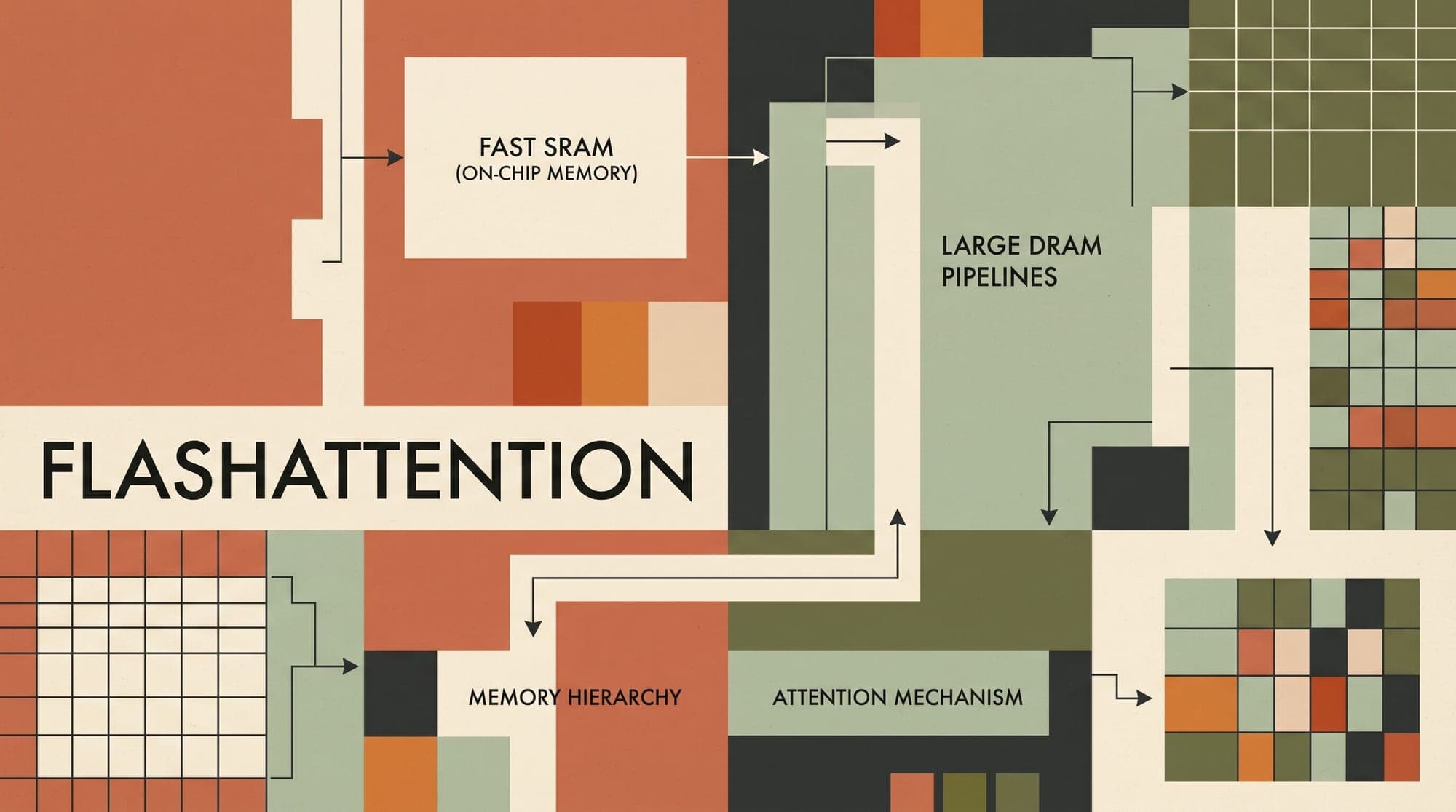
    Standard multi-head attention is the fundamental computational primitive of modern autoregressive language models. While mathematically straightforward, the operation introduces a severe operational bottleneck as context windows scale. Naive implementations of scaled dot-product attention exhibit quadratic memory complexity $O(N^2)$ and quadratic memory access costs, bounding sequence lengths and leaving modern GPU tensor cores severely underutilized. FlashAttention, introduced by Tri Dao, Dani

    AI
    7 min read
  18. Nvidia's Nemotron 4 aims for a trillion parameters, but China is already there

    Nvidia is building Nemotron 4, a new family of open-weight AI models meant to challenge the strongest freely available models, according to reporting by The Information cited by The Decoder. The largest model in the family is planned to reach at least one trillion parameters, twice the size of Nvidia's current Nemotron 3 Ultra. To train it, Nvidia has tripled its cloud spending on in-house model development to 28 billion dollars through 2031. The earliest the models could ship is this fall. C

    Nvidia
    1 min read
  19. Why DeepMind Researchers Are Leaving: Limited TPU Access, Bureaucracy, and a Chips Conflict

    As senior AI researchers continue to leave Google DeepMind, reporting is surfacing reasons behind the departures. Two recurring themes: limited access to Google's TPU chips, and a conflict of interest where Google Cloud sells those same chips to rivals the researchers are expected to beat. Semafor reported that CEO Demis Hassabis stepped back from daily operations about a year ago, turning those duties over to DeepMind chief Koray Kavukcuoglu. Hassabis was not forced out, but reportedly found m

    DeepMind
    2 min read
  20. AMD Acquires Taalas to Build Chips Hard-Wired for Specific AI Models

    AMD announced on August 6 that it has reached a definitive agreement to acquire Taalas, a Toronto-based startup that builds processors customized around individual AI models. The deal adds specialized inference silicon to AMD's accelerator portfolio, targeting a class of workloads where a model is fixed and the goal is maximum throughput at minimum cost. Taalas, founded in 2023, produces what it calls Hardcore Models: chips whose circuitry is laid out for one specific model's weights. The custo

    Hardware
    2 min read