AI Workflow Startup Relay Shuts Down as Team Joins Google Chrome to Build Browser Agents

AI-driven workflow automation startup Relay is shutting down its independent product operations, with founder and chief executive officer Jacob Bank and key engineering staff joining Google's Chrome division to develop browser-native AI agent capabilities. Relay, founded in July 2021 to compete with legacy workflow platforms like Zapier through generative AI integrations, raised $8.1 million across two venture funding rounds. The company phased out free tier access on August 15, 2026, and will

2 min
AI Workflow Startup Relay Shuts Down as Team Joins Google Chrome to Build Browser Agents

AI-driven workflow automation startup Relay is shutting down its independent product operations, with founder and chief executive officer Jacob Bank and key engineering staff joining Google's Chrome division to develop browser-native AI agent capabilities.

Relay, founded in July 2021 to compete with legacy workflow platforms like Zapier through generative AI integrations, raised $8.1 million across two venture funding rounds. The company phased out free tier access on August 15, 2026, and will officially terminate service for enterprise and paid customers on September 14, 2026.

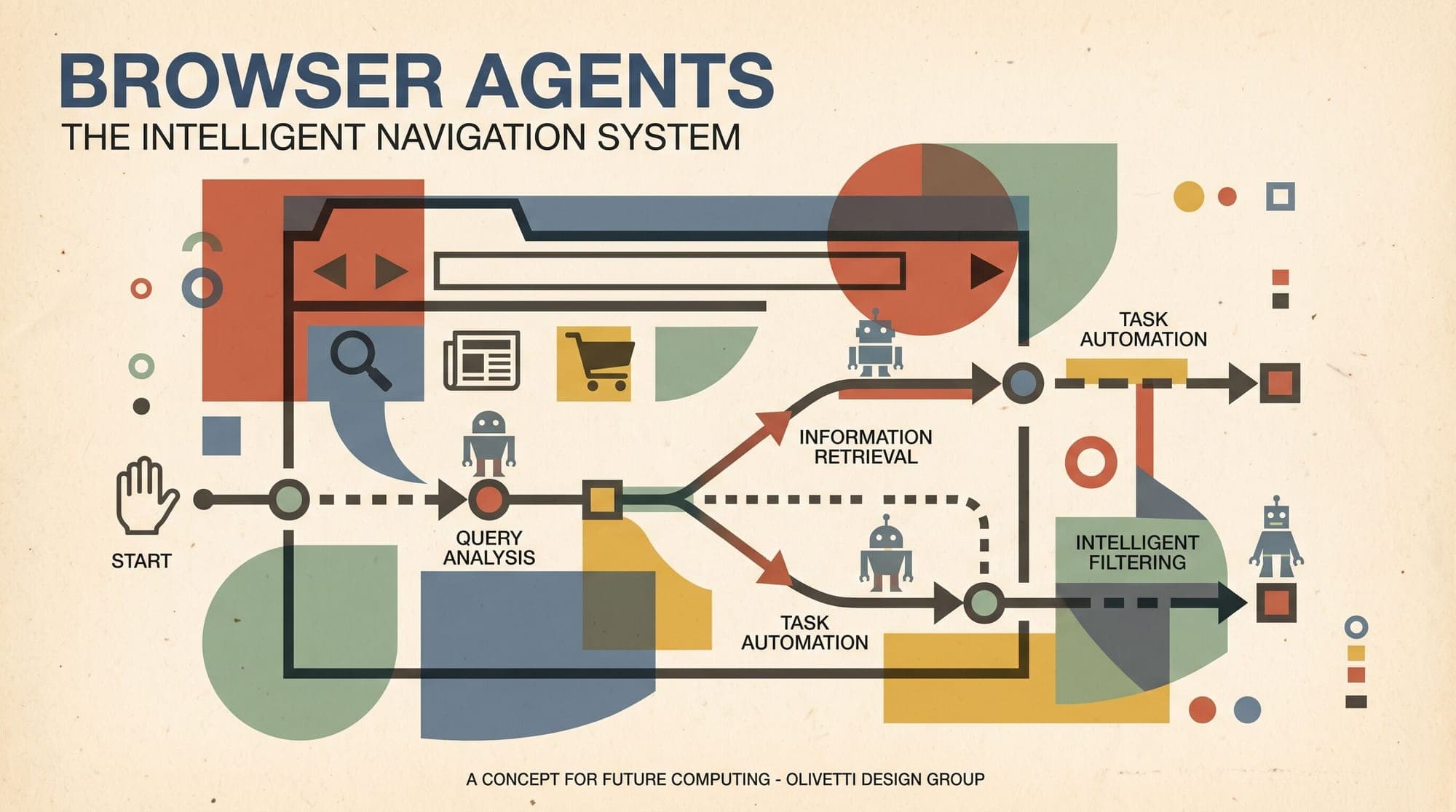
Browser Automation Workflows

Strategic Talent Re-Acquisition

The move marks a return to Google for Bank, who previously spent over six years at the technology company after Google acquired his calendar and scheduling startup, Timeful, in 2015. Bank later served as Director of Product Management for Google's consumer shopping products before departing in 2021 to establish Relay.

At Google, Bank takes on the role of Vice President of Product for Google Chrome, where he will oversee both core product development and developer relations teams. Rather than a formal corporate acquisition of Relay's codebase or platform assets, the transition operates as a targeted talent onboarding to lead Chrome's emerging agentic features.

Browser-Native Agent Integration

The transition comes as major technology vendors race to embed multimodal models and autonomous task execution directly into web clients. Google has increasingly positioned Gemini within Chrome, testing features ranging from automated form filling and cross-tab summarization to complex multi-step web navigation.

Integrating an experienced workflow orchestration team signals Google's intent to evolve Chrome from a passive rendering engine into an active environment where LLM agents can plan, authenticate, and execute actions across disparate web services on behalf of users.

Sources

Written by

More to read

  • Oxford Study Details Chinese Gray-Market Proxies Reselling Claude Tokens at 90% Discounts

    An investigation by the Oxford China Policy Lab reveals that Chinese developers routinely access Anthropic's frontier Claude models at discounts between 70% and 90% below list price, bypassing geographical blocks, payment filters, and biometric identity verification through a decentralized network of API proxies known locally as "transfer stations" (中转站). The analysis, authored by Oxford researcher Zilan Qian and published via ChinaTalk, outlines the modular supply chain and economic mechanics

    1 min
  • Low-Precision Quantization Kernels in Production: Comparing Marlin, ExLlamaV2, FlashInfer, and BitBLAS

    Low-Precision Quantization Kernels in Production: Comparing Marlin, ExLlamaV2, FlashInfer, and BitBLAS Architecture, Memory Bandwidth, and Decoding Throughput Autoregressive large language model (LLM) serving operates under two distinct compute regimes: a compute-bound prefill phase and a memory-bandwidth-bound decode phase. While processing the initial prompt involves matrix-matrix multiplications (GEMM) with high arithmetic intensity, generating tokens one by one requires matrix-vector multip

    1 min
  • xLSTM: How Exponential Gating and Matrix Memory Scale Recurrent Neural Networks

    xLSTM: How Exponential Gating and Matrix Memory Scale Recurrent Neural Networks For over two decades following its introduction by Hochreiter and Schmidhuber (1997), the Long Short-Term Memory (LSTM) network served as the dominant architecture for sequence modeling. By introducing the constant error carousel and multiplicative gating, LSTMs mitigated the vanishing gradient problem that plagued vanilla recurrent neural networks. However, the emergence of the Transformer architecture (Vaswani et

    1 min