
What One AI Image Actually Costs in Late 2026: Five Billing Meters, One Price List
Ask five image model vendors what a picture costs and you will get five different answers, not because the prices differ, but because the units differ. OpenAI and Google bill images as token streams. Black Forest Labs bills one product line per resolution tier and another per megapixel. Marketplaces like fal flatten everything to a per-image row. Replicate charges for GPU-seconds. None of these meters agree, and the headline price on any given page is usually the one closest to the vendor's preferred unit.
This post normalizes the late-2026 image API market to the two numbers a budget actually needs: one 1024x1024 image, and one 4K image, at each vendor's standard paid tier.
The meter matters more than the price
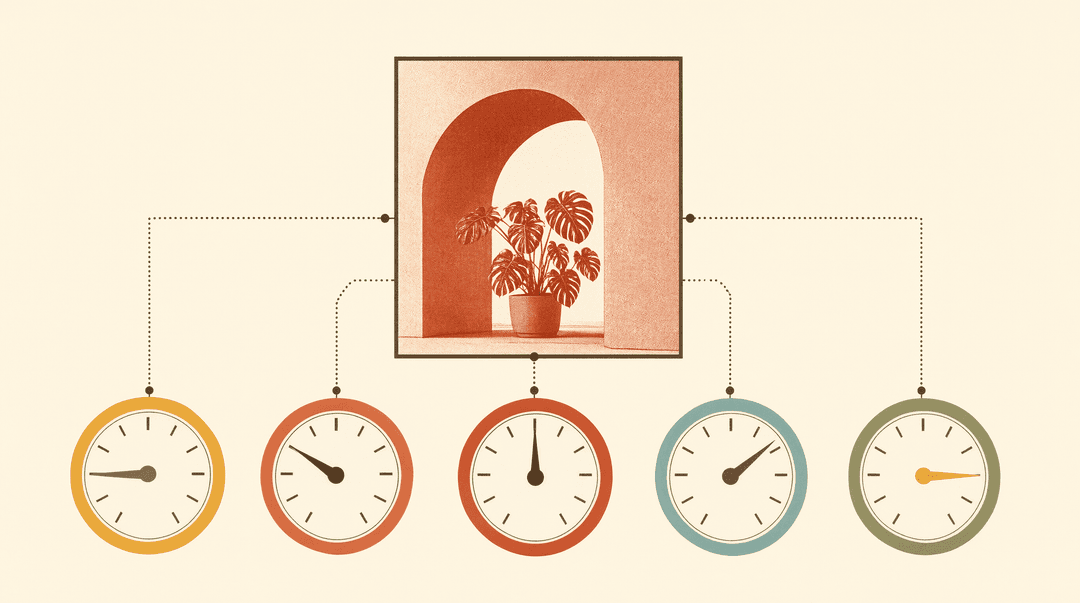
Token-metered (OpenAI, Google). GPT Image 2.6 (Sunburst and Flare) prices image output at $30 per million image tokens, with text input billed separately at $5 per million (OpenAI pricing). There is no fixed per-image price. A 1024x1024 image at medium quality costs roughly $0.025 according to OpenAI's own cost calculator, which estimated 823 output tokens for one such request (OpenAI image generation guide). Quality settings move this wildly: the predecessor GPT Image 2 ran $0.006 at low, $0.053 at medium, and $0.211 at high for the same square. OpenAI also charges an extra 100 image tokens per streamed partial image, and edit requests can burn more input tokens because gpt-image-2-class models process every input image at high fidelity.
Google bills the Nano Banana family the same way but publishes the conversion. Image output is $30 per million tokens on Nano Banana 2.1, and Google states outright that a 1K image consumes 1,120 tokens, which is $0.0336 per image (Google pricing). The same model is quoted at $0.0504 for 2K and $0.113 for 4K.
Per-megapixel (FLUX.2). Black Forest Labs' FLUX.2 line bills by megapixel rendered, so the price moves with the aspect ratio of the frame. FLUX.2 [pro] is $0.030 for the first megapixel plus $0.015 for each additional one; FLUX.2 [max] is $0.070 plus $0.030 (BFL pricing breakdown). A tall portrait and a wide banner at the same megapixel count cost the same; two images at nominally the same "resolution" label can cost different amounts if their rendered shapes differ.
Fixed resolution tiers (FLUX 3). FLUX 3, the newer line, abandons the megapixel meter for five flat per-image prices: $0.041 at 768px, $0.048 at 1K, $0.07 at 1.5K, $0.10 at 2K, and $0.607 at 4K (BFL pricing page, resolution table). Aspect ratio does not matter, and up to 10 reference images on an edit request carry no surcharge, which makes multi-reference composition the same price as a plain text prompt. The budget tier is the Klein variant: $0.008 to $0.009 at 768 and 1K, $0.036 even at 4K.
Per-image and per-second (marketplaces). fal normalizes its model APIs to per-image or per-megapixel rows, currently $0.0398 for Nano Banana, $0.08 for Nano Banana 2, and $0.15 for Nano Banana Pro, with FLUX.1 [schnell] at $0.003 per megapixel (fal pricing). Replicate bills GPU-seconds, so cost depends on the hardware pool, not the model's billing sheet.
Normalized: one square image, one 4K frame
At 1024x1024, standard tier, output only:
- FLUX 3 Image Klein: $0.009 (first billable megapixel; FLUX.2 [klein] 4B is $0.014)
- Nano Banana 2 Lite: $0.0336
- Nano Banana 2.1: $0.0336
- GPT Image 2.6 at medium, docs calculator estimate: about $0.025
- FLUX 3 Image: $0.048
- Nano Banana 2: $0.067
- Nano Banana Pro: $0.134
- GPT Image 2.6 at high quality: well above the medium estimate; the GPT Image 2 reference point was $0.211
At 4K the order flips in a way no per-1K comparison reveals: Nano Banana 2.1 is $0.113, Nano Banana Pro is $0.24, and FLUX 3 Image jumps to $0.607 because its top tier prices 16 megapixels as a premium product (tier table). The cheapest 1K vendor is not automatically the cheapest large-format vendor.
Two verification notes. First, published list prices are planning numbers, not invoices. OpenRouter billed its own API calls across providers in September 2026 and found real divergence: a model listed at $0.13 billed $0.064, and flux.2-flex listed at $0.06 per megapixel billed $0.05 for a one-megapixel image (OpenRouter comparison). Second, Google's Imagen line is no longer a separate purchase. Google's documentation states that Imagen is shut down in the Gemini API and folded into Nano Banana (Google image generation docs), so older price comparisons citing Imagen 4 are dead references.
What the per-image number excludes

Every price above is output-only. The real invoice adds:
- Input tokens. Edits and reference-workflow requests pay for input images. Google charges roughly $0.0011 per input image on Nano Banana Pro; OpenAI charges $8 per million image input tokens on GPT Image 2.6.
- Text tokens and thinking. Nano Banana Pro runs a default thinking process before rendering, billed at $12 per million text and thinking tokens on top of image output.
- Retries. The metric that matters in production is cost per accepted output, not cost per generation. A $0.014 model that needs three attempts to produce one usable image loses to a $0.048 model that lands on the first try, and prompt-failure rates are not published (APIDot analysis).
- Batch discounts. OpenAI's Batch endpoint halves image output to $15 per million tokens; Google's Batch API is a 50% reduction. For offline asset pipelines, the list price is a 2x penalty.
- Data residency. OpenAI adds a 10% uplift on regional processing endpoints for models released on or after March 5, 2026.
The takeaway
The image API market has no sticker price, only meters. If you generate squares at medium quality in volume, the realistic floor is around $0.01 per image on Klein-class models, most production teams land between $0.025 and $0.07 across GPT Image, Nano Banana, and FLUX, and premium editing or 4K work costs three to ten times that. Before committing to a vendor, run the same three prompts through each API for a week and compute cost per accepted output. The billing meter you can audit is the one on your own invoices.
Sources
- OpenAI API pricing
- OpenAI image generation guide, including cost calculator and historical per-image table
- Google Gemini API pricing (Nano Banana family)
- Google Gemini image generation docs (Imagen shutdown notice)
- Black Forest Labs pricing page
- Layer3 Labs FLUX 3 pricing rates, October 2026
- Trezalabs FLUX.3 Image rate tiers and billing notes
- fal pricing page
- OpenRouter: image generation models compared, measured bill data
- APIDot: AI image API pricing 2026, accepted-output framing
