
Every frontier model launch arrives with a leaderboard slide, and every slide looks different. One model tops the math benchmarks, another the coding ones, a third wins the human-preference arena, and the ranking can flip entirely when the questions come from real traffic instead of curated exams. Vendors present this as breadth. A 1997 mathematical result presents it as inevitability.
The no free lunch theorems, proved by David Wolpert for machine learning and, with William Macready, for optimization, say that when you average performance over all possible problems, every algorithm does exactly as well as every other one. Random guessing included. Any advantage an algorithm has on one class of problems is paid for, in full, by disadvantage on another class. Nothing about the mathematics is vague about this: it is an equality, not a metaphor.
That single fact underlies why benchmark rankings disagree, why optimizer debates never resolve, and why "the best model" is a phrase that is always missing its second half: best for what distribution of problems?
What the theorems actually say
The learning result appears in Wolpert's 1996 paper The Lack of A Priori Distinctions Between Learning Algorithms. The setting is clean: a learner sees part of an unknown function and must predict its values on points it has not seen. Wolpert's conclusion is that if you hold nothing else fixed, no learner has better expected off-training-set error than any other. Not a gradient-boosted forest, not a transformer, not the algorithm that flips a coin.
The optimization result appears in Wolpert and Macready's 1997 paper in IEEE Transactions on Evolutionary Computation, written when evolutionary-algorithm papers routinely claimed one search heuristic dominated another. Their framing: for any algorithm, "any elevated performance over one class of problems is exactly paid for in performance over another class." Averaged uniformly over all cost functions, the sequence of values any search algorithm observes is independent of the algorithm, so every search strategy has identically distributed performance.
The intuition is worth sitting with. When you have observed 1,000 points of a function and know nothing about the function, the remaining points are, across the space of all functions, exactly as likely to follow any pattern as any other. Every interpolation you can imagine has as many functions in the universe contradicting it as supporting it. A clever learner and a blind guesser both merely describe what they saw; what they say about unseen points cancels out on average.

What the theorems do not say
The pop-science reading, "no algorithm is ever better than any other," is wrong in the direction that matters. The averaging is over all possible problems, and that universe is dominated by noise.
Wolpert himself has been emphatic about this. In his essay What the No Free Lunch Theorems Really Mean, prepared for the Springer volume Black Box Optimization, Machine Learning and No-Free-Lunch Theorems, he writes that the theorems matter because of what they imply about non-uniform distributions over problems and about the assumptions you must make to compare algorithms at all. One corollary he highlights is that anti-cross-validation, picking the candidate model that performed worst out-of-sample, matches cross-validation on average unless you assume past out-of-sample behavior predicts future behavior, which is exactly the assumption the selection method was supposed to avoid needing.
A 2023 paper by Goldblum and three co-authors sharpens the point with Kolmogorov complexity. Almost every uniformly sampled dataset is incompressible noise, where learning is impossible by construction, so the uniform average silently restricts the theorem to the worst case for everyone. Real-world problems, by contrast, generate disproportionately low-complexity data, and the theorem constrains only learners that refuse to assume anything. The free lunch exists precisely for algorithms whose biases match the structure of the problem distribution.
This is why the no free lunch name invites confusion rather than despair. The theorem is a statement about the price of assumptions, not the impossibility of good algorithms.
The optimizer fight is the theorem in miniature
The clearest modern case study is older than LLMs but reads like a template for current debates. In 2017, Wilson and four co-authors (NeurIPS) showed that on simple overparameterized classification problems, adaptive optimizers like Adam could attain test error near 50 percent while plain SGD reached zero, even when Adam had better training loss. The practical claim: the optimizer that wins your training curve is not guaranteed to win your generalization curve, and the result provoked years of back-and-forth papers.
NFL predicted the shape of that fight. Every subsequent study finding "Adam beats SGD here, SGD beats Adam there" is theorems, not surprises. Each method embeds a different inductive bias about the loss landscape; each bias pays for its wins on some class of problems. There is no distribution-free answer to which optimizer is better, and the argument continues in every training run that quietly hand-tunes betas.
LLMs made the theorem a product problem
In 2026 the same structure decides news cycles.
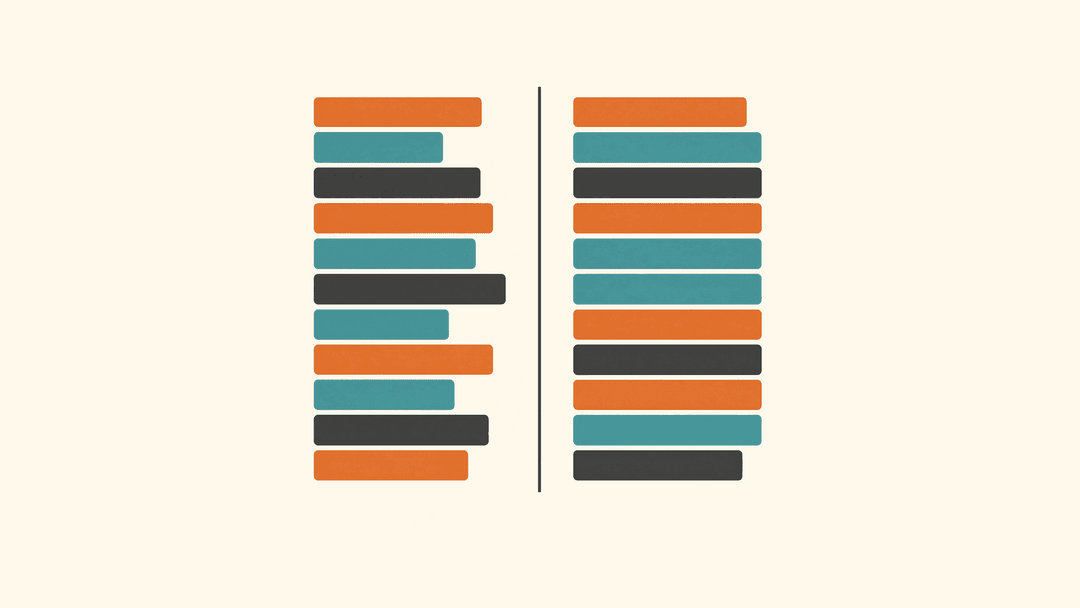
Holistic Evaluation of Language Models (Stanford, 2022) documented how fragmented evaluation had become: before HELM, models were tested on 17.9 percent of its core scenarios on average, and some prominent models shared not a single benchmark with each other. When the authors ran all 30 models across all 42 scenarios with 7 metrics each, the headline finding was trade-off structure: leaders on accuracy routinely placed mid-pack on calibration, robustness, or efficiency. Multi-metric evaluation exists precisely to expose that "best model" claims hide their averaging.
Chatbot Arena (LMSYS, 2024) then showed the same instability from the human side: rankings built from 240,000-plus pairwise votes track real user preferences, and those preferences re-sort the leaderboard relative to static benchmarks. The Elo math behind the arena is a separate story, but the lesson is the same: different problem distributions, different winners. When a lab says it tops the leaderboard, the honest follow-up question is which leaderboard, over which class of problems, with what priors baked into the model's training mix.
Model routing and cascades, now standard production practice, are the engineering response to NFL: since no single model wins everywhere on a workload, spend against the distribution you actually have, cheap specialist for routine traffic, frontier for the hard tail.
The Bitter Lesson, read through the no free lunch lens
There is an apparent contradiction sitting in every AI discourse thread. Sutton's Bitter Lesson argues that general methods that scale with compute beat hand-coded structure. The no free lunch theorems say generality with no assumptions buys nothing at all.
The two ideas fit once you notice what the bet actually is. General methods won because the distribution of real problems is not uniform. Search and learning scale with compute only on problems with exploitable structure, and the languages, images, and games scaling methods conquer are exactly the low-complexity, statistically regular corners of function space that Goldblum and co-authors formalize. The bitter lesson is not a counterexample to NFL. It is an empirical claim about the prior over worlds, a claim NFL says you always have to be carrying. The labs that scaled hardest are the ones whose bet on the shape of reality paid off, not the ones who needed no assumptions.
What to take from it
Three habits of reading follow directly from theorems that are 29 years old this month.
First, treat every "state of the art" claim as indexed to a problem class. "Model X beats Y" is incomplete without "on tasks drawn from distribution D." Benchmark cherry-picking is not new; NFL names the exact move being made, claiming elevated performance on one class while staying silent about the offset.
Second, remember that inductive bias is where all actual gains live. Architecture choices, training mix, retrieval, guardrails: each is an assumption about the problem distribution, and the wins are real precisely because real problems share structure. Cross-validation on your own traffic beats any distribution-free claim about which method is better.
Third, expect the ranking to flip. The mathematics guarantees that any leaderboard averaging over the wrong distribution mispredicts your workload. That is not a flaw in the benchmarks. It is a theorem, and it is nearly thirty years old.
Sources
- David H. Wolpert, The Lack of A Priori Distinctions Between Learning Algorithms, Neural Computation 8(7), 1996
- David H. Wolpert and William G. Macready, No Free Lunch Theorems for Optimization, IEEE Transactions on Evolutionary Computation 1(1), 1997
- David H. Wolpert, What the No Free Lunch Theorems Really Mean, essay in Black Box Optimization, Machine Learning and No-Free-Lunch Theorems (Springer), arXiv 2007.10928
- The No Free Lunch Theorem, Kolmogorov Complexity, and the Role of Inductive Biases in Machine Learning, Goldblum et al., arXiv 2304.05366
- Andrew L. Wilson et al., The Marginal Value of Adaptive Gradient Methods in Machine Learning, NeurIPS 2017
- Rishi Bommasani et al., Holistic Evaluation of Language Models, arXiv 2211.09110
- Chatbot Arena: An Open Platform for Evaluating LLMs by Human Preference, LMSYS, arXiv 2403.04132
- Rich Sutton, The Bitter Lesson, 2019
- No free lunch theorem, Wikipedia, and no-free-lunch.org reference archive
