

The largest private-credit deal in US history is tied to a data center campus in Richland Parish, Louisiana, that most of Meta's own shareholders will never find on Meta's balance sheet.
In October 2025, Meta and funds managed by Blue Owl Capital finalized a joint venture to build the Hyperion campus, a project with roughly $27 to $30 billion in development costs. Blue Owl's funds own 80% of the venture, Meta owns 20%. The venture, a bankruptcy-remote special purpose vehicle called Beignet Investor LLC, priced about $27.3 billion of senior secured notes due 2049 at a 6.581% coupon, rated A+ by S&P, with PIMCO anchoring roughly $18 billion of the debt and Morgan Stanley acting as sole bookrunner. Meta leases the finished campus back. Its financial statements record the equity stake and the lease, not the $27 billion of project debt. Days after the deal closed, Meta separately raised $30 billion in corporate bonds.
That structure was copied at least three times within nine months. The Financial Times counted more than $120 billion of data center spending moved off tech company balance sheets through special purpose vehicles by late December 2025, with Meta, xAI, Oracle and CoreWeave at the front of the line and PIMCO, BlackRock, Apollo, Blue Owl and JPMorgan supplying the capital. In July 2026, BlackRock sold $12.5 billion of bonds for Project Sopaipilla Holdings, an 80/20 BlackRock-Meta joint venture funding a 1-gigawatt campus in El Paso, this time collateralized by 20 years of Meta rent payments starting in 2028 rather than by physical assets.
Why cash flow stopped covering capex
The shift has a simple arithmetic cause. The four largest hyperscalers spent a record $381 billion of capital expenditure in 2025 and are forecast to spend about $700 billion in 2026, according to CNBC's tally of company guidance. Analysts expect Amazon's free cash flow to run negative by as much as $28 billion this year and Alphabet's and Meta's free cash flow to drop roughly 90%. Meanwhile, estimates collected in a Quinn Emanuel litigation review put 2025 AI product revenue near $60 billion against roughly $400 billion of buildout spending, and peg about $1.5 trillion of external financing as needed across the AI ecosystem by 2028.
So the money moved to debt markets. Hyperscalers issued $108 billion of bonds in 2025 and $194 billion already in 2026, per Goldman Sachs' credit strategists. Counting the wider ecosystem (data center operators, neoclouds, chip suppliers), Goldman tracks nearly $500 billion of AI-related debt issuance in 2026 alone, and only about 40% of it comes from hyperscaler corporates. Morgan Stanley expects $250 to $300 billion of investment-grade issuance in 2026 from hyperscalers and their building joint ventures, and has estimated private credit could supply more than half of the roughly $1.5 trillion needed for global data center buildout through 2028. The Bank for International Settlements put it bluntly in January: the AI boom is moving from cash-flow financing to debt financing.
The four lanes of the capital stack
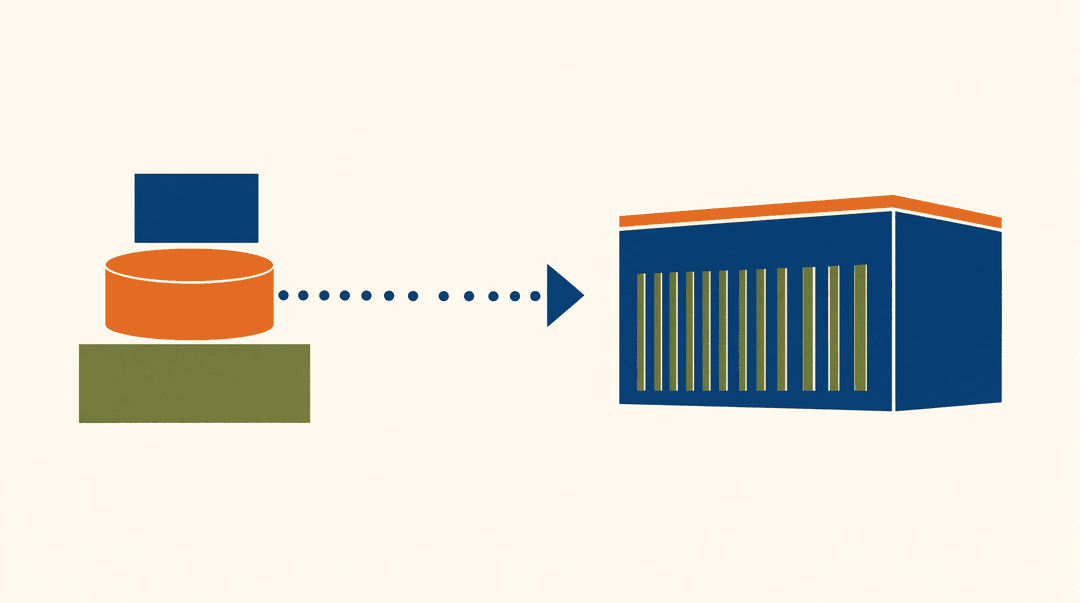
Corporate bonds. The direct lane. Oracle sold $18 billion of publicly traded bonds in a single day in September 2025 to fund its OpenAI data center commitments. Meta's $30 billion October raise sits here too. This debt is visible and expensive but rating-agency-tested.
SPV and joint-venture finance. The Hyperion and El Paso lanes. A vehicle, co-owned with a private-credit sponsor, raises debt and equity and leases the asset back to the tech company. Oracle's variant: about $13 billion from Blue Owl and JPMorgan ($10 billion of it debt) into a vehicle owning the Abilene, Texas facility, a reported $38 billion debt package funding two sites in Texas and Wisconsin, and an $18 billion bank loan for a New Mexico site.
Leases with backstops. The developer raises the money and the hyperscaler signs a lease, sometimes with a credit enhancement. In October 2025, former bitcoin miner TeraWulf sold $3.2 billion of 7.75% high-yield bonds (rated Ba2/BB, reportedly $10 billion of orders) to build a New York facility that Fluidstack leases for GPU clusters. Google agreed to backstop Fluidstack's lease obligations. The backstop only attaches after construction completes and leases commence. Fitch, the rating agency on that deal, called the construction schedule "a bit aggressive."
GPU-collateralized lending. The neocloud lane. CoreWeave's $7.5 billion facility uses the chips themselves as collateral. This is the thinnest cushion in the stack: H100 rental prices have fallen roughly 70 to 90% since 2023, per the same Quinn Emanuel survey, and lenders and engineers disagree about whether a GPU's useful life is three years or six.
The accounting that keeps it off the books
None of this requires breaking rules. It requires following them precisely.
Under US GAAP, a lease liability is recorded when the lease commences. Leases signed for data centers that do not exist yet, which is most of the pipeline, are disclosed in footnotes instead of booked as liabilities. Renewal periods only count as debt if renewal is "reasonably certain," a threshold described in the accounting literature as above roughly 70% probability. AI hardware has a useful life of four to six years, so hyperscalers negotiate short initial terms with renewal options, and can argue in good faith that they are not reasonably certain to renew. Residual value guarantees, which promise landlords compensation if the building is worth less than an agreed number at lease end, need not be recorded unless a payout is "probable."
Moody's ran the arithmetic on the five largest US hyperscalers (Amazon, Meta, Alphabet, Microsoft, Oracle): $969 billion of undiscounted future lease payments at the end of 2025, of which $662 billion had not yet commenced and therefore sat entirely off the balance sheet. That unrecorded $662 billion equals about 113% of the five companies' most recent adjusted debt. Alphabet's Q3 2025 10-Q disclosed $42.6 billion of not-yet-commenced data center lease payments, up from $23.9 billion one quarter earlier. Meta disclosed a lease starting 2029 worth roughly $12.3 billion alongside a residual value guarantee with an aggregate threshold of $28 billion, for which no liability was recorded because payout is not deemed probable.
Moody's has been publishing warnings since early 2026. In February it noted that current rules "may lead reported liabilities to materially understate" true obligations and said it may make a non-standard adjustment to its own adjusted-debt figures. In September 2026 it titled a sector study "Hyperscalers' balance sheets do not yet reflect trillions in future commitments." IFR reported that a Moody's opinion warning of "material" credit deterioration for companies using the lease route has threatened to derail off-balance-sheet deals. S&P's October 2025 opinion on the Hyperion structure, which blessed the off-balance-sheet treatment despite Meta's guarantees, is now cited in every deal pitch, and every rating agency is quietly revisiting it.
The BIS calls the category "shadow borrowing": obligations economically akin to debt that largely reside outside corporate balance sheets, linking hyperscalers to private credit funds and insurers, with banks providing credit lines to the vehicles themselves.

Where the risk actually went
Not away. Sideways.
Private credit lending to AI-related sectors passed $200 billion in early 2026, roughly 8% of the market, and the FSB found the AI-related share of private credit deals hit 34% in 2025 against a 17% five-year average. The upstream capital in those funds belongs to pensions, insurance companies and, through insurance-dedicated vehicles, policyholders. Concentration is the structural problem: a single customer, OpenAI, has made long-term commitments totaling some $1.4 trillion across vendors (Sam Altman's figure for 30 gigawatts of capacity, repeated through 2026 as the company lifted planned compute spend through 2030 to about $750 billion). Lenders across dozens of nominally independent SPVs hold claims that are, in effect, bets on the same counterparty.
The market has started repricing that. The Hyperion notes cleared in October 2025 at about 225 basis points over Treasuries. Nine months later, BlackRock's El Paso bond for Meta priced at a 7.534% yield, near junk territory for investment-grade paper, and Hyperion's own bonds were trading around 96 cents on the dollar the week of that sale, per Bloomberg. Bloomberg's headline for the moment was blunt: the AI bond binge has entered a new era of weak demand and sky-high costs.
Litigation has started too, which is usually the reliable late-cycle indicator. An Ohio pension fund sued Oracle in January 2026, alleging insufficient risk disclosure ahead of its September 2025 bond sale. A CoreWeave securities class action filed the same month centers on undisclosed data center construction delays. Four US senators (Warren, Blumenthal, Van Hollen and Smith) wrote to Treasury in January 2026 asking regulators to examine the sector's turn to "complex and opaque debt markets."
What to watch
If you want an early read on whether this ends in a write-down, skip the earnings calls and watch three things. One: the footnote line items. Leases-not-yet-commenced disclosures grew faster than any on-balance-sheet number last year; that is the actual buildout in accounting terms. Two: pricing at the margin. Every new SPV bond deal is a verdict, and the spread sequence from 225 basis points to 7.5% happened in nine months. Three: rating agency behavior. Moody's has said it may start treating contingent lease guarantees as debt in its own adjusted figures. When an adjusted-debt number moves before a balance sheet does, the market has already repriced, it just has not filed the paperwork.
The buildings are real, the chips are real, and the interest payments will be real. They are just scheduled to arrive on statements that do not exist yet, issued by companies that mostly do not exist yet either.
Sources
- Fortune: Moody's flags $662 billion risk at the heart of the data center build-out (Feb 2026) - https://fortune.com/2026/02/25/hyperscaler-risk-off-balance-sheet-662-billion-data-center-commitments-meta-amazon-microsoft-oracle-alphabet/
- Meta Investor Relations: joint venture announcement for Hyperion (Oct 2025) - https://investor.atmeta.com/investor-news/press-release-details/2025/Meta-Announces-Joint-Venture-with-Funds-Managed-by-Blue-Owl-Capital-to-Develop-Hyperion-Data-Center/default.aspx
- IFR: Moody's opinion threatens to derail off-balance-sheet data centre deals - https://www.ifre.com/bonds/2390941/moodys-opinion-threatens-to-derail-off-balance-sheet-data-centre-deals
- Financial Times: Tech groups shift $120bn of AI data centre debt off balance sheets (Dec 2025) - https://www.ft.com/content/0ae9d6cd-6b94-4e22-a559-f047734bef83
- Bloomberg: BlackRock Raises $12.5 Billion of Debt for Meta Data Center (Jul 2026) - https://www.bloomberg.com/news/articles/2026-07-27/blackrock-raises-12-5-billion-of-debt-for-meta-data-center
- Capacity: Meta's $12bn El Paso bond exposes AI debt repricing (Jul 2026) - https://capacityglobal.com/news/metas-12bn-el-paso-bond-exposes-ai-debt-repricing
- CNBC: Tech AI spending may approach $700 billion this year (Feb 2026) - https://www.cnbc.com/2026/02/06/google-microsoft-meta-amazon-ai-cash.html
- Quinn Emanuel: Financing the AI Infrastructure Boom, Emerging Litigation Risks in AI Data Centers - https://www.quinnemanuel.com/media/4dzkfccz/client-alert-ai-data-center-financing-and-litigation-risks.pdf
- Goldman Sachs Exchanges: How AI Debt Is Reshaping Credit Markets - https://www.goldmansachs.com/insights/goldman-sachs-exchanges/how-ai-debt-is-reshaping-the-credit-market
- BIS Bulletin No. 120: Financing the AI boom, from cash flows to debt (Jan 2026) - https://www.bis.org/publ/bisbull120.htm
- BIS Quarterly Review (Mar 2026): Financing the AI infrastructure boom, on- and off-balance sheet borrowing - https://www.bis.org/publications/qr-202603/financing-ai-infrastructure-boom-on-and-off-balance-sheet-borrowing
- FSB: Report on Vulnerabilities in Private Credit (May 2026) - https://www.fsb.org/uploads/P060526.pdf
- Moody's: Hyperscalers' balance sheets do not yet reflect trillions in future commitments (Sep 2026) - https://www.moodys.com/web/en/us/insights/credit-risk/data-centers.html
- Reuters: OpenAI chairman Altman on $1.4 trillion, 30 gigawatts (Oct 2025) - https://www.reuters.com/sustainability/land-use-biodiversity/altman-touts-trillion-dollar-ai-vision-openai-restructures-chase-scale-2025-10-29
- Reuters: Oracle sued by bondholders over losses tied to AI buildout (Jan 2026) - https://www.reuters.com/legal/oracle-sued-by-bondholders-over-losses-tied-ai-buildout-2026-01-14/
- US Senators letter to Treasury Secretary on AI debt (Jan 2026) - https://www.banking.senate.gov/imo/media/doc/20260122_final_letter_to_secretary_bessent_re_ai_debtpdf.pdf
- MTS: Hyperion SPV ($27.3B), Annotated - https://drops.mts.now/ai-capex/wiki/documents/hyperion-spv
- Bloomberg (via Energy Now): The $3 Trillion AI Data Center Build-Out Becomes All-Consuming for Debt Markets (Feb 2026) - https://energynow.com/2026/02/the-3-trillion-ai-data-center-build-out-becomes-all-consuming-for-debt-markets
- Yahoo/WSJ report: OpenAI lifts planned compute spending to $750 billion through 2030 - https://finance.yahoo.com/technology/ai/articles/openai-lifts-planned-compute-spending-144917731.html
