
In late November 2020, the results of CASP14, the biennial competition where protein structure predictors are graded against freshly solved experimental structures, were announced. A DeepMind system called AlphaFold 2 posted a median score of 92.4 GDT across all targets, an average positional error of roughly 1.6 angstroms, about the width of an atom. On the hardest free-modelling targets it still scored 87.0 median GDT. Nothing in the competition's history had produced a margin like that. Within months, structural biologists were using the word "solved" about a 50-year-old problem, carefully, and then loudly.
This is what AlphaFold is, how it works, and what it has and has not actually accomplished.
The problem it attacked
Proteins are chains of amino acids that fold into specific three-dimensional shapes, and the shape largely determines the job: catalyzing a reaction, carrying a molecule, forming a structure in a cell. Understanding a protein without knowing its shape is like describing a machine by its parts list.
Two old ideas frame the difficulty. In 1972, Christian Anfinsen won a share of the Nobel Prize in Chemistry for the hypothesis that a protein's amino acid sequence fully determines its folded structure, in principle. That made sequence-to-structure prediction look like a fair target. But in 1969, Cyrus Levinthal had noted that a typical protein could theoretically arrange itself in something like 10^300 different conformations; brute-force search through them would take longer than the age of the universe. Proteins fold spontaneously in milliseconds or less, guided by local interactions, so the search is not brute force. Predicting the landing spot from the sequence anyway defeated every attempt for decades.
Meanwhile, the shapes themselves were being catalogued slowly, one grueling project at a time, by X-ray crystallography, NMR spectroscopy and cryo-electron microscopy. By the time AlphaFold 2's Nature paper appeared, the experimental archive (the Protein Data Bank) held roughly 170,000 structures. Researchers had identified on the order of 200 million protein sequences. The gap between the two is the reason AlphaFold mattered.
How it works
AlphaFold 2 takes a protein's amino acid sequence and returns 3D coordinates for its atoms in minutes. The architecture borrows two ideas and combines them with transformers.
The first idea is evolutionary. The system builds a multiple sequence alignment: it searches huge protein sequence databases for relatives of the input and lines the matches up. Positions that have stayed the same across millions of related proteins are structurally important; pairs of positions that mutate together tend to touch in the folded shape. DeepMind's training relied in part on its own curated database, the Big Fantastic Database, built by clustering 2.5 billion sequences. In the paper's ablations, removing the BFD and Mgnify sequence sources cost 6.1 GDT of mean accuracy on CASP targets, the difference between a useful prediction and a failed one on many proteins.
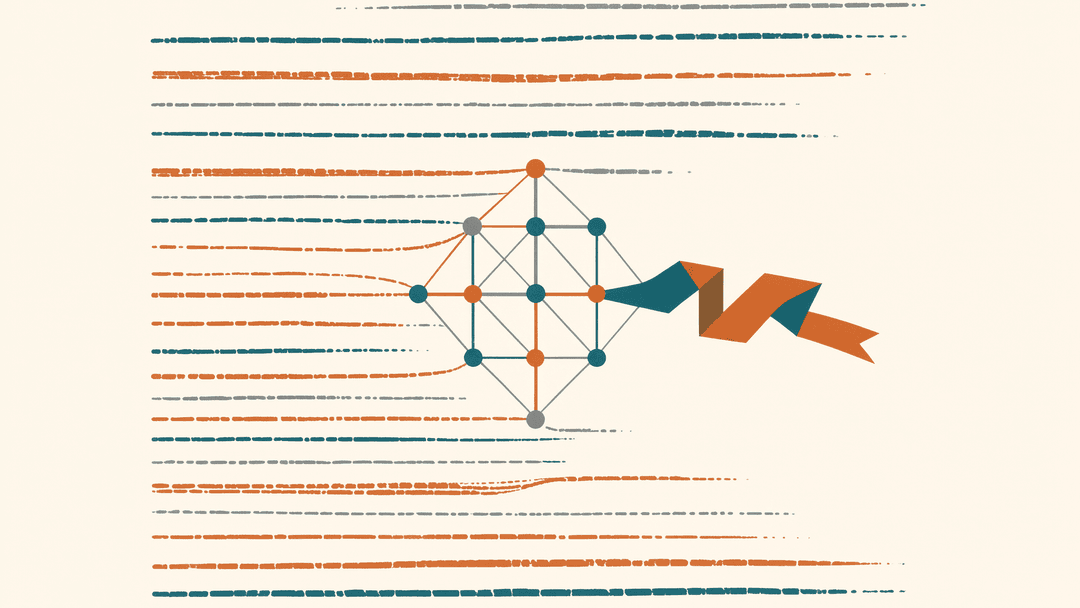
The second idea is geometric. A neural network called the Evoformer alternates between two representations, one for the alignment rows and one for every pair of residues, feeding information back and forth so the evolving guess about contacts informs the alignment processing and vice versa. A structure module then turns the final representation into actual atomic coordinates. The paper reported a median backbone accuracy of 0.96 angstroms on CASP14 domains against 2.8 angstroms for the next-best method, and the assessors judged the predictions competitive with experiment for a majority of targets.
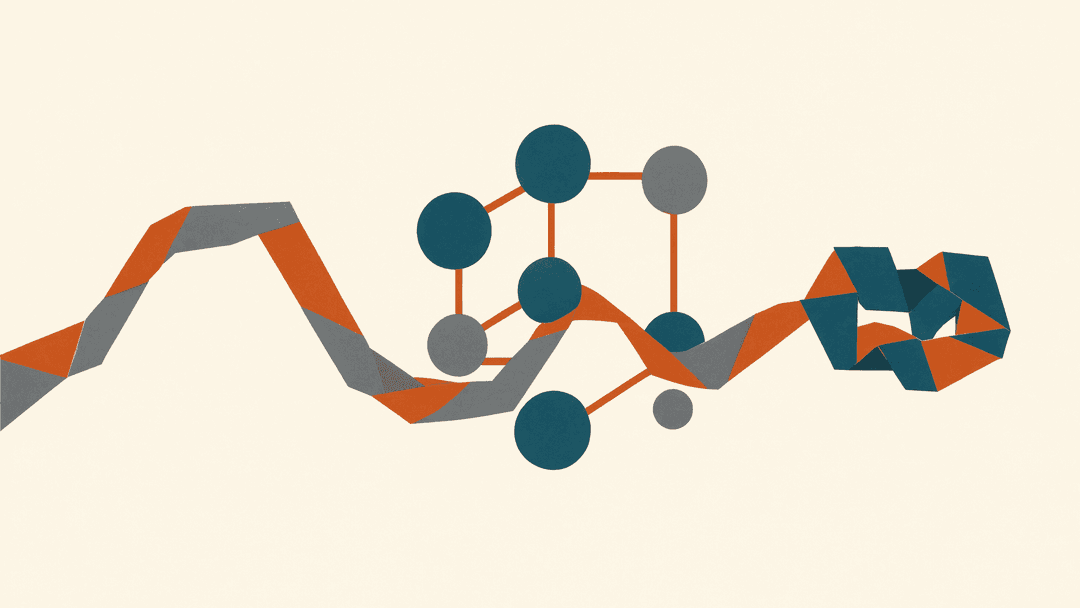
Every prediction ships with its own confidence report. A per-residue pLDDT score from 0 to 100 marks local quality (above 90 is generally crystal-comparable), and a predicted aligned error matrix describes how confidently one part of the protein sits relative to another. That matters more than it sounds: a region AlphaFold scores below 50 is usually not a wrong fold but a protein that has no single fixed shape, an intrinsically disordered segment, and low confidence there is evidence of disorder rather than failure.
The open-source decision and the database
Two choices turned a competition win into infrastructure. DeepMind published the full AlphaFold 2 method in Nature in July 2021 and released the code, now maintained on GitHub with Apache 2.0 licensed code and CC BY 4.0 model parameters. And it partnered with EMBL-EBI to launch the AlphaFold Protein Structure Database, free for anyone, starting in July 2021 with about 360,000 predicted structures covering the human proteome and 20 model organisms.
In July 2022 the database absorbed nearly all of UniProt: more than 200 million predicted structures, an expansion of roughly 200 times, covering almost every organism whose genome had been sequenced. By its 2024 database-paper update it passed 214 million entries. The Nobel committee noted in October 2024 that AlphaFold2 had by then served more than two million users in 190 countries; DeepMind now puts it above three million. The spin-off ecosystem (the Lasker award citation and the Nobel press release both list applications from antibiotic resistance to plastic-degrading enzymes) grew up on this free data layer. ColabFold, published in Nature Methods, cut the pipeline down to run on commodity hardware and free notebooks, which is when adoption stopped being a matter for specialist labs.
AlphaFold 3 went backward, sort of
AlphaFold 3, published in Nature in May 2024, changed the architecture: a simplified trunk called the Pairformer feeds a diffusion module that generates raw atom coordinates directly, the same denoising trick behind modern image models. That generalizes the system beyond proteins. AF3 predicts joint structures of complexes containing DNA, RNA, small-molecule ligands (including many drugs), ions and chemical modifications, where AlphaFold 2 handled mostly protein chains and needed a separate multimer variant for complexes.
The release posture was different, and contested. The paper shipped without code or weights, offering only a free non-commercial AlphaFold Server with restricted ligand support; researchers objected that a result nobody can reproduce is not a result. DeepMind released the AF3 inference code and model weights for academic, non-commercial use in November 2024. AlphaFold 2, for comparison, has been open throughout and free for much of the work AF3 does.
In October 2024, the Royal Swedish Academy of Sciences awarded half of the Nobel Prize in Chemistry to Demis Hassabis and John Jumper "for protein structure prediction," and the other half to David Baker "for computational protein design." A machine learning system was recognized with chemistry's top prize three and a half years after its competition debut.
What AlphaFold has not done
The honest ledger, per EMBL-EBI's own training materials, is shorter than the headlines. AlphaFold predicts static snapshots; proteins change shape when they work, and the default system does not capture conformational switches, which is exactly where much of drug binding happens. Out of the box it is largely insensitive to single point mutations, because it learned statistical patterns from evolutionary data rather than physical forces, and it is weaker on fast-evolving sequences like antibodies. Disordered regions come back as confident-looking mush unless you read the confidence scores, and the whole database is hypotheses: predictions to steer experiments, not replacements for them. "Solved the protein folding problem" meant solved for single-chain, well-behaved proteins in the sense CASP grades.
Why it is worth an AI reader's attention
Beyond the biology, AlphaFold is the cleanest case study of a pattern the industry still argues about. A hard, blind benchmark (CASP tests on structures solved but not yet released) produced an unimpeachable result. Publication with methods and weights, plus a free public database, converted the result into a research utility used by millions. The confidence scores that made biologists trust individual predictions are the same move as shipping evals with your model. And the limits, documented by the lab's own partners, are the reason a diffusion-based AlphaFold 3 and a Nobel Prize could arrive within five years of a system everyone declared finished. Structure prediction was not a finish line; it was a platform.
Sources
- Google DeepMind, "AlphaFold: a solution to a 50-year-old grand challenge in biology" (CASP14 results, 92.4 GDT, Levinthal estimate) - https://deepmind.google/blog/alphafold-a-solution-to-a-50-year-old-grand-challenge-in-biology/
- Jumper et al., "Highly accurate protein structure prediction with AlphaFold", Nature 596 (2021) - https://pmc.ncbi.nlm.nih.gov/articles/PMC8371605/
- EMBL-EBI, "What is the protein folding problem?" (Anfinsen's dogma, Levinthal's paradox) - https://www.ebi.ac.uk/training/online/courses/alphafold/an-introductory-guide-to-its-strengths-and-limitations/what-is-the-protein-folding-problem
- EMBL-EBI, "Strengths and limitations of AlphaFold 2" (static structures, mutation blindness, disorder) - https://www.ebi.ac.uk/training/online/courses/alphafold/an-introductory-guide-to-its-strengths-and-limitations/strengths-and-limitations-of-alphafold
- EMBL-EBI, "AlphaFold Database welcomes community datasets" (200M+ entries) - https://www.embl.org/news/updates-from-data-resources/alphafold-database-community-datasets
- EMBL-EBI press release, "AlphaFold predicts structure of almost every catalogued protein known to science" (July 2022 expansion) - https://www.ebi.ac.uk/about/news/technology-and-innovation/alphafold-200-million
- Varadi et al., "AlphaFold Protein Structure Database in 2024" (360k initial, 214M+), Nucleic Acids Research - https://pmc.ncbi.nlm.nih.gov/articles/PMC10767828/
- BFD: The Big Fantastic Database (2.5 billion clustered sequences) - https://bfd.mmseqs.com/
- Oxford Protein Informatics Group, "AlphaFold 2 is here" (Evoformer mechanics) - https://www.blopig.com/blog/2021/07/alphafold-2-is-here-whats-behind-the-structure-prediction-miracle
- Addgene, "An Introduction to AlphaFold" (pLDDT bands, PAE interpretation) - https://blog.addgene.org/an-introduction-to-alphafold
- google-deepmind/alphafold GitHub repository (Apache 2.0 code, CC BY 4.0 parameters) - https://github.com/google-deepmind/alphafold
- Mirdita et al., "ColabFold: making protein folding accessible to all", Nature Methods - https://www.nature.com/articles/s41592-022-01488-1
- Abramson et al., "Accurate structure prediction of biomolecular interactions with AlphaFold 3", Nature 630 (2024) - https://www.nature.com/articles/s41586-024-07487-w
- Isomorphic Labs, "AlphaFold 3 predicts the structure and interactions of all of life's molecules" (Nov 2024 code/weights update) - https://www.isomorphiclabs.com/articles/alphafold-3-predicts-the-structure-and-interactions-of-all-of-lifes-molecules
- Google DeepMind, "AlphaFold" science page (timeline, 3M+ users in 190 countries) - https://deepmind.google/science/alphafold
- Nobel Prize in Chemistry 2024 press release - https://www.nobelprize.org/prizes/chemistry/2024/press-release
- Lasker Foundation, "AlphaFold—for predicting protein structures" - https://laskerfoundation.org/winners/alphafold-a-technology-for-predicting-protein-structures
