
Airlines have repriced seats by algorithm since the 1980s, and hotels copied them. In 2026 the same machinery is running the rest of the checkout: groceries, gadgets, flights, and increasingly the price you personally are shown. The industry claims are loud, the consumer outrage is louder, and the actual evidence sits somewhere in between, mostly in a handful of datasets that few people have read. This post collects what the numbers currently support and what they do not.
How widespread is AI pricing?
The best-documented expansion is in travel. Bloomberg reported in July 2026 that airlines are replacing hand-written pricing rules, the kind that say raise fares 20 percent when a flight is a quarter full, with AI systems that weigh dozens of real-time variables. The practical effect the article describes is not higher average fares but narrower dispersion: the bargain seat on a busy route is what disappears.
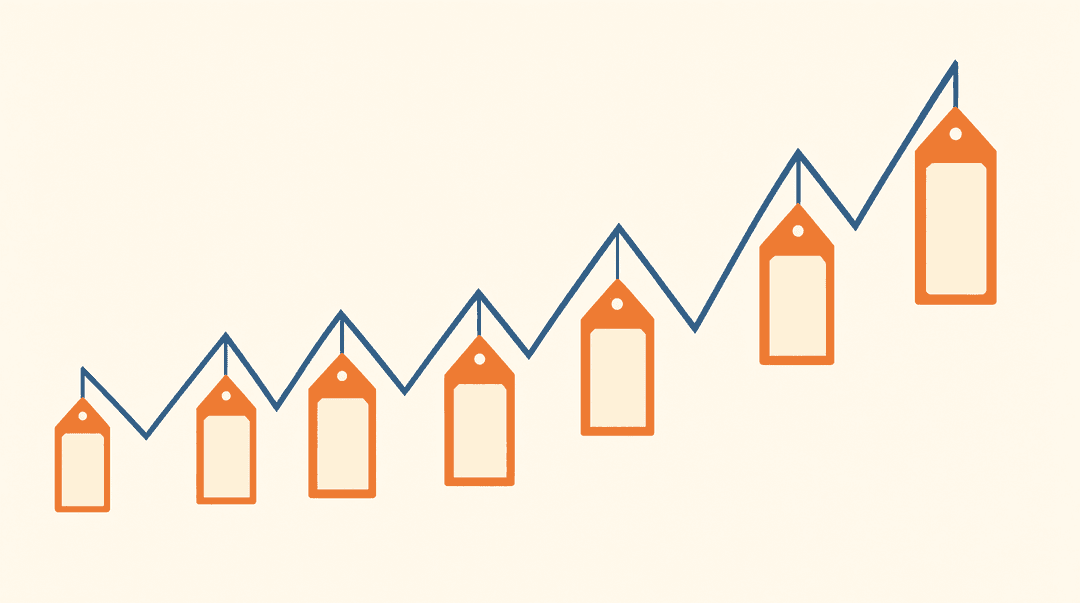
Adoption across business generally is measurable but modest. Simon-Kucher, a pricing consultancy, surveyed more than 2,200 business leaders in 28 countries and 39 industries in 2025: 41 percent said they used AI software to gather market intelligence, including competitors' prices, and another 28 percent said they used it for real-time price optimization. Economists at the University of Florida, the San Francisco Fed and the University of Missouri built a proxy from job postings and found that listings requiring both AI skills and pricing skills grew more than tenfold as a share of all pricing jobs after 2010. Firms that adopted AI pricing subsequently showed faster growth in sales, employment and markups. That last word deserves care: the paper documents correlation between adoption and performance, not proof that the algorithms caused the margin gains.
Frequency, not ratchet
The loudest consumer fear is that dynamic pricing means prices only go up. The repricing data does not support that. Decodo, a web-data company, tracked over 1,500 products at 120 retailers in more than 40 countries through 2025 and found that about half of the price changes recorded in the United States were decreases. The same firm's earlier analysis found that cart-abandonment discounts follow predictable patterns by retail category, which is a strange way to describe a ratchet.
In physical stores the rollout has been even tamer than the panic assumes. Relex Solutions, a retail technology vendor, says grocery chains using electronic shelf labels typically update on a schedule, often weekly, and researchers tracking one unnamed chain found virtually no surge pricing after the labels arrived. Walmart CEO John Furner addressed the speculation directly in a blog post: we price the product, not the person. Social posts claiming the digital tags scan shoppers' faces or phones are false, per the Kearney consumer researcher Fortune spoke with.
The two real risk vectors
The evidence that matters is less about frequency than about two specific mechanisms: individualized pricing and machine-mediated coordination.
On individualization, the FTC has been the clearest enforcer. Its June 2024 study of "surveillance pricing" sent administrative subpoenas to eight dynamic pricing vendors, and a January 2025 staff report found that intermediaries offering tools that tailor prices and promotions served at least 250 clients, including grocery and clothing retailers. An investigation by Consumer Reports, Groundwork Collaborative and More Perfect Union published December 9, 2025 found shoppers on Instacart shown prices for identical products at the same store differing by more than 20 percent from one customer to another; Instacart said the groups were randomly assigned tests, not personal-data pricing, and ended them. California prosecutors had already settled a 2022 geofencing case against Target for $5 million and a ban on raising prices once shoppers near a store. Maryland and New Jersey have now restricted using personal data to set grocery prices, Connecticut covers a broader retail range, and according to the National Conference of State Legislatures legislators in at least 30 states considered pricing bills this year. The Transportation Department went after the airline version: Secretary Sean Duffy said in August 2025 the department was concerned about AI-personalized ticket pricing and would investigate.
On coordination, the academic literature has moved from theory to experiment. Calvano and four co-authors showed in the American Economic Review in 2020 that simple Q-learning algorithms learn collusive pricing strategies by trial and error, without communicating or being instructed to collude. A 2024 paper on algorithmic collusion by large language models, revised as recently as August 2026, ran duopoly experiments with LLM pricing agents and found they converge autonomously on supracompetitive prices, that wording changes in the prompt shift the outcome, and that even models which verbally refuse to collude ("No, I won't help you collude with other sellers," GPT-4 told a screenshotting researcher) price as if they had no such scruple. A February 2026 replication uses GPT-5.2. These are laboratory markets, and industry groups like the National Retail Federation note that algorithmic pricing is a new method of doing what retailers have always done. No completed antitrust case has yet proven that deployed pricing tools colluded in a real market.
What the courts picked
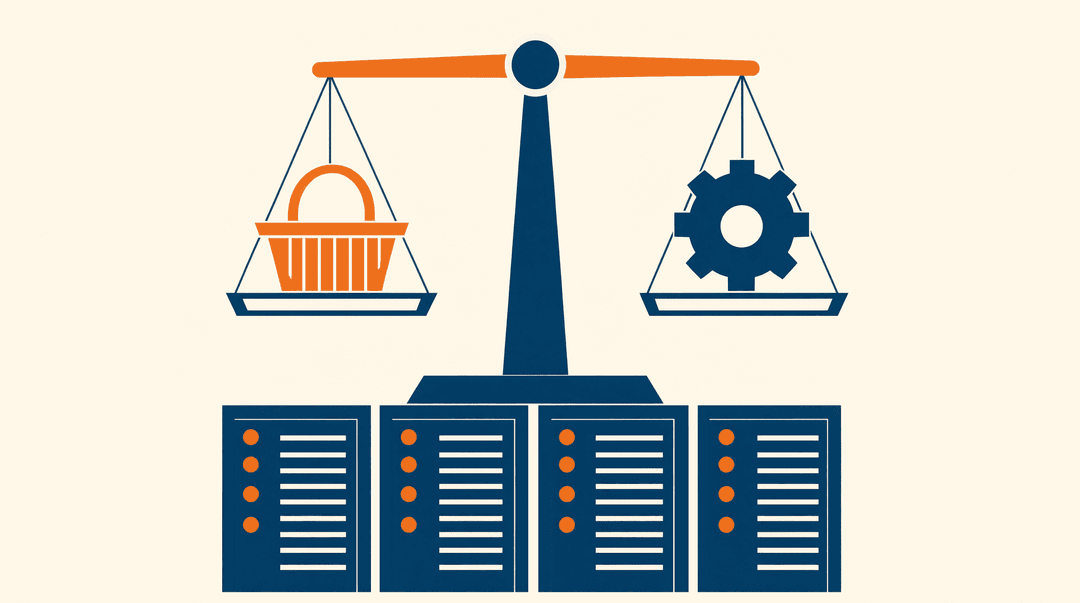
RealPage is the closest thing to a verdict. The DOJ and a bipartisan state coalition sued the rental-pricing software firm in August 2024, alleging it pooled competing landlords' non-public data into rent recommendations. On November 25, 2025, DOJ announced a settlement, the first with an algorithm provider rather than a user, restructuring how the product may use competitor data. The state claims did not end there: on October 2, 2026 a federal court in North Carolina denied RealPage's motion to dismiss the state case, which continues, alongside ongoing state suits against Camden, Pinnacle and Willow Bridge and completed settlements with Greystar and a $7 million payment from LivCor. Amazon's FTC case, filed in 2023, alleges a pricing tool codenamed Project Nessie let the company raise prices on selected products with competitors likely to follow, generating more than $1 billion in excess profits; a trial is scheduled for next year. Amazon says the allegations grossly mischaracterize a tool it scrapped. A consumer suit against McDonald's alleges its pricing system used nonpublic sales data from competing locations; the company calls the suit filled with inaccuracies.
The Zillow caveat
Algorithmic pricing at scale already has one famous autopsy. Zillow's Offers unit bought roughly 27,000 homes across 25 markets using model-generated valuations, then announced on November 2, 2021 that it was shutting the business down: it owned nearly 10,000 homes and had committed to buy thousands more it could not reprice fast enough. The Homes segment lost $881 million before taxes in 2021, about 2,000 people, a quarter of staff, lost their jobs, and the Wall Street Journal calculated the wind-down averaged roughly $25,000 lost on each home sold in the fourth quarter. The lesson generalizes: pricing algorithms work best on comparable, high-frequency goods with fast feedback, which is why they took hold in airline seats and Amazon listings, and worst on lumpy, heterogeneous assets priced against thin data.
What to actually believe
Prices in more categories are forecasts now, they change more often, and roughly as often down as up. The claim that AI is quietly ratcheting everything higher is not supported by the repricing datasets. The supportable worries are narrower and more concrete: tools that price the person instead of the product, and tools that let independent sellers discover tacit coordination faster than regulators can see it. Both are exactly where the FTC, 30-plus state legislatures, and the RealPage and Amazon cases are pointed. For a shopper, the practical upshot is mundane: timing and channel matter more than haggling. For anyone operating a pricing model, the upshot is procedural: keep the audit trail of what data the algorithm sees, because the next settlement will be drafted against whoever cannot.
Sources
- Bloomberg: Higher Airfares Loom on Busy Routes as AI Squeezes Out Bargains (July 29, 2026)
- Fortune: A study of dynamic pricing found half the U.S. changes it recorded were decreases (October 18, 2026)
- Fortune: You can get revenge on all those bots clogging up your email with dynamic pricing discounts (July 3, 2026)
- FRB San Francisco Working Paper 2024-33: The Rise of AI Pricing (Adams, Fang, Liu, Wang)
- arXiv 2404.00806: Algorithmic Collusion by Large Language Models
- CEPR/VoxEU on Calvano et al., American Economic Review 2020
- Wiley: Amidst uncertainty from FTC, states zero in on dynamic and algorithmic pricing
- Paul, Weiss: Practical Takeaways From the DOJ's Algorithmic Pricing Settlement (RealPage)
- North Carolina DOJ: Court sides with AG Jackson in RealPage case (October 2, 2026)
- California DOJ: RealPage press release (LivCor, Greystar settlements)
- Washington Monthly: How Amazon's AI Algorithms Raise the Prices You Pay (April 20, 2026)
- Reuters: US criticizes use of AI to personalize airline ticket prices (August 5, 2025)
- Business Insider: Zillow CEO on ending iBuying; re-brokerage summary of WSJ wind-down figures
