
The canary market finally got its autopsy
Freelance marketplaces were supposed to be the canary for AI effects on labor: short contracts, spot prices, buyers who can change their minds every week. Whatever AI does to white-collar work, Upwork and Fiverr should show it first and show it plainly. After roughly four years of ChatGPT and several earnings cycles, the platform data is in, and the verdict is more precise than either "AI killed the gig economy" or "nothing happened."
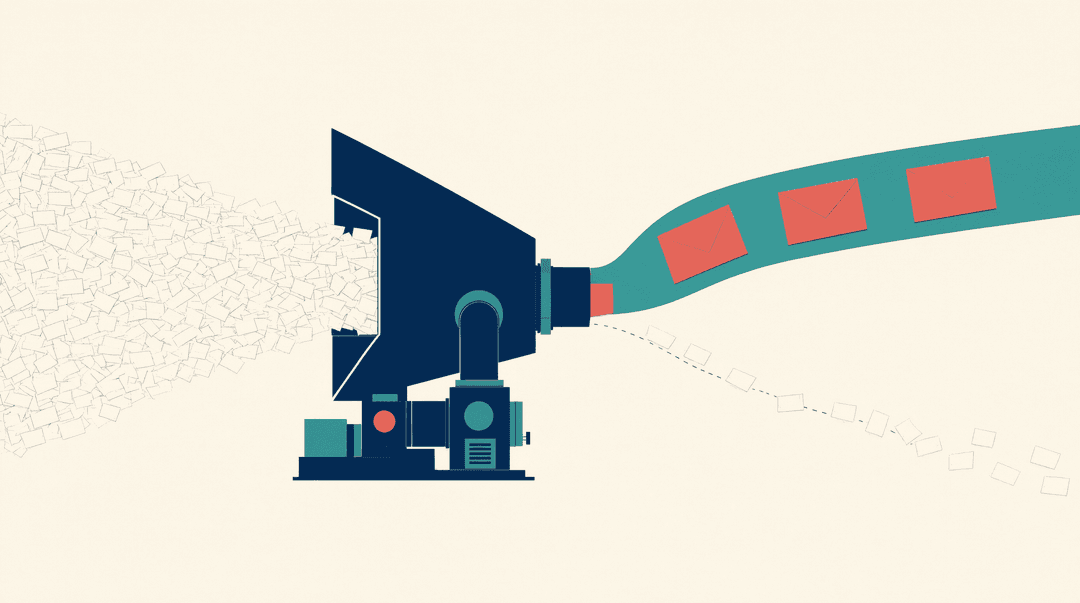
The picture is a sorting. The commodity end of the market collapsed, prices on the surviving work held, and both platforms are now structured around fewer, bigger, pickier buyers.
The spend moved first
Ramp's economics lab tracked firm-level card and expense data for spending on freelance marketplaces (Upwork, Fiverr, Toptal) and on AI model providers (OpenAI, Anthropic) from 2021 to 2025. Three findings from the paper (Payrolls to Prompts, Ryan Stevens):
- Freelance marketplace share of total business spend fell from 0.66% in Q4 2021 to 0.14% in Q3 2025, roughly a fourth of its former weight.
- AI model provider share rose from zero to 2.85% over the same window.
- More than half of the businesses that spent on freelance platforms in Q2 2022 had stopped entirely by Q2 2025.
The substitution is not one-for-one in dollars. Among firms that spent the most on freelancers before ChatGPT, each $1 of reduced freelance spend was associated with about $0.03 of new AI spend, a roughly 30-fold cost difference. Ramp's own economists note that micro substitution does not imply aggregate job loss, and its customer base skews venture-backed and tech-heavy. But the direction is hard to miss: the line item that used to buy $100 blog posts now buys API credits.
Earnings reports show the same sorting, audited
Upwork's Q3 2026 results: gross services volume of $914.1 million, down 10.1% year over year; revenue of $185.6 million; 717,000 active clients. And GSV per active client of $5,418, up 8%, a record. The client count is falling; the invoices are growing.
Fiverr's Q3 2026 results are steeper: revenue of $90.9 million, down 15.8% year over year; marketplace revenue of $55.4 million, down 24.7%; annual active buyers of 2.4 million, down 25.8%; annual spend per buyer of $373, up 12.9%.
In the Q2 2026 earnings call, Fiverr CFO Esti Levy Dadon put a name on it: the 22% decline in active buyers was driven by compression in low-value transactional work, which "currently represents the majority of our marketplace and is decelerating at a faster and stronger rate than the growth associated with our high-value work."
Upwork's numbers split the same way. In Q2 2026, GSV from AI-related work reached an annualized run rate of about $330 million, up more than 22% year over year, with AI strategy and consulting work up over 50%. Meanwhile the company cut about 145 roles, roughly a quarter of its own workforce in May 2026, and management disclosed that around 10% of GSV faces adverse exposure to AI-driven shifts.
Postings data shows exactly what got cut
Two independent scrapes of Upwork's public job feed confirm the categories. Vollna's 2025 report, built on more than 2.2 million projects, found 11 of 12 major categories shrank year over year: writing fell 32%, IT and networking 27%, data science 14%, with the overall market down 9%. The share of entry-level projects dropped from 15% in 2024 to under 9%.
UpHunt's count of 3.25 million postings from January 2025 through June 2026 is sharper, and it contains the detail that punctures the loudest narratives. Writing postings fell from 8,002 in January 2025 to 3,698 in June 2026, down 53.8%, while all postings fell 34.5%. But the median fixed-price writing budget was $100 in both months, and the median hourly midpoint was $25 every single month of the window. The price did not collapse. The buyers left. The clients who used to pay for volume word production now prompt instead, and the clients who remain still pay human rates for judgment-shaped work.
Academic work on the earlier window found the same direction with smaller magnitudes. Using Upwork platform data, economists Xiang Hui, Oren Reshef and Luofeng Zhou measured a 2% drop in monthly jobs and a 5.2% drop in monthly earnings for writing-related freelancers after ChatGPT's release, and steeper declines for image-related workers (3.7% fewer jobs, 9.4% less income) after DALL-E 2 and Midjourney. A later peer-reviewed synthesis of that work puts posting declines for AI-exposed writing at around 21% within six months of launch. One wrinkle: freelancers with stronger track records saw larger drops than lower-rated peers, because the models narrowed the quality gap between cheap and professional output.
What replaced the lost work
Three things, none of them glamorous.
Repair. The Guardian reported in September 2026 that listings to fix AI output are booming: Freelancer.com recorded an 87% rise in cleanup-related listings (fix AI, AI hallucination, AI error) between August 2025 and June 2026, to 10,760; Upwork said AI remediation gigs rose 70% year over year; Fiverr said searches for AI cleanup services grew more than 20-fold since 2023. The original Guardian piece notes the freelance complaint that runs through all of it: clients budget the repair work as quick and cheap even when it takes real time. One caution: the three platforms measure different things (listings, gigs, searches), so the numbers cannot be stacked into one growth rate.
Bigger, messier AI-shaped projects. OpenAI and Upwork published a joint study comparing ChatGPT usage with marketplace postings. Of 63 work categories analyzed, 43 saw activities that were common in ChatGPT use lose share in freelance postings. But AI-related postings were not smaller versions of old ones: their task mix became 45% more diverse between early 2023 and late 2025, roughly the difference between 15 and 21 equally common tasks in one project, and they carried larger fixed-price budgets and more hours at similar hourly rates.
Label inflation. In Upwork's Q2 2026 investor materials, an internal survey found nearly half of freelancers described their most recent job as AI-related, while only 16% of job posts said so explicitly. How much of the $330 million AI run rate is AI-native work and how much is ordinary work that now touches a chatbot is not separable from the disclosed numbers.
The platforms are exiting the commodity business
Upwork's fastest-growing lanes are the ones that do not look like the old marketplace: Business Plus, its offering for recurring small-business contracts, grew GSV 174% year over year in Q2 to about $64 million, and the company launched an MCP server so AI agents can source talent and opportunities from inside tools like ChatGPT and Claude. Fiverr's services revenue, its managed and vetted work, was $34.6 million in Q2, about 35% of total revenue, while the self-serve gig marketplace shrank 15.5%. The $50 logo and the 500-word blog post are inside the model now; both platforms are selling vetted humans, enterprise workflow, and agent plumbing instead.
The canary is still breathing
The substitution evidence is real, but it lives in the most transaction-visible corner of the economy, not in the wage bill overall. A Danish study linking survey data to administrative records for 25,000 workers across 11 AI-exposed occupations found precisely null effects on earnings, hours and wages, with confidence intervals ruling out average effects larger than 2% two years after ChatGPT's launch. Upwork's 2026 Future Workforce Index still counts 38% of skilled US knowledge workers as freelancing, and its prior study put freelance knowledge work at $1.5 trillion in US earnings for 2024.
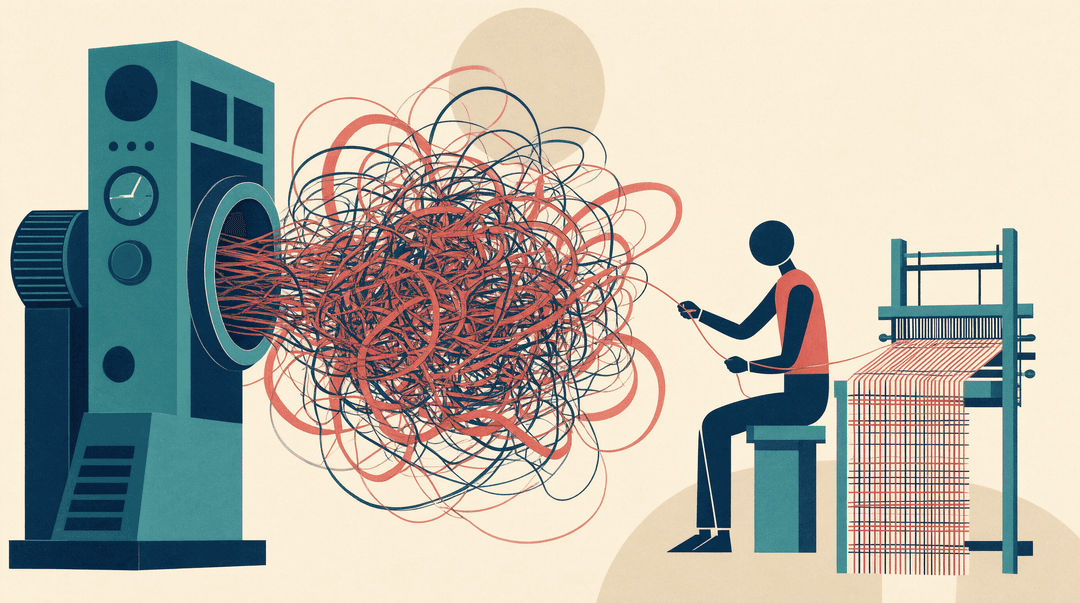
The honest synthesis is narrow. Four quarters of platform data say the cheap, high-volume end of freelance work is gone and not coming back; the surviving market is smaller per buyer, pricier per invoice, and increasingly about finishing or fixing what models started. Whether that sorting stays inside the gig platforms or migrates into salaried work is the question the next few years of payroll data will answer. For now, the canary lost the bottom of its cage and is still singing.
Sources
- Ramp Economics Lab, Payrolls to Prompts (Ryan Stevens): https://ramp.com/data/ai-labor-market-impact-freelancers
- Upwork Q2 2026 results: https://investors.upwork.com/news-releases/news-release-details/upwork-reports-second-quarter-2026-financial-results
- Upwork Q3 2026 results: https://investors.upwork.com/news-releases/news-release-details/upwork-reports-third-quarter-2026-financial-results
- Fiverr Q2 2026 results: https://investors.fiverr.com/news-releases/news-release-details/fiverr-announces-second-quarter-2026-results
- Fiverr Q3 2026 results: https://www.fiverr.com/news/q3-2026-earnings
- Fiverr Q2 2026 earnings call transcript: https://finance.yahoo.com/quote/FVRR/earnings/FVRR-Q2-2026-earnings_call-656929.html
- Vollna, Upwork Projects Analysis 2025: https://www.vollna.com/reports/upwork-projects-trends-2025
- UpHunt, Did AI Kill Upwork Writing Jobs: https://uphunt.io/blog/did-ai-kill-upwork-writing-jobs-2026-data
- Hui, Reshef and Zhou, short-term effects of generative AI on Upwork freelancers (summary): https://cobsinsights.org/2023-10-24/ai-tools-cause-a-decline-in-freelancer-work-and-income-at-least-in-the-short-run
- Frontiers in Human Dynamics review of AI labor displacement evidence: https://frontiersin.org/journals/human-dynamics/articles/10.3389/fhumd.2026.1815037/full
- OpenAI and Upwork, Work at the Frontier: https://openai.com/index/ai-effect-on-freelance-work
- The Guardian, freelancers buried in AI slop cleanup: https://www.theguardian.com/technology/2026/sep/02/ai-jobs-freelance-cleanup
- Search Engine Journal on the cleanup listing data and its unit caveats: https://www.searchenginejournal.com/ai-slop-cleanup-job-listings-report/588235
- Upwork Q2 2026 coverage, restructuring and adverse-exposure disclosure: https://thenextweb.com/news/upwork-q2-2026-ai-disruption-guidance-cut
- Yahoo Finance on Upwork Q2 investor materials: https://finance.yahoo.com/markets/stocks/articles/upwork-upwk-posts-profit-beat-103703891.html
- Humlum and Vestergaard, Still Waters, Rapid Currents (NBER WP 33777): https://www.nber.org/papers/w33777
- AI Business Weekly roundup of writing-gig studies: https://aibusinessweekly.net/p/will-ai-replace-writers
