
Zero-knowledge proofs have quietly moved from cryptocurrency research into the AI supply chain. On November 2, 2026, Anthropic open-sourced FlashProve, a prototype that cryptographically proves which model wrote a given answer, without releasing the model's weights. Earlier this year, the identity project World open-sourced ProveKit, the toolkit its users employ to prove they are human without handing over personal data. Both sit on the same 40-year-old cryptographic idea.
Here is what a zero-knowledge proof is, how close it is to working inside language models, and what it does not prove.
The problem the idea solves
The classic form of the question: I want you to believe that X is true, but showing you the evidence for X would reveal a secret. A password database breach shows one version of the problem. So does an enterprise that pays for a frontier model and cannot check that the provider is not routing its traffic to a cheaper one. Proving usually means disclosing. Zero-knowledge proofs break that link.
A zero-knowledge proof is a protocol in which one party, the prover, convinces another party, the verifier, that a statement is true while revealing nothing beyond the truth of the statement itself, as the Ethereum Foundation's explainer defines it. The formal definition requires three properties:
- Completeness. If the statement is true, an honest verifier is convinced by an honest prover.
- Soundness. If the statement is false, a cheating prover cannot convince the verifier except with negligible probability.
- Zero knowledge. The verifier learns nothing about the secret itself, not even whether the prover could produce the proof again later.
The standard intuition is the Ali Baba cave, a parable from a 1988 paper by Uriel Feige, Amos Fiat and Adi Shamir. A cave has two entrances joined by a door that only a magic word opens. A prover wants to convince a verifier she knows the word without saying it. The verifier waits outside, picks an entrance at random, and the prover emerges. Repeat enough times and a faker gets caught, while nothing about the word ever leaves the prover's mouth.
That is the whole trick: a claim can be established by interaction and randomness rather than by disclosure.
From 1985 theory to production cryptography
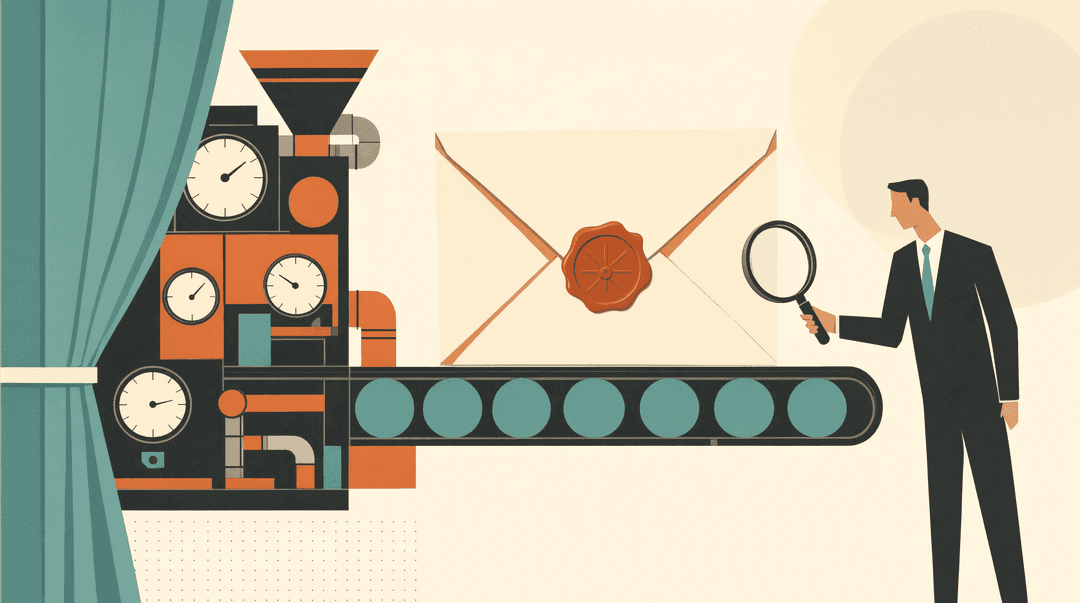
The concept comes from a 1985 paper, "The Knowledge Complexity of Interactive Proof-Systems," by Shafi Goldwasser, Silvio Micali and Charles Rackoff, published in the proceedings of the 17th ACM Symposium on Theory of Computing and later in SIAM Journal on Computing. The ACM awarded Goldwasser and Micali the 2012 Turing Award for this line of work, citing that they turned cryptography from an art into a science.
Two upgrades made the idea usable. First, the Fiat-Shamir transform (CRYPTO 1986) replaced the interactive back-and-forth with a hash function, turning a conversation into a standalone, non-interactive proof anyone can check. Second, a long line of efficiency work in the 2010s produced the two properties practical systems need: succinctness and short proof sizes. Bulletproofs, from Bünz, Bootle, Boneh, Poelstra, Wuille and Maxwell (IEEE S&P 2018), demonstrated proofs logarithmic in the witness size with no trusted setup. Those protocols power verification layers across blockchains, which is where the technology scaled before it reached AI.
Provable inference: proving who answered
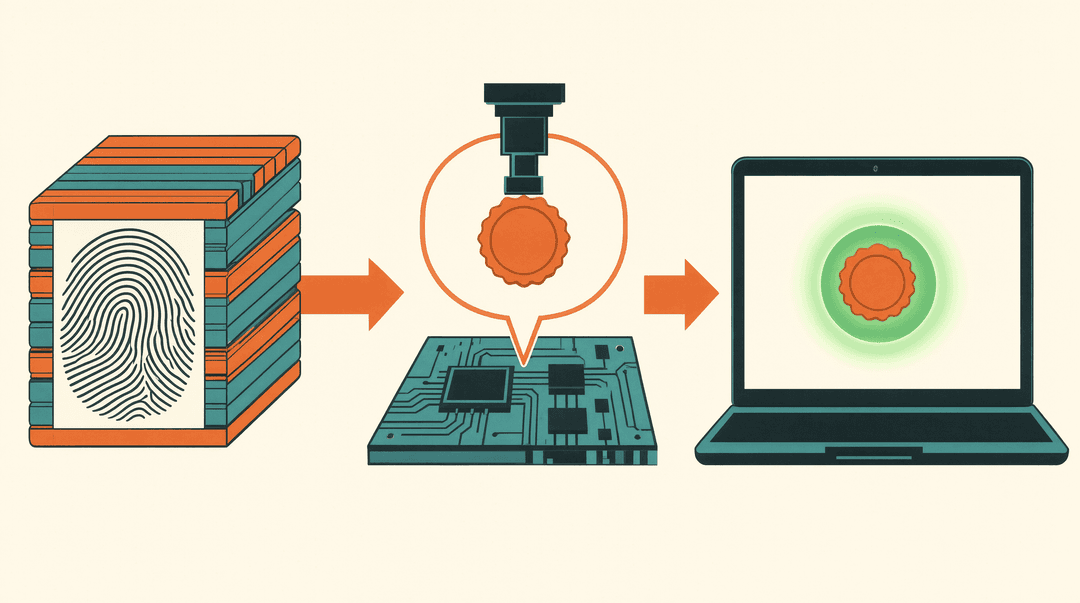
The direct application to language models is called provable inference. The problem it targets: today, no user of an API can independently confirm which model produced a reply, whether a router silently downgraded them, or whether the response was tampered with in transit. FlashProve's design has three steps. The provider first publishes a commitment, a cryptographic fingerprint bound to one specific set of weights, with the weights themselves staying secret. For each reply, the provider's GPU produces a zkSNARK proof that the reply is the committed model's output. Anyone can then check the proof on an ordinary CPU in seconds, without the weights.
The numbers are the interesting part, because this is the field where zero-knowledge proofs historically failed: cost. Anthropic ran Llama 4 Maverick, a 400-billion-parameter mixture-of-experts model with 4-bit weights, at full size on a single H100. Proving reaches roughly 110 tokens per second of prefill, and each 1,024-token request carries a proof of about 19 MB. That is functional but not free: the same post states the proving cost is 70 to 95 times the GPU time vLLM takes to serve the same prompts, and the prototype is capped at a 1,024-token context. Anthropic labels the release "intermediate progress, not a completed research agenda" and the repository says flatly it is not maintained. Notably, the protocol's soundness theorem was machine-checked in Lean 4, which removes a class of "trust the cryptographers" appeals.
Earlier academic work set the table. zkLLM, published in 2024, was the first zero-knowledge proof system built specifically for LLM inference, introducing a lookup argument called tlookup for the non-arithmetic operations in transformer layers, and reported a proof for a 13-billion-parameter model in under 15 minutes, with proofs under 200 kB. On the open-source side, ezkl compiles any ONNX computational graph into a proving circuit and lets results be verified on-chain, in a browser, or on a device, which made "zero-knowledge machine learning" (zkML) a practical experiment for small models years before frontier-scale attempts.
Provenance, personhood and the audit trail
Two other uses are in production or near it. Dataset provenance: ZKPROV attaches zero-knowledge proofs to LLM responses to show that training data was certified by its owner, without revealing the dataset or the model parameters. The paper reports sublinear scaling and end-to-end overhead under 3.3 seconds for models up to 8 billion parameters. If regulators eventually demand that labs disclose what a model trained on, constructions like this are the privacy-preserving exit.
Human verification: World ID uses zero-knowledge proofs so a person can demonstrate they are a unique human (or over 18, or a passport holder) without disclosing who they are. The network reports more than 18 million people verified and over 475 million issued proofs as of its third anniversary, and its verification stack, ProveKit, went open source in September 2026. Zoom added proof-of-human badges in October 2026 specifically to counter deepfake participants. This lane is adjacent to AI rather than inside it, but it exists because AI made bot/human separation a commercial problem.
What zero-knowledge proofs do not prove
Three limits deserve emphasis, because vendor copy routinely blurs them.
First, a proof of computation is not a proof of correctness. FlashProve proves that the committed model produced the reply, not that the reply is true, safe or good. A biased, hallucinating model can be provenly wrong. As the Chinese tech coverage of FlashProve put it, the technology proves the origin of a response, not the quality of its content.
Second, the prover still holds all the real power at setup. A commitment binds weights, but who audits the committed version against the deployed one, and what happens when a provider updates silently, is an institutional problem, not a cryptographic one.
Third, economics. A 70 to 95 times inference overhead means provability today is priced for high-assurance niches (regulated industries, government contracts, model-identity disputes), not every chat request. Compare the hardware lane instead: trusted execution environments, covered in our explainer on confidential computing, give cheap, fast attestation by trusting silicon. Cryptographic proofs give slower, stronger guarantees by trusting only math. Buyers in 2026 will see both sold as "verifiable AI."
The takeaway for a buyer
If a vendor invokes zero-knowledge proofs in a pitch, three questions separate substance from tokenism: what exactly is being proven (computation, data membership, a personhood claim); what does the proof not cover; and can your side verify proofs independently, on CPU, without the vendor's cooperation. FlashProve's repository answers all three in the affirmative for model identity, and it is the clearest signal that the lab's answer to "which model answered me" is moving from trust me to check for yourself.
Sources
- Anthropic, Progress on provable inference for large language models - https://www.anthropic.com/research/provable-inference
- FlashProve repository - https://github.com/anthropics/FlashProve
- The Next Web, Anthropic open-sources FlashProve - https://thenextweb.com/news/anthropic-flashprove-provable-inference-ai-model-identity
- 36kr, Anthropic Open-Sources FlashProve - https://eu.36kr.com/en/p/4054648135930754
- Ethereum Foundation, What are zero-knowledge proofs? - https://ethereum.org/zero-knowledge-proofs
- Wikipedia, Zero-knowledge proof (Ali Baba cave) - https://en.wikipedia.org/wiki/Zero-knowledge_proof
- Goldwasser, Micali, Rackoff, The Knowledge Complexity of Interactive Proof-Systems (STOC 1985; SIAM J. Comput. 18(1), 1989) - https://www.scirp.org/reference/referencespapers?referenceid=2077830
- Feigenbaum, Overview of Interactive Proof Systems and Zero-Knowledge - https://www.cs.yale.edu/homes/jf/F-IPZK1992.pdf
- ACM, Goldwasser and Micali, 2012 Turing Award - https://www.acm.org/articles/bulletins/2013/march/goldwasser-micali-2012-turing-award
- Wikipedia, Fiat-Shamir heuristic - https://en.wikipedia.org/wiki/Fiat%E2%80%93Shamir_heuristic
- Bünz et al., Bulletproofs: Short Proofs for Confidential Transactions and More (IEEE S&P 2018) - https://eprint.iacr.org/2017/1066
- Zhang et al., zkLLM: Zero Knowledge Proofs for Large Language Models (USENIX Security 2024) - https://arxiv.org/abs/2404.16109
- ZKPROV: A Zero-Knowledge Approach to Dataset Provenance for Large Language Models - https://arxiv.org/abs/2506.20915
- ezkl repository - https://github.com/zkonduit/ezkl
- World ID - https://world.id
- The Block, World open-sources ProveKit - https://www.theblock.co/news/ecosystems/2026-09-02-world-provekit-zero-knowledge-identity-proving-toolkit-413364
- Yahoo Finance, World turns 3 (18M verified, 475M proofs) - https://finance.yahoo.com/technology/ai/articles/sam-altman-backed-world-turns-174026719.html
- Fortune, Zoom adds Proof of Human badges - https://fortune.com/2026-10-18/zoom-adds-proof-of-human-feature-to-stop-deep-fakes-toowith-tech
