
OpenAI published research on November 24 claiming that its GPT-6 family of language models can design functional proteins using only general-purpose reasoning and code, without calling specialized biology models to generate the designs. The preprint, titled "GPT-6 as a Universal Foundation Model for Protein Biology: Beyond Specialized Models," reports wet-lab validation of a subset of the designs by research partner Onava.
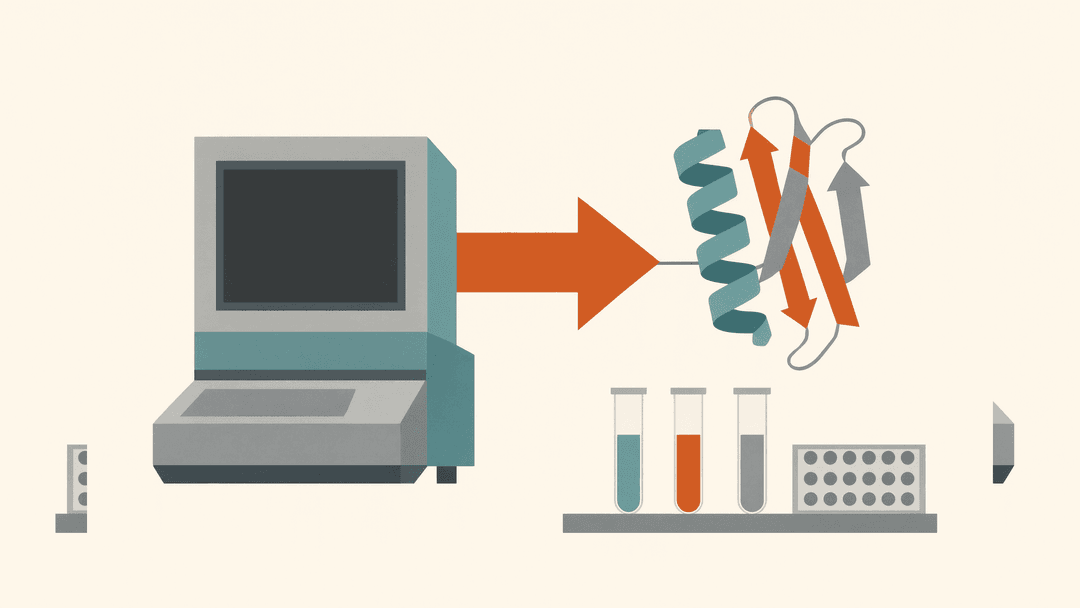
The headline result is not a single benchmark win but a workflow claim. Protein design today typically chains together purpose-built tools: one model generates a backbone structure, another proposes amino acid sequences that fold into it, others predict the result. Coordinating those tools requires expertise, and each one accepts only narrow kinds of constraints. A general model that does the same work from prompts, OpenAI argues, can absorb new instructions without retraining.
What the lab tests showed
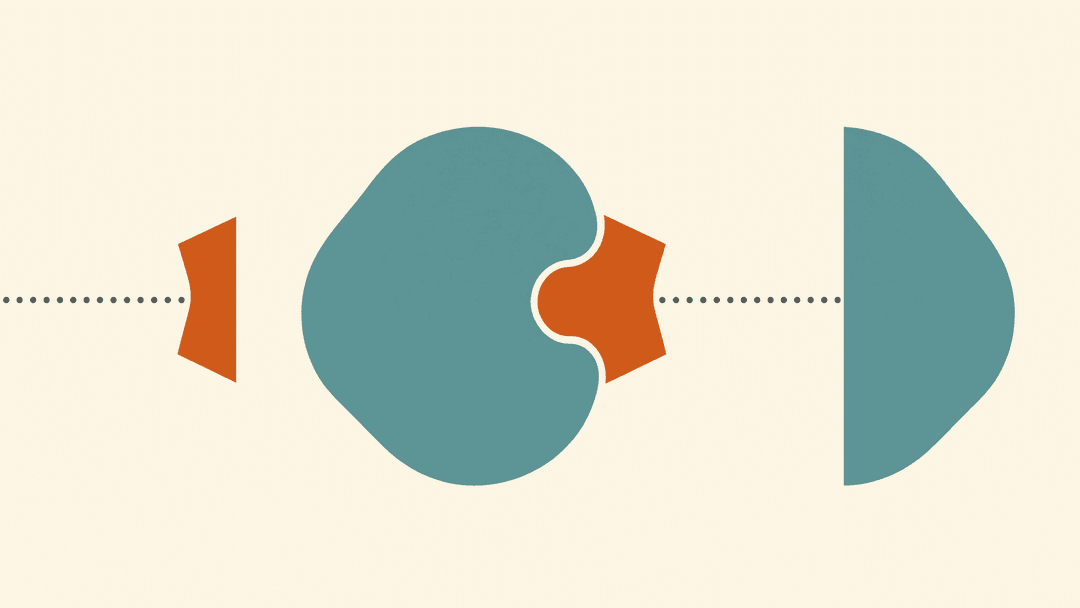
In the first laboratory experiment, GPT-6.2 was given the three-dimensional structures of five target proteins and asked to design small binding proteins, or minibinders, that attach to marked sites. It wrote and executed code to explore shapes and sequences, with no specialized generative model in the loop. Specialized tools (SolubleMPNN for sequences, other models for candidate filtering) were then used to prepare designs for testing. Of 322 minibinders tested against the five targets, 35, or 10.9%, showed evidence of binding: 18 against IL-17A, 8 against VEGF-A, 5 against PD-L1, 3 against IL-7Rα and 1 against TrkA. OpenAI notes that the original RFdiffusion study reported higher hit rates, but that rates depend heavily on filtering strictness and the definition of binding.
In a second experiment the model proposed entirely new amino acid sequences for known minibinder structures. Binding rates ran from 85% (75 of 88 designs) against MDM2 to 14% (8 of 59) against PD-1. The proposed sequences often differed sharply from the originals, a median of 50% at VEGF-A. On three unpublished structures, 14 of 107 proteins made from GPT-6.2 sequences showed binding; for one unpublished PD-L1 minibinder, two of its sequences diverged from the original at 52 and 58 of 90 positions and from each other at nearly half the sequence, which OpenAI reads as evidence the capability is not memorization.
Redesigning the binding loops of antibodies also worked at scale. Of 182 redesigned loop sequences tested, 128 (70%) kept binding to the original target. Of 272 fragments based on five therapeutic antibodies, 179 (66%) retained binding to PD-1 or PD-L1.
Computational results point the same direction. On motif scaffolding from MotifBench, the latest internal model hit a 43.7% success rate against 27.8% for RFdiffusion. On blind small-molecule docking, GPT-6.2 matched experimental poses in 93% of scored PoseBusters predictions versus 50% for the specialized model DiffDock-L. When told which two atoms form a covalent bond, the model reached 92% against DiffDock's 60%. Ranking the effects of mutations beat the specialized model ESM2-650M on average across four public datasets. And OpenAI says it could instruct the model to build minibinders with specified numbers of helices or strands with near-perfect fidelity, prompt-guidance the specialized tools cannot accept without code changes.
The jagged edge remains
One task stayed hard: predicting a full protein's structure from its sequence alone, AlphaFold's home turf. Across the test set the average TM-score rose from 0.16 for GPT-5.6 to 0.38 for the latest internal model, while the specialized model ESMFold2 averaged 0.93. OpenAI also concedes the design campaign leaned on specialized models to filter candidates, so the work does not establish end-to-end zero-shot protein design, and that unusually high scores on some sequence-inference benchmarks may partly reflect memorization.
Still, the improvement trend across generations, 0.05 to 0.81 mean DockQ on antibody-complex prediction from GPT-5.6 to the internal model, suggests general-purpose reasoning is encroaching on territory that specialized models held for a decade. The framing OpenAI itself offers is its recurring "jagged frontier" thesis: frontier language models now clear some scientific tasks at specialist level while failing adjacent ones badly, which makes the prompt, not the pipeline, the new interface to biology.
