
Anthropic launched Claude Ship on Monday, November 23, a suite of three agents that carry a GitHub pull request from review through fixes to an approval decision. It is the company's first major product launch since its initial public offering last week, and it targets the stage of the software pipeline where AI-generated code now piles up: everything that happens after the code is written.
"Most teams want a person to approve every change, and that's easy to keep up with when people write every line," the company wrote in its announcement. "On the Claude Code team, Claude writes most of our code, and we wanted everything after the PR to move that fast too."
What the three agents do
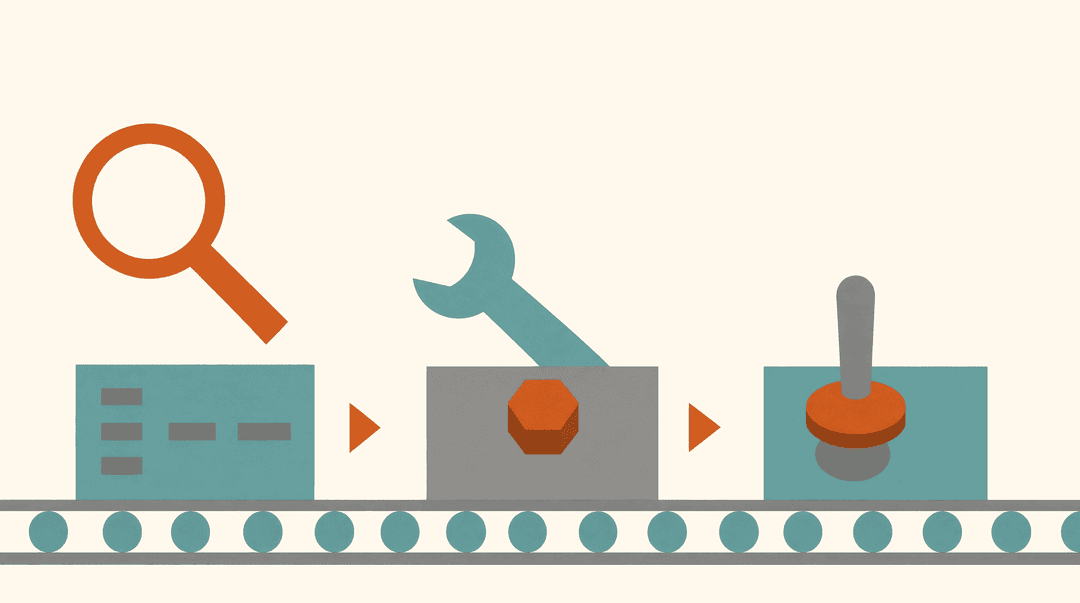
The suite has one established component and two new ones. Code Review, generally available since October, reads a proposed change against the surrounding codebase, checks its own findings and posts ranked, inline comments on the affected lines. PR Steward, in beta, works the open pull request until it is green: failing CI checks, merge conflicts and reviewer feedback. After every push it comments on what it changed and how to undo it. It is deliberately forbidden from approving or merging anything.
Claude Approvals, also in beta, is the provocative piece. It reads an approval policy the team writes in a .claude/approvals.yml file in the repository and decides whether a pull request still needs a human. A change to a billing service might require two reviewers including one from the payments team; a clean review on ordinary code might cut the human requirement to one; a documentation-only change might sail through on Claude's signature alone. Teams can also define classification criteria in natural language, and Anthropic recommends running the policy in observe-only mode first to see what Claude would have approved before making its sign-off a required check.
Developers can trigger the workflow with a /ship command in Claude Code, which opens the pull request and works it toward mergeable state. The local run can last up to seven days, so the session has to stay open and the machine awake. Existing branch protection rules still govern the merge itself.

The economics
Claude Ship is available now in beta for Team and Enterprise customers whose repositories live on GitHub. Organizations with Zero Data Retention, Anthropic's HIPAA configuration or customer-managed encryption keys cannot enable it. Billing is by token usage through organization credits, separate from plan usage. When Code Review launched, Anthropic put the average cost at $15 to $25 per review. Claude Approvals has no base charge, but its natural-language classifiers consume billable tokens, and a policy that calls for review findings pays for the review even in observe-only mode. Eligible Enterprise customers can claim at least $10,000 in Claude Ship credits until January 15, 2027, usable within 30 days.
The competitive field is crowded. GitHub made Copilot code review approvals generally available in late October, with admin-set path restrictions. Cursor sells a PR Routing & Approval agent that reads an APPROVAL_POLICY.md file. CodeRabbit lets teams set separate merge-risk and security-risk limits. GitHub's forthcoming Max review level reconciles findings from models of different providers; in Claude Ship, all three agents run on Claude.
What Anthropic reports, and what analysts doubt
Anthropic says the Claude Code team uses the suite on many of its own pull requests, and credits the period from June to September with more than doubling the team's merged PR count while cutting the share of work reverted by more than 40%. The company does not say how much of that came from the agents. Early external customers describe partial adoption: TELUS Digital's director of engineering Vatsal Bhatt said "We keep a human in the loop" and credits PR Steward with pre-clearing review findings, while Carvana's pilot uses PR Steward for review feedback. Neither described letting the agent approve a pull request outright.
Analysts were cool. "Anthropic's Claude Ship is not a breakthrough innovation as much as an evolution of existing AI-assisted code review capabilities," said Nitish Tyagi, senior principal analyst at Gartner. The deeper problem is correlation of error: if the same family of models writes and reviews the code, their blind spots may overlap. "AI models are inherently non-deterministic, which makes them unsuitable as the sole quality gate," Tyagi said. IDC's Deepika Giri recommended restricting automated approvals to low-risk changes, keeping security scans and CI checks independent of the agent, and ensuring every merge has a named human owner. Omdia's Lian Jye Su noted that agents "may not fully appreciate all the security and compliance requirements that are constantly evolving in some industries."
The launch reframes an old DevOps truth: review is the bottleneck, not typing. Anthropic's bet is that teams will trade a share of that human review attention for throughput, inside guardrails they write themselves. Whether engineers hand an AI the approval stamp, or just the wrench, is the question the beta will answer.
Sources
- Claude Ship - Claude Code Docs
- Anthropic launches Claude Ship, letting AI agents review, fix, and approve code changes - TechCrunch
- Anthropic's Claude Ship lets Claude approve routine pull requests - The New Stack
- Anthropic launches Claude Ship, extending AI-assisted development to pull request approvals - InfoWorld
- Claude Ship: Anthropic Now Lets Claude Approve Code, Too - TrendingTopics.eu
